


Israeli Strikes on Gaza Leave Children without Parents and Parents without Children

A Palestinian man mourns his 4-day-old twin relatives, killed in the Israeli bombardment of the Gaza Strip, as he holds their birth certificates, at a hospital morgue in Deir al-Balah, Tuesday, Aug. 13, 2024. (AP)
TT

Israeli Strikes on Gaza Leave Children without Parents and Parents without Children

A Palestinian man mourns his 4-day-old twin relatives, killed in the Israeli bombardment of the Gaza Strip, as he holds their birth certificates, at a hospital morgue in Deir al-Balah, Tuesday, Aug. 13, 2024. (AP)

Reem Abu Hayyah, just three months old, was the only member of her family to survive an Israeli airstrike in the Gaza Strip late Monday. A few miles (kilometers) to the north, Mohamed Abuel-Qomasan lost his wife and their twin babies — just four days old — in another strike.

More than 10 months into its war with Hamas, Israel's relentless bombardment of the isolated territory has wiped out extended families. It has left parents without children and children without parents, brothers or sisters.

And some of the sole survivors are so young they will have no memory of those they lost, The AP reported.

The Israeli strike late Monday destroyed a home near the southern city of Khan Younis, killing 10 people. The dead included Abu Hayyah's parents and five siblings, ranging in age from 5 to 12, as well as the parents of three other children. All four children were wounded in the strike.

“There is no one left except this baby,” said her aunt, Soad Abu Hayyah. “Since this morning, we have been trying to feed her formula, but she does not accept it, because she is used to her mother’s milk.”

The strike that killed Abuel-Qomasan's wife and newborns — a boy, Asser, and a girl, Ayssel — also killed the twins' maternal grandmother. As he sat in a hospital, stunned into near-silence by the loss, he held up the twins' birth certificates.

His wife, Joumana Arafa, a pharmacist, had given birth by Cesarean section four days ago and announced the twins' arrival on Facebook. On Tuesday, he had gone to register the births at a local government office. While he was there, neighbors called to say the home where he was sheltering, near the central city of Deir al-Balah, had been bombed.

“I don’t know what happened,” he said. "I am told it was a shell that hit the house.”

The Israeli military did not immediately respond to a request for comment on the strikes.

The United Nations estimated in February that some 17,000 children in Gaza are now unaccompanied, and the number is likely to have grown since.

The Abu Hayyah family was sheltering in an area that Israel had ordered people to evacuate from in recent days. It was one of several such orders that have led hundreds of thousands to seek shelter in an Israeli-declared humanitarian zone consisting of squalid, crowded tent camps along the coast.

The vast majority of Gaza's population has fled their homes, often multiple times. The coastal strip, which is just 25 miles (40 kilometers) long by about 7 miles (11 kilometers) wide, has been completely sealed off by Israeli forces since May.

Around 84% of Gaza's territory has been placed under evacuation orders by the Israeli military, according to the United Nations.

Many families have ignored the evacuation orders because they say nowhere feels safe, or because they are unable to make the arduous journey on foot, or because they fear they will never be able to return to their homes, even after the war.

Abuel-Qomasan and his wife had heeded orders to evacuate Gaza City in the opening weeks of the war. They sought shelter in central Gaza, as the army had instructed.
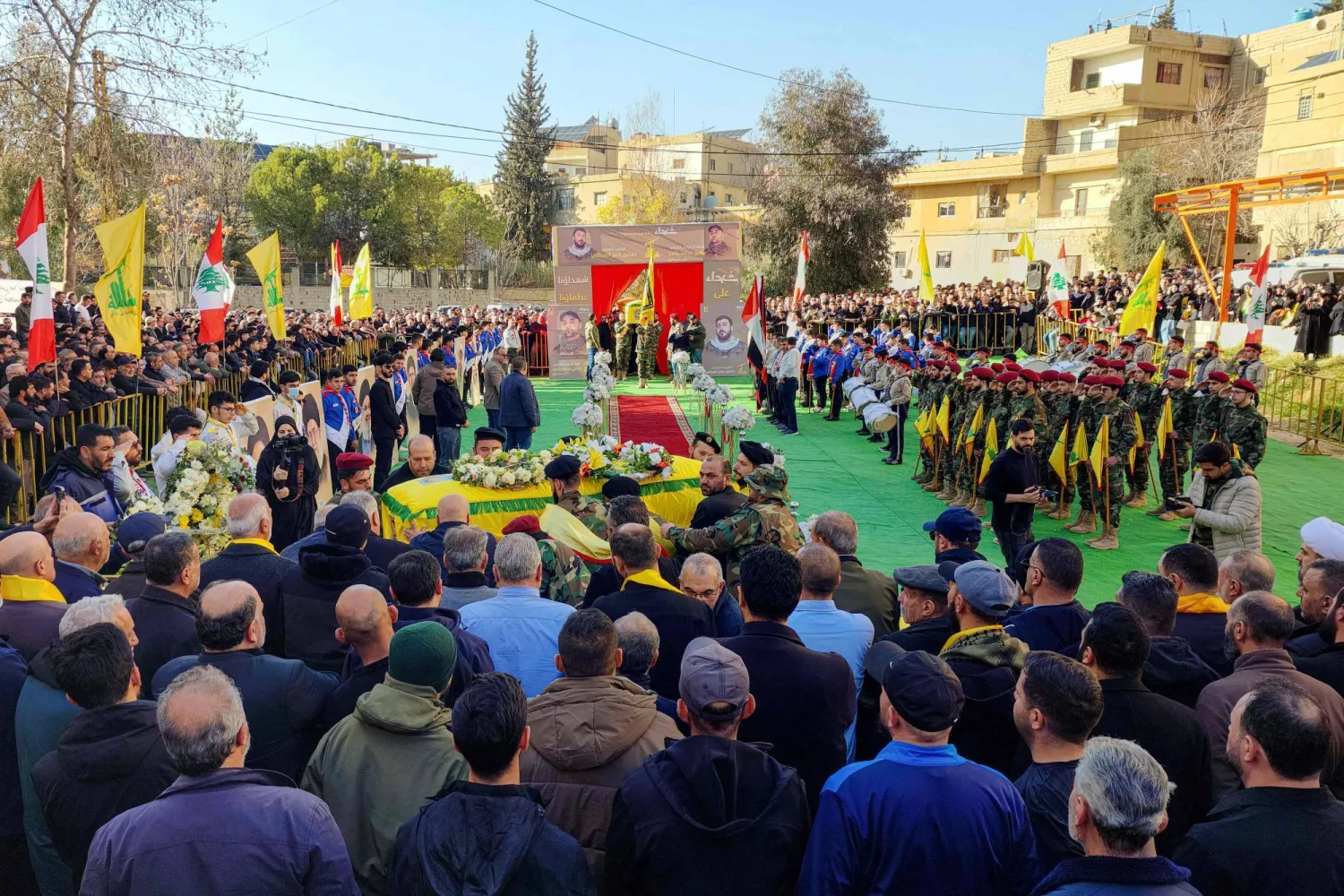



Israeli Agent Confession Reveals How Deep Hezbollah Has Been Infiltrated

Hezbollah supporters are seen during the funeral of slain member Hussein Yaghi in the eastern Bekaa, Lebanon. (AFP)
TT

Israeli Agent Confession Reveals How Deep Hezbollah Has Been Infiltrated

Hezbollah supporters are seen during the funeral of slain member Hussein Yaghi in the eastern Bekaa, Lebanon. (AFP)

Investigations into detainee “A.M.”, a native of the southern town of Ansar arrested last week on charges of collaborating with Israel, show he did more than carry out assigned tasks under an Israeli agenda.

According to the findings, A.M. took the initiative to supply precise information about sites that were later destroyed, providing coordinates for military locations, including Hezbollah missile depots and drone manufacturing facilities.

The case also underscores the scale of effort by Israel’s Mossad intelligence agency to recruit agents. High-risk recruits are enlisted abroad, then transferred to Israel and assigned sensitive missions.

Phased training

Security sources said the Mossad recruited A.M. in 2020 and put him through multi-stage training courses. He was deployed at the height of the latest war between Israel and Hezbollah in 2024 and continued operating even after the November 2024 ceasefire, suggesting his case mirrors others.

Some agents have been arrested; others, sources said, are still moving freely inside Lebanon.

A.M.’s file is considered one of the most serious, given the missions he carried out.

Asharq Al-Awsat learned from security sources that the detainee, who holds a master’s degree from the University of Turin in Italy, was viewed as a valuable catch by a Mossad officer using the alias “Rami Murad.”

The officer recruited him in a European country in 2020 and maintained regular contact before introducing him to another handler, “Michael Leva,” who identified himself as a Mossad officer.

Leva asked the Lebanese national to gather security information in exchange for money. After agreeing, A.M. underwent a polygraph test, which he passed. He began by providing personal details about himself and his family, as well as security-related information about Lebanon. He was later tasked with supplying information about Hezbollah members.

Meetings in Germany

Security sources said A.M. met his handler several times in Germany, providing information on Hezbollah members and their phone numbers. He also identified the types of bulldozers and heavy machinery used by the Iran-backed party in southern Lebanon, including the names and contact details of their owners.

In October 2021, A.M. met Michael again in Cologne, where he underwent a second polygraph test. He provided additional information about residents of Ansar and Hezbollah members.

In late 2022, A.M. traveled with Michael from Germany to Israel. Upon arrival, the Mossad officer took his phone and informed him he would remain in Israel for three days. The next day, he was moved to a private room in a nearby building and subjected to a third polygraph test.

After passing, he was questioned about multiple sites in southern Lebanon, reviewing three-dimensional maps displayed on screens. He and his handler conducted a detailed review of Hezbollah-affiliated locations for which A.M. had already provided coordinates.

Sources said he also underwent several training courses inside the occupied Palestinian territories under the supervision of specialized trainers.

From intelligence to operations

While A.M.’s role was officially limited to gathering information, sources say his activities took on an operational dimension.

He supplied Mossad handlers with reports on institutions, individuals, centers, factories and hospitals affiliated with or funded by Hezbollah. He also documented the locations of surveillance cameras in Ansar, nighttime movements in southern areas, Hezbollah military movements and the party’s funding sources.

His reports extended to displaced residents from border villages during the war, Hezbollah’s handling of them and the assistance provided, as well as rental costs, electricity subscriptions and other expenses incurred due to displacement.

41 detainees

With his arrest, the number of agents detained since the start of the Israeli war on Lebanon in September 2024 has risen to 41.

A judicial source told Asharq Al-Awsat that the military court attaches “utmost importance” to these cases, whether before investigative judges or during trials before the military court.

According to security sources, after the ceasefire, A.M. provided the Mossad with precise information about bulldozer and heavy machinery showrooms in the southern towns of Msayleh, Daoudiyeh and Ansar that were later bombed and destroyed. He also prepared detailed reports on southern traders importing bulldozers, heavy machinery and spare parts.

Sources said he photographed Hezbollah sites in Ansar, as well as in Tyre, Nabatieh and the western Bekaa, and supplied detailed information about Hezbollah members, some of whom were later assassinated by Israel.

Inspecting targets after the ceasefire

After the ceasefire between Israel and Hezbollah took effect, A.M. inspected about 30 strike sites, according to informed sources, providing detailed assessments. The targets included Hezbollah military facilities, supply warehouses, missile and weapons depots, electronic equipment and drone factories.

His role was not confined to executing instructions. Sources revealed he proactively relayed everything he knew or heard about Hezbollah, its members, locations and funding methods.

He photographed dozens of sites in southern Lebanon, including buildings, commercial complexes, roads and military positions linked to Hezbollah, and sent the images and video footage to his handlers.


Israeli Settlers Burn Tents, Vehicles in West Bank Village, Say Residents

 Palestinians check damage to a burned vehicle, which Palestinians say was damaged by Israeli settlers, in Susiya near Hebron in the Israeli-occupied West Bank February 25, 2026. (Reuters)
Palestinians check damage to a burned vehicle, which Palestinians say was damaged by Israeli settlers, in Susiya near Hebron in the Israeli-occupied West Bank February 25, 2026. (Reuters)
TT

Israeli Settlers Burn Tents, Vehicles in West Bank Village, Say Residents

 Palestinians check damage to a burned vehicle, which Palestinians say was damaged by Israeli settlers, in Susiya near Hebron in the Israeli-occupied West Bank February 25, 2026. (Reuters)
Palestinians check damage to a burned vehicle, which Palestinians say was damaged by Israeli settlers, in Susiya near Hebron in the Israeli-occupied West Bank February 25, 2026. (Reuters)

Israeli settlers set ‌fire to vehicles and tents in the Palestinian village of Susiya on Tuesday night, residents said, in the latest incident of settler violence against Palestinians in the Israeli-occupied West Bank.

Videos verified by Reuters showed a masked group of men, who residents said were Israeli settlers, approaching the village near the city of Hebron, and later burning vehicles and Palestinian property.

"They attack us almost every day, repeatedly, because we live near the main road...Last night they burned everywhere," Halima Abu Eid, a Susiya resident told Reuters on Wednesday.

The ‌Israeli military ‌said they had dispatched soldiers to deal with ‌reports ⁠of "deliberate burnings of ⁠Palestinian property" and had opened an investigation into the incident.

Violence by Israeli settlers against Palestinians in the West Bank has increased sharply since the beginning of the war in Gaza in October 2023, with over 800 Palestinians displaced due to settler attacks in 2026 according to United Nations data.

Attacks where masked settlers arrive ⁠at night to destroy Palestinian property or attack ‌residents have become common, as Israeli settlers ‌seek to control large swathes of land in the West Bank.

An ‌Israeli official previously blamed settler violence on a "fringe minority", although ‌Reuters reporting has shown well-organized plans to take Palestinian land in public settler social media channels.

The United Nations has documented at least 86 instances of settler violence from February 3 to 16, leading to the displacement ‌of 146 Palestinians and the injury of 64.

Israeli indictments of settler violence are rare. At ⁠the end of ⁠2025, Israeli monitoring group Yesh Din said of the hundreds of cases of settler violence it had documented since October 7, 2023, only 2% resulted in indictments. Israel's far-right governing coalition has enabled the rapid spread of settlements, with some ministers openly stating they want to "bury" a Palestinian state.

Most world powers deem Israel's settlements, on land it captured in a 1967 war, illegal, and numerous UN Security Council resolutions have called on Israel to halt all settlement activity.

Israel disputes the view that its settlements are unlawful and it cites biblical and historical ties to the land.


PA Slams, Israel Hails US Offer of Consular Services in West Bank Settlement

 A view of the Israeli settlement of Tzufim in the north of Qalqilya city in occupied West Bank is pictured against the backdrop of Israeli city of Netanya on February 25, 2026. (AFP)
A view of the Israeli settlement of Tzufim in the north of Qalqilya city in occupied West Bank is pictured against the backdrop of Israeli city of Netanya on February 25, 2026. (AFP)
TT

PA Slams, Israel Hails US Offer of Consular Services in West Bank Settlement

 A view of the Israeli settlement of Tzufim in the north of Qalqilya city in occupied West Bank is pictured against the backdrop of Israeli city of Netanya on February 25, 2026. (AFP)
A view of the Israeli settlement of Tzufim in the north of Qalqilya city in occupied West Bank is pictured against the backdrop of Israeli city of Netanya on February 25, 2026. (AFP)

Israel welcomed Wednesday a decision by the US embassy to offer consular services in an Israeli settlement in the occupied West Bank, while the Palestinian Authority slammed it as a "violation of international law".

The US mission in Jerusalem said Tuesday that as part of an initiative to mark the 250th anniversary of US independence, it would provide Americans with "routine passport services in Efrat on Friday, February 27... for one day only".

Efrat is a West Bank settlement home to about 12,000 Israelis and is located 12 kilometers (7.5 miles) south of Jerusalem.

Israeli settlements in the West Bank, which Israel occupied in 1967, are illegal under international law.

Israeli Foreign Minister Gideon Saar welcomed the US move.

"We... appreciate the important decision by the US embassy to extend consular services to Efrat, in Judea and Samaria," he said, using the biblical name for the West Bank.

"As America marks 250 years of independence, Israel stands proudly beside it," he added at an event marking the occasion.

The Palestinian Authority's Colonization and Wall Resistance Commission condemned the move, saying in a statement that it "constitutes a clear violation of international law and a blatant favoring of the occupation authorities", referencing Israel.

Minister Muayyad Shubban, head of the commission, called on the US to reverse the decision, and on the international community to refrain from legitimizing the settlement system.

The Palestinian militant group Hamas also decried the US decision, describing it in a statement as "a dangerous step that supports (Israel's) Judaization plans".

The US embassy in Jerusalem also announced that such pop-up consular services will be provided in the next couple of months in another Israeli settlement, Beitar Illit, as well as in the Palestinian city of Ramallah and three cities inside Israel.