Israeli Banks Refusing Shekel Cash Deposits from West Bank, Palestinian Officials Say 

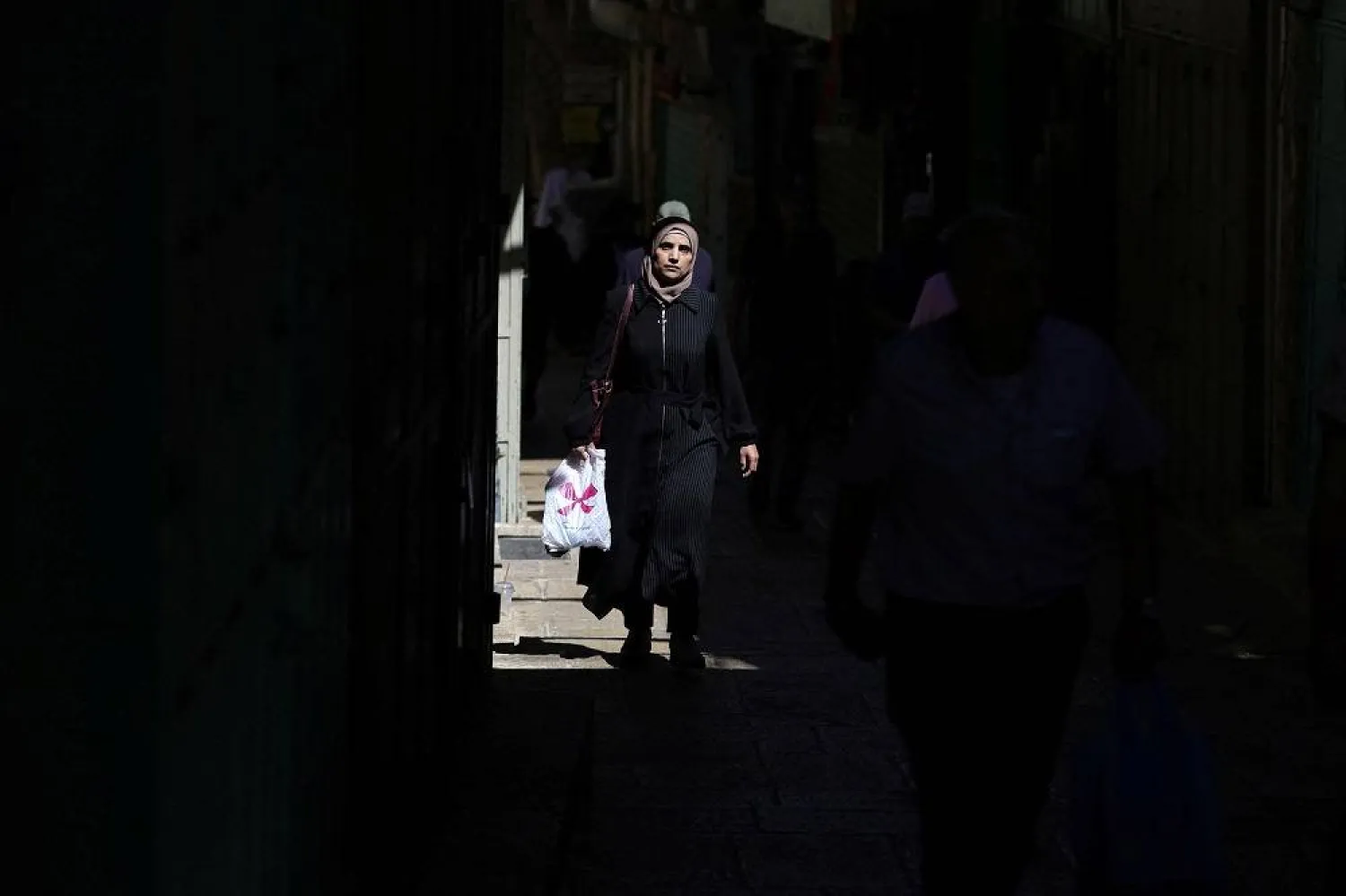
A woman walks near a market in Jerusalem's Old City, August 16, 2024. (Reuters)
TT

Israeli Banks Refusing Shekel Cash Deposits from West Bank, Palestinian Officials Say 

A woman walks near a market in Jerusalem's Old City, August 16, 2024. (Reuters)

Israeli banks are refusing shekel cash transfers from Palestinian banks in the occupied West Bank in a move that could soon prevent Palestinians from accessing vital goods and services, Palestinian officials said.

The office of Israel's finance minister Bezalel Smotrich, who in June extended a waiver that allows the country's banks to cooperate with Palestinian banks in the West Bank, had no immediate comment.

"In the next few days, banks in Palestine will be unable to finance trade operations between Palestinian and Israeli merchants, as their ability to make financial transfers is directly connected to shipping the accumulated shekel banknotes to their Israeli counterparts," the Palestinian Monetary Authority said.

It added this will prevent Palestinians from accessing vital goods and services as they will be unable to pay for them through official banking channels.

Violence in the West Bank has escalated since war broke out last October between Israel and the Palestinian militant group Hamas in Gaza. The territory is at the same time hurtling towards a financial crisis.

Smotrich heads a pro-settler party in Prime Minister Benjamin Netanyahu's ruling coalition.


Board of Peace Pledges on Gaza Face Test of Implementation on the Ground

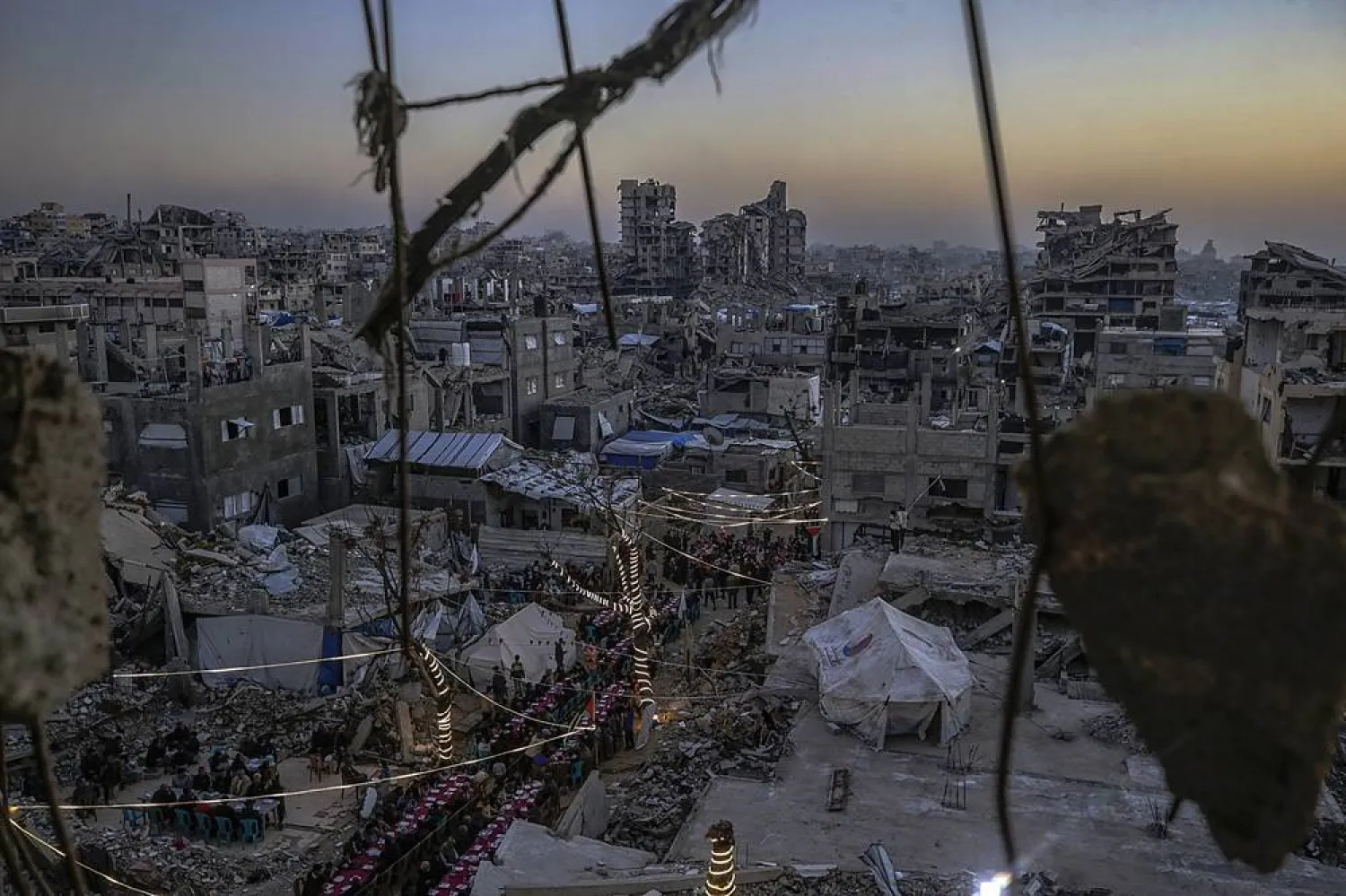
Palestinians gather between destroyed houses to break their fast together during the holy month of Ramadan in the northern Gaza Strip, 20 February 2026. (EPA)
TT

Board of Peace Pledges on Gaza Face Test of Implementation on the Ground

Palestinians gather between destroyed houses to break their fast together during the holy month of Ramadan in the northern Gaza Strip, 20 February 2026. (EPA)

The first meeting of the Board of Peace, chaired by US President Donald Trump and attended by Arab and Israeli representatives in the absence of the Palestinian Authority, set out ambitious goals but left key issues unresolved.

Washington distilled its priorities into two tracks: funding the reconstruction of Gaza and disarming Hamas. Arab participants, however, tied their demands to full implementation of the Gaza ceasefire, deployment of an international stabilization force, and enabling the technocrats’ committee to operate across the enclave without obstruction from Tel Aviv.

The meeting, which drew representatives from more than 40 countries and observers from 12 others, may struggle to translate pledges into practice, experts told Asharq Al-Awsat.

They pointed to formidable hurdles, foremost Israel’s continued deployment in Gaza and the absence of clear understandings on Hamas disarmament, warning that these issues could stall or even freeze the agreement.

Concerns

Indonesian President Prabowo Subianto urged caution against efforts that could derail the peace process in Gaza, Germany’s dpa news agency reported, citing Indonesia’s Antara News on Friday.

Trump announced that the United States would contribute $10 billion to the board, saying Saudi Arabia, Kazakhstan, Azerbaijan, the United Arab Emirates, Morocco, Bahrain, Qatar, Uzbekistan, and Kuwait had pledged more than $7 billion to the Gaza relief package.

He pressed hard on Hamas disarmament, saying the group would hand over its weapons as promised and warning of a harsh response if it did not.

Israel’s Foreign Minister Gideon Saar struck the same note in his address to the board, voicing support for disarming Hamas and other factions. Prime Minister Benjamin Netanyahu had already set the tone ahead of the meeting, declaring that there would be no reconstruction before Gaza is disarmed.

General Jasper Jeffers, commander of the newly formed International Stabilization Force, said Indonesia, Morocco, Kazakhstan, Kosovo, and Albania had pledged troops. Egypt and Jordan, which border Gaza, agreed to train police and security forces.

Egypt, in remarks delivered by Prime Minister Mostafa Madbouly, underscored the need to preserve the link between the West Bank and Gaza to allow the Palestinian Authority to resume its responsibilities in the enclave.

He called for empowering Palestinians to manage their own affairs and for the technocrats’ committee to begin work from inside Gaza and across all its areas.

Qatar’s Prime Minister and Foreign Minister Sheikh Mohammed bin Abdulrahman Al Thani pledged $1 billion from Doha to back the board’s push for a final settlement, saying the Board of Peace under Trump’s leadership would drive full implementation of the 20-point plan without delay.

Saeed Okasha, an Israeli affairs analyst at the Al-Ahram Center for Political and Strategic Studies, said the proposals unveiled by the Board of Peace lack operational clarity and risk creating confusion in implementation, potentially leading to paralysis.

Trump, he said, rushed to launch the board without first resolving core obstacles or forging solid understandings.

Palestinian political analyst Nizar Nazzal shared that view, arguing that the board’s pledges could falter because they emphasize economic measures, such as reconstruction funding, without a clear roadmap, and security measures, such as disarming Hamas, without addressing Israeli withdrawal or the group’s future.

“This sidestepping of political commitments will collide with security complexities and delay implementation of contentious provisions such as deploying stabilization forces, Israeli withdrawal, or empowering the technocrats’ committee,” he said.

Hamas

Hamas, for its part, has avoided direct confrontation with Trump’s recent calls for its disarmament. In a statement on Thursday, it said any arrangements in Gaza must begin with a “complete halt to the Israeli aggression.”

In another statement later that evening, the group said any political track or arrangements discussed regarding the Gaza Strip and the future of our Palestinian people must start with a complete cessation of the aggression, lifting the siege, and guaranteeing our people’s legitimate national rights, foremost among them the right to freedom and self-determination.

US mediator Bishara Bahbah said on Thursday that Hamas disarmament hinges on guarantees and protection for its members.

Okasha said an end to the offensive in Gaza, as Hamas demands, is unlikely so long as disarmament remains unresolved, pointing to US and Israeli statements.

The course Hamas appears to be charting, he said, suggests it wants to remain in place, a stance that could block implementation of the agreement and even pave the way for a return to war, especially as Washington has yet to clarify the mandate and timeline for deploying the stabilization force.

Nazzal said negotiating with Hamas over ending its existence is unrealistic. Its future must be addressed through serious, genuine understandings rather than a continuation of transactional trade-offs, he said.



Yemen Presidential Leadership Council Vows to Confront Saboteurs

Members of the dissolved Southern Transitional Council attempted to storm the presidential palace in Aden (AP)
TT

Yemen Presidential Leadership Council Vows to Confront Saboteurs

Members of the dissolved Southern Transitional Council attempted to storm the presidential palace in Aden (AP)

After elements loyal to what was known as the Southern Transitional Council attempted to storm the presidential palace in Aden, Yemen’s Presidential Leadership Council said it would not tolerate chaos in the city or across the southern provinces, accusing regional forces of involvement in suspicious moves to destabilize the situation and fracture national unity.

A senior source at the Presidential Leadership Council said the state leadership viewed with deep regret what it described as incitement, armed mobilization and repeated attempts by outlaws to attack state institutions in the interim capital, Aden.

The violence left casualties a day after the new government convened its first meeting and began outlining priorities to improve conditions in the liberated provinces, upgrade services and strengthen citizens’ livelihoods.

Security forces, the source said, exercised maximum restraint, dispersing gatherings that tried to block roads, stir unrest and target security personnel as they carried out their duty to protect sovereign facilities and maintain public order in line with the law.

The source expressed profound sorrow over the casualties resulting from what he called an organized escalation, saying those who funded, armed and incited the unrest, and who sent soldiers in civilian clothing into confrontation with security forces, bear full political, moral and legal responsibility for further bloodshed and for messing with the security of the interim capital and the interests of its residents.

While reaffirming full respect for the constitutionally guaranteed right to peaceful expression, the presidential source warned that attacks on national institutions, obstruction of their work or attempts to use street pressure to achieve illegitimate political goals amount to an assault on constitutional legitimacy and citizens’ interests.

Such actions, the source said, would be met firmly and would not be allowed to recur under any circumstances.

The source said the new government’s meeting in Aden sends a clear signal that the state is moving ahead with restoring the regular functioning of its institutions from within, entrenching stability and building on Saudi efforts to normalize conditions, improve public services and roll out a package of quick-impact development projects to open what he described as a promising new phase for citizens.

They added that the timing of the escalation, coinciding with tangible improvements in services and preparations for a Saudi-sponsored southern conference, raises serious questions about the suspicious role of certain regional forces seeking to reignite chaos and derail efforts to unify national ranks against what he described as the existential threat posed by the Iran-backed Houthi militias.

The state will not allow Aden and the southern provinces to become arenas for chaos or platforms for suspicious regional projects, the source said, pledging to press ahead, with Saudi support, to protect citizens and their vital interests and to deter any activity aimed at undermining security and stability, obstructing reconstruction or hindering the restoration of state institutions.

The source urged residents of Aden and other liberated provinces to cooperate with security agencies to safeguard the gains achieved and not to be drawn into calls for chaos issued by fugitives from justice and dissolved entities backed from abroad, referring to what was known as the Southern Transitional Council.

“The future of the south will not be built by attacking or paralyzing state institutions,” the presidential source said. “It will be built by rebuilding them, improving their services and engaging consciously and responsibly in the anticipated southern dialogue.”


Lebanon Says Two Killed in Israeli Strike on Palestinian Refugee Camp

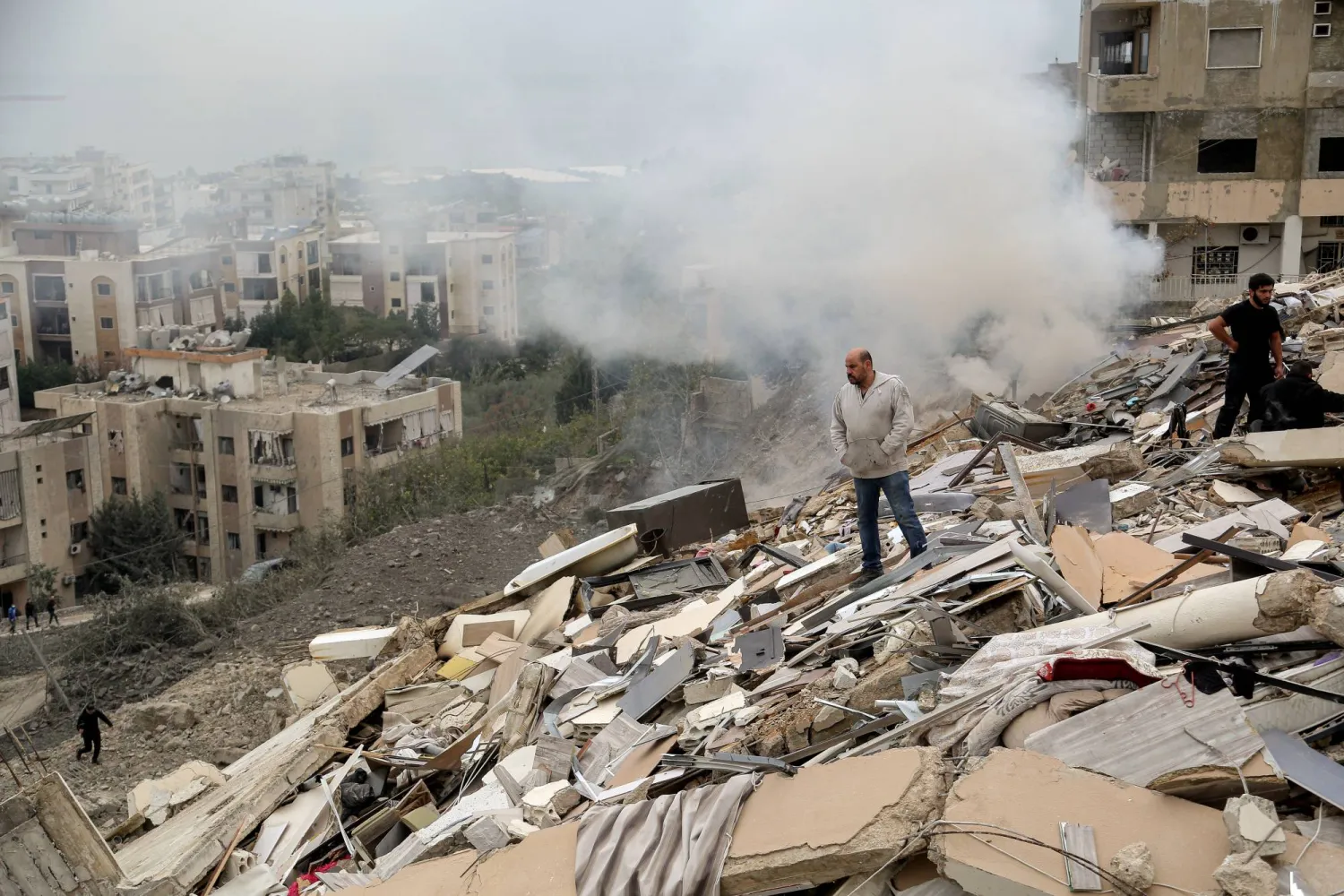
22 January 2026, Lebanon, Qnarit: People inspect the damage of a building that was destroyed by an Israeli air raid on the southern Lebanese village of Qnarit. (dpa)
TT

Lebanon Says Two Killed in Israeli Strike on Palestinian Refugee Camp

22 January 2026, Lebanon, Qnarit: People inspect the damage of a building that was destroyed by an Israeli air raid on the southern Lebanese village of Qnarit. (dpa)

Lebanon said an Israeli strike on the country's largest Palestinian refugee camp killed two people on Friday, with Israel's army saying it had targeted the Palestinian group Hamas. 

The official National News Agency said "an Israeli drone" targeted a neighborhood of the Ain al-Hilweh camp, which is located on the outskirts of the southern city of Sidon. 

Lebanon's health ministry said two people were killed in the raid. The NNA had earlier reported one dead and an unspecified number of wounded. 

An AFP correspondent saw smoke rising from a building in the densely populated camp as ambulances headed to the scene. 

The Israeli army said in a statement that its forces "struck a Hamas command center from which terrorists operated", calling activity there "a violation of the ceasefire understandings between Israel and Lebanon" and a threat to Israel. 

The Israeli military "is operating against the entrenchment" of the Palestinian group in Lebanon and will "continue to act decisively against Hamas terrorists wherever they operate", it added. 

Israel has kept up regular strikes on Lebanon despite a November 2024 ceasefire that sought to halt more than a year of hostilities with Hezbollah. 

Israel has also struck targets belonging to Hezbollah's Palestinian ally Hamas, including in a raid on Ain al-Hilweh last November that killed 13 people. 

The UN rights office had said 11 children were killed in that strike, which Israel said targeted a Hamas training compound, though the group denied it had military installations in Palestinian camps in Lebanon. 

In October 2023, Hezbollah began launching rockets at Israel in support of Hamas at the outset of the Gaza war, triggering hostilities that culminated in two months of all-out war between Israel and the Iran-backed Lebanese group. 

On Sunday, Lebanon said an Israeli strike near the Syrian border in the country's east killed four people, as Israel said it targeted operatives from Palestinian group Islamic Jihad.