Families Flee After New Israeli Evacuation Orders in Gaza as Ceasefire Hopes Dim

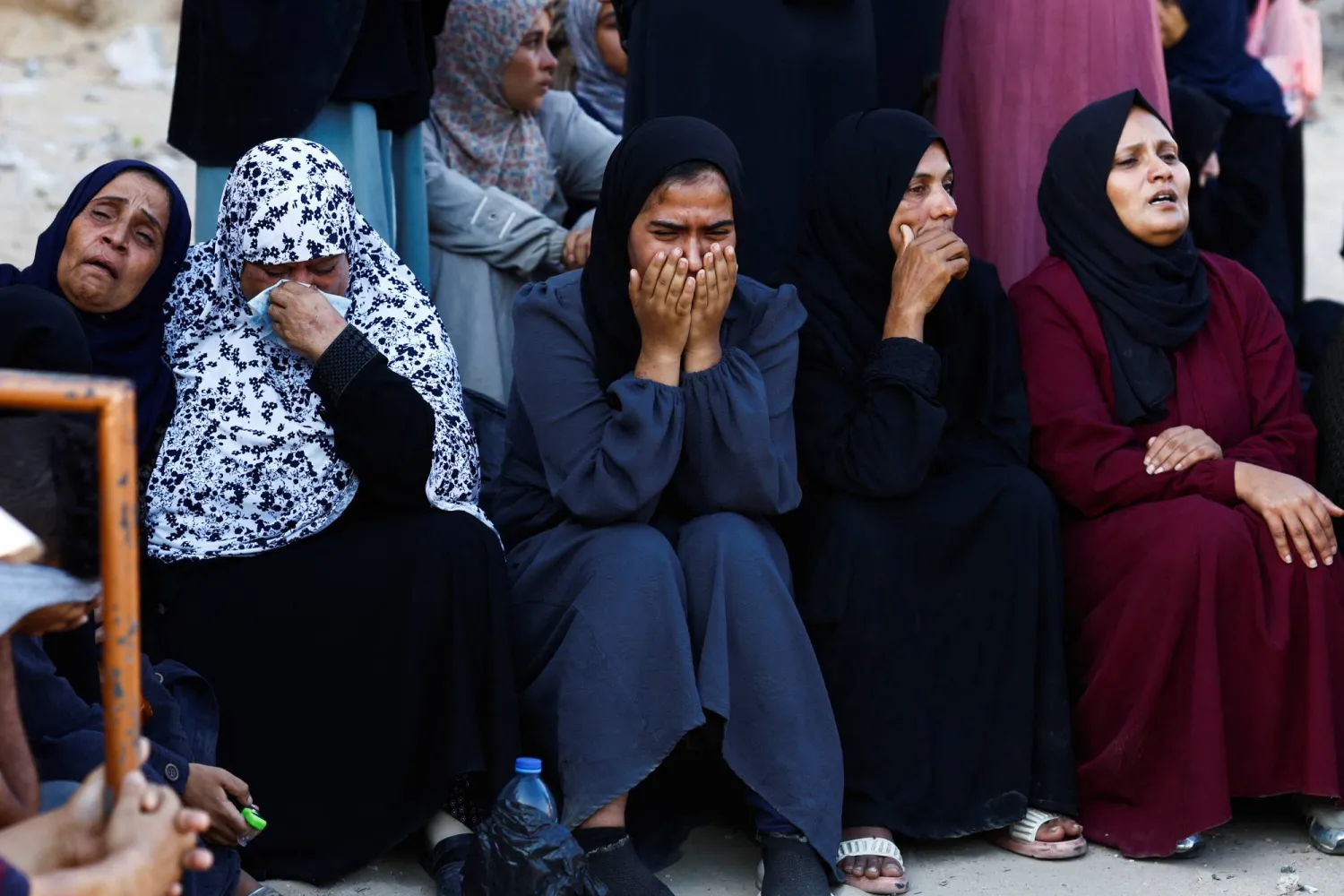
Mourners react during the funeral of Palestinians killed in Israeli strikes, amid the Israel-Hamas conflict, at Nasser hospital, in Khan Younis, southern Gaza Strip August 26, 2024. REUTERS/Mohammed Salem
TT

Families Flee After New Israeli Evacuation Orders in Gaza as Ceasefire Hopes Dim

Mourners react during the funeral of Palestinians killed in Israeli strikes, amid the Israel-Hamas conflict, at Nasser hospital, in Khan Younis, southern Gaza Strip August 26, 2024. REUTERS/Mohammed Salem

Israel issued new evacuation orders for Deir Al-Balah in the central Gaza Strip late on Sunday, forcing more families to flee, saying forces intended to act against the group Hamas and others operating in the area. In recent days, Israel has issued several evacuation orders across Gaza, the most since the beginning of the 10-month war, prompting an outcry from Palestinians, the United Nations and relief officials over the reduction of humanitarian zones and the absence of safe areas.
The Deir Al-Balah municipality says Israeli evacuation orders have so far displaced 250,000 people, Reuters reported.
Israeli military strikes killed at least seven Palestinians on Monday, medics said. Two were killed in Deir Al-Balah, where around a million people were sheltering, two at a school in the Al-Nuseirat camp and three in the southern city of Rafah, near the border with Egypt.
The new orders forced many families and patients to leave Al-Aqsa Hospital, the main medical facility in Deir Al-Balah, where hundreds of thousands of residents and displaced people had taken shelter, for fear of bombardments.
The hospital is close to the area covered by the evacuation notice.
Médecins Sans Frontières (MSF) said in a statement on X on Sunday night that an explosion approximately 250 meters (820 feet) away from the MSF-supported Al-Aqsa Hospital triggered panic.
"As a result, MSF is considering whether to suspend wound care for the time being, while trying to maintain life-saving treatment."
From around 650 patients, only 100 remain in the hospital, with seven in intensive care unit, it said, citing Gaza's health ministry.
"This situation is unacceptable. Al Aqsa has been operating well beyond capacity for weeks due to the lack of alternatives for patients. All warring parties must respect the hospital, as well as patients' access to medical care," it added.
DIPLOMATIC IMPASSE
Sawasn Abu Afesh said she and her children had now been displaced 11 times.
"I left half of my children behind me near my furniture and I am now with my little ones and my daughter. Only God can help us...I have no money for transportation. I will go to area 17 where my family is staying on my foot. I took my kids and three are left behind. No idea where," the woman said.
The escalation comes with little hope of an end in sight to the war as diplomacy by mediators, Qatar, Egypt, and the United States has so far failed to close the gap between Israel and Hamas, whose leaders traded blame over responsibility for the lack of accord.
Neither Hamas, nor Israel, agreed to several compromises presented by mediators at talks in Cairo on Sunday, two Egyptian security sources said.
A senior US official, however, described the talks as "constructive," saying they were conducted in a spirit on all sides to reach "a final and implementable agreement."
Hamas official Osama Hamdan said the group rejected new conditions made by Israel during the talks, which the group didn't attend, and added that US comments over an imminent ceasefire deal were false and aimed to serve election purposes.
US President Joe Biden and his administration have faced growing protests in the US over aid for Israel ahead of November elections.
More than 40,000 Palestinians have been killed in the war, according to Gaza's health ministry. The crowded enclave has been laid to waste and most of its 2.3 million people have been displaced multiple times and face acute shortages of food and medicine, humanitarian agencies say.
The war was triggered by Hamas' Oct. 7 attack on Israel, which killed 1,200 people, by Israeli tallies, with more than 250 taken hostage.



Israeli Attacks Kill at Least Four Palestinians in Gaza

FILE PHOTO: Displaced Palestinians shelter in a tent camp on a windy day in Khan Younis in the southern Gaza Strip, April 2, 2026. REUTERS/Haseeb Alwazeer/File Photo
TT

Israeli Attacks Kill at Least Four Palestinians in Gaza

FILE PHOTO: Displaced Palestinians shelter in a tent camp on a windy day in Khan Younis in the southern Gaza Strip, April 2, 2026. REUTERS/Haseeb Alwazeer/File Photo

Israeli military attacks killed at least four Palestinians in the Gaza Strip on Sunday, health officials in the enclave said.

Medics said an airstrike carried out by Israel's forces killed one person near the central village of Al-Mughraqa, while Israeli gunfire and tank shelling killed two others near Gaza City.

In another incident, Israeli forces shot and killed a 40-year-old ⁠woman in Khan ⁠Younis, in the south of the territory, health officials said. The Israeli military said it was unaware of any attack by its troops in that area at the time of the reported incident ⁠on Sunday.

The Israeli military said it was looking into the other reported strikes.

Separately, it said it had struck and killed several Hamas militants in Gaza since Friday.

Violence in Gaza has persisted despite an October 2025 ceasefire, with Israel conducting almost daily attacks on Palestinians.

At least 800 Palestinians have been killed since the ceasefire deal took ⁠effect, ⁠according to local medics, while Israel says militants have killed four of its soldiers over the same period.

Israel and Hamas have blamed each other for ceasefire violations.

More than 72,500 Palestinians have been killed since the Gaza war started in October 2023, most of them civilians, according to Gaza health authorities.

Hamas' October 7, 2023, attacks on Israel killed 1,200 people, according to Israeli tallies.


A 5-Step Approach to 'Dismantling Iraqi Militias'

PM Mohammed Shia Al-Sudani, head of the Popular Mobilization Forces Faleh Al-Fayyad, and PMF's chief of staff Abu Fadak (government media)
TT

A 5-Step Approach to 'Dismantling Iraqi Militias'

PM Mohammed Shia Al-Sudani, head of the Popular Mobilization Forces Faleh Al-Fayyad, and PMF's chief of staff Abu Fadak (government media)

Despite continuous American demands for the Iraqi authorities to curb and dismantle factions, observers noted that the meetings of the leaders of the Coordination Framework have not been tackling this issue.

This could threaten the loss of American support for the new government, while experts propose a 5-step approach to resolve the matter.

The American insistence on dismantling armed factions has become recently highly clear through a series of punitive measures, beginning with a $10 million reward for information leading to the leader of Kataib Hezbollah, Abu Hussein Al-Hamidawi, then placing seven factions on sanctions and terrorism lists, and finally a similar reward for information about Abu Alaa Al-Wala'i, leader of Kataib Sayyid al-Shuhada.

Contrary to the discourse that escalated about three months ago regarding the necessity of disarming factions and restructuring the Popular Mobilization Forces (PMF), the Coordination Framework forces remain silent, despite the factions' actual involvement in the war with Iran and their missile attacks inside Iraqi territory and abroad on some Arab Gulf states.

War undermined efforts

A leading source from the Coordination Framework states that the war launched by the United States and Israel against Iran "undermined what could be called efforts to integrate the factions."

The source confirms to Asharq Al-Awsat that "the Coordination Framework had indeed begun preliminary discussions on mechanisms for addressing the issue, but the war ... provided the appropriate pretext for the factions to refuse to disarm, considering that the war represents an existential threat to them."

The source points out that "the leaders of the Coordination Framework recognize the seriousness and magnitude of the risks posed by American demands, but they are forced to ignore them due to pressure from the factions and the Iranian actor," indicating that "some forces and figures that possess armed factions have a genuine desire to integrate their elements into the army and restructure the PMF, but they appear incapable of taking any action due to the regional developments and the stalled efforts to form a government."

Dismantling the Funding System

Writer and political researcher Dr. Basil Hussein believes that dismantling the factions is linked to what he calls the "funding system."

He told Asharq Al-Awsat that the Coordination Framework forces are “a fragile coalition where disparate interests intersect.”

He points out that "armed factions are not merely an executive arm in the hands of political parties; rather, they are often the backbone upon which these parties are built economically, politically, and socially."

He further states that "any serious attempt to dismantle the factions will inevitably mean dismantling the entire funding system, which amounts to political suicide for anyone who undertakes it. Therefore, such efforts will always remain incomplete and selective, avoiding any harm to the core structure upon which the militias' influence rests."

In addition to these reasons, Hussein believes that "dismantling the factions is not a purely Iraqi decision; rather, it relates to the Iranian vision that has long viewed these factions as a cornerstone of Tehran's forward defense strategy.”

He adds that "when American pressure on the factions intensifies and their room for maneuver narrows, they will reluctantly bend rather than willingly, resorting to a superficial solution that masks their facade without touching their essence. They may change their name while retaining their structure, and formally dissolve into state institutions while maintaining their networks, weapons, and loyalties outside any actual oversight."

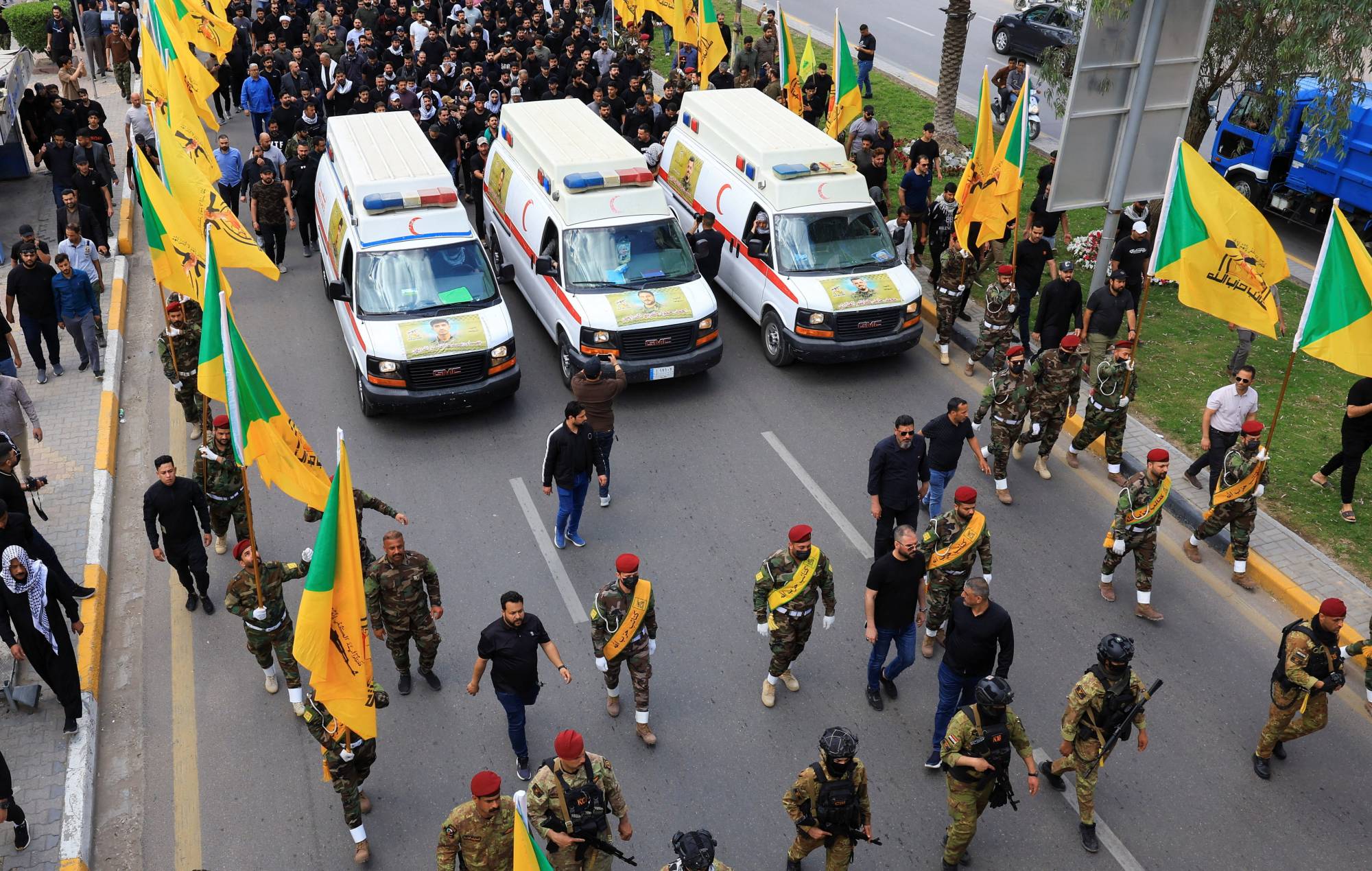
Mourners attend the funeral of fighters with Iraq’s Popular Mobilisation Forces who were killed in an airstrike, in Baghdad, Iraq, April 8, 2026. REUTERS/Thaier Al-Sudani

5 Steps to a Solution

For his part, Firas Elias, Professor of Political Science at the University of Mosul and a specialist in Iranian studies, proposes an approach that includes five steps that would help dismantle the factions.

He believes that the future of armed factions in Iraq will directly depend on the future of the war between Tehran and Washington, as they "will be directly affected by the outcome of this war."

Elias tells Asharq Al-Awsat that "discussing practical ways to deal with armed factions requires developing a new approach for the post-war phase. The practical method is not (immediate dismantling), but rather a gradual re-engineering of power through the state."

Elias anticipates that if the Framework forces succeed in forming a government, and under American pressure, they may move along five paths: "First: separating the PMF as an official body from the factions as political-military arms, establishing that the PMF, which receives salaries from the state, is exclusively subject to the Commander-in-Chief, while any formation that retains independent decision-making or external affiliation is treated as an entity outside the state."

The second move involves "controlling money before weapons. The most effective approach is to audit salaries, contracts, crossings, companies, economic offices, and transfers. When informal resources are cut off, the factions become less capable of maneuvering."

In the third path, Elias expects "restructuring leadership by changing sensitive positions within the PMF Commission, transferring some brigades to distant sectors away from the borders, integrating selected units into the army or Federal Police, and retiring undisciplined leaders or assigning them to symbolic positions."

The Iraqi expert adds a fourth path related to "dismantling from within, not through confrontation. The government may differentiate between three types: factions amenable to integration, factions requiring political containment, and completely resistant factions. The approach to dealing with them would be piecemeal: incentives for the disciplined, isolation for the resistant, and legal pressure on those involved."

He concludes with the fifth path, which concerns "transforming American pressure into internal political leverage. The Framework might tell the factions: either adhere to state discipline, or face sanctions, financial isolation, and security measures that affect everyone. Here, American pressure becomes a tool in the hands of the government, not merely an external threat."

Despite these five paths, Elias believes that "the 'Framework will not dismantle the factions in one stroke, because they are part of its political structure. However, it may work to gradually strip them of their military and financial independence, while retaining the PMF designation in a disciplined, institutional manner."


Four Killed in Israeli Strikes on Southern Lebanon

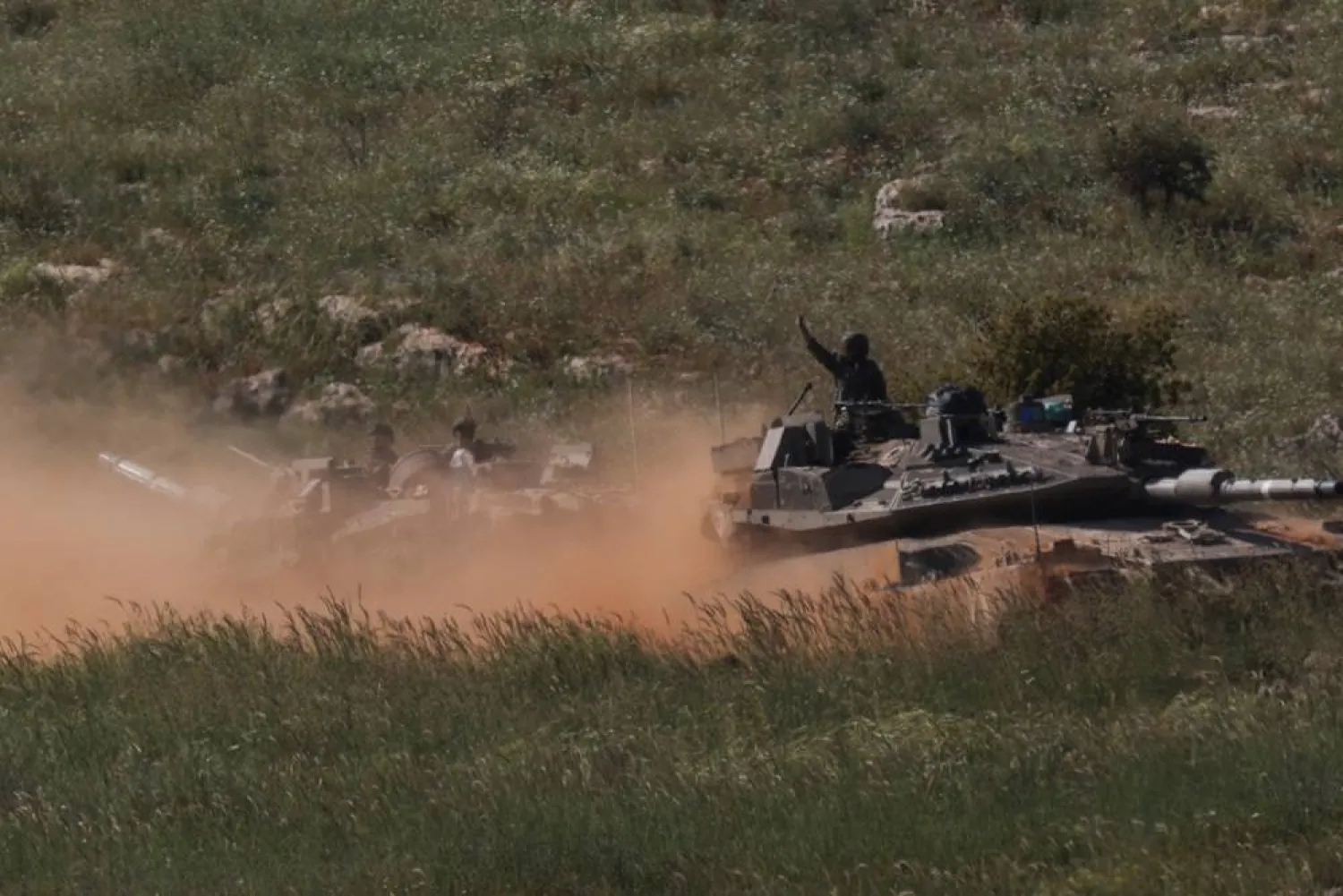
Israeli tanks drive in Lebanon, as seen from the Israeli side of the Israel-Lebanon border, in northern Israel, April 25, 2026. (Reuters)
TT

Four Killed in Israeli Strikes on Southern Lebanon

Israeli tanks drive in Lebanon, as seen from the Israeli side of the Israel-Lebanon border, in northern Israel, April 25, 2026. (Reuters)

Four people were killed on Saturday in Israeli strikes on southern Lebanon, Lebanon's state news agency reported, while the Israeli military said Hezbollah had fired rockets at Israel, the latest challenges to a tenuous, recently extended ceasefire.

The ceasefire agreed between Israel and Lebanon has led to a significant reduction in hostilities, ‌but Israel ‌and Iran-backed Hezbollah ‌have ⁠continued to clash ⁠in southern Lebanon, where Israel has kept soldiers in the self-declared buffer zone.

The Israeli military said on Saturday that it had struck loaded rocket launchers belonging to Hezbollah in three locations in southern Lebanon overnight ⁠and targeted several Hezbollah fighters in ‌separate strikes.

It was ‌unclear whether the deaths reported by the ‌state news agency were linked to those ‌Israeli strikes.

The Israeli military restated its warning for Lebanese residents not to approach the Litani River area in southern Lebanon while it battles ‌Hezbollah.

It said it had intercepted a "suspicious aerial target" within the area its ⁠forces ⁠are presently occupying, and that two rockets were fired by Hezbollah into northern Israel, one of which was intercepted. There were no reports of casualties.

A Hezbollah lawmaker said on Friday that a US-mediated ceasefire in the war with Israel was meaningless, a day after it was extended for three weeks. The truce had been due to expire on Sunday.