


Top Hezbollah Commander among 14 Killed in Israeli Strike on Beirut

 Residents and rescuers gather at the scene of a missile strike in the southern suburbs of Beirut, Friday, Sept. 20, 2024. (AP)
Residents and rescuers gather at the scene of a missile strike in the southern suburbs of Beirut, Friday, Sept. 20, 2024. (AP)
TT

Top Hezbollah Commander among 14 Killed in Israeli Strike on Beirut

 Residents and rescuers gather at the scene of a missile strike in the southern suburbs of Beirut, Friday, Sept. 20, 2024. (AP)
Residents and rescuers gather at the scene of a missile strike in the southern suburbs of Beirut, Friday, Sept. 20, 2024. (AP)

Israel killed a top Hezbollah commander and other senior figures in the Lebanese movement in an airstrike on Beirut on Friday, vowing to press on with a new military campaign until it is able to secure the area around the Lebanese border.

The Israeli military and a security source in Lebanon said Ibrahim Aqil had been killed with other senior members of an elite Hezbollah unit in the airstrike, sharply escalating the year-long conflict between Israel and the Iran-backed group.

Hezbollah confirmed Aqil's death in a statement just after midnight that called him "one of its top leaders," without providing details of how he died.

In a later statement summarizing Aqil's biography, Hezbollah said he was killed in Beirut's southern suburbs of Dahiyeh in what it called a "treacherous Israeli assassination".

Lebanon's health ministry said at least 14 people died in the strike and the toll was expected to climb as rescue teams worked through the night. It was not immediately known whether the toll included Aqil and other Hezbollah commanders.

Earlier, the ministry said at least 66 people were injured, nine of whom were in critical condition.

A second security source said at least six other Hezbollah commanders died when multiple missiles slammed into the opening of a building's garage. The explosion tore into the building's lower levels as Aqil met other commanders inside.

Witnesses reported hearing a loud whistling and several consecutive blasts at the time of the strike.

In a brief statement carried by Israeli media, Prime Minister Benjamin Netanyahu said Israel's goals were clear and its actions spoke for themselves.

Defense Minister Yoav Gallant, who said this week that Israel is launching a new phase of war on the northern border, posted on X: "The sequence of actions in the new phase will continue until our goal is achieved: the safe return of the residents of the north to their homes."

Tens of thousands of people have been evacuated from homes on both sides of the Israel-Lebanon border since Hezbollah began rocketing Israel in October in sympathy with Palestinians in the nearly year-old Israeli war against Hamas in Gaza.

Israel, which last fought an all-out war against Hezbollah 18 years ago, has said it will use force if necessary to ensure its citizens can return to northern Israel.

The Israeli military described Aqil as the acting commander of the Radwan special forces unit, and said it had killed him along with around 10 other senior commanders as they met. Aqil sat on Hezbollah's top military council, sources in Lebanon told Reuters.

The strike inflicted another blow on Hezbollah after two days of attacks in which pagers and walkie-talkies used by its members exploded, killing 37 people and wounding thousands. Those attacks were widely believed to have been carried out by Israel, which has neither confirmed nor denied its involvement.

Local broadcasters showed groups of people gathered near the site, and reported they were searching for missing people, most of them children. Drones were still flying over Beirut's southern suburbs hours after the strike.

"We are not afraid, but we want a solution. We cannot continue with the country like this," said Alain Feghali, a resident of Beirut who spoke to Reuters. "War? I don't know if it started or not, but nothing is reassuring. It is clear that the two sides will not stop."

The UN Special Coordinator for Lebanon, Jeanine-Hennis Plasschaert, said Friday's strike in a densely populated area of Beirut's southern suburbs was part of "an extremely dangerous cycle of violence with devastating consequences. This must stop now."

The strike marked the second time in less than two months that Israel has targeted a leading Hezbollah military commander in Beirut. In July, an Israeli airstrike killed Fuad Shukr, the group's top military commander.

Aqil had a $7-million bounty on his head from the United States over his link to the deadly bombing of Marines in Lebanon in 1983, according to the US State Department website.

The Israeli military said Aqil had been head of Hezbollah operations since 2004 and was responsible for a plan to launch a raid on northern Israel, similar to the Hamas-led attack on southern Israel on Oct. 7 that triggered the war in Gaza.

"The Hezbollah commanders we eliminated today had been planning their ‘October 7th’ on the northern border for years," Israeli army chief General Herzi Halevi said.

"We reached them, and we will reach anyone who threatens the security of Israel's citizens."

RUBBLE AND BURNT-OUT CARS

The Israeli military reported warning sirens in northern Israel following the Beirut strike, and Israeli media reported heavy rocket fire there.

Hezbollah said it twice fired Katyusha rockets at what it described as the main intelligence headquarters in northern Israel "which is responsible for assassinations".

White House national security spokesperson John Kirby said he was not aware of any Israeli notification to the United States before the Beirut strike, adding Americans were strongly urged not to travel to Lebanon, or to leave if they were there.

However, he added that, "war is not inevitable ... and we're going to continue to do everything we can to try to prevent it."

The current conflict between Israel and Hezbollah, ignited by the Gaza war, has intensified significantly this week.

On Thursday night, the Israeli military carried out its most intensive airstrikes in southern Lebanon since the conflict erupted almost a year ago.

The conflict between Israel and Hezbollah is the worst since they fought a war in 2006. Tens of thousands of people have had to leave homes on both sides of the border.

While the conflict has largely been contained to areas at or near the frontier, this week's escalation has heightened concerns that it could widen and further intensify.



France's Justice Minister to Visit Algeria amid Diplomatic Thaw

File photo: Algerian and French flags flutter ahead of the arrival of French President Emmanuel Macron, in Algiers, Algeria August 25, 2022. (Reuters)
TT

France's Justice Minister to Visit Algeria amid Diplomatic Thaw

File photo: Algerian and French flags flutter ahead of the arrival of French President Emmanuel Macron, in Algiers, Algeria August 25, 2022. (Reuters)

France's justice minister will head to Algeria next week to discuss improving cooperation and the fate of a detained French journalist, his office said Saturday, as ties warm following a diplomatic spat.

"The purpose of this trip is to work on opening a new chapter in judicial cooperation," Justice Minister Gerald Darmanin's office said of the trip planned for Monday.

But jailed reporter Christophe Gleizes would also be a "major topic," it said.

Gleizes, 37, was arrested in May 2024 while reporting on a football club in Algeria's Kabylia region and sentenced to seven years in jail in June last year for "glorifying terrorism".

Relations between France and its former colony became rocky after Paris in 2024 officially backed Moroccan sovereignty over the disputed Western Sahara region, where Algeria supports the pro-independence Polisario Front.

But France and Algeria agreed in February to restart security cooperation as Interior Minister Laurent Nunez visited Algiers, marking the first sign of a thaw in diplomatic ties.

After deputy defense minister Alice Rufo met President Abdelmadjid Tebboune last week, France's ambassador to the North African country returned to his post after being recalled about a year ago at the height of the dispute.

Gleizes, the journalist, on Monday received his first visit from a diplomat since his detention.

His mother has said she hopes for "very positive developments on Christophe's return to France" by the end of the month, after he dropped an appeal with Algeria's top court, hoping for a presidential pardon.


Israel Strikes South Lebanon Day After Ceasefire Extension

TOPSHOT - A photograph taken from the southern area of Tyre shows smoke rising from the site of an Israeli airstrike that targeted the area of Ras Al-Ain on May 12, 2026. (Photo by KAWNAT HAJU / AFP)
TT

Israel Strikes South Lebanon Day After Ceasefire Extension

TOPSHOT - A photograph taken from the southern area of Tyre shows smoke rising from the site of an Israeli airstrike that targeted the area of Ras Al-Ain on May 12, 2026. (Photo by KAWNAT HAJU / AFP)

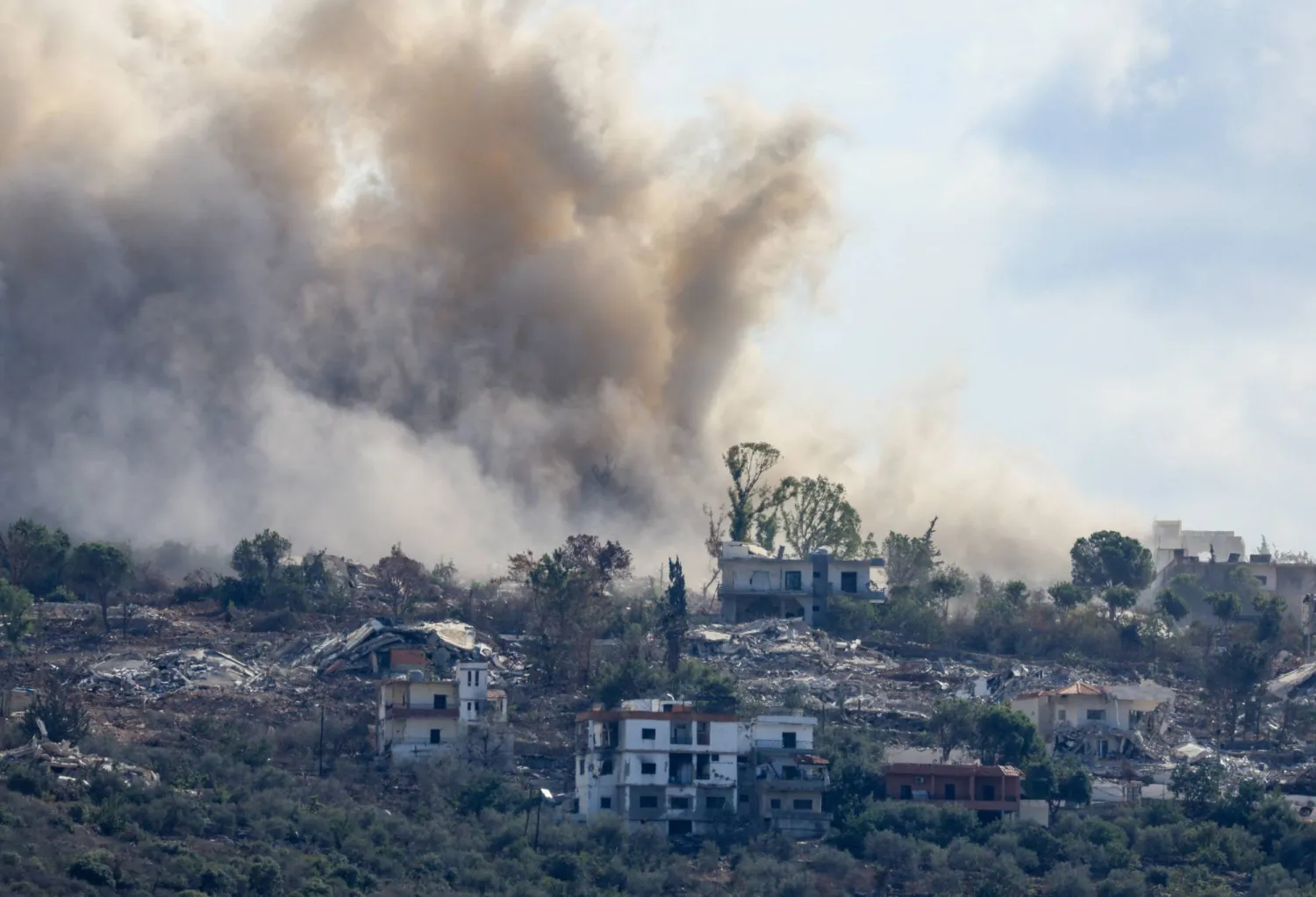
Israel launched a series of airstrikes on southern Lebanon on Saturday, despite the extension of the truce between the two countries. 

Israel says it is targeting Hezbollah but the strikes were preceded by an evacuation warning covering nine villages. 

The continuing bombardment has only increased skepticism about the truce among the many thousands of Lebanese driven from their homes in the south. 

Lebanon's state-run National News Agency (NNA) reported strikes on at least five villages on Saturday, including one more than 50 kilometers from the border. 

At the same time it reported a new exodus of residents towards the southern city of Sidon and the capital Beirut. 

On Friday, the two countries agreed to extend a ceasefire, which began on April 17 but has been marred by numerous violations, by another 45 days. 

Since the start of the ceasefire, Israel has repeatedly issued evacuation warnings for south Lebanese villages ahead of strikes. 

Over this period their geographical scope has expanded to include areas north of the Litani River and further from the border. 

The Israeli military also struck at least one town that was not included in the warning, near the southern city of Nabatieh. 

Despite the ceasefire, Israel continues to conduct strikes in Lebanon, and its forces are occupying territory near the border. 

Hezbollah, meanwhile, regularly claims attacks on northern Israel and against the Israeli military in southern Lebanon. 

- 'What kind of a truce is this?' - 

Israeli attacks since the start of the war have killed more than 2,900 people in Lebanon, including more than 400 since the truce took effect, according to Lebanese authorities. 

Israel has also reported the deaths of 19 soldiers in southern Lebanon since fighting with Hezbollah erupted. 

The latest strikes come after envoys from Israel and Lebanon held negotiations in Washington -- following the first direct talks in decades last month between the two countries, which do not have diplomatic relations. 

They agreed to extend the ceasefire. 

Iran-backed Hezbollah opposes the negotiations and claimed an attack against Israeli troops in the Lebanese town of Khiam on Saturday. 

The group justified their action by accusing Israel of ceasefire violations and "attacks that targeted villages in southern Lebanon". 

On Friday an Israeli strike hit a center of the Hezbollah-linked Islamic Health Committee in the southern town of Harouf, authorities said. 

Six people were killed, including three paramedics, according to the Lebanese health ministry. 

Displaced residents from southern Lebanon say the truce is not being implemented. 

"This is not a truce as long as Israeli attacks continue against the south and its people, with deaths, injuries, and destruction," said Ali Salameh, 60, from a school in Beirut where he has been displaced since the start of the war on March 2. 

Others said they backed Hezbollah to keep fighting Israel in retaliation for its attacks. 

"What kind of truce is this when they have just threatened villages and people are being displaced? Where is the state? We stand only with the resistance," said Nawal Mezhir, also displaced from the south. 

- 'Lasting stability' - 

Lebanon's negotiating delegation in Washington on Friday nonetheless welcomed the truce's 45-day extension and the creation of a US-facilitated security track, saying they "provide critical breathing space for our citizens, reinforce state institutions, and advance a political pathway toward lasting stability". 

Lebanon was dragged into the Middle East war on March 2 when Hezbollah fired rockets at Israel in retaliation for the killing of Iran's supreme leader Ali Khamenei. 

On Friday, Israel struck the southern city of Tyre. 

An AFP correspondent saw significant destruction at the targeted site near the coastal city's ancient ruins. 

"They destroyed the entire neighborhood," said Ibrahim Kahwaji, a tailor who was wounded in the leg. 

"They are emptying the south of its population... it's a real occupation. We want a solution." 


Palestinian Ministry Says Israeli Forces Kill Man in West Bank Camp

 A member of the Israeli security forces aims his weapon while patrolling during a military raid in the Qalandia refugee camp, south of Ramallah in the Israeli-occupied West Bank, on May 11, 2026. (AFP)
A member of the Israeli security forces aims his weapon while patrolling during a military raid in the Qalandia refugee camp, south of Ramallah in the Israeli-occupied West Bank, on May 11, 2026. (AFP)
TT

Palestinian Ministry Says Israeli Forces Kill Man in West Bank Camp

 A member of the Israeli security forces aims his weapon while patrolling during a military raid in the Qalandia refugee camp, south of Ramallah in the Israeli-occupied West Bank, on May 11, 2026. (AFP)
A member of the Israeli security forces aims his weapon while patrolling during a military raid in the Qalandia refugee camp, south of Ramallah in the Israeli-occupied West Bank, on May 11, 2026. (AFP)

Palestinian health officials said Israeli forces killed a man on Saturday on the outskirts of the Jenin refugee camp in the northern occupied West Bank.

The health ministry in Ramallah identified the victim as 34-year-old Nour al-Din Kamal Hassan Fayyad, saying he was "killed by occupation forces' fire in the Jenin camp".

The Palestinian Red Crescent said its teams in Jenin received a man "with no signs of breathing or pulse from inside Jenin camp after he sustained a live bullet wound to the thigh".

The Israeli army did not immediately respond to a request for comment.

Israel launched a major military operation in mid-January in multiple northern Palestinian refugee camps, where the army says it is seeking to root out armed groups.

The operation, dubbed "Iron Wall", has targeted Jenin and Tulkarem camps and displaced nearly 40,000 Palestinians, according to the UN agency for Palestinian refugees UNRWA.

The Israeli military has sealed off Jenin camp, allowing displaced residents only limited access to check on their homes and belongings.

Refugee camps were created in the West Bank, Gaza and neighboring Arab countries after the first Arab-Israeli war for Palestinians who fled or were expelled from what is now Israel at the time of its creation in 1948.

Since the war in Gaza broke out in October 2023, near-daily violence has also rocked the West Bank, which Israel has occupied since 1967.

Israeli soldiers or settlers have killed at least 1,072 Palestinians since then, including many gunmen, according to an AFP tally based on Palestinian health ministry data.

Official Israeli figures show at least 46 Israelis have been killed in Palestinian attacks or during Israeli military operations in the same period.