
Israel Strikes South Lebanon Day After Ceasefire Extension

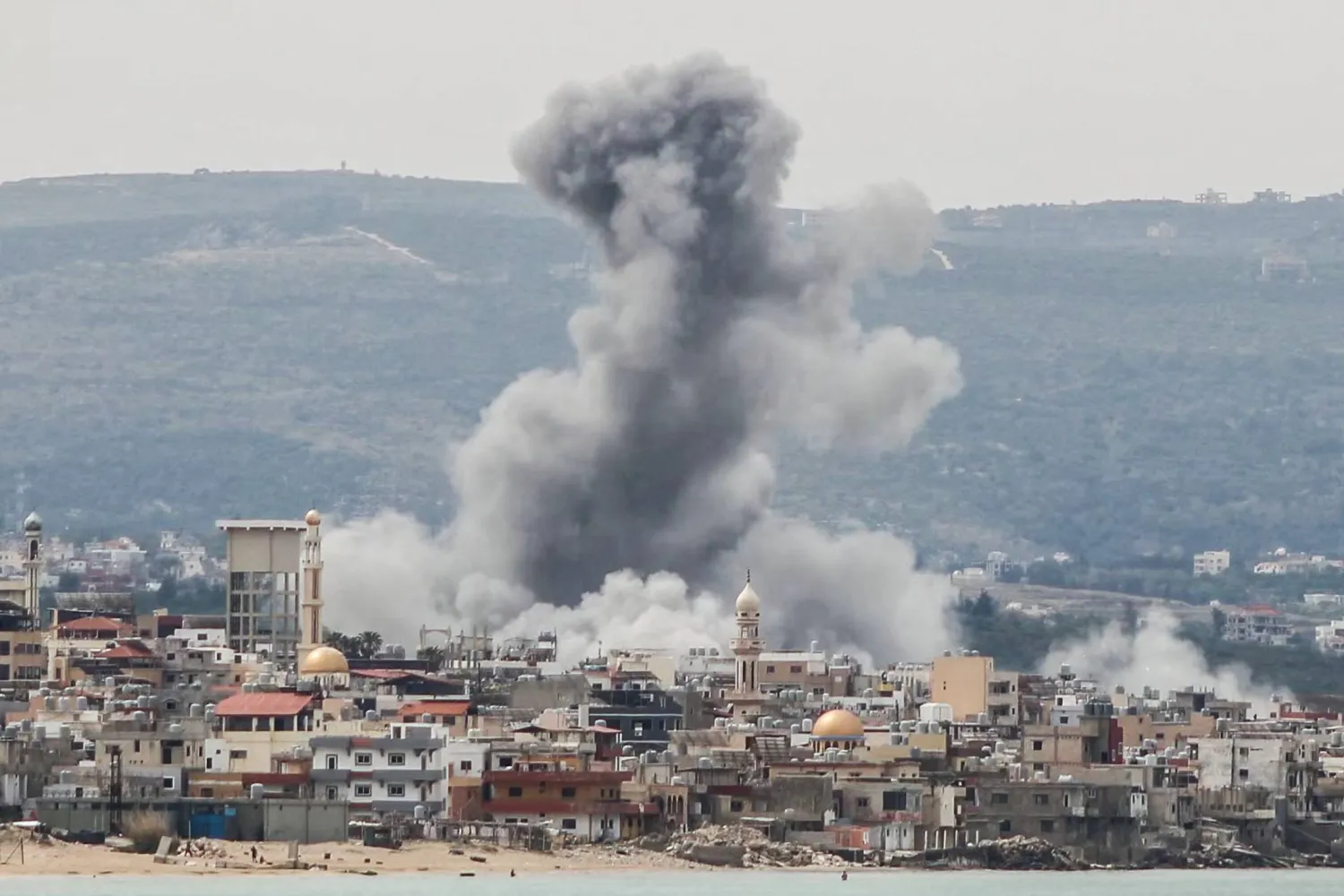
TOPSHOT - A photograph taken from the southern area of Tyre shows smoke rising from the site of an Israeli airstrike that targeted the area of Ras Al-Ain on May 12, 2026. (Photo by KAWNAT HAJU / AFP)
TT

Israel Strikes South Lebanon Day After Ceasefire Extension

TOPSHOT - A photograph taken from the southern area of Tyre shows smoke rising from the site of an Israeli airstrike that targeted the area of Ras Al-Ain on May 12, 2026. (Photo by KAWNAT HAJU / AFP)

Israel launched a series of airstrikes on southern Lebanon on Saturday, despite the extension of the truce between the two countries. 

Israel says it is targeting Hezbollah but the strikes were preceded by an evacuation warning covering nine villages. 

The continuing bombardment has only increased skepticism about the truce among the many thousands of Lebanese driven from their homes in the south. 

Lebanon's state-run National News Agency (NNA) reported strikes on at least five villages on Saturday, including one more than 50 kilometers from the border. 

At the same time it reported a new exodus of residents towards the southern city of Sidon and the capital Beirut. 

On Friday, the two countries agreed to extend a ceasefire, which began on April 17 but has been marred by numerous violations, by another 45 days. 

Since the start of the ceasefire, Israel has repeatedly issued evacuation warnings for south Lebanese villages ahead of strikes. 

Over this period their geographical scope has expanded to include areas north of the Litani River and further from the border. 

The Israeli military also struck at least one town that was not included in the warning, near the southern city of Nabatieh. 

Despite the ceasefire, Israel continues to conduct strikes in Lebanon, and its forces are occupying territory near the border. 

Hezbollah, meanwhile, regularly claims attacks on northern Israel and against the Israeli military in southern Lebanon. 

- 'What kind of a truce is this?' - 

Israeli attacks since the start of the war have killed more than 2,900 people in Lebanon, including more than 400 since the truce took effect, according to Lebanese authorities. 

Israel has also reported the deaths of 19 soldiers in southern Lebanon since fighting with Hezbollah erupted. 

The latest strikes come after envoys from Israel and Lebanon held negotiations in Washington -- following the first direct talks in decades last month between the two countries, which do not have diplomatic relations. 

They agreed to extend the ceasefire. 

Iran-backed Hezbollah opposes the negotiations and claimed an attack against Israeli troops in the Lebanese town of Khiam on Saturday. 

The group justified their action by accusing Israel of ceasefire violations and "attacks that targeted villages in southern Lebanon". 

On Friday an Israeli strike hit a center of the Hezbollah-linked Islamic Health Committee in the southern town of Harouf, authorities said. 

Six people were killed, including three paramedics, according to the Lebanese health ministry. 

Displaced residents from southern Lebanon say the truce is not being implemented. 

"This is not a truce as long as Israeli attacks continue against the south and its people, with deaths, injuries, and destruction," said Ali Salameh, 60, from a school in Beirut where he has been displaced since the start of the war on March 2. 

Others said they backed Hezbollah to keep fighting Israel in retaliation for its attacks. 

"What kind of truce is this when they have just threatened villages and people are being displaced? Where is the state? We stand only with the resistance," said Nawal Mezhir, also displaced from the south. 

- 'Lasting stability' - 

Lebanon's negotiating delegation in Washington on Friday nonetheless welcomed the truce's 45-day extension and the creation of a US-facilitated security track, saying they "provide critical breathing space for our citizens, reinforce state institutions, and advance a political pathway toward lasting stability". 

Lebanon was dragged into the Middle East war on March 2 when Hezbollah fired rockets at Israel in retaliation for the killing of Iran's supreme leader Ali Khamenei. 

On Friday, Israel struck the southern city of Tyre. 

An AFP correspondent saw significant destruction at the targeted site near the coastal city's ancient ruins. 

"They destroyed the entire neighborhood," said Ibrahim Kahwaji, a tailor who was wounded in the leg. 

"They are emptying the south of its population... it's a real occupation. We want a solution." 


Türkiye Planning Special Flights to Bring Back Activists on Gaza Flotilla

Türkiye’s Foreign Minister Hakan Fidan speaks to the reporters at Antalya Diplomacy Forum in Antalya, Türkiye, April 19, 2026. (Reuters)
TT

Türkiye Planning Special Flights to Bring Back Activists on Gaza Flotilla

Türkiye’s Foreign Minister Hakan Fidan speaks to the reporters at Antalya Diplomacy Forum in Antalya, Türkiye, April 19, 2026. (Reuters)

Türkiye is planning special flights ​from Israel on Thursday to fly out its citizens and some activists from ‌third ‌countries ​who ‌joined ⁠a ​global aid flotilla that ⁠was intercepted by Israeli forces while trying to break ⁠its Gaza blockade, ‌Foreign ‌Minister Hakan ​Fidan ‌said.
Fidan said ‌on X that all Turkish institutions were working to ‌ensure the security and safe ⁠return ⁠of Turkish nationals. Broadcaster NTV separately said Turkish Airlines has sent three planes to Israel for the repatriations.


Sudan’s Security and Defense Council Orders Curbs on Armed Movement Inside Cities

Al-Burhan chairs a meeting of Sudan’s Security and Defense Council on Tuesday (Transitional Sovereignty Council)
 
Al-Burhan chairs a meeting of Sudan’s Security and Defense Council on Tuesday (Transitional Sovereignty Council)  
TT

Sudan’s Security and Defense Council Orders Curbs on Armed Movement Inside Cities

Al-Burhan chairs a meeting of Sudan’s Security and Defense Council on Tuesday (Transitional Sovereignty Council)
 
Al-Burhan chairs a meeting of Sudan’s Security and Defense Council on Tuesday (Transitional Sovereignty Council)  

Sudan’s highest military and security authority has called for tighter controls on the movement of armed personnel, combat vehicles, and security cells inside cities and marketplaces, following reports and videos alleging incidents of “disorder” attributed to armed forces and army-aligned groups in areas recently recaptured by the military or currently under its control.

Following the Security and Defense Council’s regular meeting on Tuesday evening, Sudanese Defense Minister Lt. Gen. Hassan Daoud Kabroun said that the council had instructed the relevant authorities to regulate the movement of armed individuals and vehicles inside cities and markets, and to establish rules governing the work of “security cells” in local districts, with a focus on investigations involving those authorities describe as collaborators with the Rapid Support Forces (RSF).

The term “security cells” refers to groups or units operating in support of military and security agencies. They are typically engaged in surveillance, monitoring, inspections, and intelligence-gathering activities in neighborhoods, markets, and conflict zones.

Authorities say their role is focused on “tracking down collaborators with the RSF, dismantling sabotage cells, and protecting areas retaken by the army.” Critics of the Transitional Sovereignty Council, however, describe them in social media commentary as an extension of Islamist organizations tied to the former regime, alleging that they seek to eliminate political opponents.

The Security and Defense Council is one of Sudan’s most prominent military and sovereign decision-making bodies. It includes executive, military, and security leaders, among them the ministers of defense, interior, foreign affairs, and finance, as well as army commanders and heads of security agencies. The council is chaired by Sovereignty Council President and Armed Forces Commander-in-Chief Gen. Abdel Fattah al-Burhan.

According to media affiliated with it, the council met Tuesday under al-Burhan’s chairmanship, with all members in attendance, to review the country’s security and military situation.

The council’s role in managing security and military affairs has expanded since the outbreak of war between the army and the RSF on April 15, 2023, amid the widening conflict and mounting concerns over security violations in war-affected areas.

On the military front, Kabroun said the armed forces and allied troops had achieved “major victories” in recent weeks on several battlefronts, particularly in South Kordofan, Blue Nile, and Darfur.

He added that the council stressed the importance of adherence to the law, respect for human rights and Sudan’s sovereignty, as well as the need to provide essential services to citizens returning to their areas, especially electricity and water.

Citizens’ Complaints

Residents in some army-controlled areas - particularly the capital, Khartoum, parts of Al Jazirah State, and other states retaken by the military in recent months - have complained of what they describe as growing “security abuses.”

The allegations include looting, arrests, and other violations attributed to armed groups or individuals wearing military uniforms, in addition to the widespread presence of weapons and combat vehicles in neighborhoods and markets.

Videos and local testimonies concerning these incidents have circulated widely on social media platforms, while authorities say they are working to regulate armed movements and pursue those responsible.

Independent verification of all the accounts has not been possible because of the ongoing war and the complexity of the security situation.


Iraq: Al-Sadr Warns Against Being Branded a ‘Traitor’ after Backing Government

A photo from a meeting of the Coordination Framework forces in Baghdad (Iraqi News Agency).
TT

Iraq: Al-Sadr Warns Against Being Branded a ‘Traitor’ after Backing Government

A photo from a meeting of the Coordination Framework forces in Baghdad (Iraqi News Agency).

Sadrist Movement leader Muqtada al-Sadr is facing mounting criticism over reports that he supports Iraq’s new prime minister, Ali al-Zaidi, as major political factions reassess their alliances after failing to secure key cabinet posts in the new government.

Among the dissatisfied parties are Nouri al-Maliki’s State of Law Coalition and Masoud Barzani’s Kurdistan Democratic Party (KDP), both of which saw their influence weakened by the passage of al-Zaidi’s cabinet. The developments have revived debate over the collapse of the Tripartite Alliance formed in 2021 by the Sadrist Movement, the KDP, and the Sunni-led Taqaddum coalition.

Al-Sadr’s phone call with al-Zaidi earlier this week further complicated the political landscape, reportedly unsettling factions within the Coordination Framework, the umbrella coalition of Iran-aligned Shiite groups, as well as Kurdish parties angered by the parliamentary confidence vote.

Shakhawan Abdullah, head of the KDP bloc in parliament, said candidates from both the KDP and the State of Law Coalition had filed appeals with Iraq’s Federal Supreme Court challenging the legitimacy of the session that approved al-Zaidi’s government.

According to Abdullah, the appeals focus on voting procedures and the rejection of certain nominees. He claimed there are “documents and recordings” proving procedural violations during the parliamentary vote on ministerial portfolios.

Legal experts say candidates who failed to win parliamentary approval cannot be renominated under parliament’s internal rules, which require political blocs to submit alternative names for vacant ministries.

Despite the political turmoil, al-Zaidi has sought to project an image of decisiveness. During his first cabinet meeting, he issued rapid directives aimed at addressing administrative problems, reducing bureaucracy, and accelerating government procedures.

The clearest shift, however, came in his tougher stance toward armed factions. Al-Zaidi strongly condemned attacks targeting neighboring countries, including Saudi Arabia and the United Arab Emirates, even though the factions denied responsibility.

On May 17, 2026, al-Sadr called al-Zaidi to congratulate him on forming the government and urged him to improve public services and combat corruption.

Observers believe al-Sadr’s support could provide al-Zaidi with political cover if he chooses to confront the influence of armed groups, especially amid widening divisions within the Coordination Framework.

At the same time, support voiced by US President Donald Trump for al-Zaidi has placed both the prime minister and al-Sadr in indirect confrontation with factions that identify themselves as the “Resistance” and accuse their rivals of being too close to Washington.

Al-Sadr responded sharply to the criticism, accusing some opponents of “selling their consciences” and attempting to distort his political positions through media campaigns and personal attacks.

He said he was dealing with critics “patiently,” but warned against accusations of “treason” or collaboration with foreign powers, threatening legal action against those promoting such claims.