Lebanon Fears Gaza-like Carnage as Israel Ramps Up Airstrikes across the Country

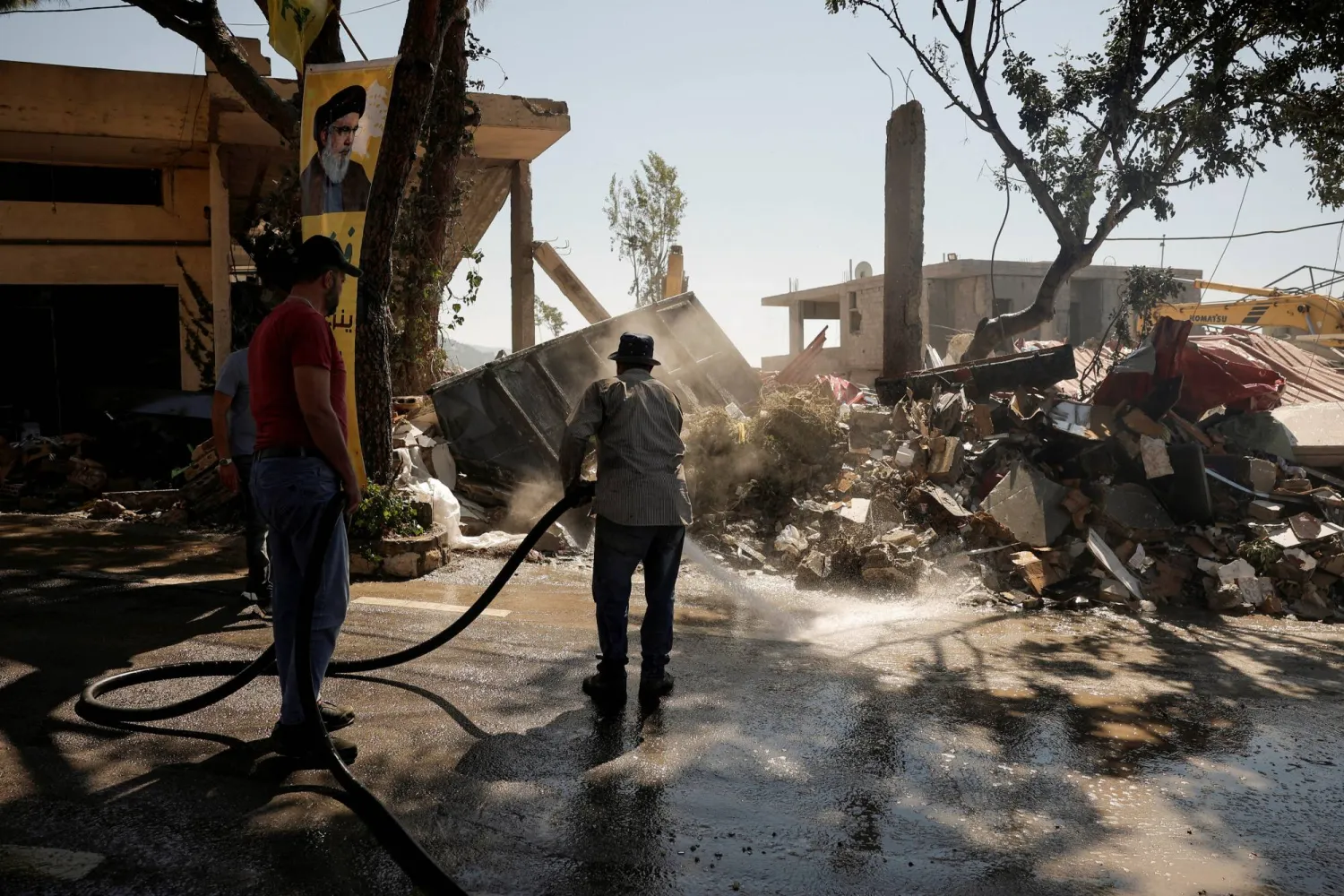
People clean the streets a day after an Israeli strike on residential buildings in the village of Maaysrah, north of Beirut, Lebanon, September 26, 2024. REUTERS/Louisa Gouliamaki.
TT

Lebanon Fears Gaza-like Carnage as Israel Ramps Up Airstrikes across the Country

People clean the streets a day after an Israeli strike on residential buildings in the village of Maaysrah, north of Beirut, Lebanon, September 26, 2024. REUTERS/Louisa Gouliamaki.

When she first heard about the evacuation warnings Israel was sending to residents of Lebanon, Aline Naser’s thoughts immediately turned to Gaza.
For the past year, the 26-year-old Beirut resident has been following with horror the reports about besieged Palestinians in the Gaza Strip ordered to move from one place to the other, fleeing to “humanitarian zones” only to be bombed and ordered to leave again.
The Israeli calls for Lebanese citizens to evacuate ahead of a widening air campaign, delivered via mobile phone alerts, calls and leaflets this week, seemed chillingly familiar, The Associated Press said.
“It’s definitely something on the back of my mind, and we don’t really know where exactly is safe,” she said.
Almost a year after the start of its war in Gaza, Israel has turned its focus on Lebanon, significantly ratcheting up its campaign against its archenemy Hezbollah. Among many in Lebanon, there is fear that Israel’s military operations in Lebanon would follow the same Gaza playbook: Evacuation orders, mass displacement and overwhelming airstrikes. Israel says its strikes target Hezbollah weapons sites and militants.
There are key differences between Gaza and Lebanon and how Israel has so far conducted its operations, which it says aim to push back Hezbollah from the border so that tens of thousands of Israelis displaced by Hezbollah's rocket attacks can return to their homes. Although it has said it is preparing for a possible ground operation, Israel has so far not sent troops into Lebanon.
Still, there are fears that Israel’s actions in Gaza, including the use of overwhelming and what rights groups and the United Nations have described as disproportionate force, would be repeated in Lebanon. Top Israeli officials have threatened to repeat the destruction of Gaza in Lebanon if the Hezbollah fire continues.
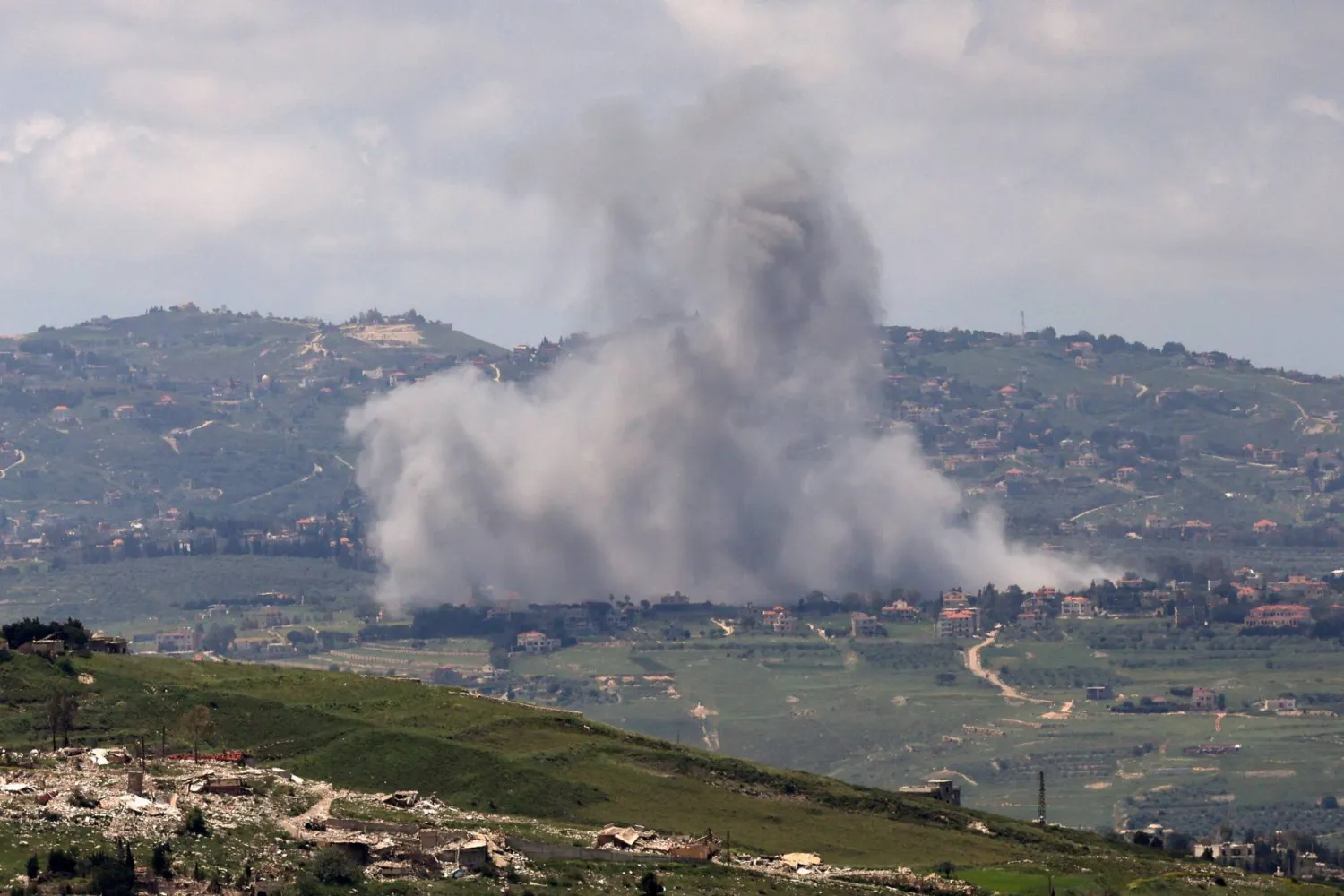
On Monday, Israel struck 1,600 targets across Lebanon, killing 492 people and wounding 1,645, and causing a massive wave of displacement as thousands fled from south Lebanon north. It was a staggering one-day toll that shocked a nation used to war. It was by far the deadliest barrage since the monthlong 2006 Israel-Hezbollah war, when an estimated 1,000 people in Lebanon were killed.
Throughout the day, the Israeli military sent warnings to residents to immediately evacuate in anticipation of the strikes and to stay away from places where Hezbollah stores weapons — something most would have no way of knowing.
“Please get out of harm’s way now,” Israeli Prime Minister Benjamin Netanyahu said in a recorded message. “Once our operation is finished, you can come back safely to your homes.”
Israel’s evacuation orders have been a central part of its military campaign in Gaza for the past year. In the first week after launching war, Israel ordered 1.1 million civilians in the Gaza Strip to relocate from the north to the south, sowing confusion and fear in the overcrowded enclave.
Since then, the Israeli military has issued dozens of evacuation orders calling on Palestinians to evacuate to Israeli-designated "humanitarian zones.” Israeli officials say they are targeting Hamas militants who have embedded themselves among the population. Israel’s campaign in Gaza has killed more than 41,000 Palestinians, according to health officials in Gaza. The Health Ministry, part of the territory’s Hamas government, does not differentiate between civilians and combatants, but says that just over half the dead have been women and children.”
With Gaza's borders sealed, residents of the crammed territory are trapped with nowhere to go, whereas in Lebanon, those fleeing Israeli strikes have been able to move to safer areas. Thousands have fled to neighboring Syria, while others have left through the country’s airport.
A second front for Israel Hezbollah started firing rockets on Israel in support of Gaza on Oct. 8, a day after Hamas militants launched an unprecedented attack on Israel, killing some 1,200 people and abducting another 250. Since then, the two sides have been engaged in cross border strikes that have gradually escalated and displaced tens of thousands of civilians on both sides of the border.
Many Lebanese have been following the growing hostilities with a mixture of nonchalance and dread, hoping they would remain contained. Lebanon has been in the throes of an economic meltdown since 2019 and can ill afford another devastating war with Israel.
Hostilities escalated dramatically last week when thousands of explosives hidden in pagers and walkie-talkies used by Hezbollah detonated, killing dozens of people and leaving thousands, including many civilians, with severe injuries to the eyes, face and limbs. Israel is widely believed to be behind the attack. Israel has also killed several top Hezbollah commanders in Beirut.
Meanwhile, intensifying Hezbollah barrages have wounded several people in Israel.
As the region appeared to be teetering toward another all-out war, Jana Bsat, 25, who works for a media analysis company in Beirut, said she now has a bag packed, ready for immediate evacuation. She feels it’s only a matter of time.
“It feels surreal, to be honest. We heard about what was happening in Gaza and now we’re experiencing it for ourselves,” she said.
“I am in disgust of all this fear-mongering and psychological torture,” she said, adding: “But then you remember, it’s all part of a warfare strategy and it’s not going to stop anytime soon.”
Lebanon is not Gaza While Israel’s actions in Lebanon may have echoes of Gaza, the conflicts are different. In Gaza, Israel’s goal is the complete destruction of Hamas, whereas Israel’s stated goal in Lebanon is to push Hezbollah away from its border. Whereas Hamas rules Gaza, Hezbollah is a powerful militia with enormous influence inside Lebanon, and has representatives in the country's parliament and government.
In 2006, Israel flattened entire Beirut neighborhoods and bombed Lebanon's only international airport as well as key infrastructure, including bridges and power stations. By contrast, its current campaign seems to be, for the large part, targeting Hezbollah, although many civilians have also been killed.
Unlike Gaza, Lebanon is also a mixed tapestry of political and religious groups, including Christian and Sunni-majority areas where there is significant opposition to the Iran-backed Shiite Hezbollah.
Ali Safa, a 30-year-old interior designer who fled to Beirut from south Lebanon with his family this week, said he isn’t worried about the Gaza scenario being repeated in Lebanon.
“Gaza is an open prison, it is besieged. Lebanon is much larger, it is not encircled. And it has Hezbollah, which is a much bigger force, much better-equipped than Hamas,” he said.
UN Secretary General Antonio Guterres, speaking at the United Nations Wednesday, said the world “cannot afford Lebanon to become another Gaza.”
Frayed nerves Whether the current hostilities will expand into an all-out war or whether Israel will launch a ground invasion remains to be seen. Israel’s army chief said Wednesday that preparations were underway for a possible ground operation.
Many in Lebanon say they are haunted by the nonstop churn of horrifying images from Gaza over the past year, fearing the same scenario in Lebanon.
For several months, low-flying Israeli fighter jets have launched sonic booms over Lebanon, rattling windows and terrifying residents. More recently, the buzzing sound of Israeli military drones in Lebanese skies have added to the anxiety.
Some have gotten used to it. At a funeral for a Hezbollah commander recently where a few hundred people gathered, hardly anyone flinched when low-flying Israeli planes caused a thundering boom that shook the ground.
Bsat said at some point she, too, got used to hearing sonic booms that made the windows in her house shake.
"The drones I also got used to and now, unfortunately, the bombing,” she said via Whatsapp.
“I’ve come to terms with reality, but my hands still can’t stop shaking as I’m writing this,” she said.
“I’m still dreading what is going to happen here.”



Israel PM Says Hezbollah Rockets, Drones Need Further Military Action

03 March 2020, Israel, Tel Aviv: Israeli Prime Minister Benjamin Netanyahu delivers an address. (dpa)
TT

Israel PM Says Hezbollah Rockets, Drones Need Further Military Action

03 March 2020, Israel, Tel Aviv: Israeli Prime Minister Benjamin Netanyahu delivers an address. (dpa)

Israeli Prime Minister Benjamin Netanyahu on Monday said rockets and drones possessed by Iran-backed Hezbollah group remained a key threat that demanded further military action by Israel's army in Lebanon. 

Israel and Hezbollah have traded blame over violations of the fragile 10-day ceasefire in Lebanon agreed earlier this month, which has since been extended, and attacks by both sides have continued. 

"There are still two central threats from Hezbollah: the 122mm rockets and the drones. This demands a combination of operational and technological activity," Netanyahu said in a statement. 

"They have about 10 percent of the missiles they had at the start of the war. But these still trouble the residents of the north," he added. 

"We are carrying out strikes now, both within the security zone and north of it, and north of the Litani River," he said, reiterating Israel's right to do so under its agreement "with the US and the Lebanese government". 

Hezbollah drew Lebanon into the Middle East war on March 2 by firing rockets towards Israel to avenge the killing of Iranian supreme leader Ali Khamenei in US-Israeli strikes. 

Lebanon and Israel's US ambassadors met twice in Washington over the past weeks, the first meetings of their kind in decades, for discussions that were categorically rejected by Hezbollah. 


Lebanon's Aoun: We Won't Accept Humiliating Deal with Israel...Taking Country to War is 'Treason'

A photograph released by the Lebanese Presidency on April 17, 2026, shows Lebanon's President Joseph Aoun delivering a televised address to the Lebanese people from the Baabda Presidential Palace, east of the capital Beirut.  (Photo by Lebanese Presidency / AFP)
A photograph released by the Lebanese Presidency on April 17, 2026, shows Lebanon's President Joseph Aoun delivering a televised address to the Lebanese people from the Baabda Presidential Palace, east of the capital Beirut. (Photo by Lebanese Presidency / AFP)
TT

Lebanon's Aoun: We Won't Accept Humiliating Deal with Israel...Taking Country to War is 'Treason'

A photograph released by the Lebanese Presidency on April 17, 2026, shows Lebanon's President Joseph Aoun delivering a televised address to the Lebanese people from the Baabda Presidential Palace, east of the capital Beirut.  (Photo by Lebanese Presidency / AFP)
A photograph released by the Lebanese Presidency on April 17, 2026, shows Lebanon's President Joseph Aoun delivering a televised address to the Lebanese people from the Baabda Presidential Palace, east of the capital Beirut. (Photo by Lebanese Presidency / AFP)

Lebanese President Joseph Aoun said Monday that direct negotiations with Israel were aimed at ending the conflict with Hezbollah, while accusing those who drew Lebanon into war of "treason" in an implicit rebuke to the Iran-backed armed group.

"My goal is to reach an end to the state of war with Israel, similar to the armistice agreement" of 1949, Aoun said in a statement, adding that "I assure you that I will not accept reaching a humiliating agreement".

"Those who dragged us into war in Lebanon are now holding us accountable because we made the decision to go to negotiations... What we are doing is not treason. Rather, treason is committed by those who take their country to war to achieve foreign interests," he said.

Earlier on Monday, Hezbollah Secretary-General Naim Qassem reaffirmed his party’s rejection of direct negotiations by the Lebanese authorities with Israel, describing them as a “grave sin,” and warning that such a step would plunge the country into a “cycle of instability.”

In a statement carried by the group’s media outlets, Qassem said: “We categorically reject direct negotiations. Those in power should know that their conduct will not benefit Lebanon, nor will it benefit them.”

He added that it is the authorities’ responsibility “to roll back their grave missteps that place Lebanon in a cycle of instability. They are responsible for halting direct negotiations with the Israeli enemy and adopting indirect ones.”

Qassem added: “These direct negotiations and their outcomes are, to us, as if they do not exist, and they do not concern us in any way.” He stressed: “We will continue our defensive resistance to protect Lebanon and its people... We will respond to Israeli aggression and confront it,” underscoring that “no matter how much the enemy threatens, we will not retreat, bow, or be defeated.”

Following the outbreak of the latest war between Israel and Hezbollah, which began on March 2, the Lebanese and Israeli ambassadors in Washington held two rounds of direct talks, the first between the two countries in decades. After the first round, US President Donald Trump announced a ceasefire that took effect on April 17 for a period of 10 days, before later announcing a three-week extension after the second round of talks.

Lebanese authorities have repeatedly stated that the US-sponsored negotiations aim to end the war, secure Israel’s withdrawal from southern Lebanon, and enable displaced residents to return to their areas, after the fighting displaced more than one million people.

Despite the ceasefire, Israel continues to carry out air and artillery strikes, particularly in southern Lebanon, while its forces conduct widespread demolition and blasting operations in many border towns, where it has announced the establishment of a “yellow line” separating dozens of villages from the rest of Lebanese territory.

At least 2,509 people have been killed and 7,755 injured in Lebanon as a result of Israeli attacks since the start of the war on March 2, according to the Health Ministry.


Israel Defense Minister Says Hezbollah Chief ‘Playing with Fire’ That Will ‘Burn Lebanon’

 People hold up portraits of Hezbollah leader, Naim Qassem, top, and slain Hezbollah leader Hassan Nasrallah as displaced residents drive back to their villages, in Jiyyeh, near Sidon, southern Lebanon, Friday, April 17, 2026, following a ceasefire between Israel and Hezbollah. (AP)
People hold up portraits of Hezbollah leader, Naim Qassem, top, and slain Hezbollah leader Hassan Nasrallah as displaced residents drive back to their villages, in Jiyyeh, near Sidon, southern Lebanon, Friday, April 17, 2026, following a ceasefire between Israel and Hezbollah. (AP)
TT

Israel Defense Minister Says Hezbollah Chief ‘Playing with Fire’ That Will ‘Burn Lebanon’

 People hold up portraits of Hezbollah leader, Naim Qassem, top, and slain Hezbollah leader Hassan Nasrallah as displaced residents drive back to their villages, in Jiyyeh, near Sidon, southern Lebanon, Friday, April 17, 2026, following a ceasefire between Israel and Hezbollah. (AP)
People hold up portraits of Hezbollah leader, Naim Qassem, top, and slain Hezbollah leader Hassan Nasrallah as displaced residents drive back to their villages, in Jiyyeh, near Sidon, southern Lebanon, Friday, April 17, 2026, following a ceasefire between Israel and Hezbollah. (AP)

Israeli Defense Minister Israel Katz warned Monday that Hezbollah's defiance would bring catastrophic consequences for Lebanon, after the group's leader rejected proposed direct talks between Israel and Lebanon. 

"Naim Qassem is playing with fire, and the fire will burn Hezbollah and all of Lebanon... If the Lebanese government continues to take cover under the wing of the Hezbollah terrorist organization -- fire will break out and engulf the cedars of Lebanon," Katz told UN envoy to Lebanon Jeanine Hennis-Plasschaert, according to a statement issued by his office. 

"If the Lebanese government continues to take cover under the wing of the Hezbollah terrorist organization -- fire will break out and engulf the cedars of Lebanon."

Katz said that Lebanese President Joseph Aoun was "gambling with the future of Lebanon", adding that Israel would not accept a situation in which a ceasefire in Lebanon coexists with continued attacks on Israeli forces and communities in northern Israel.

He reiterated that "the Lebanese government must ensure that Hezbollah is disarmed, first of all south of the Litani up to the Blue Line, and afterwards throughout all of Lebanon," referring to the river that cuts through southern Lebanon.

Aoun on Monday said that the direct talks with Israel were aimed at ending the conflict with Hezbollah while accusing those who drew Lebanon into war of "treason", in an implicit rebuke of the Iran-backed armed group.

Hezbollah leader Naim Qassem on Monday rejected Lebanon's planned direct negotiations with Israel, calling them a "grave sin" that will destabilize Lebanon. 

Lebanon and Israel's US ambassadors held two meetings in Washington over the past weeks, the first of their kind in decades. 

The first meeting led to a truce in the Israel-Hezbollah war, while Beirut has been preparing for direct negotiations with the aim of striking a peace deal with Israel. The two countries have officially been at war since 1948. 

"We categorically reject direct negotiations with Israel, and those in power should know that their actions will not benefit Lebanon or themselves," Qassem said in a statement, aired by the group's channel Al-Manar. 

He called on authorities to "back down from their grave sin that is putting Lebanon in a spiral of instability". 

He added that the Lebanese government "cannot continue while it is neglecting Lebanon's rights, giving up land, and confronting its resistant people". 

Lebanese authorities have repeatedly stated that the goal of the US-sponsored negotiations is to stop the war, secure Israel's withdrawal from southern Lebanon, and return displaced people to their homes after the fighting forced more than a million people to flee. 

"These direct negotiations and their outcomes are as if they do not exist for us, and they do not concern us in the slightest," Qassem said. 

"We will continue our defensive resistance for Lebanon and its people," he added. 

"No matter how much the enemy threatens, we will not back down, we will not bow down, and we will not be defeated. 

"We will not give up our weapons... and the Israeli enemy will not remain on a single inch of our occupied land." 

Hezbollah drew Lebanon into the Middle East war on March 2 by firing rockets at Israel to avenge the death of Iran's supreme leader Ali Khamenei in US-Israeli strikes. 

Since the truce went into force on April 17, Israeli strikes have killed at least 36 people, according to an AFP tally of Lebanese health ministry figures. 

Hezbollah has meanwhile claimed several attacks on Israeli troops in southern Lebanon, as well as missile and drone launches at northern Israel, saying it is responding to Israeli "violations". 

According to details of the truce released by the US State Department, which said both Lebanon and Israel agreed to it, Israel reserves the right to continue targeting Hezbollah to prevent "planned, imminent, or ongoing attacks". 

Hezbollah strongly rejects this clause, saying the text of the agreement was not presented to the cabinet, in which the group and its allies are represented. 

"Has the government decided to work alongside the Israeli enemy against its own people?" Qassem said in his speech. 

Israeli attacks on Lebanon killed more than 2,500 people since March 2, according to Lebanese authorities.