24 People Killed in Israeli Attack on Ain Deleb, Lebanon’s Health Ministry Says https://english.aawsat.com/arab-world/5065774-24-people-killed-israeli-attack-ain-deleb-lebanon%E2%80%99s-health-ministry-says
24 People Killed in Israeli Attack on Ain Deleb, Lebanon’s Health Ministry Says
Smoke billowed from the burning rubble as people gathered at the site of Israeli airstrikes in the Harat Harek neighborhood of southern Beirut (AFP).
Lebanon’s Health Ministry said on Sunday at least 24 people were killed in Israeli airstrikes that hit two buildings in the country’s south.
The consecutive strikes Sunday on Ain all-Delb, east of Sidon, were caught on camera by neighbors in the area. The Health Ministry said the strikes also injured at least 29 people.
In video verified by The Associated Press, one strike caused a huge plume of smoke. The second one hit an adjacent building, causing to sway and then collapse.
Separately, the Health Ministry said Israeli strikes in the northern province of Baalbek Hermel killed 21 people and injured at least 47.
Israel struck more targets in Lebanon on Sunday, pressing Hezbollah with new attacks after killing the Iran-backed group's leader, Hassan Nasrallah, and a string of its other top commanders in an escalating military campaign.
The attacks have dealt a stunning succession of blows to Hezbollah after almost a year of cross-border fire, killing much of its leadership and revealing gaping security holes. Israel's defense minister is now discussing widening the offensive.
Following the death of Nasrallah - killed in a massive airstrike in Beirut on Friday - Hezbollah fired new fusillades of rockets into Israel, while Iran said his death would be avenged.
Israel's intensifying bombardment has increased fears the conflict could spin out of control, potentially drawing in Iran as well as the United States, Israel's closest ally, which said on Sunday it has authorized its military to reinforce in the region while also urging a diplomatic resolution.
Nasrallah had not only made Hezbollah into a powerful domestic force in Lebanon during his 32 years as leader, but helped turn it into the linchpin of Iran's network of allied groups in the Arab world.
Nasrallah's body was recovered intact from the site of Friday's strike, a medical source and a security source told Reuters on Sunday. Hezbollah has not yet said when his funeral will be held.
Supporters of the group and other Lebanese who hailed its role fighting Israel, which occupied south Lebanon for years, mourned him on Sunday.
"We lost the leader who gave us all the strength and faith that we, this small country that we love, could turn it into a paradise," said Lebanese Christian woman Sophia Blanche Rouillard, carrying a black flag to work in Beirut.
The fighting between Hezbollah and Israel, their latest round of warfare in four decades of on-off conflict, has been waged in parallel with Israel's war in Gaza against Hamas since the Iran-backed Palestinian group's attack on Israel last Oct. 7.
Israel's stated goal is to make its northern areas safe from Hezbollah rocket fire and allow thousands of displaced residents to return, but its strikes have also had a devastating impact on civilians in Lebanon.
Lebanon's Health Ministry said more than 1,000 Lebanese were killed and 6,000 wounded in the past two weeks, without saying how many were civilians. The government said a million people - a fifth of the population - had fled their homes.
The Health Ministry said 14 medics had been killed in airstrikes over the past two days.
In Beirut, some displaced families spent the night on the benches at Zaitunay Bay, a string of restaurants and cafes on Beirut's waterfront. On Sunday morning, families with nothing more than a duffle bag of clothes had rolled out mats to sleep on and made tea for themselves.
"You won't be able to destroy us, whatever you do, however much you bomb, however much you displace people - we will stay here. We won't leave. This is our country and we're staying," said Francoise Azori, a Beirut resident jogging through the area.
The UN World Food Program began an emergency operation to provide food for those affected by the conflict.
MILITARY ACTION
On Sunday Israel's military said the air force had struck dozens of targets including launchers and weapons stores while its navy said it had intercepted eight projectiles coming from the direction of Lebanon and one from the Red Sea.
More blasts rocked Beirut and drones could be heard flying over all parts of the Lebanese capital overnight and throughout the day on Sunday.
Nasrallah's death capped a traumatic fortnight for Hezbollah, starting with the detonation of thousands of communications devices used by its members. Israel was widely assumed to have carried out that action but has not confirmed or denied it did.
Israeli airstrikes across Hezbollah strongholds in south Lebanon, the Bekaa Valley near the Syrian border, and in Beirut's southern suburbs have meanwhile killed a string of the group's other most senior commanders.
On Sunday Israel said it had killed Nabil Qaouq, a prominent Hezbollah leader. Hezbollah confirmed his death.
ESCALATION RISKS
Concerns have grown about the prospect of a wider conflict. Israel has mobilized reserve brigades and says it is ready for all options, including a ground operation.
Hezbollah has said it will cease fire only when Israel's offensive in Gaza ends. Hamas and other Hezbollah allies issued statements mourning his death.
Diplomatic efforts have shown little sign of progress. Lebanon's caretaker Information Minister Ziad Makary said during a cabinet meeting on Sunday that efforts for a ceasefire were still underway.
The US, which has praised the killing of Nasrallah as a measure of justice for victims of Hezbollah attacks, on Sunday urged a peaceful resolution.
White House national security spokesperson John Kirby said all-out war with Hezbollah or Iran would not help residents of northern Israel return to their homes.
"We believe that a diplomatic path is the right course," he said.
In Iran, which helped create Hezbollah in the early 1980s, senior figures mourned the death of a senior Revolutionary Guards member killed alongside Nasrallah, and Tehran called for a UN Security Council meeting on Israel's actions.
Iranian Supreme Leader Ali Khamenei was moved to a secure location in Iran after Nasrallah's killing, sources told Reuters.
Hezbollah's arsenal has long been a point of contention in Lebanon, a country with a history of civil conflict. Hezbollah's Lebanese critics say the group has unilaterally pulled the country into conflicts and undermined the state.
Iran Guards Threaten 'Heavy' Missile Fire on Israel in Support of Lebanese, Palestinianshttps://english.aawsat.com/arab-world/5254676-iran-guards-threaten-heavy-missile-fire-israel-support-lebanese-palestinians
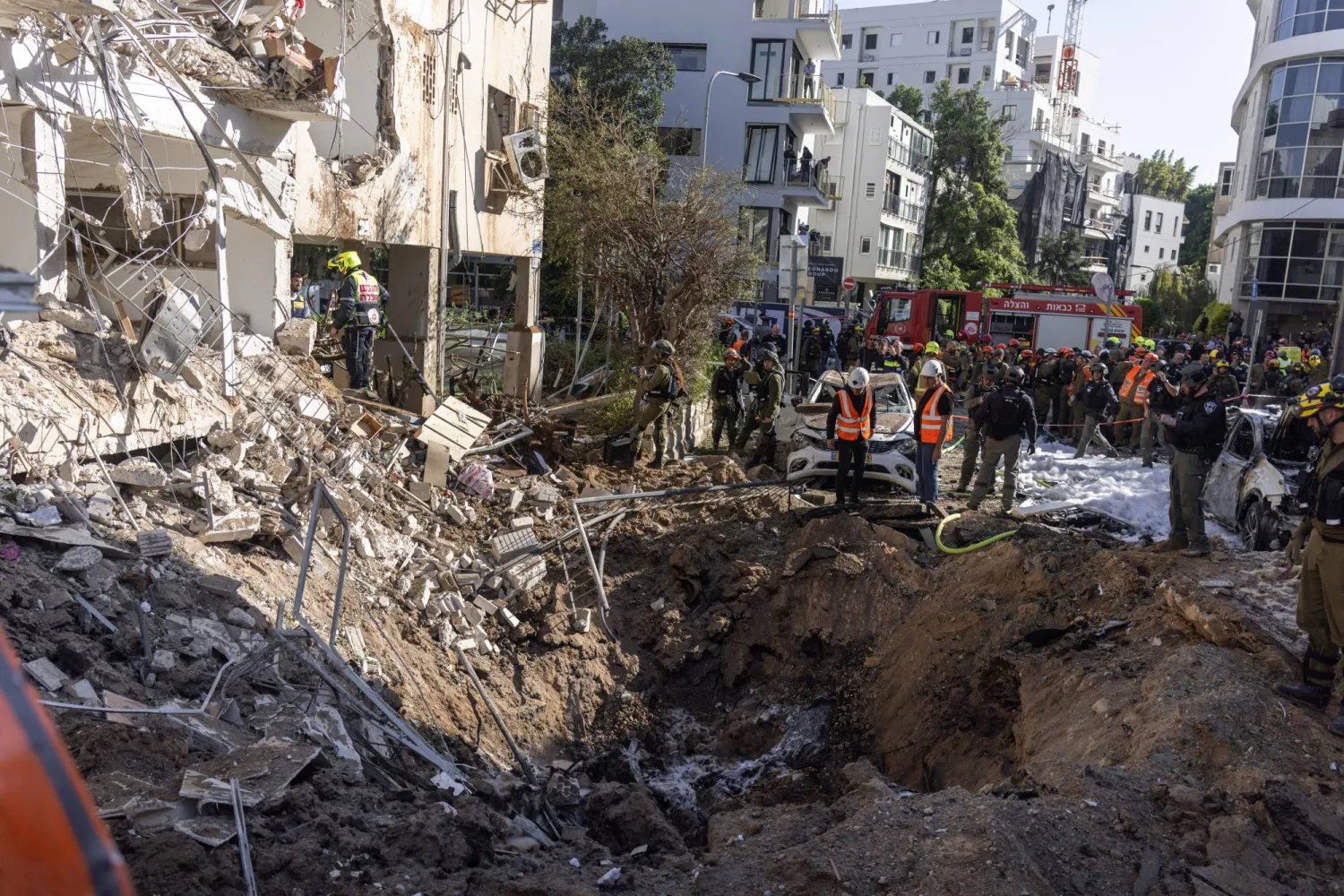
24 March 2026, Israel, Tel Aviv: Israeli security forces and rescue teams inspect the damage caused by an Iranian missile strike on Tel Aviv. Photo: Itai Ron/dpa
TT
TT
Iran Guards Threaten 'Heavy' Missile Fire on Israel in Support of Lebanese, Palestinians
24 March 2026, Israel, Tel Aviv: Israeli security forces and rescue teams inspect the damage caused by an Iranian missile strike on Tel Aviv. Photo: Itai Ron/dpa
Iran's Revolutionary Guards threatened on Tuesday to conduct "heavy" missile and drone attacks on Israel in what it described as support for Lebanese and Palestinian civilians.
"We warn the regime's criminal army that if its crimes against civilians in Lebanon and Palestine persist," Israeli forces "will be the target of heavy missile and drone strikes", the Guards said in a statement.
Iran is at war with Israel and the United States, while Israel is also battling Hezbollah in Lebanon.
Israel's military will occupy southern Lebanon up to the Litani River, defense minister Israel Katz said on Tuesday, the first time Israel has clearly spelled out its intent to seize swathes of territory that make up nearly a tenth of Lebanon.
The military has destroyed five bridges over the river since March 13 and has accelerated the demolition of homes in Lebanese villages close to the Israeli border as part of a campaign that Israel says is aimed at Hezbollah and not Lebanese civilians.
Baghdad: An Intelligence Battleground in Iran’s Latest Warhttps://english.aawsat.com/arab-world/5254667-baghdad-intelligence-battleground-iran%E2%80%99s-latest-war
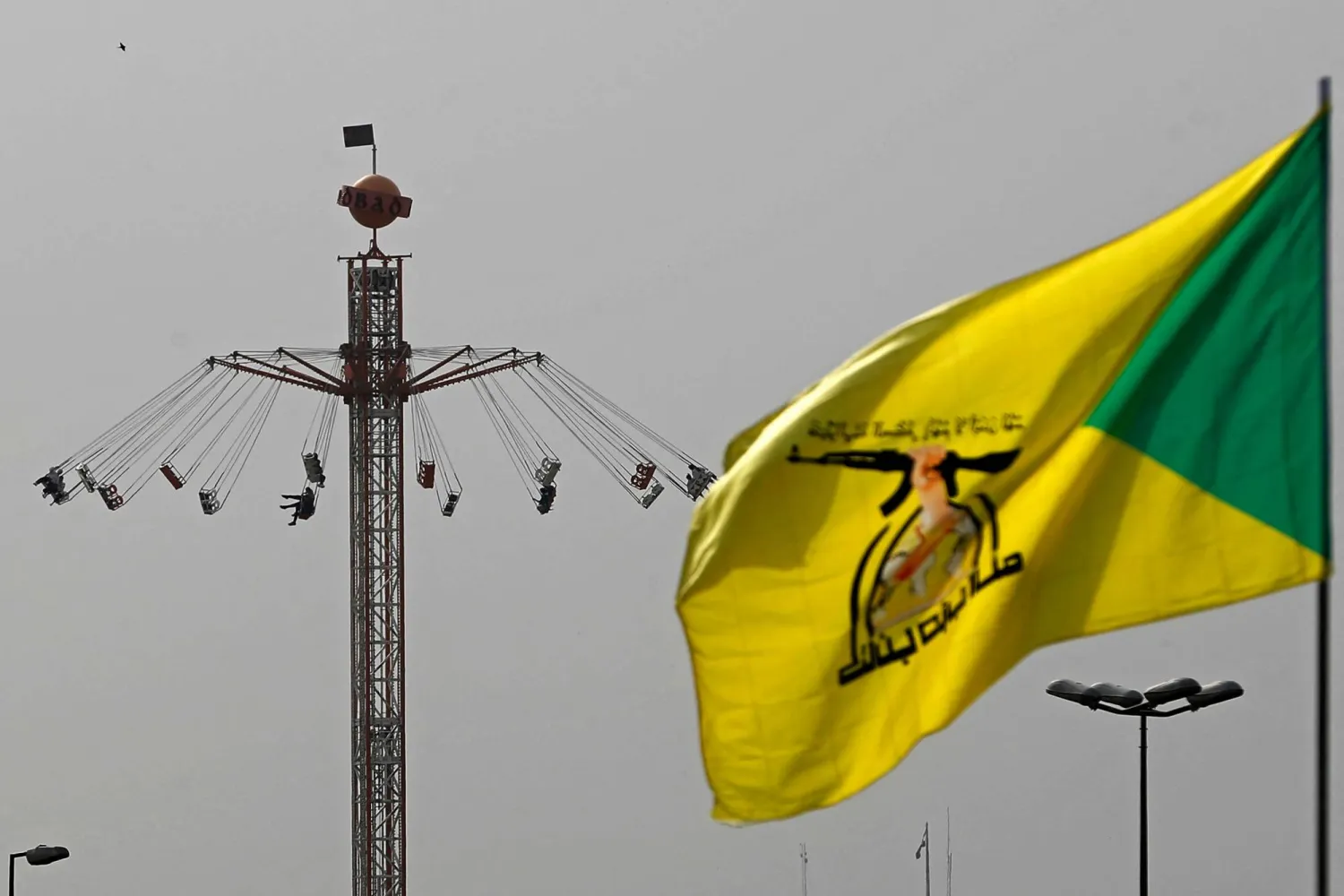
A flag of Iraq's pro-Iran paramilitary group Hezbollah Brigades (Kataib Hezbollah), flutters against the backdrop of people taking a swing ride at an amusement park during Eid al-Fitr celebrations, marking the end of the Muslim holy fasting month of Ramadan, in Baghdad on March 21, 2026. (Photo by AHMAD AL-RUBAYE / AFP)
Baghdad: An Intelligence Battleground in Iran’s Latest War
A flag of Iraq's pro-Iran paramilitary group Hezbollah Brigades (Kataib Hezbollah), flutters against the backdrop of people taking a swing ride at an amusement park during Eid al-Fitr celebrations, marking the end of the Muslim holy fasting month of Ramadan, in Baghdad on March 21, 2026. (Photo by AHMAD AL-RUBAYE / AFP)
Within days of the outbreak of the US-Israeli war on Iran, Quds Force officers began arriving in Iraq to oversee “attrition operations” and establish a support command for the Iranian Revolutionary Guard Corps. The move reflects contingency planning for possible escalation inside Tehran.
At the same time, Baghdad has become a hub for espionage activity, with intelligence operations unfolding alongside the military conflict, according to sources cited by Asharq Al-Awsat. Sources report that in the immediate aftermath of the killing of Iran’s Supreme Leader, Ali Khamenei, communication between Iranian operatives and Iraqi militia leaders was briefly disrupted before being restored by the third day of the war, on March 3, 2026.
Iranian officers entered Iraq in stages to supervise attacks against US interests and allied targets. They are supported by long-established Iranian advisers inside Iraq who coordinate networks of armed groups across multiple factions. According to political and security sources, the strategy aims to “spread instability in areas hosting US interests” and ultimately “consolidate Iranian influence over Iraq after the war.”
Some analysts, however, view the operations as defensive, to protect missile and drone stockpiles supplied by Tehran for later use. They note that Iraqi militias lack the capacity for large-scale strategic warfare compared with Lebanon’s Hezbollah.
Sources familiar with meetings among Iran-aligned factions say Iranian officers have established an operations room in Baghdad to create a new deterrence framework against US forces and potentially serve as a fallback command center if conditions worsen in Tehran. Despite these efforts, Iranian activities in Baghdad have reportedly been exposed, leading to deadly strikes attributed to the United States that caused casualties among Iranian personnel.
Aftermath of Khamenei’s Killing
The first wave of Quds Force officers is believed to have arrived shortly after Khamenei’s death on Feb. 28, 2026. Iraqi sources suggest some personnel had already been deployed earlier, including operatives traveling on Iraqi and Lebanese passports who also moved to Beirut.
Shortly after Khamenei’s death, the umbrella group known as the “Islamic Resistance in Iraq” launched a series of attacks, claiming responsibility for 16 operations involving dozens of drones both inside and outside Iraq.
The network includes major militias such as Kataib Hezbollah, Harakat al-Nujaba, and Kataib Sayyid al-Shuhada, as well as smaller groups that emerge during periods of escalation, including Ashab al-Kahf and Saraya Awliya al-Dam. These are widely seen as front organizations for Iran-backed factions.
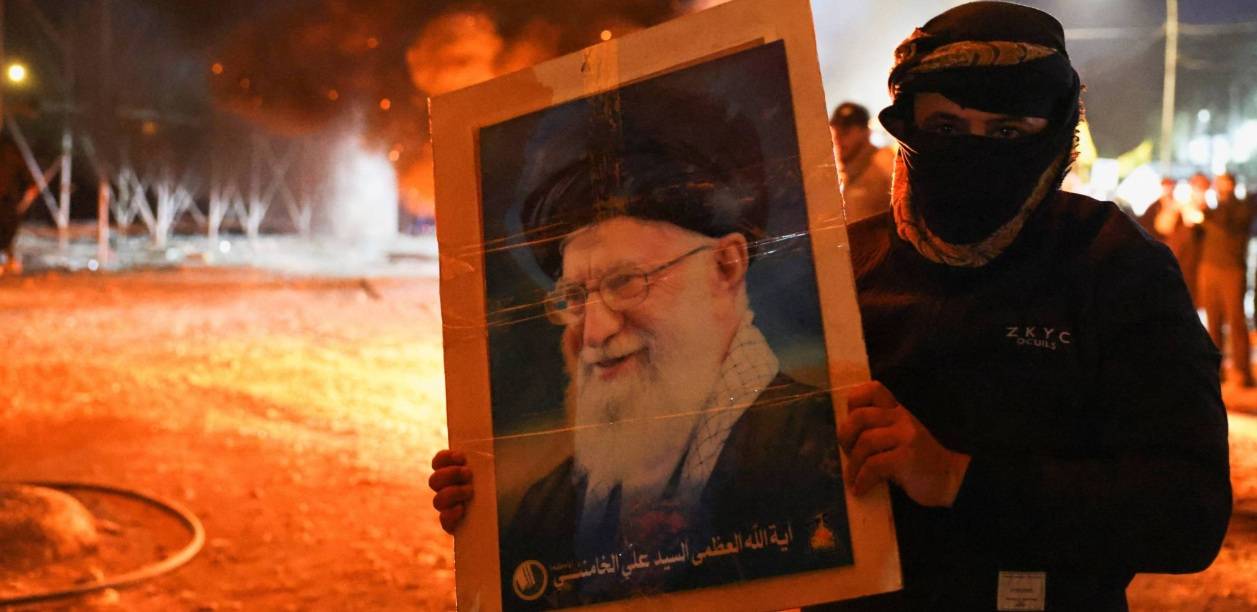
A protester in Baghdad holds a picture of Iranian Supreme Leader Ali Khamenei after the announcement of his death on February 28 (Reuters)
Once communications were restored, Iraqi officials sought clarity from Iranian counterparts about the trajectory of the conflict. According to one official, the response was that the Iranian leadership was focused primarily on retaliation and targeting US forces. Iranian officers have since established themselves in secure locations across Baghdad, Najaf, Diyala, and Basra, with Iraqi factions providing protection and logistical support. A senior militia figure stated that Iran has mobilized groups it has cultivated over many years for what it views as a decisive confrontation.
Assessments from militia sources indicate that the current level of engagement exceeds that seen after Oct. 2023, driven by concerns that a collapse of Iran’s political system would threaten the survival of these groups in Iraq. One source cited anger and a desire for revenge as key motivations, while another emphasized that these groups were specifically designed for such a conflict and remain closely tied to Iranian command structures.
Analysts argue that the operations are effectively directed by Iran, with Iraqi factions serving primarily as a local cover. Political researcher Akeel Abbas noted that militia actions are “essentially extensions of the Revolutionary Guard operating under a local façade.”
A Fragile State Position
An Iraqi government official warned that the likelihood of keeping militias out of the conflict is diminishing as the war continues. He described the state as “an invisible presence caught between two fighters,” noting that confronting the militias could risk direct conflict with Iran or trigger internal Shiite divisions.
Another militia leader suggested that the war has clarified the balance of power in Baghdad, reinforcing the dominance of armed factions. Initial attacks focused on US diplomatic facilities in Baghdad and Erbil, along with military bases. They later expanded to include Iraqi radar systems and government communications infrastructure.
Sources estimate that more than 15 US and French radar systems - part of contracts signed since 2022 worth roughly $350 million - have been destroyed. The objective, they say, was to disable drone detection capabilities and prevent surveillance of Iranian movements. Iraqi military officials declined to comment on the extent of these losses or those responsible. Instructions to militias reportedly include severing intelligence-sharing and operational coordination between Iraqi security agencies and the United States.
Attacks have also targeted Camp Victory, a logistical base near Baghdad International Airport used by US forces and Iraqi units. According to an Iraqi officer, some explosive-laden drones struck service facilities used by Iraqi personnel located near US positions.
A Decentralized Strategy
The deployment of Iranian officers to Iraq is also intended to establish an alternative command structure in what sources describe as “a friendly country that provides political and security cover.” According to these sources, part of the Islamic Revolutionary Guard Corps’ activity in Iraq is designed to relieve pressure caused by US and Israeli strikes inside Iran.
They added that Iraq offers faster and more reliable communication channels with regional allies than those available in Tehran, making it effectively “the last regional arena” for the Revolutionary Guard. Observers believe Iran’s security system is designed to function in a decentralized manner. A Shiite source said the plan includes protecting a core group of elite officers in case assassinations escalate inside Iran.
Sources also revealed that Iran has activated a “backup plan” built around mixed, hard-to-trace cells drawn from different armed factions. Those networks that had been quietly prepared over several years.
This escalation coincided with a rare public statement by Esmail Qaani, commander of the Quds Force, in his first remarks since the killing of Ali Khamenei. He praised Tehran’s allies in what he called the “axis of resistance” for confronting the United States and Israel.
Although Qaani stressed the “independence” of these groups, he effectively reaffirmed control over a broad, multi-layered network operating under a flexible, decentralized structure.
Iraqi politician Hamed al-Sayed said Qaani’s statement clarified his central wartime role: managing Iran’s networks of influence abroad. He added that Iraq’s importance requires direct Iranian oversight of armed factions, as developments there could threaten political gains linked to Iran’s ruling system. While this model is not new, al-Sayed noted that what has changed is “its intensity and its integration into a wider regional war.”
Sources told Asharq Al-Awsat that Iran’s current strategy operates on a broader scale, aiming to “spread disruption and instability across multiple arenas, including areas previously considered outside the conflict.”
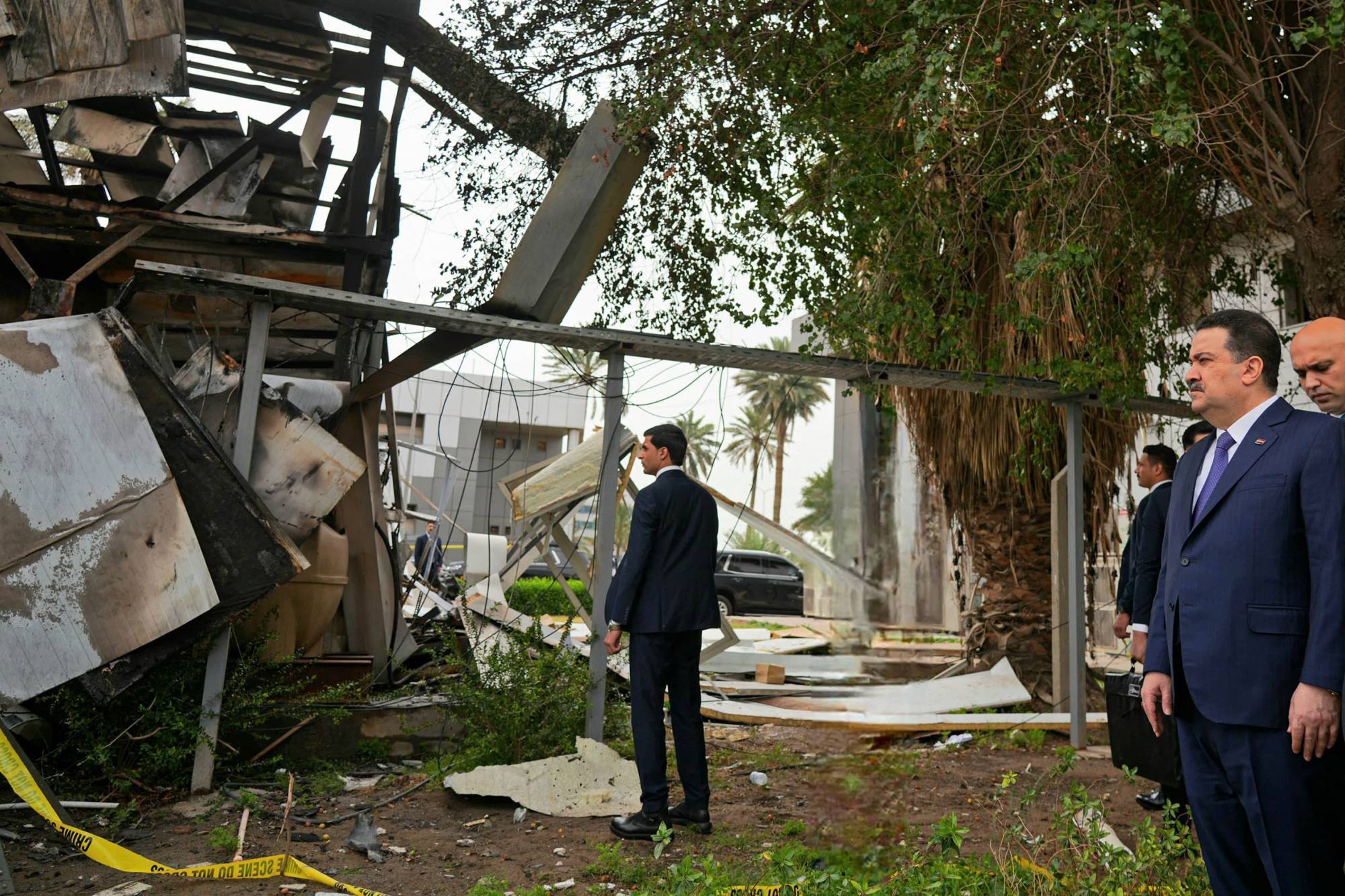
A photo distributed by the government’s media office on March 22 shows Prime Minister Mohammed Shia al-Sudani (right) inspecting the damage after a drone attack targeted a building belonging to the intelligence service in Baghdad
Baghdad: A City of Spies
The military escalation has been accompanied by what sources describe as an intense intelligence war inside Baghdad, peaking with attacks on sensitive sites, including facilities belonging to Iraq’s intelligence service.
On March 21, the agency announced that one of its officers had been killed in what it described as a terrorist attack carried out by outlaw groups. Two days later, Kataib Hezbollah claimed that 90 percent of the agency’s personnel had been infiltrated, even naming a specific officer accused of leading a network that leaked information to foreign actors.
Sources said armed factions strongly suspect the intelligence service to be one of the few government institutions still maintaining close ties with the United States. They believe a faction within the agency has been supplying intelligence and coordinates on militia and Iranian movements.
According to these accounts, the agency has come under mounting pressure during the war, as a parallel intelligence conflict unfolds between Iranian operatives, Iraqi intelligence officers, and US CIA personnel, each side attempting to outmaneuver the others. In this environment, Baghdad has at times become a deadly espionage battleground.
One source said these groups have been monitoring one another closely since the war began, tracking movements street by street across the capital.
However, many observers question claims that Iran was behind the attack on the intelligence facility, attributing it instead to internal political rivalries among Shiite factions that have spilled over into the agency, which has long struggled to remain independent.
The Jurf al-Sakhar Trap
Iranian coordination with armed factions appears to have created a classic intelligence vulnerability. Their increasingly visible activities made it easier for US forces to detect and track them, according to assessments circulating among members of those factions.
Sources confirmed that a strike — widely believed to have been carried out by the United States — on the town of Jurf al-Sakhar, south of Baghdad, in early March 2026 marked the first direct US targeting of Revolutionary Guard activity in Iraq following Khamenei’s killing.
Jurf al-Sakhar has been a major stronghold for Iraqi factions since 2014 and is believed to have evolved into a strategic military hub, housing training camps, detention facilities, storage depots, and sites for missile and drone development.
Political analyst Akeel Abbas described the strike as “the most significant in the Iraqi theater, as it targeted command-and-control structures.”
Sources, including individuals close to armed factions, said the area has shifted from being a strategic asset for Iran’s allies into a growing intelligence liability, threatening the core of their security and economic operations.
Subsequent strikes in Baghdad’s Karrada and Jadriya districts were reportedly aimed at senior Iranian figures. Abbas noted that the Jadriya strike in particular appeared intended to eliminate those directing operations linked to Jurf al-Sakhar. A resident of Jadriya told Asharq Al-Awsat that the targeted house had long been used by Iranian figures, whom locals had assumed were part of the Iranian diplomatic presence.
Fragile Ceasefire and Continued Strikes
Following these developments, Kataib Hezbollah announced a conditional unilateral ceasefire, pledging to halt attacks on the US embassy in Baghdad in exchange for an end to Israeli strikes in Beirut’s southern suburbs. However, the group Ashab al-Kahf violated the ceasefire within two days.
Later statements attributed to armed factions claimed that the United States had sought a temporary truce to allow its forces to withdraw. Pro-Iran activists circulated nighttime footage allegedly showing US military vehicles leaving Iraq overland toward Jordan.
The US State Department and the embassy in Baghdad declined to comment on reports of indirect negotiations with Iraqi factions. However, a diplomatic official told Asharq Al-Awsat that US air operations against Iran-aligned targets in Iraq “will continue until their operational capabilities are dismantled.”
Toward a “Final Battle”?
Hadi al-Amiri, leader of the Badr Organization, called on the Popular Mobilization Forces to mobilize for what he described as a “battle of truth against falsehood.” The group has suffered significant losses in US strikes targeting sites in Salah al-Din and Kirkuk.
Abbas does not expect this mobilization to escalate into full-scale war alongside Iran. He argues that Iraqi factions primarily serve logistical functions, including storing missiles and drones that Iran could deploy if pressure intensifies inside Iran or on Hezbollah’s front.
He added that these factions do not constitute a decisive fighting force on their own but operate as instruments of the Revolutionary Guard, reinforcing the idea that Iraq is being used as a strategic pressure platform.
In contrast, Shiite leaders in Baghdad increasingly believe that the Revolutionary Guard is preparing the capital for a “final battle” that may become necessary in its confrontation with the United States.
One such leader told Asharq Al-Awsat that a key lesson drawn by the Revolutionary Guard is the need to implement sweeping changes to Iraq’s political and security systems, including abandoning previous rules governing engagement with international actors.
Another Shiite leader said armed factions have long sought to bring remaining independent security institutions under their control. These assessments align with broader indications that Tehran, in the absence of a political settlement with Washington, may attempt to impose a new reality of direct influence in Iraq, reshaping the country’s governing structure. One political figure suggested this explains “why Iran has delayed the formation of a new Iraqi government until after the war ends.”
Lebanon Withdraws Accreditation of Iran’s Ambassador, Orders Him to Leave Countryhttps://english.aawsat.com/arab-world/5254657-lebanon-withdraws-accreditation-iran%E2%80%99s-ambassador-orders-him-leave-country
The Foreign Ministry said Tehran’s diplomatic representative in the country has to leave by Sunday. (NNA)
TT
TT
Lebanon Withdraws Accreditation of Iran’s Ambassador, Orders Him to Leave Country
The Foreign Ministry said Tehran’s diplomatic representative in the country has to leave by Sunday. (NNA)
Lebanon's foreign ministry said on Tuesday it had withdrawn its approval of the Iranian ambassador's accreditation, giving him until Sunday to leave the country.
The ministry said in a statement that it had summoned the Iranian charge d'affaires in Lebanon and informed him of "the Lebanese state's decision to withdraw approval of the accreditation of the appointed Iranian ambassador, Mohammad Reza Sheibani, and declare him persona non grata, demanding that he leave Lebanese territory no later than next Sunday".
The ministry said it had also summoned Lebanon's ambassador to Iran "in light of what the Lebanese state described as Tehran's violation of diplomatic norms and established practices between the two countries", after Beirut accused Iran's Revolutionary Guards of commanding Hezbollah's operations in its war against Israel.
The government has accused Hezbollah of dragging Lebanon to war after it fired rockets at Israel on March 2 in wake of the killing of Iran's supreme leader Ali Khamenei at the beginning of the conflict.
Lebanon had already ordered Iranians to leave the country.
Israel has said that some of its strikes have targeted IRGC officials operating in the country.
لم تشترك بعد
انشئ حساباً خاصاً بك لتحصل على أخبار مخصصة لك ولتتمتع بخاصية حفظ المقالات وتتلقى نشراتنا البريدية المتنوعة