


Iranian Officials: Quds Force Chief Out of Contact since Beirut Strikes

FILE PHOTO:  Brigadier General Esmail Qaani, the head of the Revolutionary Guards' Quds Force, speaks during a ceremony, in Tehran, Iran April 14, 2022. Majid Asgaripour/WANA (West Asia News Agency) via REUTERS
FILE PHOTO: Brigadier General Esmail Qaani, the head of the Revolutionary Guards' Quds Force, speaks during a ceremony, in Tehran, Iran April 14, 2022. Majid Asgaripour/WANA (West Asia News Agency) via REUTERS
TT

Iranian Officials: Quds Force Chief Out of Contact since Beirut Strikes

FILE PHOTO:  Brigadier General Esmail Qaani, the head of the Revolutionary Guards' Quds Force, speaks during a ceremony, in Tehran, Iran April 14, 2022. Majid Asgaripour/WANA (West Asia News Agency) via REUTERS
FILE PHOTO: Brigadier General Esmail Qaani, the head of the Revolutionary Guards' Quds Force, speaks during a ceremony, in Tehran, Iran April 14, 2022. Majid Asgaripour/WANA (West Asia News Agency) via REUTERS

Iran's Quds Force commander Esmail Qaani, who travelled to Lebanon after the killing last month of Hezbollah leader Hassan Nasrallah in an Israeli airstrike, has not been heard from since strikes on Beirut late last week, two senior Iranian security officials told Reuters.

One of the officials said Qaani was in Beirut's southern suburbs, known as the Dahiyeh, during a strike on Thursday that was reported to have targeted senior Hezbollah official Hashem Safieddine but the official said he was not meeting Safieddine.

The official said Iran and Hezbollah had not been able to contact Qaani since then.

Israel has been hitting multiple targets in Dahiyeh as it pursues a campaign against Iran-backed Lebanese group Hezbollah.

The second official also said Qaani had travelled to Lebanon after the killing of Nasrallah and the Iranian authorities had not been able to contact him since the strike against Safieddine, who was widely expected to be the next Hezbollah chief.

Hezbollah has made no comment so far on Safieddine.
The Quds Force, the overseas arm of Iran's Revolutionary Guards, oversees dealings with militias allied with Tehran across the Middle East, such as Hezbollah.

Iranian Revolutionary Guards commander Brigadier General Abbas Nilforoushan was killed with Nasrallah in his bunker when it was hit on Sept. 27 by Israeli bombs.



Reports: US to Withdraw All Troops from Syria

A US Army patrol in the Syrian city of Qamishli (Reuters file photo)
TT

Reports: US to Withdraw All Troops from Syria

A US Army patrol in the Syrian city of Qamishli (Reuters file photo)

The United States is planning to withdraw all of its 1,000 troops from Syria over the next two months, according to US media reports.

Washington will end its presence in the country after the Syrian government extended its control over the country and the Kurdish-led Syrian Democratic Forces once key to fighting ISIS pledged to integrate into the state, the Wall Street Journal reported.

Television network CBS also reported on the plan, citing unnamed US officials.

The decision comes after US forces recently withdrew from some bases
in Syria including Al-Tanf and Al-Shadadi, which were used in the US-led international coalition's fight against ISIS, AFP reported.

The US is building up its military capabilities near Iran, where officials have vowed to respond to any attack by laying siege to American military outposts in the region.

US media reported Wednesday that Washington will be ready to launch strikes against Iran as early as this weekend, though Trump has reportedly not made a final decision yet.

The Pentagon did not immediately respond to a request for comment.


Canada Eases Sanctions on Syria

13 February 2026, Bavaria, Munich: Anita Anand, Minister of Foreign Affairs of Canada, arrives at the Bavarian Hof for the 62nd Munich Security Conference. Photo: Felix Hörhager/dpa
TT

Canada Eases Sanctions on Syria

13 February 2026, Bavaria, Munich: Anita Anand, Minister of Foreign Affairs of Canada, arrives at the Bavarian Hof for the 62nd Munich Security Conference. Photo: Felix Hörhager/dpa

Canadian Minister of Foreign Affairs Anita Anand said on Wednesday that Canada had amended its economic sanctions on Syria ‌to ease ‌restrictions related ‌to the ⁠import and export ⁠of goods, investment activities and the provision of financial and other ⁠services, according to Reuters.

"The amendments also ‌remove ‌24 entities and ‌one individual from ‌the Syria Regulations to reduce barriers to economic activity and ‌to enable transactions with state-affiliated entities ⁠in ⁠key sectors critical to Syria’s recovery," Anand said in a statement.


Tetteh: Despite UN Engagement, No Progress in Libya Roadmap

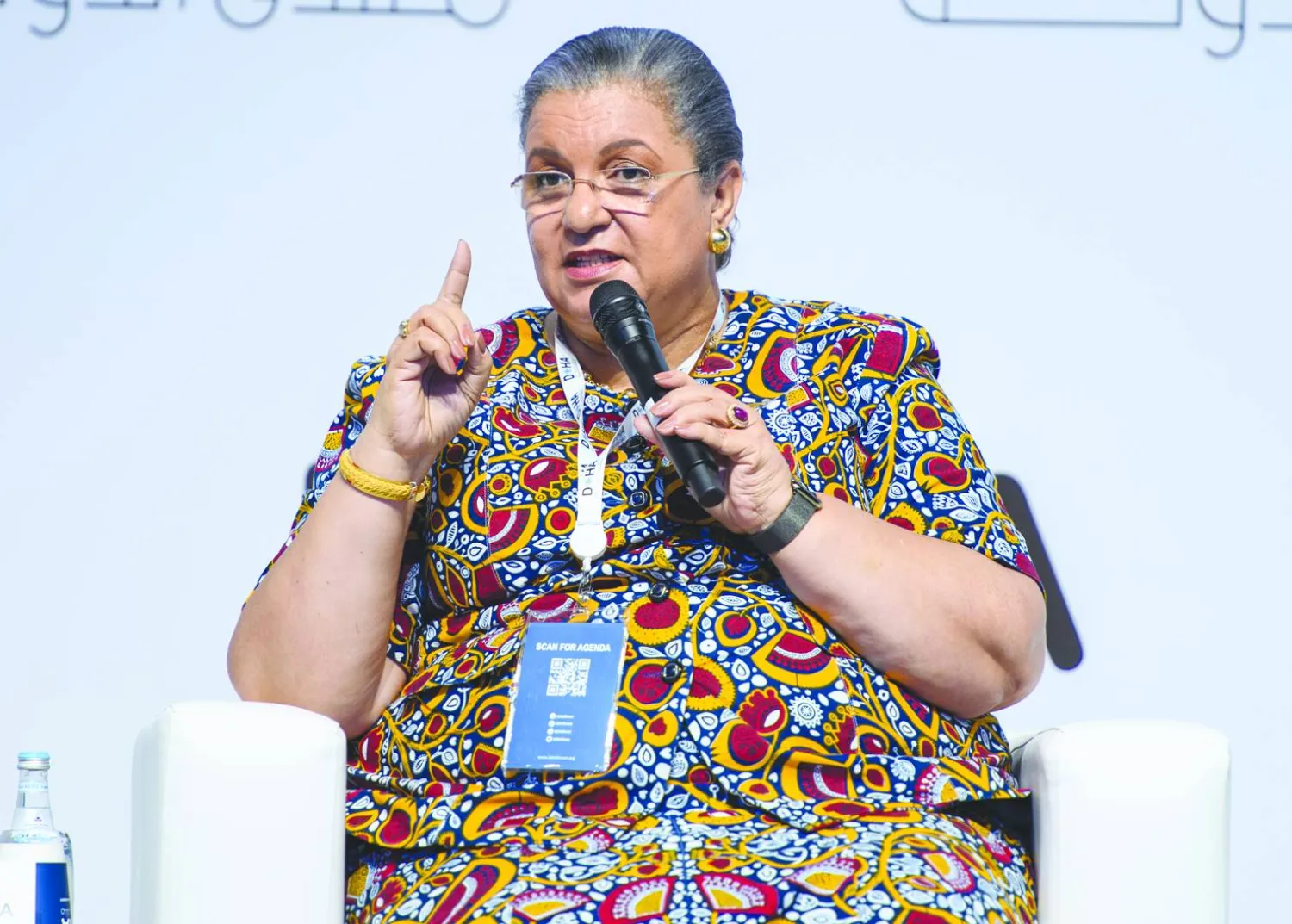
Head of the United Nations Support Mission in Libya Hanna Tetteh Getty)
TT

Tetteh: Despite UN Engagement, No Progress in Libya Roadmap

Head of the United Nations Support Mission in Libya Hanna Tetteh Getty)

The UN’s top envoy for Libya, Hanna Tetteh, has informed the Security Council that despite active United Nations engagement, the Libyan House of Representatives and the High Council of State have failed to make progress on the first steps of the agreed political roadmap, including establishing a mechanism to select the board of the High National Elections Commission (HNEC) and advancing electoral legislation.

Briefing the Council in New York on Wednesday, the Special Representative of the Secretary-General said: “Their inability to use their agreed mechanism and follow-on unilateral actions has further eroded their credibility."

Tetteh added that Libyan public perceptions reflect a growing belief that the bodies are “unable or unwilling” to deliver.

She told Council members that she has begun consultations with key actors on an alternative two-step approach aimed at restoring momentum. Should a smaller group of Libyan representatives fail to agree on the roadmap’s milestones, she warned, a broader convening would be required. “We cannot wait indefinitely,” she emphasized.

The UN envoy also issued a stark warning about escalating tensions within Libya’s judicial system.

She said “contradictory, parallel judicial decisions put into jeopardy the unity of the legal and judicial systems,” cautioning that the situation “is a red line that if crossed can undermine the unity of the state.”

She urged Libyan leaders to refrain from further escalatory steps and called on the Council to hold accountable those taking actions that threaten to fracture the judiciary.

Tetteh also warned that transnational criminal networks continue to expand, turning Libya into a major transit hub for drug trafficking and sustaining illicit economies linked to corruption and armed groups.