Israeli violations of the US-brokered ceasefire on the Lebanon front continue, as military operations and airstrikes persist against targets Israel claims are affiliated with Hezbollah. This has forced residents who had returned to some southern villages to leave again immediately, fearing a rapid return to fighting.
The yellow line
These violations coincide with the Israeli army’s announcement of the creation of a “yellow line” in southern Lebanon, similar to the one in Gaza, effectively preventing residents from returning to 55 Lebanese towns located within this line.
On Saturday, the Israeli army said it had established a separating “yellow line” in southern Lebanon, similar to the line dividing its forces from areas controlled by Hamas in Gaza. It stated that it had targeted suspected militants who approached its forces along this line.
The army said that over the past 24 hours, its forces operating south of the yellow line had identified individuals it described as militants who violated the ceasefire and approached from the north of the line in what it called a direct threat. This marked the first reference to the line since the ceasefire took effect.
It added that its forces struck those individuals in several areas of southern Lebanon immediately after detecting them, in order to eliminate the threat, stressing that it is authorized to act against threats despite the ceasefire.
In this context, military and security expert Brig. Gen. Fadi Daoud told Asharq Al-Awsat that the Israeli security line is unofficial but effectively constitutes a dangerous point of friction. He said it is known in the field as the Israeli technical line along the Lebanon-Israel border. It is not an internationally recognized boundary but a security measure imposed by Israel that extends beyond the Blue Line and is used to impose facts on the ground, and could quickly trigger clashes.
An unstable situation
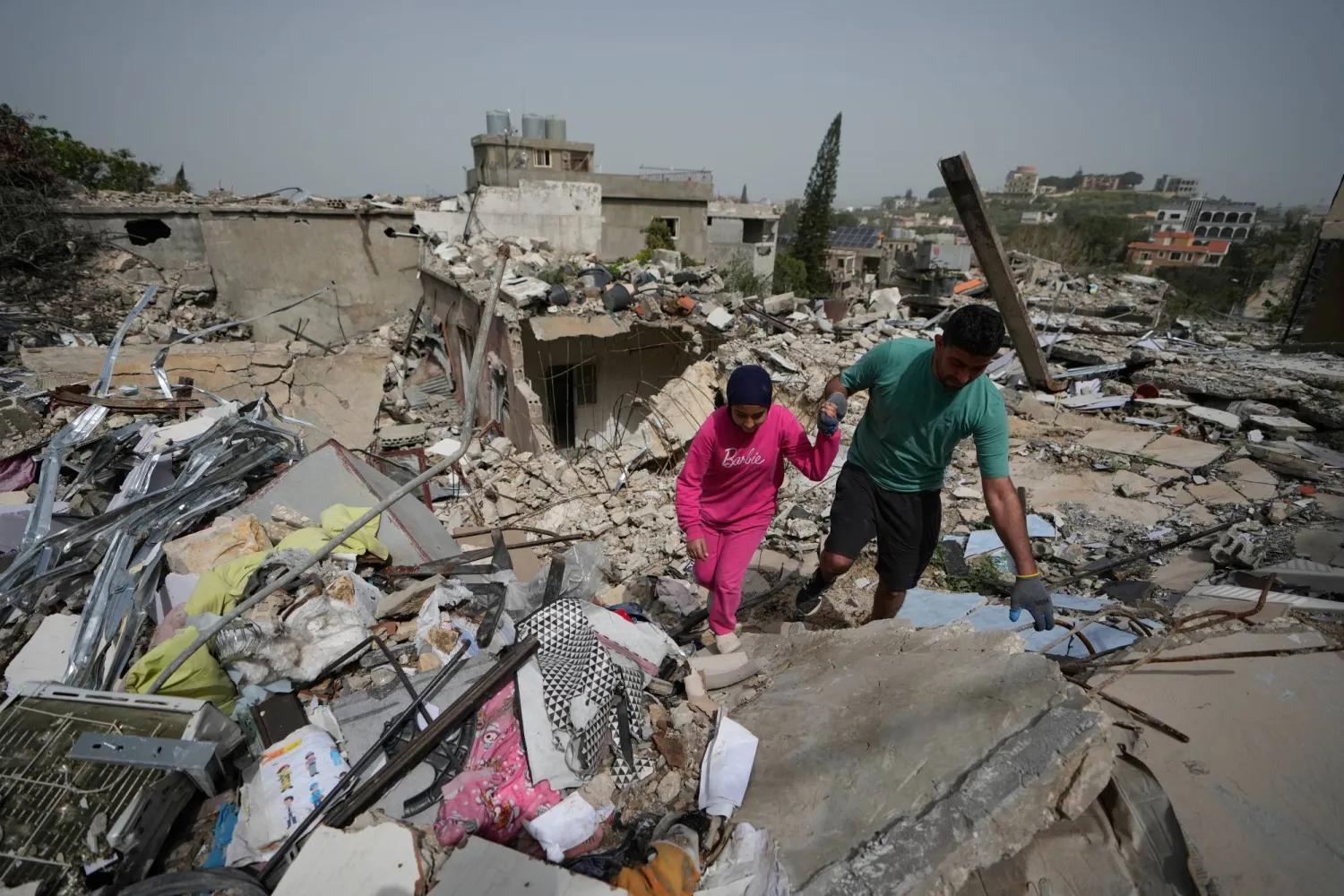
Amid the developments imposed by the recent war, it has become difficult to quantify Israeli violations, as UNIFIL forces are unable to enter towns under full Israeli control. A security source told Asharq Al-Awsat that violations are not limited to artillery shelling, drone strikes, or clashes with Hezbollah fighters, but also include the deliberate booby-trapping and complete demolition of homes under the pretext of destroying the group’s infrastructure.
The source described the situation in the south as unstable, warning of concerns about a return to a cycle of fighting. The source added that the Lebanese side had been monitoring developments through the mechanism committee, but the committee is currently not in place, leaving no mechanism to address new Israeli attacks.
On the ground, one person was killed in the town of Kounine and others were wounded by a suspicious object believed to be a cluster munition left over from Israeli bombardment, just hours after the ceasefire came into effect. Artillery shelling continues to be heard in several villages in the central sector, while Israeli forces fired bursts of gunfire toward the town of Aitaroun.
Field reports indicate that the town of Khiam continues to come under artillery fire. Israeli forces have also carried out demolitions in Khiam, Qantara, Shamaa, Bint Jbeil, and Bayyada. Explosions and sweeping fire were also reported in the vicinity of Bint Jbeil.
Two tracks of operations in the south
The ceasefire terms, which took effect at midnight between Thursday and Friday, have imposed a new and more difficult reality compared with the cessation of hostilities agreement reached between Lebanon and Israel on November 27, 2024.
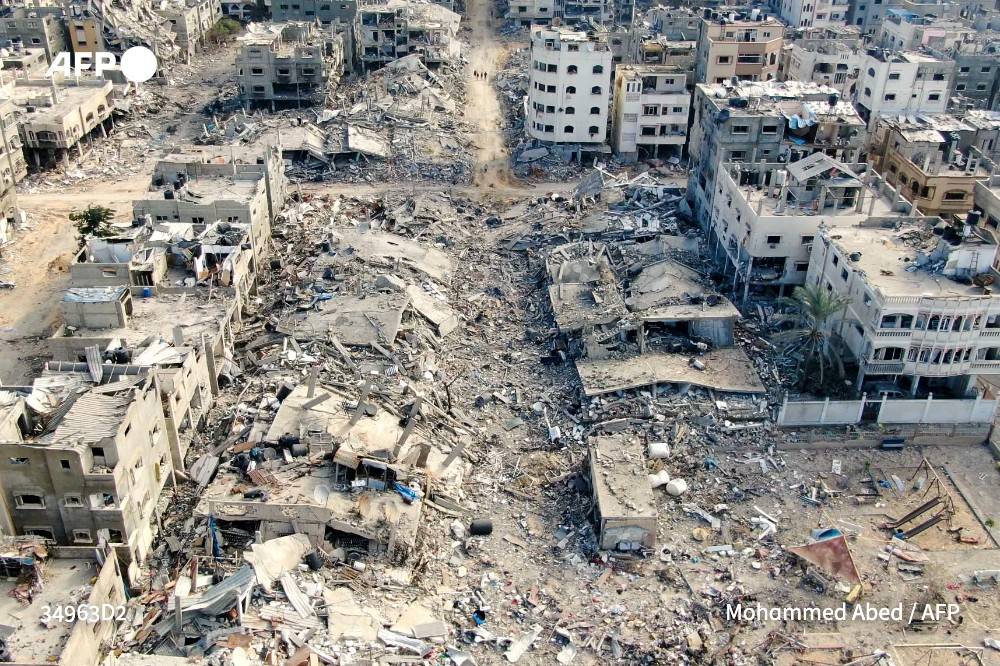
Daoud said Israeli operations south of the Litani River are proceeding along two parallel tracks aimed at establishing a new reality on the ground. The first track involves efforts by the Israeli army to entrench its presence in villages it has taken control of, alongside continuing a policy of widespread destruction similar to what it previously carried out in Gaza.
He said the Israeli army is focusing on demolishing buildings in villages it controls in the first and second defensive lines, uprooting trees including olive trees, and setting forests on fire to turn them into completely scorched areas. He added that Israel is also clearing the rubble of destroyed homes and transporting it for recycling, indicating an intention to fundamentally alter the nature of the area.
The battle for Bint Jbeil
The second track centers, according to Daoud, on the battle for Bint Jbeil. He said the battle has two main dimensions: a symbolic one, as Hezbollah has called the city the “capital of the resistance,” and a strategic one due to its geographic location near the border, allowing whoever controls it to influence both northern Israel and southern Lebanon.
The importance of Bint Jbeil is not limited to symbolism but extends to its surroundings. Daoud said controlling the city effectively means controlling surrounding roads and towns, as it provides a tactical advantage that allows fire control over the northeastern and western sectors of the area. He added that operations inside Bint Jbeil will continue regardless of the ceasefire.
He also suggested that if a US green light is given, Israel may continue operations under what is described as “low-intensity warfare” or guerrilla-style operations, aimed at completing control over remaining Hezbollah positions in the city.
Daoud stressed that Israel’s less visible operations reflect a scorched-earth policy, turning occupied towns south of the Litani into fully devastated areas, mirroring the operational pattern seen in Gaza.