UN Says Israeli Tanks Burst through Gates of Peacekeeper Base in Lebanon

12 October 2024, Lebanon, Qliyaa: United Nations Interim Force In Lebanon (UNIFIL) peace keeping troops from the Spanish contingent conduct an early morning patrol in the southern Lebanese village of Qliyaa. Israeli forces attacked UNIFIL bases in south Lebanon wounding two soldiers. Photo: Stringer/dpa
TT

UN Says Israeli Tanks Burst through Gates of Peacekeeper Base in Lebanon

12 October 2024, Lebanon, Qliyaa: United Nations Interim Force In Lebanon (UNIFIL) peace keeping troops from the Spanish contingent conduct an early morning patrol in the southern Lebanese village of Qliyaa. Israeli forces attacked UNIFIL bases in south Lebanon wounding two soldiers. Photo: Stringer/dpa

The United Nations said on Sunday Israeli tanks had burst through the gates of a base of its peacekeeping force in southern Lebanon, the latest accusation of Israeli violations and attacks that have been denounced by Israel's own allies.

Israel's Prime Minister Benjamin Netanyahu called on the United Nations to evacuate the troops of the UNIFIL peacekeeping force from combat areas in Lebanon. Hours later, the force reported what it described as additional Israeli violations, including two Israeli Merkava tanks destroying the main gate of a base and forcibly entering before dawn that morning.

Soon after the tanks left, shells exploded 100 meters away, releasing smoke which blew across the base and sickened UN personnel, causing 15 to require treatment despite wearing gas masks, it said. It did not say who fired the shells or what sort of toxic substance it suspected.

It also accused Israel's IDF military of halting a logistics convoy. The Israeli military did not immediately respond to the statement.

"Any deliberate attack on peacekeepers is a grave violation of international humanitarian law and Resolution 1701," the UN force said. "UNIFIL's mandate provides for its freedom of movement in its area of operations, and any restriction on this is a violation of Resolution 1701. We have requested an explanation from the IDF from these shocking violations."

In his earlier statement addressed to UN Secretary-General Antonio Guterres, Netanyahu said: "The time has come for you to withdraw UNIFIL from Hezbollah strongholds and from the combat zones."

"The IDF has requested this repeatedly and has met with repeated refusal, which has the effect of providing Hezbollah terrorists with human shields."

Iran-backed armed group Hezbollah, which Israel has been battling on the ground since launching an incursion at the start of this month, denies Israel's accusation that it uses the proximity of peacekeepers for protection.

Netanyahu on Sunday expressed regret for wounding peacekeepers but accused the UN mission of providing a "human shield" for Hezbollah.

"We regret the injury to the UNIFIL soldiers and we are doing everything in our power to prevent this injury. But the simple and obvious way to ensure this is simply to get them out of the danger zone," he said in a video addressed to the UN secretary-general, who has been banned from entering Israel.

Israel has long accused the UN of being biased against it, and relations have worsened during the yearlong war in Gaza.

The conflict between Israel and Hezbollah fighters resumed a year ago when the group began launching rockets at northern Israel in support of Hamas at the start of the Gaza war.

Five peacekeepers have been wounded in a series of strikes in recent days, most blamed by UNIFIL on Israeli forces.

Italian Prime Minister Giorgia Meloni, typically one of Israel's most vocal supporters among Western European leaders, spoke to Netanyahu by phone on Sunday and denounced the "unacceptable" Israeli attacks, her government said.

Italy has more than a thousand troops in the 10,000-strong UNIFIL force, making it one of the biggest contributors of personnel. France and Spain, which each have nearly 700 soldiers in the force, have also condemned the Israeli attacks.

Israeli Foreign Minister Israel Katz reiterated on Sunday that Israel has banned UN chief Guterres from entering, due to what it says is antisemitic and anti-Israeli conduct, including his failure to adequately condemn Iran for a missile attack.

PEACEKEEPERS IN HARM'S WAY

The presence of UNIFIL puts peacekeepers from 50 separate countries in harm's way, in a force initially set up in southern Lebanon in 1978.

The area has seen decades of persistent conflict, with Israel invading in 1982, occupying southern Lebanon until 2000 and again fighting a major five-week war against Hezbollah in 2006, which ended with a ceasefire monitored by UNIFIL.

Israel's assault against Hezbollah over the past three weeks has been the deadliest in Lebanon in decades, driving 1.2 million Lebanese from their homes and inflicting an unprecedented blow on the group by killing most of its senior leadership.

Israeli officials say UNIFIL has failed in its mission of upholding UN Resolution 1701, passed after the 2006 war, which calls for the border area of southern Lebanon to be free of weapons or troops other than those of the Lebanese state.

US Defense Secretary Lloyd Austin, in a call with Israeli Defense Minister Yoav Gallant on Saturday, expressed "deep concern" about reports Israeli forces had fired on peacekeeper positions. He urged Israel to ensure their safety and that of the Lebanese military, which is not party to Israel's conflict with Hezbollah.

SECURITY IN JEOPARDY

The Israeli military has already told UN peacekeepers to get out of the way, asking them weeks ago to prepare to relocate more than 5 km (3 miles) from the border "in order to maintain your safety," according to an excerpt from a message seen by Reuters.

UN peacekeeping chief Jean-Pierre Lacroix told the Security Council on Thursday that "the safety and security of peacekeepers is now increasingly in jeopardy". They remained in position but operational activities had virtually come to a halt since Sept. 23.

Attacks on a watchtower, cameras, communications equipment and lighting had limited UNIFIL's monitoring abilities, a UNIFIL spokesperson said on Thursday.

Lebanon's government says more than 2,100 people have been killed and 10,000 wounded in over a year of fighting, mainly over the past few weeks. The toll does not distinguish between civilians and combatants but includes scores of women and children.

The Middle East remains on high alert for Israel to retaliate against Iran for an Oct. 1 volley of long-range missiles launched in response to Israel's assaults on Lebanon.

Iran said on Sunday it has "no red lines" in defending itself. Foreign Minister Abbas Araqchi's comments appeared intended to counter suggestions that Iran would absorb an Israeli strike without a response, as it did earlier this year when Israel last struck Iran after a volley of Iranian missiles.

US officials believe Israel has narrowed down targets in its potential retaliation for the Iranian missile barrage, and would aim to hit military and energy infrastructure, NBC reported on Saturday. It said there was no indication Israel would hit nuclear facilities or assassinate officials in Iran. 


Sisi, Macron Hold Strategic Talks amid Escalating Regional Crises

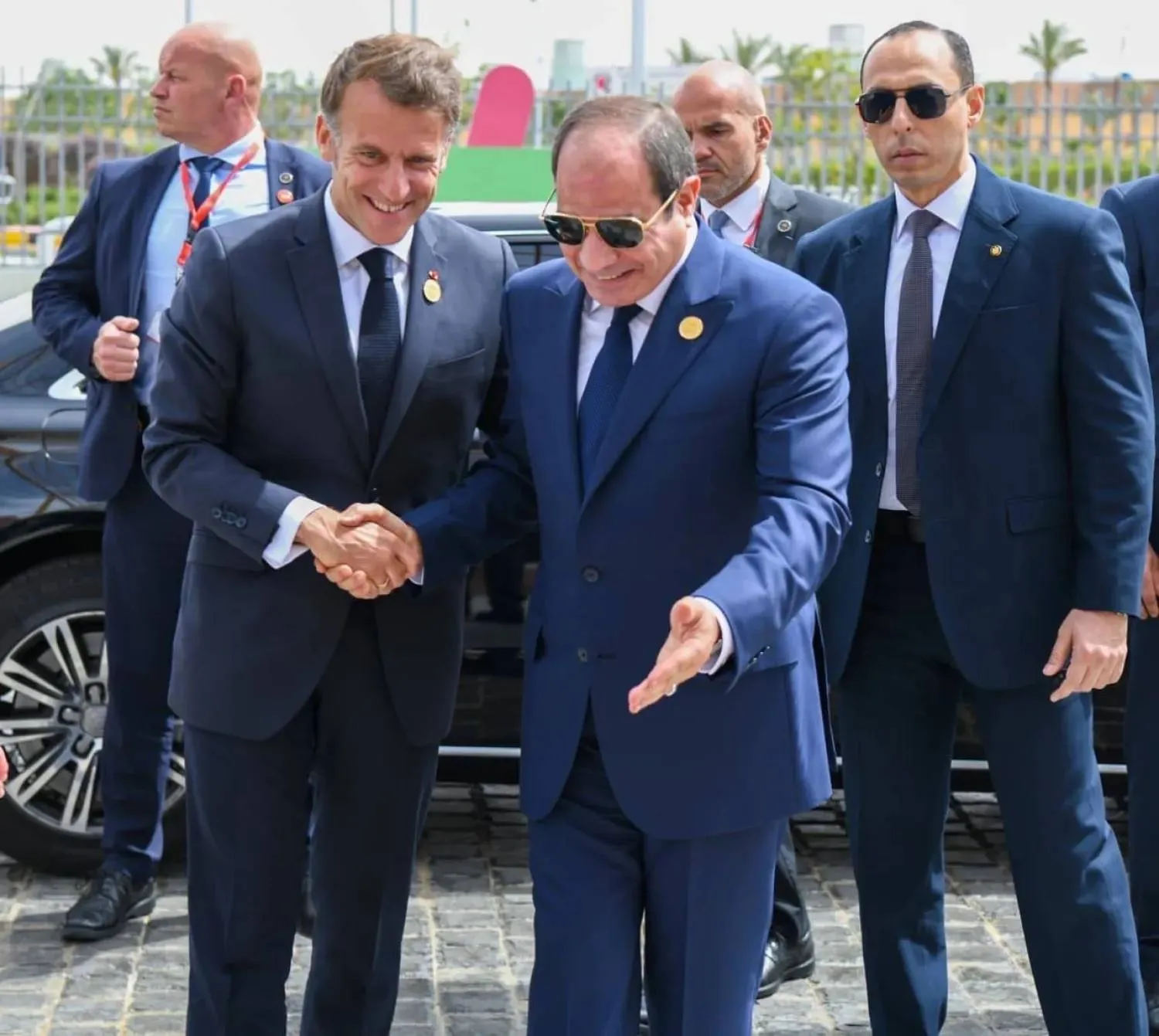
Sisi welcomed Macron and the two discussed regional developments. (Egyptian Presidency)
TT

Sisi, Macron Hold Strategic Talks amid Escalating Regional Crises

Sisi welcomed Macron and the two discussed regional developments. (Egyptian Presidency)

Egyptian President Abdel Fattah al-Sisi and French President Emmanuel Macron held wide-range talks in Alexandria on Saturday focused on bilateral ties and mounting regional crises, as the two leaders inaugurated the new headquarters of Senghor University.

Macron arrived in the Mediterranean city after landing at Borg El Arab airport to open the campus of the francophone institution, which specializes in African development and leadership training.

The Egyptian presidency said the discussions covered strategic relations between Cairo and Paris as well as regional developments, describing Macron’s visit as a reflection of the “distinguished friendship” between the two countries.

Sisi praised what he called significant progress in bilateral ties, particularly after relations were elevated to a strategic partnership during Macron’s visit to Egypt in April 2025.

According to presidential spokesman Mohamed al-Shennawy, Sisi stressed the need to strengthen cooperation in trade, investment, education, industry and transport in ways that serve the interests of both peoples and deepen ties between Egypt and the European Union.

The talks also focused on regional tensions. Sisi reviewed Egyptian efforts aimed at containing current crises and warned against further escalation and instability, citing their impact on regional and global security as well as supply chains, trade and transport.

He reiterated Egypt’s support for the security and stability of Arab states and rejected any infringement on their sovereignty. Macron, for his part, said he hoped the current regional crisis would be resolved quickly to restore peace and stability to the Middle East.

The leaders also discussed the Palestinian issue, with Sisi outlining Egyptian efforts to preserve the Gaza ceasefire agreement and implement the second phase of the truce. He called for unrestricted humanitarian aid access to the Gaza Strip and for the launch of early recovery and reconstruction efforts.

Sisi also expressed Egypt’s “deep concern” over escalating violations in the occupied West Bank and reiterated support for a Palestinian state based on the June 4, 1967 borders with East Jerusalem as its capital, in line with international legitimacy and the two-state solution.

The discussions further touched on developments in Lebanon, with both sides emphasizing the importance of preserving peace and stability and enhancing Mediterranean cooperation to promote shared prosperity.

French foreign ministry spokesman Pascal Confavreux said Macron’s visit underscored the depth of the strategic partnership between Paris and Cairo and reflected French confidence in Egypt’s regional role.

In remarks to Egypt’s state news agency MENA, he said bilateral relations had gained momentum since the launch of strategic dialogue talks in April 2025, alongside stronger cooperation in priority sectors including the economy, energy and transport, supported by the French Development Agency.

The inauguration ceremony for Senghor University was attended by Burundi Prime Minister Nestor Ntahontuye, Organization internationale de la Francophonie Secretary-General Louise Mushikiwabo, Senegalese Foreign Minister Cheikh Tidiane Niang and African Union Commissioner for Education, Science, Technology and Innovation Mohammed Belhocine.

In his address, Sisi described the opening of the university’s new headquarters as coming at a critical moment marked by growing development challenges and a rising need for effective international partnerships, particularly among Global South countries.

Founded in 1990 on the initiative of the Organization internationale de la Francophonie, Senghor University focuses on African development issues and the training of future leaders across the continent.

Macron described the institution as a center for academic, scientific and cultural cooperation among francophone countries and said the Egypt-France alliance stood for “peace, stability and generosity”.

The French president is due to continue his African tour in Kenya for a France-Africa summit before heading to Ethiopia for talks with Prime Minister Abiy Ahmed.


Israeli Strikes in Gaza Kill Three, Medics Say, Testing Fragile Ceasefire

Palestinians inspect the damage to a home in the Shati refugee camp after Israeli airstrikes targeted a house in Gaza City Saturday, May 9, 2026. (AP)
TT

Israeli Strikes in Gaza Kill Three, Medics Say, Testing Fragile Ceasefire

Palestinians inspect the damage to a home in the Shati refugee camp after Israeli airstrikes targeted a house in Gaza City Saturday, May 9, 2026. (AP)

Israeli ‌strikes killed at least three Palestinians in Gaza on Sunday, including two members of the Hamas-run police force, health officials said, in violence that underscored the fragility of a US-brokered ceasefire.

Medics said an air strike killed one person in the Maghazi refugee camp in ‌the Gaza ‌Strip, while another killed ‌the ⁠head of the criminal ⁠police force in Khan Younis, Wessam Abdel-Hadi, and his aide, according to Gaza’s Hamas-run interior ministry.

Reuters has previously reported that Israel has heightened its attacks ⁠on Gaza's Hamas-run police force ‌that the fighters ‌have used to re-establish governance in ‌areas under their control.

The Israeli ‌military didn't immediately comment on either incident.

Violence in Gaza has persisted despite an October 2025 ceasefire, with Israel conducting ‌almost daily attacks.

At least 850 Palestinians have been killed ⁠since ⁠the ceasefire took effect, local medics say, while Israel says fighters have killed four of its soldiers over the same period.

Israel and Hamas have blamed each other for ceasefire violations.

More than 72,500 Palestinians have been killed since the Gaza war started in October 2023, Gaza health authorities say, most of them civilians.


Report: Efforts Underway to Bring Gaza Administration Committee into Strip Before Eid al-Adha

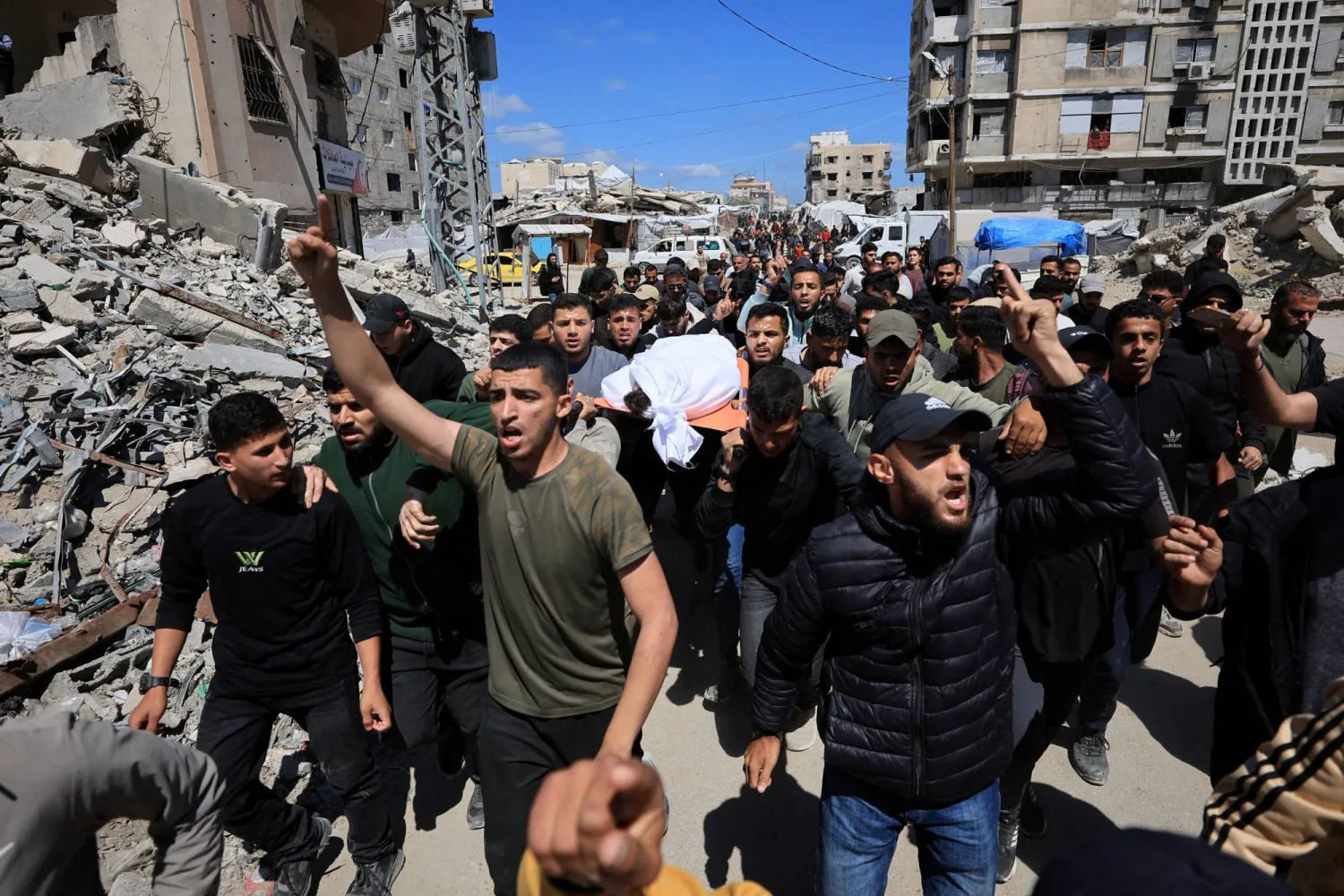
Mourners attend the funeral of Azzam al-Hayya, the son of Khalil al-Hayya, Hamas' chief negotiator in US-mediated talks over Gaza's future, after Azzam succumbed to his injuries on Thursday after being struck in an Israeli attack on Wednesday, in Gaza City May 7, 2026. (Reuters)
TT

Report: Efforts Underway to Bring Gaza Administration Committee into Strip Before Eid al-Adha

Mourners attend the funeral of Azzam al-Hayya, the son of Khalil al-Hayya, Hamas' chief negotiator in US-mediated talks over Gaza's future, after Azzam succumbed to his injuries on Thursday after being struck in an Israeli attack on Wednesday, in Gaza City May 7, 2026. (Reuters)

A well-informed Egyptian source told Asharq Al-Awsat on Saturday that mediators are working to bring members of the National Committee for the Administration of Gaza into the enclave soon, with discussions proposing that the move take place before Eid al-Adha, which falls at the end of the month.

“The negotiations did not stop because of the killing of the son of Hamas leader Khalil al-Hayya, and they will not stop,” it added, saying mediators are waiting for the Israeli government to respond to proposals by senior representative of the Gaza Board of Peace Nickolay Mladenov.

On Thursday, Hamas confirmed the death of Khalil al-Hayya's son Azzam from wounds sustained after an Israeli attack targeted him and others in Gaza City on Wednesday.

The attack also killed Hamza al-Sharbasi, a field commander in Hamas’ Qassam Brigades armed wing, in the Shujaiyya neighborhood.

Two days before the killing, Mladenov said he had a “positive and substantive discussion” with Israeli Prime Minister Benjamin Netanyahu.

In a post on X after meeting the PM, Mladenov added that all parties were working to turn Gaza commitments into concrete measures, saying that progress would require decisions to be made. He did not elaborate.

The Egyptian source revealed that the meeting between Mladenov and Netanyahu “was not successful.”

It explained that Mladenov presented the Israeli prime minister with a working paper outlining new paths of action for the coming period, but the meeting “did not achieve progress and was not good.”

The source revealed that the paper focused on two main points. The first was allowing members of the Gaza administration committee to enter the Strip, something the parties agreed would take place during the coming period, specifically before Eid al-Adha.

The second was increasing the entry of humanitarian aid.

Speaking to Asharq Al-Awsat, the source said Cairo would soon host leaders from the Palestinian Fatah movement and its various factions ahead of its general conference on May 14.

The meetings aim to support Egypt’s efforts to reorganize Palestinian priorities following the successful municipal elections, which included Gaza’s Deir al-Balah city.

The source stressed that contacts regarding completion of the ceasefire implementation have not stopped, and that Cairo remains determined to ensure the success of efforts and deny Israel the opportunity to evade previous agreements.

According to the source, continuous contacts are also taking place with Türkiye and Qatar, alongside a role played by the United Arab Emirates, in order to push forward a Gaza agreement.

The source said all parties are currently waiting to see how Israel responds to regional and international pressure, while efforts continue to strengthen communication with the United States to increase pressure on Netanyahu, who argues that there has been no breakthrough on the disarmament of factions, including Hamas.

The source said Cairo recognizes the importance of timing, particularly with Israeli parliamentary elections approaching.