The first meeting of the Board of Peace, chaired by US President Donald Trump and attended by Arab and Israeli representatives in the absence of the Palestinian Authority, set out ambitious goals but left key issues unresolved.
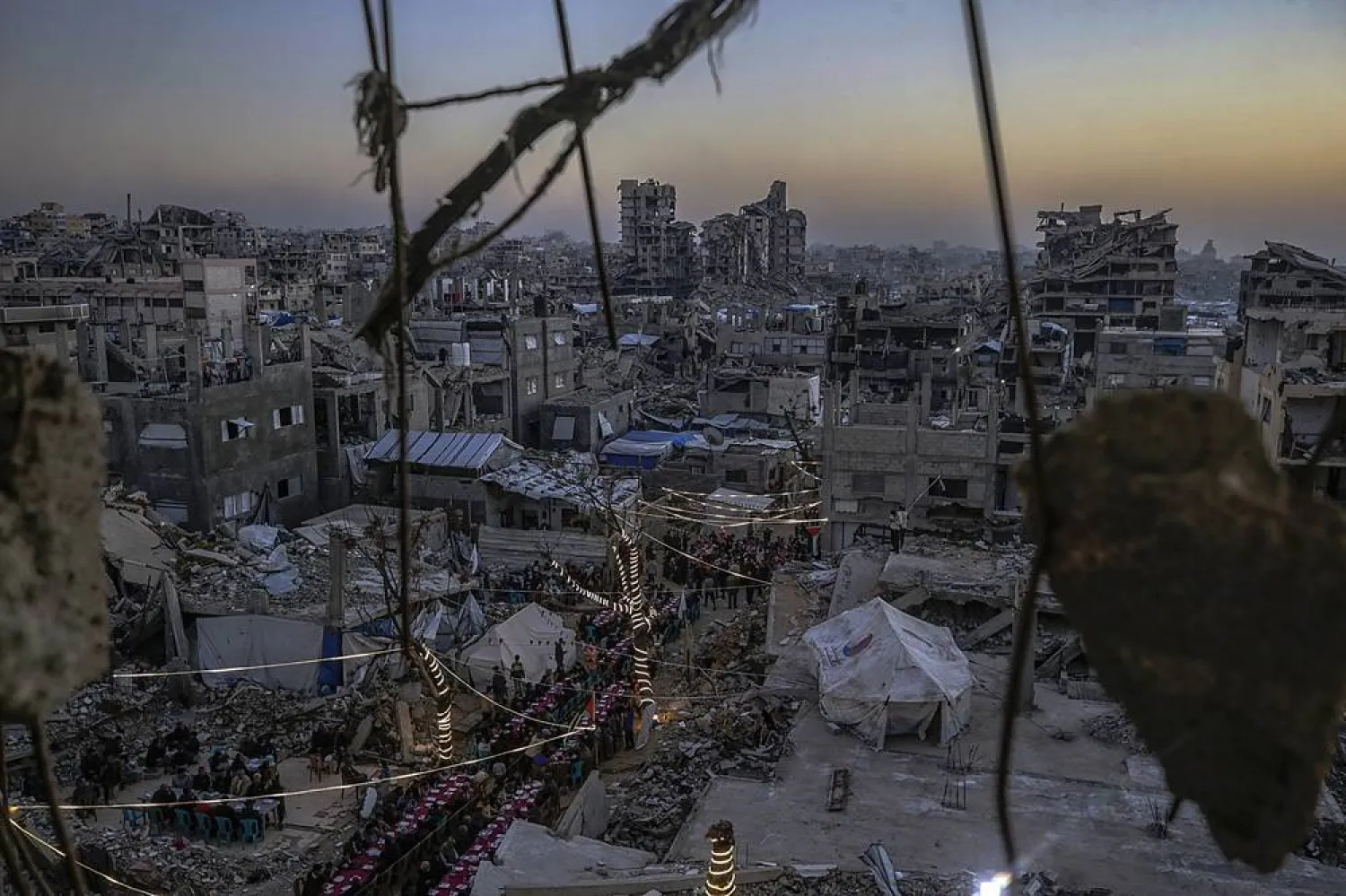
Washington distilled its priorities into two tracks: funding the reconstruction of Gaza and disarming Hamas. Arab participants, however, tied their demands to full implementation of the Gaza ceasefire, deployment of an international stabilization force, and enabling the technocrats’ committee to operate across the enclave without obstruction from Tel Aviv.
The meeting, which drew representatives from more than 40 countries and observers from 12 others, may struggle to translate pledges into practice, experts told Asharq Al-Awsat.
They pointed to formidable hurdles, foremost Israel’s continued deployment in Gaza and the absence of clear understandings on Hamas disarmament, warning that these issues could stall or even freeze the agreement.
Concerns
Indonesian President Prabowo Subianto urged caution against efforts that could derail the peace process in Gaza, Germany’s dpa news agency reported, citing Indonesia’s Antara News on Friday.
Trump announced that the United States would contribute $10 billion to the board, saying Saudi Arabia, Kazakhstan, Azerbaijan, the United Arab Emirates, Morocco, Bahrain, Qatar, Uzbekistan, and Kuwait had pledged more than $7 billion to the Gaza relief package.
He pressed hard on Hamas disarmament, saying the group would hand over its weapons as promised and warning of a harsh response if it did not.
Israel’s Foreign Minister Gideon Saar struck the same note in his address to the board, voicing support for disarming Hamas and other factions. Prime Minister Benjamin Netanyahu had already set the tone ahead of the meeting, declaring that there would be no reconstruction before Gaza is disarmed.
General Jasper Jeffers, commander of the newly formed International Stabilization Force, said Indonesia, Morocco, Kazakhstan, Kosovo, and Albania had pledged troops. Egypt and Jordan, which border Gaza, agreed to train police and security forces.
Egypt, in remarks delivered by Prime Minister Mostafa Madbouly, underscored the need to preserve the link between the West Bank and Gaza to allow the Palestinian Authority to resume its responsibilities in the enclave.
He called for empowering Palestinians to manage their own affairs and for the technocrats’ committee to begin work from inside Gaza and across all its areas.
Qatar’s Prime Minister and Foreign Minister Sheikh Mohammed bin Abdulrahman Al Thani pledged $1 billion from Doha to back the board’s push for a final settlement, saying the Board of Peace under Trump’s leadership would drive full implementation of the 20-point plan without delay.
Saeed Okasha, an Israeli affairs analyst at the Al-Ahram Center for Political and Strategic Studies, said the proposals unveiled by the Board of Peace lack operational clarity and risk creating confusion in implementation, potentially leading to paralysis.
Trump, he said, rushed to launch the board without first resolving core obstacles or forging solid understandings.
Palestinian political analyst Nizar Nazzal shared that view, arguing that the board’s pledges could falter because they emphasize economic measures, such as reconstruction funding, without a clear roadmap, and security measures, such as disarming Hamas, without addressing Israeli withdrawal or the group’s future.
“This sidestepping of political commitments will collide with security complexities and delay implementation of contentious provisions such as deploying stabilization forces, Israeli withdrawal, or empowering the technocrats’ committee,” he said.
Hamas
Hamas, for its part, has avoided direct confrontation with Trump’s recent calls for its disarmament. In a statement on Thursday, it said any arrangements in Gaza must begin with a “complete halt to the Israeli aggression.”
In another statement later that evening, the group said any political track or arrangements discussed regarding the Gaza Strip and the future of our Palestinian people must start with a complete cessation of the aggression, lifting the siege, and guaranteeing our people’s legitimate national rights, foremost among them the right to freedom and self-determination.
US mediator Bishara Bahbah said on Thursday that Hamas disarmament hinges on guarantees and protection for its members.
Okasha said an end to the offensive in Gaza, as Hamas demands, is unlikely so long as disarmament remains unresolved, pointing to US and Israeli statements.
The course Hamas appears to be charting, he said, suggests it wants to remain in place, a stance that could block implementation of the agreement and even pave the way for a return to war, especially as Washington has yet to clarify the mandate and timeline for deploying the stabilization force.
Nazzal said negotiating with Hamas over ending its existence is unrealistic. Its future must be addressed through serious, genuine understandings rather than a continuation of transactional trade-offs, he said.