Syrian diplomacy has ended an absence of nearly 14 years from Libya following talks held Sunday in Tripoli by Foreign Minister and Expatriates Asaad al-Shaibani aimed at strengthening bilateral relations and expanding cooperation.
Al-Shaibani reopened Syria’s embassy in the Libyan capital during the visit and met several officials.
The Syrian Embassy in Tripoli closed in 2012, months after the fall of late Libyan leader Muammar Gaddafi’s regime in August 2011, after Libya’s then-Transitional National Council recognized the Syrian revolution. Relations remained severed throughout the rule of ousted Syrian President Bashar al-Assad.
The new Syrian administration, led by President Ahmed al-Sharaa, has sought to reopen channels with Libya, with Syrian officials visiting Tripoli to explore bilateral ties and cooperation in various fields — a move observers see as an attempt to forge “new relations that benefit both countries.”
A ‘New Phase’
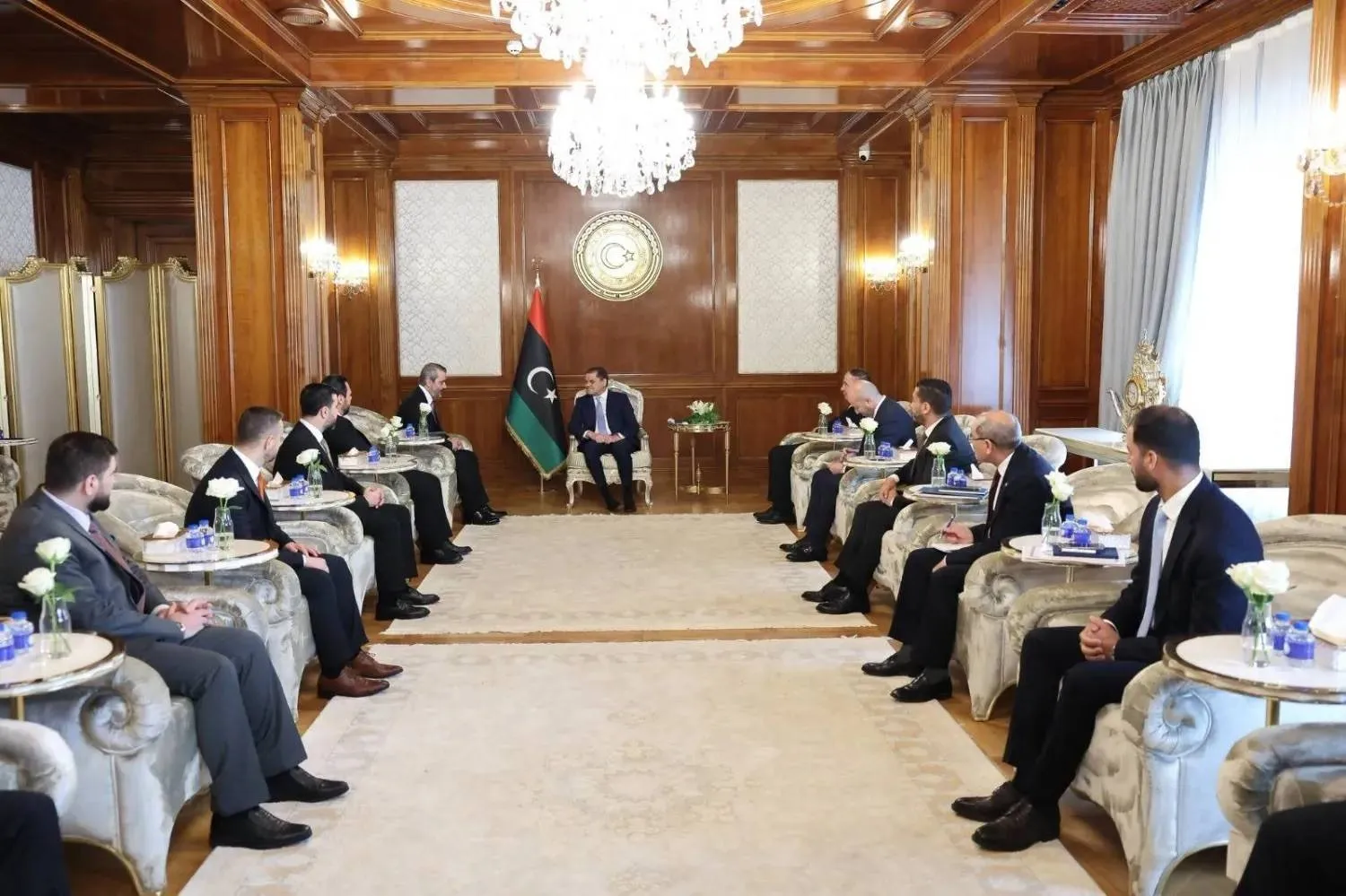
Al-Shaibani and his delegation arrived at Mitiga International Airport in Tripoli on Sunday morning and later met Abdul Hamid Dbeibeh, prime minister of the interim Government of National Unity.
Before meeting Dbeibeh, the Syrian minister held talks with Taher al-Baour, who is overseeing the affairs of the GNU’s Foreign Ministry and received him at the airport.
Tripoli’s Ministry of Foreign Affairs and International Cooperation said the talks addressed issues of mutual interest, ways to advance Libyan-Syrian relations and strengthen coordination and consultations “in a manner that serves the common interests of the two brotherly peoples.”
The two sides also discussed procedures for reopening the Syrian Embassy in Tripoli to strengthen diplomatic communication, facilitate consular services and develop bilateral cooperation.
Dbeibeh’s talks with al-Shaibani focused on “reactivating frameworks for Libyan-Syrian cooperation, raising the level of diplomatic representation and revitalizing the Joint Higher Committee,” as well as economic, investment and trade cooperation and outstanding financial issues between institutions in the two countries.
According to Dbeibeh’s office, they also discussed security cooperation and counterterrorism, the situation of the two countries’ communities, consular services, prisoners and detainees, refugees and displaced people, as well as reopening the Syrian Consulate in Benghazi.
Dbeibeh stressed the importance of “opening a new phase of relations” based on shared interests and practical cooperation, while resolving outstanding issues in a way that serves citizens of both countries.
Energy and Investment
The Syrian Foreign Ministry said al-Shaibani also met Libyan Oil and Gas Minister Khalifa Abdulsadek and Ali Mahmoud Hassan Mohamed, chairman and CEO of the Libyan Investment Authority.
The talks covered bilateral cooperation in energy and investment, expanding partnerships and exchanging expertise in sectors of mutual interest to strengthen economic ties.
Syrian-Libyan relations have seen notable progress recently. In August 2025, a Syrian technical and diplomatic delegation raised the Syrian flag over the embassy building in Tripoli in preparation for its reopening.
Earlier this month, al-Shaibani met Libya’s chargé d’affaires in Damascus, Walid Hassan Ammar, to discuss strengthening bilateral relations and exchange views on issues of common interest.
Al-Sharaa also met Dbeibeh on the sidelines of the Antalya Diplomacy Forum in April 2025, when they agreed to reactivate the Libyan-Syrian Joint Higher Committee.
A Step With ‘Practical Dimensions’
The Syrian and Libyan foreign ministries said al-Shaibani’s visit reflected a shared commitment to strengthening the countries’ historic ties and expanding bilateral cooperation and coordination.
Tripoli’s Foreign Ministry said al-Baour and al-Shaibani also discussed completing procedures to reactivate the Joint Higher Committee and signing the agreement governing its work, opening broader prospects for economic, development and other forms of cooperation.
Turkish international relations researcher Muhannad Hafizoglu said the mutual opening between Tripoli and Damascus “reflects both countries’ efforts to emerge from their crises by drawing up a different map of foreign relations.”
“Libya sees Damascus as a gateway for expanding its regional partnerships, while Syria seeks to reach deeper into North Africa through the Libyan gateway,” Hafeziglu told Asharq Al-Awsat.
He noted that the diplomatic move had “practical dimensions that go beyond protocol,” particularly in addressing outstanding issues related to the Syrian presence in Libya, including refugees, military personnel and administrative arrangements.
He argued that both sides aim to build “a partnership based on mutual benefits and avoid the mistakes of the past through joint coordination.”
Missing Persons and Detainees
In mid-August, Libya received a delegation headed by Syrian chargé d’affaires Samir al-Shalabi to discuss obstacles to developing economic relations, including difficulties in issuing visas to Syrians and some customs procedures affecting Libyan exports to Syria.
Tripoli authorities continue to hold a number of Syrians who were transferred by Türkiye to fight in Libya, while Russian forces remain deployed in areas controlled by the General Command of the Libyan National Army under the banner of the “Africa Corps.”
Libyan rights activist Tarik Lamloum stressed the importance of Shaibani’s visit to Libya and urged that the issue of missing and detained Syrians be a priority. He called for lists of Syrians held in prisons and other detention facilities to help determine their fate, including whether they remain detained or went missing during sea journeys.