Five Killed in Turkish Drone Strikes on PKK Members in Northern Iraq

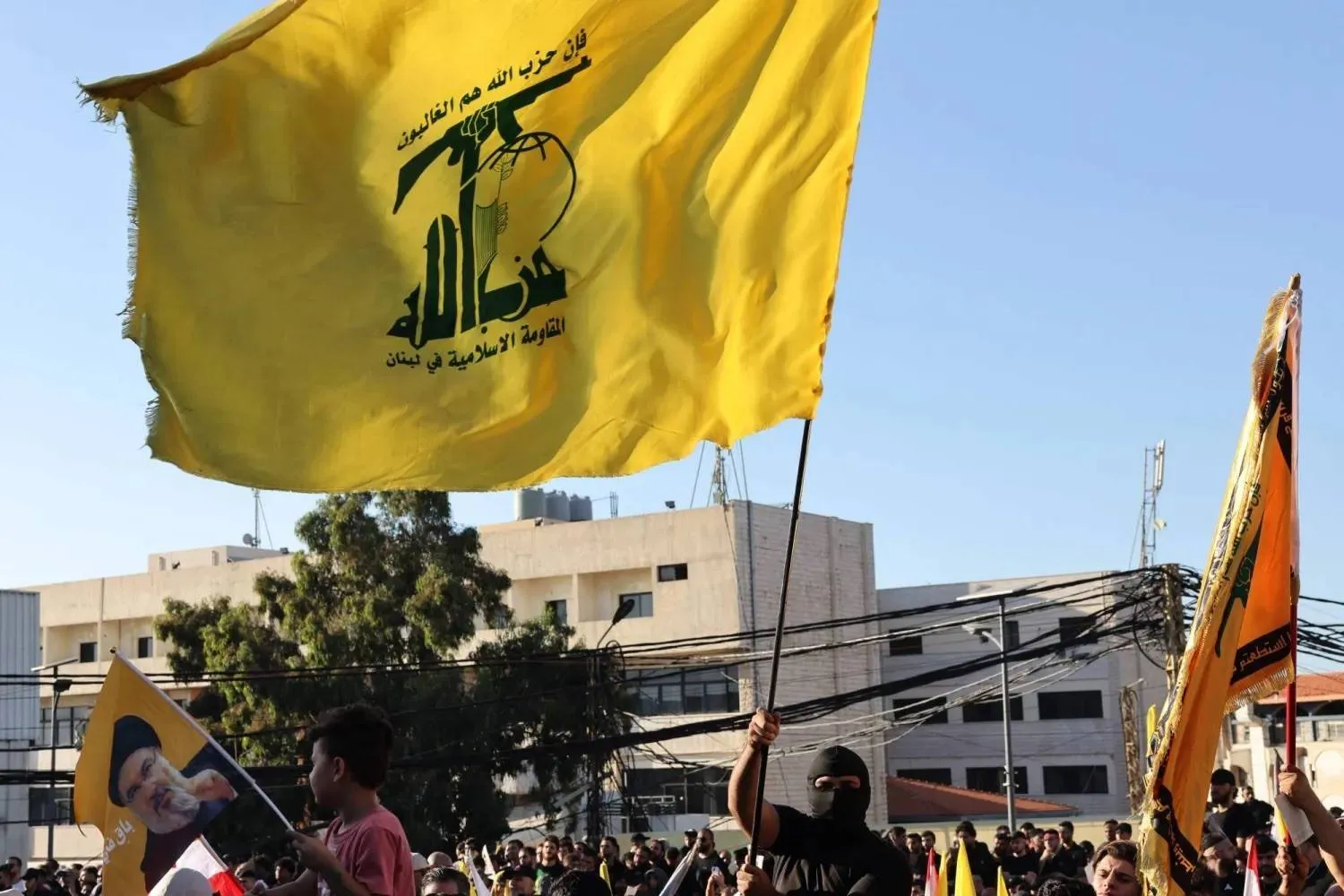
10 April 2016, Hamburg: Participants in a demonstration by Kurds and left-wing groups wave the flag of the banned Kurdistan Workers' Party (PKK). (dpa)
TT

Five Killed in Turkish Drone Strikes on PKK Members in Northern Iraq

10 April 2016, Hamburg: Participants in a demonstration by Kurds and left-wing groups wave the flag of the banned Kurdistan Workers' Party (PKK). (dpa)

Turkish drone strikes killed five members of the Kurdistan Workers Party (PKK) in northern Iraq, Iraqi Kurdistan's counter-terrorism service and security sources said on Sunday.

The first Turkish strike targeted a vehicle in a mountain area near Iraq's northern province Dohuk late on Saturday, killing three, including one person identified by the Iraqi Kurdistan's counter-terrorism service statement as a "senior PKK official", the statement added.

Another drone strike on Sunday targeted a vehicle, killing two fighters from the Sinjar Resistance Units (YBS), a militia affiliated with the Kurdistan Workers Party (PKK), two security sources and a local official in the district of Sinjar told Reuters.

Türkiye regularly carries out airstrikes on PKK militants in northern Iraq and has dozens of outposts in the Iraqi territory.

The PKK launched an insurgency against Ankara in 1984 with the initial aim of creating an independent Kurdish state. It subsequently moderated its goals to seeking greater Kurdish rights and limited autonomy in southeast Türkiye.


Israeli Forces Kill Palestinian Infant in West Bank

Fahd Abu Heikal, 41 displays a mobile photo of his seven month old Palestinian baby boy Sam, who was killed on Friday when Israeli soldiers fired at the vehicle carrying him and his parents, in Tel Rumeida, at a hospital in the West Bank city of Hebron Saturday, June 6, 2026. (AP Photo/Mahmoud Illean)
TT

Israeli Forces Kill Palestinian Infant in West Bank

Fahd Abu Heikal, 41 displays a mobile photo of his seven month old Palestinian baby boy Sam, who was killed on Friday when Israeli soldiers fired at the vehicle carrying him and his parents, in Tel Rumeida, at a hospital in the West Bank city of Hebron Saturday, June 6, 2026. (AP Photo/Mahmoud Illean)

Israeli troops killed a seven-month-old Palestinian baby boy after firing at his parents’ vehicle in the occupied West Bank, the Palestinian health ministry said.

Sam Fahd Abu Haikal was killed Friday evening, and his parents were wounded while driving in the Tel Rumeida area south of Hebron City, according to the ministry.

The official Palestinian news agency WAFA said the infant was critically wounded after being struck in the jaw by the same bullet that injured his mother. He later died of his injuries.

His father, Fahd Abdul Aziz Abu Haikal, a lecturer at Bethlehem University, was shot in the hand. They were traveling from Bethlehem to visit family in Hebron when soldiers opened fire, the agency reported.

A man inspects the shattered family vehicle of seven month old Palestinian baby boy Sam Fahd Abu Heikal, who was killed on Friday when Israeli soldiers fired at the vehicle carrying him and his parents, in Tel Rumeida, in the West Bank city of Hebron Saturday, June 6, 2026. (AP Photo/Mahmoud Illean)

Israel’s military has scaled up military operations in the West Bank since the Oct. 7, 2023 Hamas attack.

The United Nations said last month that more than 1,000 Palestinians have been killed in the West Bank and east Jerusalem since the war began, at least 240 of them children. Forty-nine people have been killed since the start of this year, it said.

The army said an initial inquiry found that the injured were uninvolved civilians and said the situation is under review.

Israel's military said Friday that soldiers shot at a vehicle that was perceived to be accelerating toward them in the Hebron area. It said soldiers responded with single shots, wounding three Palestinians who were evacuated for medical treatment.


Yemeni Gov’t Accuses Houthis of Assassinating Senior Development Official

Yemeni Interior Minister Maj. Gen. Ibrahim Haidan (Government media)
TT

Yemeni Gov’t Accuses Houthis of Assassinating Senior Development Official

Yemeni Interior Minister Maj. Gen. Ibrahim Haidan (Government media)

The Yemeni government has accused the Houthi group of assassinating one of the country’s most prominent development officials, in a case that has drawn wide attention because of the victim’s stature and his role in leading an important development program.

The accusation was made during talks between Yemeni Interior Minister Maj. Gen. Ibrahim Haidan and European Union Ambassador to Yemen Patrick Simonnet.

Haidan briefed the ambassador on the latest findings in the investigation into the killing of Wesam Qaid, Acting Executive Director of the Social Fund for Development (SFD), and on the measures taken by security agencies since the incident, according to official media.

The program has worked for decades to support local communities and ease the impact of humanitarian crises.

Haidan said the investigation had led to the arrest of several suspects. He also pointed to evidence that authorities said proved Houthi involvement in planning and carrying out the killing.

The case adds a new dimension to accusations exchanged between the government and the group over the targeting of civilian cadres and workers in humanitarian and development fields.

According to Yemen’s Interior Ministry, the investigation produced what it described as decisive results, prompting authorities to hold the Houthis responsible for the assassination.

Qaid had led an institution that played a central role in carrying out development and service projects across Yemen’s governorates.

Haidan told the EU ambassador that security agencies were continuing to complete the investigation, collect evidence, and pursue those involved. He said the crime could not be separated from the complex security climate Yemen has faced for years.

He also linked the case to the Houthis’ continued detention of a number of United Nations employees and staff from international organizations, saying such practices reflected an escalating pattern of restrictions on humanitarian and development work.

Government circles see the killing as a painful blow to development efforts in Yemen.

The SFD is considered one of the country’s most important institutions, having maintained its work during the years of war and helped provide jobs and improve basic services in the most vulnerable areas.

The assassination case was discussed as part of broader talks on security cooperation between Yemen and the EU. Haidan praised the EU’s support for the Yemeni government and its programs to build the capacity of security agencies.

He said his ministry hoped to expand its partnership with the European Union, particularly in combating illegal migration and cross-border security challenges. He stressed the importance of joint coordination to protect mutual interests and promote stability.

Simonnet, for his part, reiterated EU’s support for Yemen’s Presidential Leadership Council and government. He also confirmed continued cooperation with the Interior Ministry in various security fields to help consolidate security and stability, according to official media.

The support comes as the government seeks to mobilize more international backing to confront worsening security, economic, and humanitarian challenges, amid the continuing conflict and declining international funding for relief and development programs.


Sudanese Groups Agree on Basis for Transition to Democratic Rule

A photo shows political and civil groups who participated in the Addis Ababa meeting and agreed on a new path to end the war
TT

Sudanese Groups Agree on Basis for Transition to Democratic Rule

A photo shows political and civil groups who participated in the Addis Ababa meeting and agreed on a new path to end the war

Sudanese political and civil forces from rival camps have reached a significant breakthrough, agreeing on a common vision to launch a process aimed at ending the war and laying the groundwork for a peaceful transition to democratic civilian rule, following days of talks.

The forces, once grouped under one umbrella before the war split them apart and hardened their positions, issued a joint statement that included the Civil Democratic Alliance for the Forces of the Revolution, known as Somoud, led by former prime minister Abdalla Hamdok, the Democratic Bloc, an ally of the Sudanese army, and the Arab Socialist Baath Party, along with other parties, political forces, public figures, and civil, women’s and youth organizations.

The statement said the parties had agreed on a new political path to achieve comprehensive peace, end the war, and establish the basis for a peaceful solution that preserves Sudan’s unity and sovereignty.

It marks the first such consensus since Sudan’s war erupted in April 2023, bringing together anti-war forces represented by Somoud and the Democratic Bloc, the largest political alliance supporting the Sudanese army.

Early on Friday, the Sudanese forces handed the draft consensus vision to the international quintet mechanism, which includes the African Union, the Arab League, the European Union, the United Nations, and the Intergovernmental Authority on Development, IGAD.

The agreement followed the failure to hold a formal meeting called by the Quintet mechanism, pushing the political and civil forces into intensive side consultations to agree on the foundations of a new political process. The signatories said the consensus reflected a shared political and civil will to end the fighting and pave the way for a comprehensive, peaceful settlement.

The meetings brought together the Democratic Bloc, Somoud, and the Tasis alliance, which is aligned with the Rapid Support Forces (RSF). But the talks themselves were held between the Democratic Bloc and Somoud after members of the Democratic Bloc refused to sit with the Tasis delegation.

The joint statement said any political process must be comprehensive, with priority given to addressing the humanitarian disaster caused by the war, expanding civic space, and creating the conditions needed for a successful national dialogue.

It also stressed accountability for war crimes, criminal justice, and transitional justice to address the social and psychological scars left by the conflict.

Committee to draft the agenda

The parties agreed to form a preparatory committee of no more than 40 members, men and women, representing the different sides of the political process.

The committee would reflect political diversity, geographic balance and social, professional, women’s and youth representation, as well as those affected by the war, including displaced people and refugees.

The committee will identify the participants in the political process according to agreed criteria, draft the dialogue agenda and the principles and foundations of a political solution, oversee measures to prepare the atmosphere, set the dialogue methodology, determine the time and venue, and coordinate with regional and international mediators and guarantors.

The vision sets out three simultaneous tracks for the political process.

On the humanitarian track, the forces called for lifting sieges on cities and camps in Darfur, Kordofan and other affected areas, opening safe corridors for aid delivery and civilian protection, and requiring the warring parties to allow humanitarian organizations to operate without restrictions.

On the security track, the vision called for a humanitarian ceasefire based on the terms of the Jeddah Declaration and monitored by regional, international and UN bodies, in parallel with the launch of the political process, paving the way for a permanent and comprehensive ceasefire.

On the political track, it called for a comprehensive Sudanese dialogue among political and civil forces to address the roots of the national crisis and reach a new social contract that would underpin a democratic civilian transition.

The document also called for confidence-building measures before the process begins, including the release of detainees, prisoners and abductees, mechanisms to search for the missing, the cancellation of arbitrary measures against civil and political forces, guarantees for freedom of political and civil activity, and an end to politically driven war-related trials.

Participants in the Addis Ababa meetings on Wednesday and Thursday stressed that the ousted National Congress Party and its organizational fronts must be excluded from any role in the next political process, a position described as one of the principles that won broad consensus among the participating parties.

They also stressed the exclusion from the political process of the National Congress Party, which was ousted by the 2018 revolution, and its organizational fronts.

It is widely believed that the Democratic Bloc’s participation in the Addis Ababa meeting and the consensus that followed may have been directed by Sudanese army leaders.

The vision’s principles include affirming Sudan’s unity and sovereignty, linking the humanitarian, security, and political tracks as part of an integrated package to end the war, and restoring the path toward a democratic civilian transition.

The quintet mechanism had invited Sudanese forces, including the RSF-linked Tasis, to an exploratory meeting aimed at narrowing differences and opening a new political track to end the country’s continuing conflict.

The meeting also examined the possibility of forming a unified mechanism to support efforts to stop the war and negotiate transitional arrangements, ahead of a comprehensive political dialogue among the Sudanese.

Mubarak Ardol, head of the Democratic Alliance for Social Justice and a prominent Democratic Bloc leader, said the Addis Ababa consultations marked a major step since the war began.

He said participants had reached a common position on the preparatory committee for the political process and on the final statement, while maintaining their rejection of Tasis’ participation in the political process.

The Democratic Bloc includes several armed movements and political forces, most notably the Justice and Equality Movement led by Jibril Ibrahim, the Sudan Liberation Movement led by Minni Arko Minnawi, the Beja Congress, and the Democratic Unionist Party, among others.

Al-Wathiq al-Bireir, Secretary-General of the National Umma Party, said the Addis Ababa meeting aimed to agree on the foundations and mechanisms for preparing a comprehensive Sudanese political process.

He said his party remained committed to rejecting the return of the National Congress Party and the Islamic Movement to the political scene after the war.