


Sudan War Deaths are Likely Much Higher than Recorded

Sudanese women who fled the conflict in Geneina in Sudan's Darfur region, line up to receive rice portions from Red Cross volunteers in Ourang on the outskirts of Adre, Chad July 25, 2023. REUTERS/Zohra Bensemra
TT

Sudan War Deaths are Likely Much Higher than Recorded

Sudanese women who fled the conflict in Geneina in Sudan's Darfur region, line up to receive rice portions from Red Cross volunteers in Ourang on the outskirts of Adre, Chad July 25, 2023. REUTERS/Zohra Bensemra

More than 61,000 people are estimated to have died in Khartoum state during the first 14 months of Sudan's war, with evidence suggesting the toll from the devastating conflict is significantly higher than previously recorded, according to a new report by researchers in Britain and Sudan.
The estimate includes some 26,000 people who suffered violent deaths, a higher figure than one currently used by the United Nations for the entire country, Reuters said.
The preprint study by the London School of Hygiene and Tropical Medicine's Sudan Research Group, released on Wednesday before peer review, suggested that starvation and disease are increasingly becoming the leading causes of death reported across Sudan.
The estimated deaths from all causes in Khartoum state were at a rate 50% higher than the national average before the conflict between the army and paramilitary Rapid Support Forces erupted in April 2023, researchers said. The UN says the conflict has driven 11 million people from their homes and unleashed the world's biggest hunger crisis. Nearly 25 million people - half of Sudan's population - need aid as famine has taken hold in at least one displacement camp.
But counting the dead has been challenging.
Even in peace time, many deaths are not registered in Sudan, researchers say. As fighting intensified, people were cut off from places that record deaths, including hospitals, morgues and cemeteries. Repeated disruptions to internet services and telecommunications left millions unable to contact the outside world. The study “tried to capture that invisibility” using a sampling technique known as “capture-recapture”, said lead author Maysoon Dahab, an infectious disease epidemiologist and co-director of the Sudan Research Group.
Originally designed for ecological research, the technique has been used in published studies to estimate the number of people killed during pro-democracy protests in Sudan in 2019 and the COVID-19 pandemic, when it was not possible to carry out full counts, she said.
Using data from at least two independent sources, researchers look for individuals who appear on multiple lists. The less overlap there is between the lists, the higher the chances that deaths have gone unrecorded, information that can be used to estimate the full number of deaths.
In this case, researchers compiled three lists of the dead. One was based on a public survey circulated via social media platforms between November 2023 and June 2024. The second used community activists and other “study ambassadors” to distribute the survey privately within their networks. And the third was compiled from obituaries posted on social media, a common practice in the cities of Khartoum, Omdurman and Bahri, which together make up the greater capital.
"Our findings suggest that deaths have largely gone undetected," the researchers wrote.
UNCOUNTED TOLL
Deaths captured in the three lists made up just 5% of the estimated total for Khartoum state and 7% of those attributed to "intentional injury". The findings suggest that other war-affected parts of the country could have experienced similar or worse tolls, the study said.
The researchers noted that their estimate of violent deaths in Khartoum state surpassed the 20,178 killings recorded across the country over the same period by the Armed Conflict Location & Event Data project (ACLED), a US-based crisis monitoring group.
ACLED's data, which is based on reports from sources including news organizations, human rights groups and local authorities, has been cited by UN officials and other humanitarian workers.
Dahab said the researchers did not have sufficient data to estimate mortality levels in other parts of the country or determine how many deaths in all could be linked to the war.
The study also notes other limitations. The methodology used assumes that every death has an equal chance of showing up in the data, for example. However, well-known individuals and those who suffered violent deaths may have been more likely to be reported, the researchers said.
Paul Spiegel, who heads the Center for Humanitarian Health at the John Hopkins Bloomberg School of Public Health and was not involved in the study, said there were issues with all three sources of data that could skew the estimates. But he said the researchers had factored such limitations into their methodology and analysis.
"While it is difficult to know how the various biases in this capture-recapture methodology could affect the overall numbers, it is a novel and important attempt to estimate the number of deaths and bring attention to this horrific war in Sudan," he said.
An official with the Sudanese American Physicians Association, an organization that offers free healthcare across the country, said the findings appeared credible.
"The number might even be more," its program manager, Abdulazim Awadalla, told Reuters, saying weakened immunity from malnutrition was making people more susceptible to infection.
"Simple diseases are killing people," he said.
The study was funded by the US Centers for Disease Control and Prevention and the UK Foreign, Commonwealth and Development Office.
"WE BURIED HIM HERE"
Among the war's many victims was Khalid Sanhouri, a musician whose death in Omdurman's Mulazmeen neighborhood was announced on social media in July last year.
A neighbor, Mohammed Omar, told Reuters that friends and relatives were unable to get medical care for Sanhouri after he fell ill due to the intensity of the fighting at the time.
"There were no hospitals or pharmacies where we could get medicine, not even markets to buy food," Omar said.
They couldn't even reach the nearest graveyard.
“So, we buried him here,” Omar said, pointing to a grave just beyond the bullet-pocked wall surrounding the musician’s home.
Hundreds of graves have popped up next to homes across greater Khartoum since last year, residents say. With the return of the army to some neighborhoods, they have started relocating the bodies to Omdurman's main cemetery.
There are as many as 50 burials a day there, undertaker Abdin Khidir told Reuters. The cemetery has expanded into an adjoining football field.
Still, the bodies keep coming, Khidir said.
The warring sides have traded blame for the growing toll.
Army spokesman Brigadier General Nabil Abdallah referred questions about the study's estimates to the Ministry of Health but said: "The main cause of all this suffering is the terrorist Rapid Support militia (RSF), which has not hesitated from the first moment to target civilians."
The health ministry said in a statement to Reuters that it has observed far fewer deaths than the estimates in the study. Its tally of war-related deaths stands at 5,565, it said.
The RSF did not dispute the study's estimates, blaming the deaths in the capital on “deliberate air strikes on populated areas, in addition to artillery shelling and drone strikes.”
"It is known that the army is the only one with [such weapons]," it said in a statement to Reuters.
The war erupted from a power struggle between the Sudanese Armed Forces and the RSF ahead of a planned transition to civilian rule. The RSF quickly took over most of the capital and has now spread into at least half the country, though the military regained control of some neighborhoods in Omdurman and Bahri in recent months. Both sides have committed abuses that may amount to war crimes, including attacking civilians, a UN fact-finding mission said in September. The war has also produced ethnically driven violence in the western Darfur region blamed largely on the RSF.
However, the new report highlighted the significant and likely growing toll taken by the war's indirect impacts, including hunger, disease and the collapse of healthcare.
Sick patients lined the hallways at al-Shuhada hospital in Bahri, which has seen a spike in cases of malnutrition and diseases such as malaria, cholera and dengue fever.
Fresh fruits, vegetables and meat were hard to come by until the arrival of the army opened up supply routes, said hospital manager Hadeel Malek.
"As we all know, malnutrition leads to weak immunity in general," she said. "This is one factor ... which led to many deaths, especially among pregnant women and children."
Both sides deny impeding aid and commercial deliveries.



Syria: SDF’s Mazloum Abdi Says Implementation of Integration Deal May Take Time

People sit outdoors surrounded by nature, with the Tigris river flowing in the background, following a long atmospheric depression, near the Syrian-Turkish border in Derik, Syria, February 16, 2026 REUTERS/Orhan Qereman
TT

Syria: SDF’s Mazloum Abdi Says Implementation of Integration Deal May Take Time

People sit outdoors surrounded by nature, with the Tigris river flowing in the background, following a long atmospheric depression, near the Syrian-Turkish border in Derik, Syria, February 16, 2026 REUTERS/Orhan Qereman

Mazloum Abdi, commander of the Syrian Democratic Forces, said the process of merging the SDF with Syrian government forces “may take some time,” despite expressing confidence in the eventual success of the agreement.

His remarks came after earlier comments in which he acknowledged differences with Damascus over the concept of “decentralization.”

Speaking at a tribal conference in the northeastern city of Hasakah on Tuesday, Abdi said the issue of integration would not be resolved quickly, but stressed that the agreement remains on track.

He said the deal reached last month stipulates that three Syrian army brigades will be created out of the SDF.

Abdi added that all SDF military units have withdrawn to their barracks in an effort to preserve stability and continue implementing the announced integration agreement with the Syrian state.

He also emphasized the need for armed forces to withdraw from the vicinity of the city of Ayn al-Arab (Kobani), to be replaced by security forces tasked with maintaining order.


Israeli Far-Right Minister to Push for ‘Migration’ of West Bank, Gaza Palestinians 

A Palestinian man checks leather belts as people prepare for Ramadan, in the old city of Hebron in the Israeli-occupied West Bank, February 17,2026. (Reuters)
TT

Israeli Far-Right Minister to Push for ‘Migration’ of West Bank, Gaza Palestinians 

A Palestinian man checks leather belts as people prepare for Ramadan, in the old city of Hebron in the Israeli-occupied West Bank, February 17,2026. (Reuters)

Israel's far-right Finance Minister Bezalel Smotrich said he would pursue a policy of "encouraging the migration" of Palestinians from the occupied West Bank and Gaza Strip, Israeli media reported Wednesday.

"We will eliminate the idea of an Arab terror state," said Smotrich, speaking at an event organized by his Religious Zionism Party late on Tuesday.

"We will finally, formally, and in practical terms nullify the cursed Oslo Accords and embark on a path toward sovereignty, while encouraging emigration from both Gaza and Judea and Samaria.

"There is no other long-term solution," added Smotrich, who himself lives in a settlement in the West Bank.

Since last week, Israel has approved a series of measures backed by far-right ministers to tighten control over the West Bank, including in areas administered by the Palestinian Authority under the Oslo Accords, in place since the 1990s.

The measures include a process to register land in the West Bank as "state property" and facilitate direct purchases of land by Jewish Israelis.

The measures have triggered widespread international outrage.

On Tuesday, the UN missions of 85 countries condemned the measures, which critics say amount to de facto annexation of the Palestinian territory.

"We strongly condemn unilateral Israeli decisions and measures aimed at expanding Israel's unlawful presence in the West Bank," they said in a statement.

"Such decisions are contrary to Israel's obligations under international law and must be immediately reversed.

"We underline in this regard our strong opposition to any form of annexation."

UN Secretary-General Antonio Guterres on Monday called on Israel to reverse its land registration policy, calling it "destabilizing" and "unlawful".

The West Bank would form the largest part of any future Palestinian state. Many on Israel's religious right view it as Israeli land.

Israeli NGOs have also raised the alarm over a settlement plan signed by the government which they say would mark the first expansion of Jerusalem's borders into the occupied West Bank since 1967.

The planned development, announced by Israel's Ministry of Construction and Housing, is formally a westward expansion of the Geva Binyamin, or Adam, settlement situated northeast of Jerusalem in the West Bank.

The current Israeli government has fast-tracked settlement expansion, approving a record 52 settlements in 2025.

Excluding Israeli-annexed east Jerusalem, more than 500,000 Israelis live in West Bank settlements and outposts, which are illegal under international law.


Maliki Can Withdraw as Candidacy as Iraq PM the Easy or Hard Way

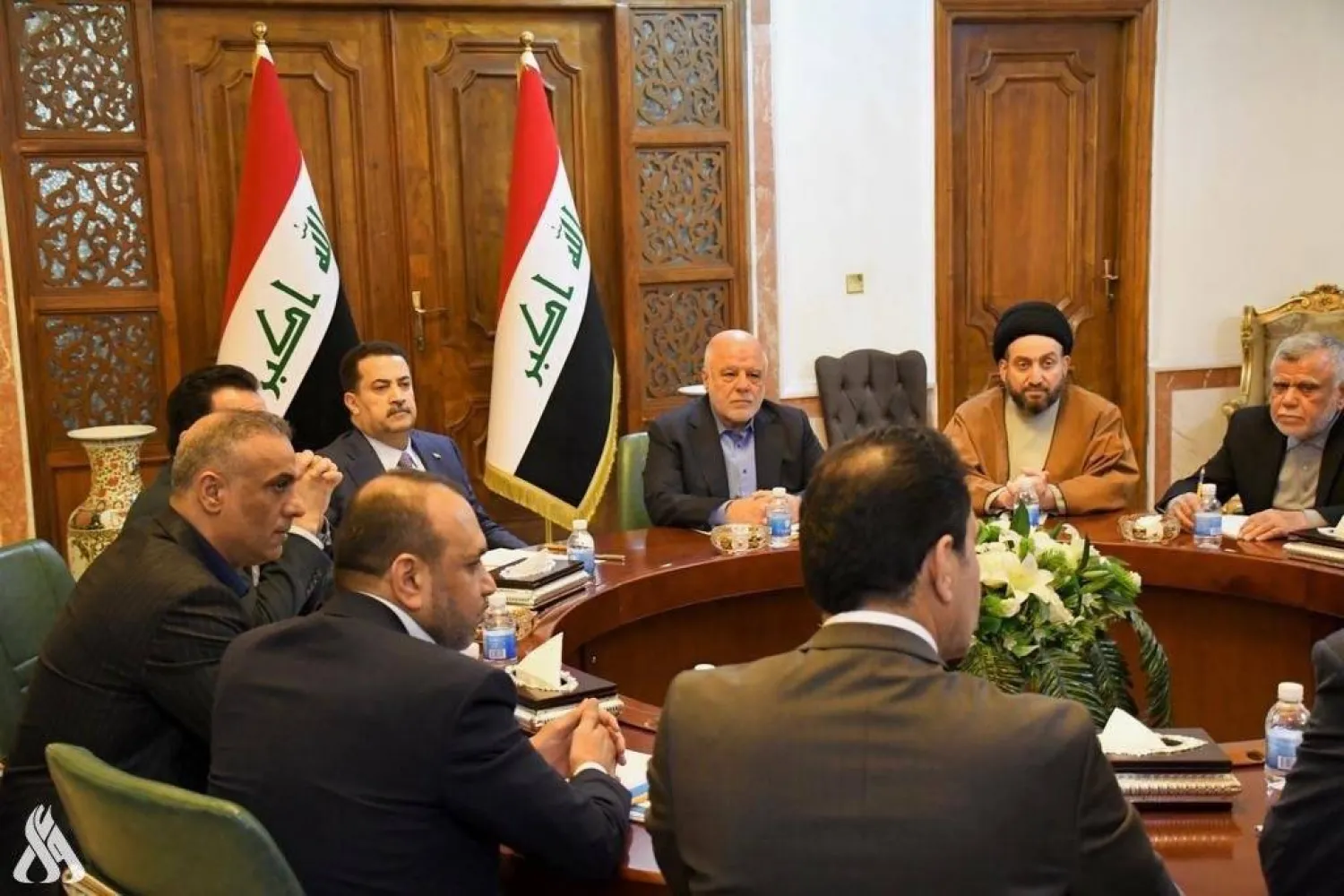
Members of the Coordination Framework hold a meeting. (Iraqi News Agency)
TT

Maliki Can Withdraw as Candidacy as Iraq PM the Easy or Hard Way

Members of the Coordination Framework hold a meeting. (Iraqi News Agency)

Iraqi Former Prime Minister Nouri al-Maliki declined at the last minute to attend a meeting of the pro-Iran Coordination Framework on Monday night that was aimed at settling the crisis over his nomination as prime minister.

Instead of declaring that he was pulling out as candidate, as had been expected, Maliki informed his close circle that he is “following through with his nomination to the end,” trusted sources told Asharq Al-Awsat.

Iraq has come under intense pressure from the US to withdraw the nomination. In January, President Donald Trump warned Baghdad against picking Maliki as its PM, saying the United States would no longer help the country.

“Last time Maliki was in power, the Country descended into poverty and total chaos. That should not be allowed to happen again. Because of his insane policies and ideologies, if elected, the United States of America will no longer help Iraq,” Trump wrote on Truth Social.

Maliki also dismissed as “extortion and intimidation” talks of renewed US sanctions on Iraq, added the sources.

However, circles within the Coordination Framework have started to “despair” with the impasse over naming a new prime minister and are weighing the possibility of taking “difficult” choices, they revealed. Maliki has become a prisoner of his own nomination.

The Sunni Progress Party (Takadum) had voiced its reservations over Maliki’s nomination before Trump made his position clear and which has since weighed heavily on Iraq.

‘Indefinitely’

Maliki’s decision to skip the Framework’s meeting on Monday forced the coalition to postpone it “indefinitely”, exposing more differences inside the alliance that have been festering for months. The dispute over the post of prime minister is threatening to evolve into one that threatens the unity of the coalition itself.

Several sources told Asharq Al-Awsat that Maliki had sent the Framework a written message on Monday night informing them that he will not attend the meeting because “he was aware that discussions will seek to pressure him to withdraw his candidacy.”

Maliki was the one to call for the meeting to convene in the first place, they revealed.

Reports have been rife in Iraq that Shiite, Sunni and Kurdish political leaderships have all received warnings that the US would take measure against Iraq if Maliki continued to insist on his nomination.

Former Foreign Minister Hoshyar Zebari told Dijlah TV that “Shiite parties” had received two new American messages reiterating the rejection of Maliki’s nomination.

Necessary choice

Maliki and the Framework are now at an impasse, with the latter hoping the former PM would take it upon himself to withdraw his candidacy in what a leading Shiite figure said would help protect the unity of the coalition.

Leading members of the coalition were hoping to give Maliki enough time to decide himself to withdraw, but as time stretches on, the coalition may take matters into its own hands and take “necessary” choices, said the figure.

Other sources revealed, however, that Maliki refuses to voluntarily withdraw from the race believing that this is a responsibility that should be shouldered by the Framework. This has effectively left the alliance with complex and limited choices to end the crisis.

Sources close to Maliki said he has made light of US threats to impose sanctions, saying that if they were to happen, Iraq will emerge on the other side stronger, citing other countries that came out stronger after enduring years of pressure.

Moreover, he is banking on an American change in position, saying mediators have volunteered to “polish his image before Trump and his team.” Members of Maliki’s State of Law coalition declined to comment on this information.

Sources inside the Framework said the coalition may “ultimately withdraw Maliki’s nomination if he becomes too much of a burden on an already weary alliance.”

Doing so may cost them a strong ally in Maliki and force the Framework to yield to Washington’s will, said the Shiite figure. “Maliki may come off as stubborn and strong, but he is wasting his realistic options at this critical political juncture,” it added.

The Framework is divided between a team that is banking on waiting to see how the US-Iran tensions will play out to resolve the crisis and on Maliki voluntarily withdrawing his nomination. The other team is calling for the coalition to resolve the crisis through an internal vote.

Leading Shiite figures told Asharq Al-Awsat that opponents of Maliki’s nomination in the coalition have no choice but to apply internal pressure inside the Framework, which is on the verge of collapse.