


Israel Approves Ceasefire Deal with Lebanon, Netanyahu Says Focus Now on 'Iranian Threat'

 A photo shows destruction at the site of an overnight Israeli airstrike that targeted the southern Lebanese city of Nabatieh on November 26, 2024, amid the ongoing war between Israel and Hezbollah. (AFP)
A photo shows destruction at the site of an overnight Israeli airstrike that targeted the southern Lebanese city of Nabatieh on November 26, 2024, amid the ongoing war between Israel and Hezbollah. (AFP)
TT

Israel Approves Ceasefire Deal with Lebanon, Netanyahu Says Focus Now on 'Iranian Threat'

 A photo shows destruction at the site of an overnight Israeli airstrike that targeted the southern Lebanese city of Nabatieh on November 26, 2024, amid the ongoing war between Israel and Hezbollah. (AFP)
A photo shows destruction at the site of an overnight Israeli airstrike that targeted the southern Lebanese city of Nabatieh on November 26, 2024, amid the ongoing war between Israel and Hezbollah. (AFP)

Israeli Prime Minister Benjamin Netanyahu said on Tuesday he was ready to implement a ceasefire deal with Lebanon and would "respond forcefully to any violation" by Hezbollah.

In a television address, Netanyahu said he would put the ceasefire accord to his full cabinet later in the evening. Israeli TV reported that the more restricted security cabinet had earlier approved the deal.

"We will enforce the agreement and respond forcefully to any violation. Together, we will continue until victory," he said.

"In full coordination with the United States, we retain complete military freedom of action. Should Hezbollah violate the agreement or attempt to rearm, we will strike decisively."

He added that there were three reasons to pursue a ceasefire -- to focus on the "Iranian threat", replenish depleted arms supplies and give the army a rest, and finally to isolate Hamas, the group that triggered war in the region when it launched an attack on Israel from Gaza last year.

He said Hezbollah, which is backed by Iran and allied to Hamas, was considerably weaker than it had been at the start of the conflict.

"We have set it back decades, eliminated ... its top leaders, destroyed most of its rockets and missiles, neutralized thousands of fighters, and obliterated years of terror infrastructure near our border," he said.

"We targeted strategic objectives across Lebanon, shaking Beirut to its core."  

"We are changing the face of the Middle East," stated Netanyahu.

The accord was expected to take effect on Wednesday.   

Israeli approval of the deal would pave the way for a ceasefire declaration by US President Joe Biden and French President Emmanuel Macron, according to four senior Lebanese sources who spoke to Reuters on Monday.  

Despite the diplomatic breakthrough, hostilities raged as Israel dramatically ramped up its campaign of air strikes in Beirut and other parts of Lebanon.  

However, there was no indication that a truce in Lebanon would hasten a ceasefire and hostage-release deal in devastated Gaza, where Israel is battling Palestinian group Hamas.  

The Lebanon ceasefire agreement requires Israeli troops to withdraw from south Lebanon and Lebanon's army to deploy in the region, officials say. Hezbollah would end its armed presence along the border south of the Litani River.  

Lebanese caretaker Foreign Minister Abdallah Bou Habib said the Lebanese army would be ready to have at least 5,000 troops deployed in southern Lebanon as Israeli troops withdraw, and that the United States could play a role in rebuilding infrastructure destroyed by Israeli strikes.

'Barrage’

In the hours before the announcement, Israeli strikes smashed more of Beirut's densely-populated southern suburbs, a Hezbollah stronghold. The Israeli military said one barrage of strikes had hit 20 targets in the city in just 120 seconds, killing at least seven people and injuring 37, according to Lebanon's health ministry.  

Israel issued its biggest evacuation warning yet, telling civilians to leave 20 locations. Israeli military spokesperson Avichay Adraee said the air force was conducting a "widespread attack" on Hezbollah targets across the city.  

The Iran-backed Hezbollah has kept up rocket fire into Israel.  

The UN rights chief voiced concern about the escalation of bloodshed in Lebanon and his office said nearly 100 people had been reported killed by Israeli airstrikes in recent days, including women, children and medics.  

Israel has dealt Hezbollah massive blows since going on the offensive against the group in September, killing its leader Hassan Nasrallah and other top commanders, and pounding areas of Lebanon where the group holds sway.  

Over the past year, more than 3,750 people have been killed in Lebanon and over one million have been forced from their homes, according to Lebanon's health ministry, which does not distinguish between civilians and combatants in its figures.  

Hezbollah strikes have killed 45 civilians in northern Israel and the Israeli-occupied Golan Heights. At least 73 Israeli soldiers have been killed in northern Israel, the Golan Heights and in combat in southern Lebanon, according to Israeli authorities.



Arab League Urges Action to Force Israel to Repeal Prisoner Execution Law

Meeting at Palestine’s request, the Arab League Council, at the level of permanent representatives, convened an extraordinary session in Cairo on Thursday. (Arab League)
TT

Arab League Urges Action to Force Israel to Repeal Prisoner Execution Law

Meeting at Palestine’s request, the Arab League Council, at the level of permanent representatives, convened an extraordinary session in Cairo on Thursday. (Arab League)

The Arab League strongly condemned on Thursday the Israeli Knesset’s approval of a law allowing the execution of Palestinian prisoners.

It urged the international community, particularly the United Nations Security Council and the United Nations Human Rights Council, to act urgently to compel Israel to repeal it.

Meeting at Palestine’s request, the Arab League Council, at the level of permanent representatives, convened an extraordinary session in Cairo, chaired by Bahrain, to address what it described as a “racist and invalid” law, and to discuss Arab and international steps to confront systematic Israeli violations in Jerusalem.

A 21-point resolution adopted at the meeting said limiting the death penalty to Palestinian prisoners amounted to “entrenching an apartheid system imposed by Israel,” holding “Israel, the illegal occupying power, fully responsible for the legal and humanitarian consequences.”

The Arab League called for listing Israel’s National Security Minister Itamar Ben-Gvir and members of his party, along with Finance Minister Bezalel Smotrich and their party members, on “international, regional, and national terrorism lists,” and welcomed condemnations of the law by several countries and the European Union.

It urged states party to the Fourth Geneva Convention to annul the law, and called on the International Criminal Court to open an urgent investigation and prosecute Israeli officials responsible for its approval, describing it as a “war crime.”

The Arab League also called for activating a legal monitoring unit to document any implementation of the law for use before international courts, and urged Arab parliamentary bodies to work toward suspending the Knesset’s membership in the Inter-Parliamentary Union.

Foreign ministers from Saudi Arabia, Türkiye, Egypt, Indonesia, Jordan, Pakistan, Qatar, and the United Arab Emirates also condemned the law, warning it entrenches an apartheid system and promotes rhetoric denying the Palestinian people’s inalienable rights and presence in occupied territory.

Regarding Jerusalem, the Arab League condemned what it described as unprecedented Israeli measures to close Al-Aqsa Mosque, calling it a “flagrant violation of international law” and an unprecedented provocation to Muslims worldwide, as well as an assault on freedom of worship. It also condemned measures targeting the Christian presence in the city.

The Arab League denounced Israeli efforts to dismantle the United Nations Relief and Works Agency for Palestine Refugees in the Near East and shut its offices and schools in Jerusalem, calling it an attempt to erase the refugee issue from final status talks.

It called for coordinated Arab, Islamic, and international action, political, diplomatic, economic, and legal, to protect Jerusalem and its holy sites, urging the international community, including the UN Security Council, to take a firm stance obliging Israel to halt its violations.

The Arab League reiterated its rejection of any move to alter Jerusalem’s legal status, including relocating diplomatic missions, and warned Argentina against moving its embassy to the city, saying such a move would damage Arab-Argentine relations.

Arab League Assistant Secretary-General for Palestine Affairs Faed Mustafa told the Cairo meeting that developments in Jerusalem and measures targeting Palestinian prisoners are “two facets of one policy,” urging a shift from condemnation to concrete action and impact.

Former Egyptian assistant foreign minister Mohamed Hegazy told Asharq Al-Awsat the meeting was a necessary step toward unifying the Arab stance and moving beyond political condemnation.

He called for a serious international debate on sanctions against Israel if violations continue.


Israel Says Hezbollah Chief to Pay ‘Heavy Price’ for Jewish Holiday Attacks

First responders clear the rubble from the site of an Israeli airstrike that targeted a building in the southern Lebanese village of Hanouiyeh, east of Tyre, on March 30, 2026. (AFP)
TT

Israel Says Hezbollah Chief to Pay ‘Heavy Price’ for Jewish Holiday Attacks

First responders clear the rubble from the site of an Israeli airstrike that targeted a building in the southern Lebanese village of Hanouiyeh, east of Tyre, on March 30, 2026. (AFP)

Israeli Defense Minister Israel Katz on Thursday warned that Hezbollah chief Sheikh Naim Qassem would pay an "extraordinarily heavy price" for escalating attacks during the ongoing Jewish holidays.

"I have a clear message for Naim Qassem... you and your associates will pay an extraordinarily heavy price for the intensified rocket fire directed at Israeli citizens as they gathered to celebrate Passover Seder," Katz said in a video statement.

"You will be consigned to the depths of hell alongside Nasrallah, Khamenei, Sinwar and the other fallen figures of the axis of evil," he said, referring to the former leaders of Hezbollah, Iran, and the Palestinian Hamas movement, who have been assassinated by Israel over the past two and half years.

"The Hezbollah terrorist organization you now lead, and its supporters in Lebanon, will bear the full and severe consequences," Katz added.

His warning followed claims by Hezbollah that it had carried out a series of rocket attacks on northern Israel late Wednesday and early Thursday, as Israeli Jews began marking the Passover holidays.

Katz also reiterated that Israeli forces "will clear Hezbollah and its supporters from southern Lebanon, maintain Israeli security control throughout the Litani area, and dismantle Hezbollah's military capabilities across Lebanon."

Lebanon was drawn into the Middle East war in early March when Tehran-backed Hezbollah launched rockets towards Israel to avenge the attack that killed Iran's supreme leader Ali Khamenei.

Israel has responded with massive strikes across Lebanon and a ground offensive.


UN Experts Call for Investigation into Israel's Killing of Lebanese Journalists

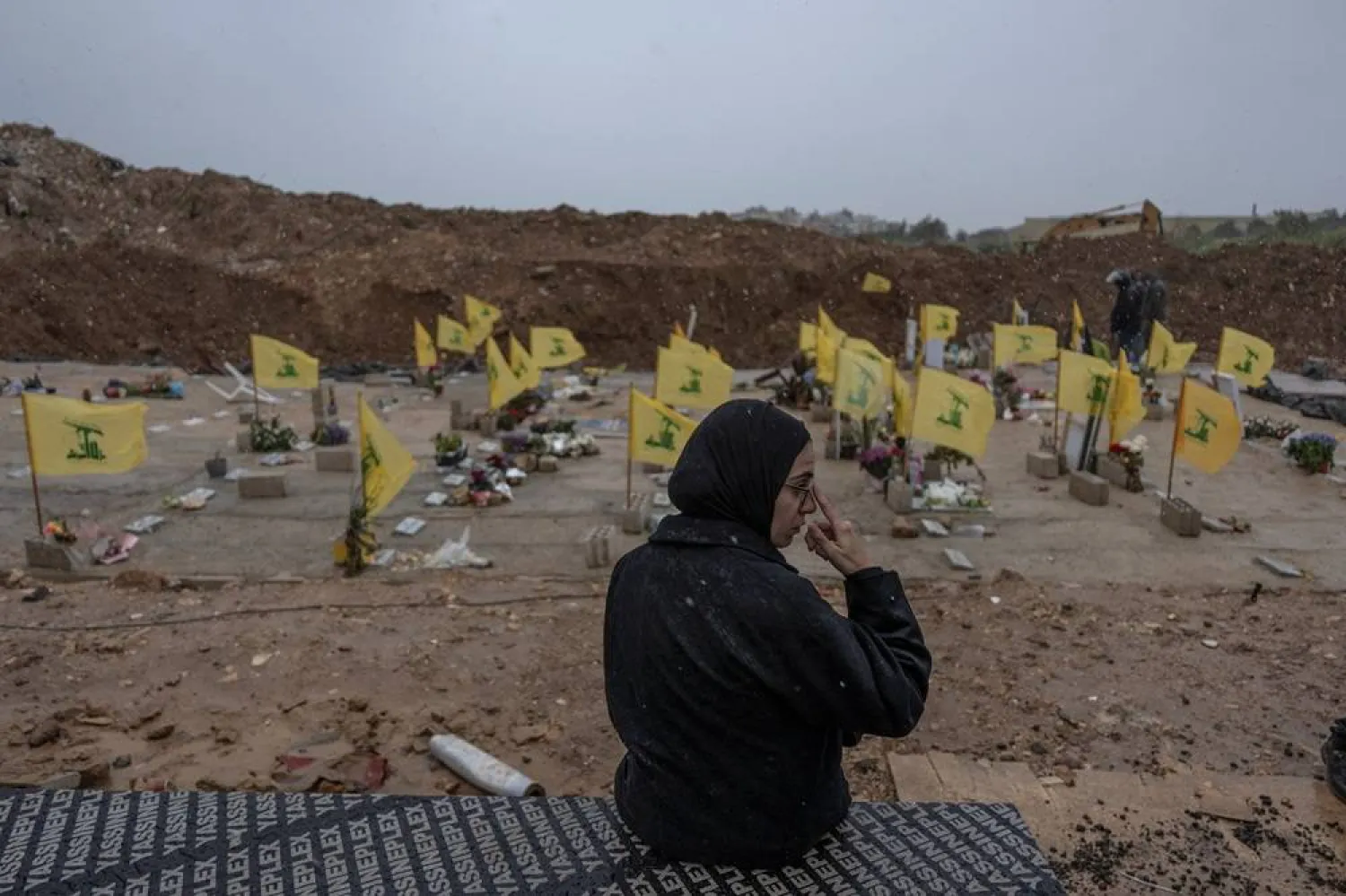
A woman sits in a cemetery before the funeral of Lebanese journalists, Al Manar reporter Ali Shoeib, Al Mayadeen reporter Fatima Ftouni and cameraman Mohammed Ftouni, who were killed by a targeted Israeli strike, amid escalating hostilities between Israel and Hezbollah, as the US-Israeli conflict with Iran continues, in Choueifat, Lebanon, March 29, 2026. (Reuters)
TT

UN Experts Call for Investigation into Israel's Killing of Lebanese Journalists

A woman sits in a cemetery before the funeral of Lebanese journalists, Al Manar reporter Ali Shoeib, Al Mayadeen reporter Fatima Ftouni and cameraman Mohammed Ftouni, who were killed by a targeted Israeli strike, amid escalating hostilities between Israel and Hezbollah, as the US-Israeli conflict with Iran continues, in Choueifat, Lebanon, March 29, 2026. (Reuters)

UN experts on Thursday called for an international investigation into the death of three Lebanese journalists in an Israeli strike, saying Israel had not provided "credible evidence" of their alleged links to armed groups.

The three journalists, including Ali Shoeib, a star correspondent for Al Manar channel of Hezbollah, which is at war with Israel, were killed on March 28 in an Israeli strike in southern Lebanon.

"We denounce strongly what has now become a standard, dangerous practice of Israel to target and kill journalists and then claim, without providing any credible evidence, that they were involved with armed groups," the experts said in a statement.

The Israeli army had described Shoeib as a member of the Radwan force, an elite Hezbollah unit, operating "under the guise of a journalist".

According to the experts, Israel's only so-called "evidence" for its claims was a photoshopped image of the journalist.

Israel also confirmed it killed journalist Fatima Ftouni of Al Mayadeen, seen as close to Hezbollah, and her brother cameraman Mohammed Ftouni, describing him as "an additional terrorist in Hezbollah's military wing".

The experts argued that working as a journalist for a media outlet linked to an armed group does not constitute direct participation in hostilities under international humanitarian law.

"Israeli officials know this, yet they choose to ignore it -- emboldened by impunity for their previous killings of journalists in Lebanon, Gaza and the West Bank."

At least 231 journalists and media workers have been killed by Israel since 2023, including 210 in Gaza and 11 in Lebanon, according to the Committee to Protect Journalists (CPJ).

Although appointed by the United Nations Human Rights Council, special rapporteurs are independent experts and do not speak on behalf of the UN.