Israeli Minister Says Army Applying Lessons from Gaza in West Bank Operation

Israeli soldiers run to take position in Jenin camp during the second day of an Israeli military operation in the West Bank city of Jenin, 22 January 2025. (EPA)
TT

Israeli Minister Says Army Applying Lessons from Gaza in West Bank Operation

Israeli soldiers run to take position in Jenin camp during the second day of an Israeli military operation in the West Bank city of Jenin, 22 January 2025. (EPA)

Israel's defense minister said on Tuesday forces were applying lessons learned in Gaza as a major operation continued in Jenin which the military said was aimed at countering Iranian-backed armed groups in the volatile West Bank city.

A military spokesperson declined to give details but said the operation was "relatively similar" to but in a smaller area than one last August, in which hundreds of Israeli troops backed by drones and helicopters raided Jenin and other flashpoint cities in the occupied West Bank.

It was the third major incursion by the Israeli army in less than two years into Jenin, a longtime major stronghold of armed groups including Hamas and Islamic Jihad, which said its forces were fighting Israeli troops.

At least four Palestinians were wounded on Tuesday, after 10 were killed a day earlier, Palestinian health services said, and residents reported constant gunfire and explosions.

Israeli military spokesperson Nadav Shoshani said the fighters' increasing use of roadside bombs and other improvised explosive devices were a particular focus of the operation, which included armored bulldozers to tear up roads in the refugee camp adjacent to the city.

As the operation continued, many Palestinians left their homes in the camp, a crowded township for descendants of Palestinians who fled or were driven from their homes in the 1948 war of Israel's creation.

"Thank God, we were at home, we went out and asked an ambulance to take us out," said a woman who gave her name as Um Mohammad.

Before the raid, which came two weeks after a shooting attack blamed by Israel on gunmen from Jenin, roadblocks and checkpoints had been thrown up across the West Bank in an effort to slow down movement across the territory.

As the raid began, Palestinian Authority (PA) security forces pulled out after having conducted a weeks-long operation to try to reassert control over the refugee camp, dominated by Palestinian factions that are hostile to the PA, which exercises limited governance in parts of the West Bank.

The operation came just two days after the launch of a ceasefire deal in Gaza and exchange of hostages for Palestinian prisoners held in Israeli jails, with Israeli troops pulling back from their positions in many areas of the enclave.

LEARNING FROM GAZA

Defense Minister Israel Katz said the Jenin raid marked a shift in the military's security plan in the West Bank and was "the first lesson from the method of repeated raids in Gaza".

"We will not allow the arms of the Iranian regime and radical Sunni Islam to endanger the lives of (Israeli) settlers (in the West Bank) and establish a terrorist front east of the state of Israel," he said in a statement.

Israel's campaign in Gaza, following the Oct. 7, 2023 attack on Israel by bands of Hamas-led gunmen, has left much of the coastal enclave in ruins after 15 months of bombardment. The military has said it has refined its urban warfare tactics in the light of its experience in Gaza, but Shoshani declined to provide details of how such lessons were being applied in Jenin.

Israel considers Palestinian armed groups such as Hamas and Islamic Jihad that are backed by Iran as part of a multifront war waged by an axis that includes Hezbollah in southern Lebanon and the Houthis in Yemen.

Newly installed US President Donald Trump has appointed a string of senior officials with close ties to the settler movement, and his return to the White House has been welcomed by hardline pro-settler ministers who have pledged to expand settlement building in the West Bank.

Around 700,000 Israeli settlers live among 2.7 million Palestinians in the West Bank and East Jerusalem, land Israel seized in the 1967 Middle East war. Most countries deem Israel's settlements on territory taken in war to be illegal. Israel disputes this, citing historical and biblical ties to the land.

Gas, Transport and Charity Kitchens Deepen Ramadan Hardship in Gaza

Palestinians share the iftar meal amid homes destroyed by Israeli bombardment in Gaza on Sunday (EPA). 
TT

Gas, Transport and Charity Kitchens Deepen Ramadan Hardship in Gaza

Palestinians share the iftar meal amid homes destroyed by Israeli bombardment in Gaza on Sunday (EPA). 

As Ramadan enters its sixth day, residents of the Gaza Strip are grappling with mounting daily pressures amid a web of crises that extend well beyond soaring prices for basic goods.

For many families, access to essentials such as cooking gas, adequate food and transportation has become an exhausting struggle.

Among the most acute problems is the shortage of cooking gas, leaving most households reliant on firewood. But wood is also scarce and increasingly expensive, particularly during Ramadan, when demand rises, including from restaurants facing the same fuel shortages.

The Gaza Petroleum Authority distributes limited quantities of gas to residents — eight kilograms per household — without a fixed timetable. Distribution cycles are irregular due to the limited and inconsistent flow of supplies into the territory.

Hassan Al-Masri, 45, said residents can wait three or four months to receive just eight kilograms, less than the 12 kilograms or more typically held by a standard gas cylinder.

The shortage has severely affected families’ ability to prepare meals, particularly during Ramadan. Samar Abu Al-Jebin, from Jabalia and currently displaced at a shelter in the Al-Nasr neighborhood, said preparing food for her family of nine, especially the pre-dawn suhoor meal, has become increasingly difficult. On some days, she relies on meals distributed by charity kitchens for iftar.

Even those who manage to receive food aid say the quality has deteriorated.

In a camp on the outskirts of Al-Shati refugee camp, northwest of Gaza City, hundreds of tents shelter families displaced from northern Gaza. Residents say the meals provided by charity kitchens, many operating on behalf of international organizations, are often extremely poor in quality.

Ahmed Labad, 39, displaced from Beit Lahia, said that for nearly two months, even before Ramadan began, meals have been substandard. “Most of it is thrown away,” he said, explaining that only those with no alternative eat the food to feed their children. He questioned the level of oversight on kitchens operating for international and other institutions.

Firas Al-Kafarna, a resident of the camp, said that since the beginning of Ramadan, only the first day’s meal had been of acceptable quality. “After that, families have been throwing the food in the trash,” he said, adding that complaints are coming from displacement camps and shelters across the Gaza Strip due to the very poor meals being served.

Some families living in partially damaged homes also depend on the charity kitchens because of severe economic hardship. Yet residents say much of the distributed food ultimately ends up discarded.

Gaza’s Ministry of Social Development, run by Hamas, has issued instructions to all organizations providing meals — particularly to displaced people — to improve quality.

The ministry stressed that kitchens should not limit distributions to plain rice or thin stews without additions, and called for including meat and poultry, especially given the recent influx of frozen products allowed into Gaza.

According to Al-Kafarna, however, none of the organizations have complied with these directives so far.

Beyond food and fuel, transportation has become another daily burden. A shortage of vehicles — many destroyed during the war — combined with a severe liquidity crisis has complicated movement across the territory.

Anas Hamid, 21, displaced from the Shujaiya neighborhood east of Gaza City to Al-Nasr in the west, said drivers insist on cash payments and frequently vary fares from one location to another. “There is no unified fare,” he said, questioning the absence of effective oversight.

Driver Hassan Al-Hanawi said many drivers avoid electronic banking applications or digital wallets for several reasons, including unreliable internet access, the absence of bank accounts among some drivers, and fuel station owners who require payment in cash rather than electronically.

The Hamas-run government has issued several circulars instructing drivers to accept worn banknotes and encouraging the use of electronic payment systems. However, implementation has remained limited.

With vehicle shortages persisting, many residents have turned to bicycles — once uncommon in Gaza — to meet daily needs. Demand has surged, though supply remains limited and prices have risen sharply compared to pre-war levels.

Nabil Al-Tayef, 26, initially used his bicycle to run errands for his family before joining a delivery office as restaurants and shops gradually resumed operations.

Most delivery services now rely heavily on young men using their own bicycles. Motorbikes are rare, and electric bicycles — recently permitted into Gaza through a single trader — are prohibitively expensive, costing more than $3,500, compared with $500 to $700 before the war.


Maliki Says Has ‘Absolutely No Intention’ to Withdraw PM Candidacy as Barrack Visits Iraq 

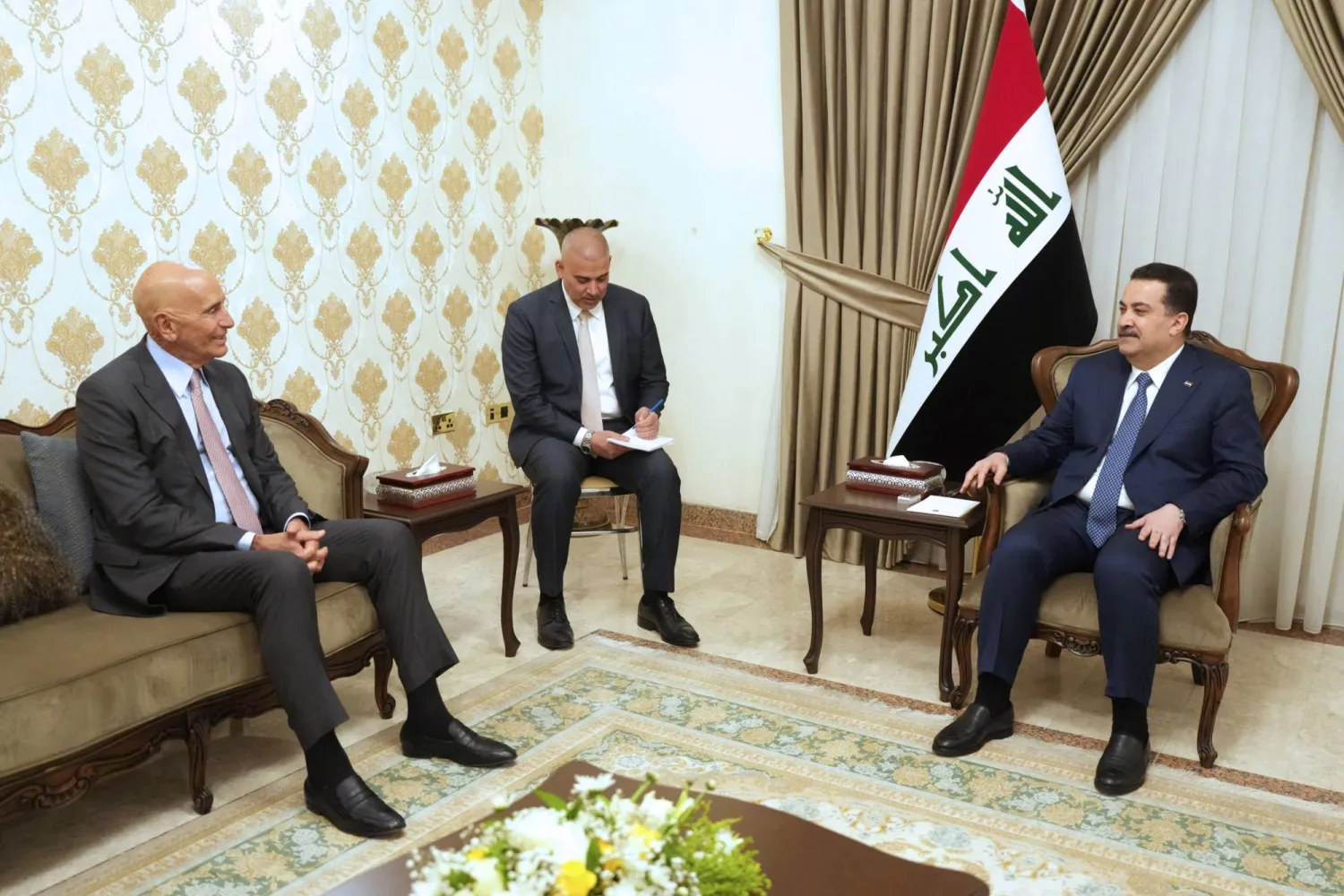
A handout picture made available by the Iraqi prime minister's office on February 22, 2026, shows US envoy to Syria Tom Barrack (L) meeting with Iraq's Prime Minister Mohammed Shia al-Sudani (R) in Baghdad's Green Zone. (Handout / Iraqi Prime Minister’s Press Office / AFP)
TT

Maliki Says Has ‘Absolutely No Intention’ to Withdraw PM Candidacy as Barrack Visits Iraq 

A handout picture made available by the Iraqi prime minister's office on February 22, 2026, shows US envoy to Syria Tom Barrack (L) meeting with Iraq's Prime Minister Mohammed Shia al-Sudani (R) in Baghdad's Green Zone. (Handout / Iraqi Prime Minister’s Press Office / AFP)

The leading candidate to become Iraq's next prime minister, former premier Nouri al-Maliki, told AFP on Monday that he will not withdraw his nomination after pressure from the US, while also seeking to allay Washington's concerns.

Since the US-led invasion that overthrew former ruler Saddam Hussein in 2003, Iraqi leaders have struggled to find a balance between two global powers competing for influence in the country: neighbor Iran and its arch-rival the United States.

Last month President Donald Trump intervened by issuing an ultimatum that if Maliki -- a two-time former premier with close ties to Iran -- was named Iraq's next prime minister, the US would no longer help the country.

"I have absolutely no intention of withdrawing out of respect for my country, its sovereignty, and its will," Maliki told AFP in an interview.

"No one has the right to say whom we can or cannot vote for," the powerbroker added.

"I will not withdraw until the end."

Trump's threat left Iraqi leaders at a loss, particularly within the Coordination Framework -- a ruling alliance of Shiite groups with varying degrees of links to Iran than nominated Maliki.

Maliki told AFP that "countries have the right to set conditions in their dealings with Iraq," but changing the nomination depends on the Coordination Framework, which still backs him.

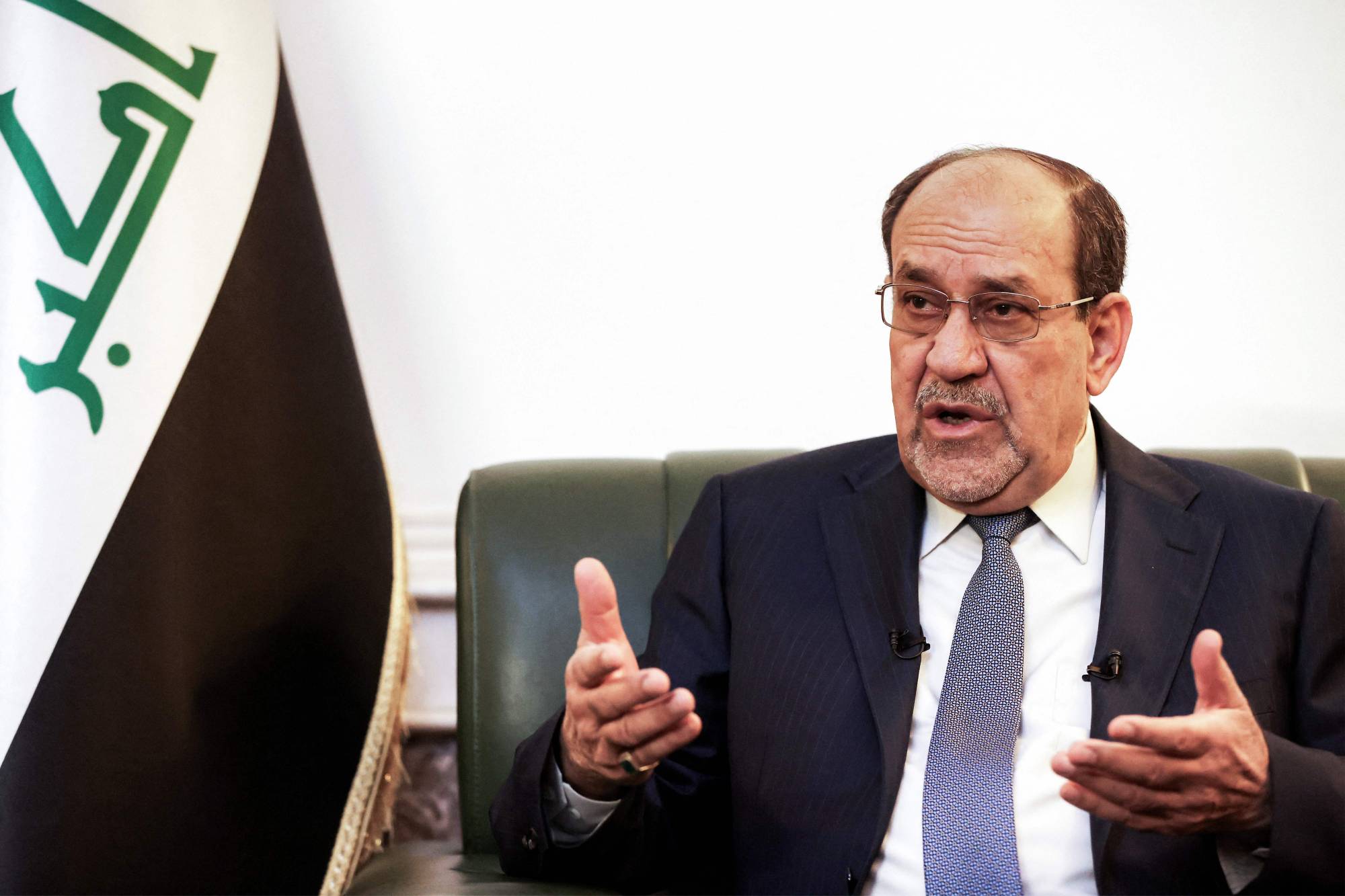
Iraq’s former PM and candidate for the premiership, Nouri al-Maliki, speaks during an interview with AFP at his office in the Green Zone in Baghdad on February 23, 2026. (AFP)

- 'One army under one command' -

Maliki -- who is Iraq's only two-term prime minister, serving from 2006 to 2014 -- also rejected claims that his relationship with the US was bad during his previous tenure.

Maliki at first enjoyed support from the American occupation following the 2003 invasion, but later fell out with Washington over his growing ties with Iran and allegations that he pushed a sectarian agenda.

Iraq's new premier will be expected to address Washington's longstanding demand that Baghdad rein in Tehran-backed factions that are designated terrorist groups by the US.

Maliki said that Washington has conveyed several messages to Iraqi leaders.

"They seek changes in the state's policies," he said.

Washington's concerns include the future of the Popular Mobilization Forces (PMF) -- a former paramilitary alliance that has integrated into the armed forces -- as well as disarming pro-Iran armed factions and accusations that some Iraqi entities are helping Iran evade US sanctions on oil exports.

Maliki sought to reassure the US on Monday.

"In fact, what America wants is not new. These are our demands," he said.

"We want weapons in the hands of the state. We want a centralized military force. We have said it repeatedly: we want one army under one command, directly under state authority.

"It's quite possible" to achieve a deal with pro-Iran armed factions, he added.

"There is a good basis for understanding with the factions" but this cannot happen "through force, war or confrontations," he said.

Maliki added that he believes factions "do not want to expose Iraq to any danger."

Washington has also demanded that the eventual Iraqi government exclude Iran-backed armed groups -- an issue that is under discussion, according to Maliki.

Some of these groups have increased their presence in the new parliament and have seen their political and financial clout increase.

"We want those who participate in the political process and the government to lay down their arms," Maliki said.

"Those who lay down their arms are welcome to be part of the next government."

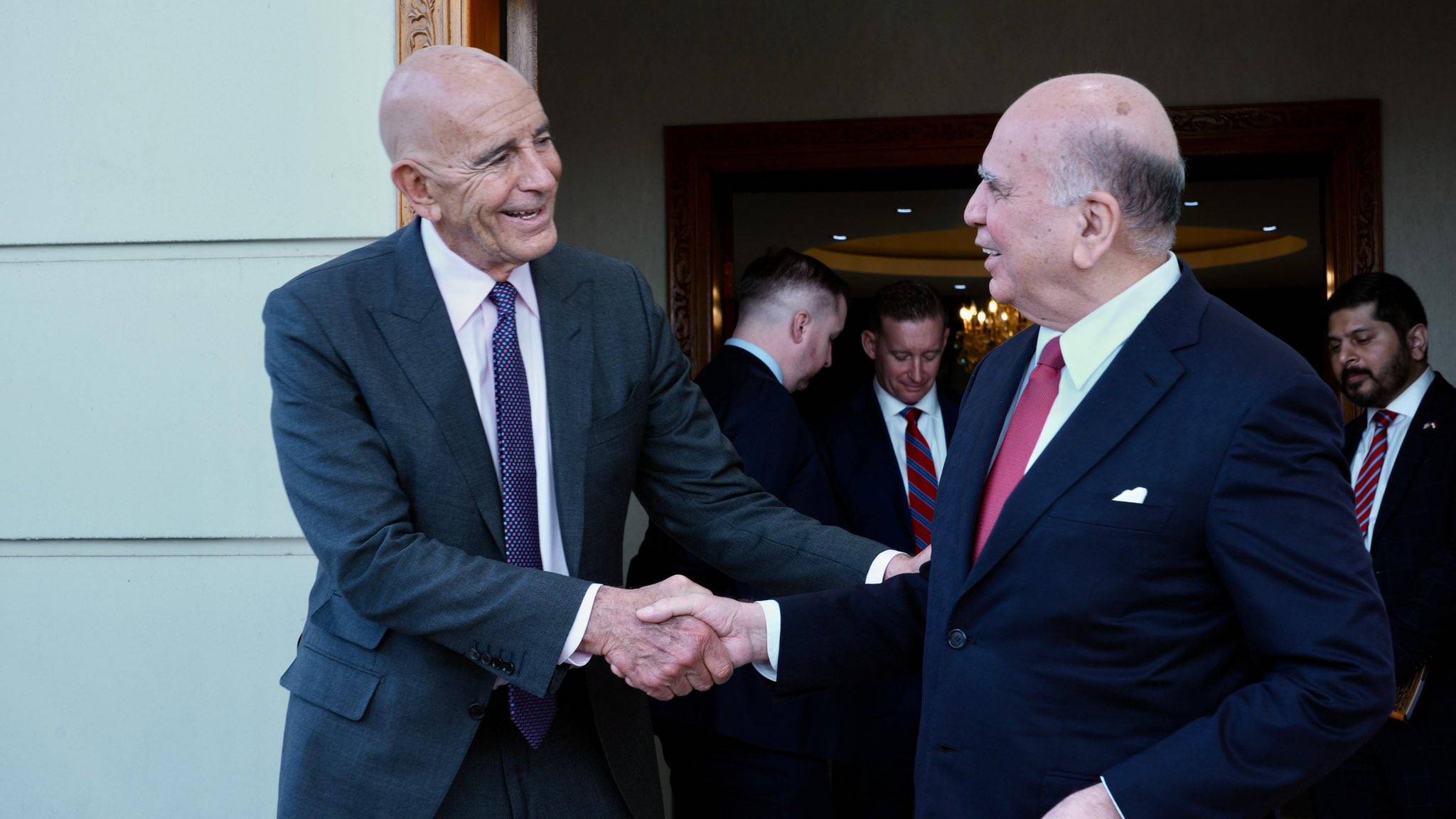
Iraqi Foreign Minister Fuad Hussein and US envoy Tom Barrack meet in Baghdad on Monday. (Iraq Foreign Ministry)

- No attacks -

After decades of conflict, Iraq has begun to enjoy some stability in recent years, yet its politics remain volatile, shaped not only by internal disputes but also by regional dynamics.

Today, all eyes are on negotiations between the US and Iran over Tehran's nuclear program, with a third round of talks scheduled for Geneva on Thursday.

With fears rising that Iraq could be dragged into a war if the US strikes Iran, Maliki vowed to prevent attacks on diplomatic missions in Iraq if he becomes prime minister.

"All countries can be assured that we will prevent any violation against their embassies or officially recognized interests in Iraq," Maliki said.

"We will not allow any party to target any country that maintains a diplomatic presence."

Previously, Iran-backed armed groups attacked US missions and troops in Iraq.

Maliki defended Iraq's relations with Iran, which he said "rest on the principle that Iraq's sovereignty is respected" and that "shared interests define this relationship".

"We share a 1,300-kilometer border and mutual interests with Iran," he added.

Despite its oil wealth, Iraq depends on imports from Iran to meet its energy needs.

Maliki warned that "if Iran cut off our natural gas supply... it would be a major catastrophe."

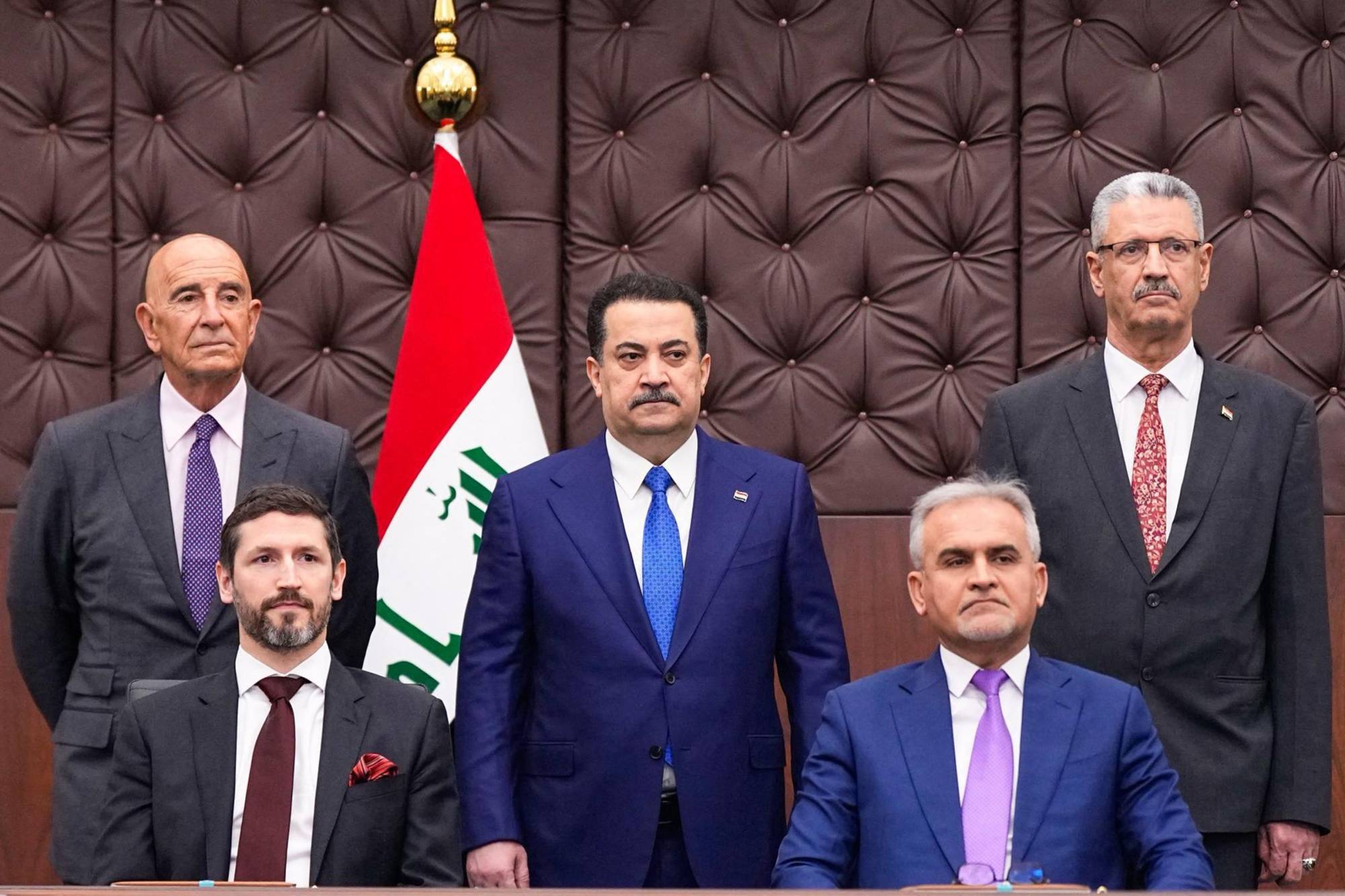
This handout picture made available by the Iraqi prime minister's office shows Iraq's Prime Minister Mohammed Shia al-Sudani (top C), Oil Minister Hayan Abdul Ghani al-Sawad (top R), US envoy Tom Barrack (top L), Chevron's Director of Business Development Joe Koch (bottom L), and the Basra Oil Company Director Bassem Abdul Karim (bottom R) attending the signing of agreements between Chevron Corporation and the Basra Oil Company at the government palace in Baghdad on February 23, 2026. (Iraqi Prime Minister’s Press Office / AFP)

- Barrack visits -

Meanwhile, US envoy Tom Barrack was in Iraq on Monday where he held talks with caretaker Prime Minister Mohammed Shia al-Sudani, Foreign Minister Fuad Hussein and President of the Supreme Judicial Council Faiq Zidan.

Sudani said the meeting with Barrack stressed the importance of dialogue and diplomacy to resolve disputes.

The officials discussed bilateral ties between Iraq and the US and developments in the region, as well as Baghdad’s efforts to support regional stability, especially in Syria, read a statement from Sudani’s office.

They also tackled opportunities for economic cooperation.

For his part, Barrack described the meeting with Sudani as "fruitful".

In a post on the X platform, he said he discussed with Sudani "continued Iraqi goals and objectives to build a sovereign, stable, and prosperous future that aligns with Trump’s desire and plan for peace and prosperity in the region."

"The necessity of effective leadership that aligns itself with the policies and practices of further stabilization for Iraq and the Iraqi people is key to our mutual goals," he remarked.

Barrack later held meetings with President of the Iraqi Kurdistan Region Nechirvan Barzani and Taqaddum Party leader Mohammed Halbousi.

During his visit, Iraq's foreign minister said Türkiye had agreed to take back Turkish citizens from among thousands of ISIS detainees transferred to Iraq from Syria when camps and prisons there were shut in recent weeks.

Also on Monday, Iraq and the US energy giant Chevron signed deals to manage and develop several oil fields, including one previously operated by Russia's Lukoil.

Sudani's media office said "two preliminary memoranda of principles" were signed with Chevron, the first of which was "concerning the transfer of management of the West Qurna 2 field," one of the world's largest oil fields.

The second agreement concerns the development of the Nasiriyah field and four exploratory blocks in Dhi Qar province in the country's south, as well as the Balad field in the northern province of Salah al-Din.

Sudani and Barrack attended the signing ceremony.


EU Diplomats Meet Board of Peace Director over Gaza's Future

Trump and leaders and representatives of participating states sign the founding charter of the Board of Peace in Davos on Jan. 22, 2026. (AFP)
TT

EU Diplomats Meet Board of Peace Director over Gaza's Future

Trump and leaders and representatives of participating states sign the founding charter of the Board of Peace in Davos on Jan. 22, 2026. (AFP)

The European Union's top diplomats met Monday in Brussels with the director of the Board of Peace after a shaky and controversial embrace of US President Donald Trump's efforts to secure and rebuild the war-ravaged Gaza Strip.

Nikolay Mladenov, a former Bulgarian politician and UN diplomat chosen by Trump to manage the Board of Peace, met the EU's foreign policy chief Kaja Kallas and foreign ministers from across the 27-nation bloc. The EU diplomats were also expected to discuss the war in Ukraine and fresh sanctions on Russia.

“We want to be part of the peace process in Gaza and also contribute with what we have,” Kallas said ahead of the meeting. Afterward, she said Mladenov updated diplomats on the humanitarian situation in Gaza and the Board of Peace's activities and strategy, which included an EU presence in stabilization and humanitarian efforts.

“It was good to hear from Mladenov that it’s really right now trying to improve the situation, that he sees this in the same way, that actually they also need us there contributing," Kallas said.

One EU nation blocked new sanctions on Israeli settlers agreed by the rest of the bloc, she said, without naming the holdout. The EU's planned training of Palestinian police in Gaza is awaiting approval by Israel, Kallas said.

Just across the Mediterranean Sea from the Middle East, the EU has deep links to Israel and the Palestinians. It now plays a crucial oversight role at Gaza's Rafah border crossing with Egypt, and is the top donor to the Palestinian Authority.

The question of whether to work with the Trump-led board has split national capitals from Nicosia to Copenhagen. The EU is supportive of the United Nations’ mandate in Gaza.

EU members Hungary and Bulgaria are full members of the board, as are EU candidate countries Türkiye, Kosovo and Albania.

Twelve other EU nations sent observers to the inaugural meeting in Washington on Thursday: Austria, Croatia, Cyprus, Czech Republic, Finland, Germany, Greece, Italy, Netherlands, Poland, Romania and Slovakia. The EU flag was displayed at the event alongside EU observer and member nations.

European leaders like French President Emmanuel Macron and European Commission President Ursula von der Leyen turned down invitation to join, as did Pope Leo XIV. But von der Leyen did send European Commissioner for the Mediterranean Dubravka Šuica to the meeting in Washington as an observer.

French Foreign Minister Jean-Noël Barrot said sending Šuica without consulting the European Council, the group of the bloc's leaders, broke EU regulations.

“The European Commission should never have attended the Board of Peace meeting in Washington,” Barrot said in a post on X. “Beyond the legitimate political questions raised by the ‘Board of Peace,’ the Commission must scrupulously respect European law and institutional balance in all circumstances.”

"It is in the remit of the commission to accept invitations,” von der Leyen spokesperson Paula Pinho said Friday.

While the executive is not joining the board, it is seeking to influence reconstruction and peacekeeping in Gaza beyond being the top donor to the Palestinian Authority, she said.

Trump’s ballooning ambitions for the board extend from governing and rebuilding Gaza as a futuristic metropolis to challenging the UN Security Council’s role in solving conflicts. But they could be tempered by the realities of dealing with Gaza, where there has so far been limited progress in achieving the narrower aims of the ceasefire.