
Maliki Says Has ‘Absolutely No Intention’ to Withdraw PM Candidacy as Barrack Visits Iraq 

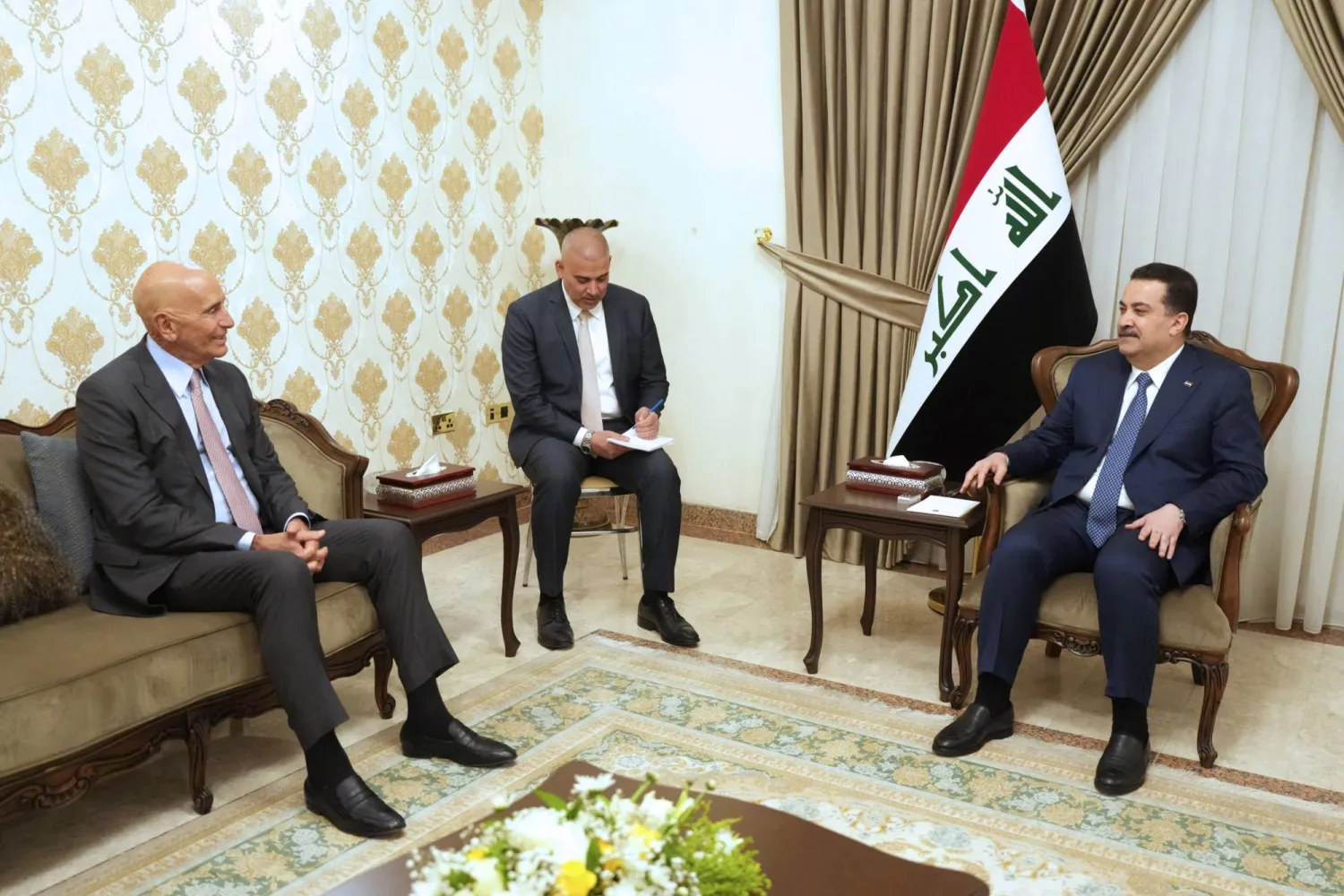
A handout picture made available by the Iraqi prime minister's office on February 22, 2026, shows US envoy to Syria Tom Barrack (L) meeting with Iraq's Prime Minister Mohammed Shia al-Sudani (R) in Baghdad's Green Zone. (Handout / Iraqi Prime Minister’s Press Office / AFP)
TT

Maliki Says Has ‘Absolutely No Intention’ to Withdraw PM Candidacy as Barrack Visits Iraq 

A handout picture made available by the Iraqi prime minister's office on February 22, 2026, shows US envoy to Syria Tom Barrack (L) meeting with Iraq's Prime Minister Mohammed Shia al-Sudani (R) in Baghdad's Green Zone. (Handout / Iraqi Prime Minister’s Press Office / AFP)

The leading candidate to become Iraq's next prime minister, former premier Nouri al-Maliki, told AFP on Monday that he will not withdraw his nomination after pressure from the US, while also seeking to allay Washington's concerns.

Since the US-led invasion that overthrew former ruler Saddam Hussein in 2003, Iraqi leaders have struggled to find a balance between two global powers competing for influence in the country: neighbor Iran and its arch-rival the United States.

Last month President Donald Trump intervened by issuing an ultimatum that if Maliki -- a two-time former premier with close ties to Iran -- was named Iraq's next prime minister, the US would no longer help the country.

"I have absolutely no intention of withdrawing out of respect for my country, its sovereignty, and its will," Maliki told AFP in an interview.

"No one has the right to say whom we can or cannot vote for," the powerbroker added.

"I will not withdraw until the end."

Trump's threat left Iraqi leaders at a loss, particularly within the Coordination Framework -- a ruling alliance of Shiite groups with varying degrees of links to Iran than nominated Maliki.

Maliki told AFP that "countries have the right to set conditions in their dealings with Iraq," but changing the nomination depends on the Coordination Framework, which still backs him.
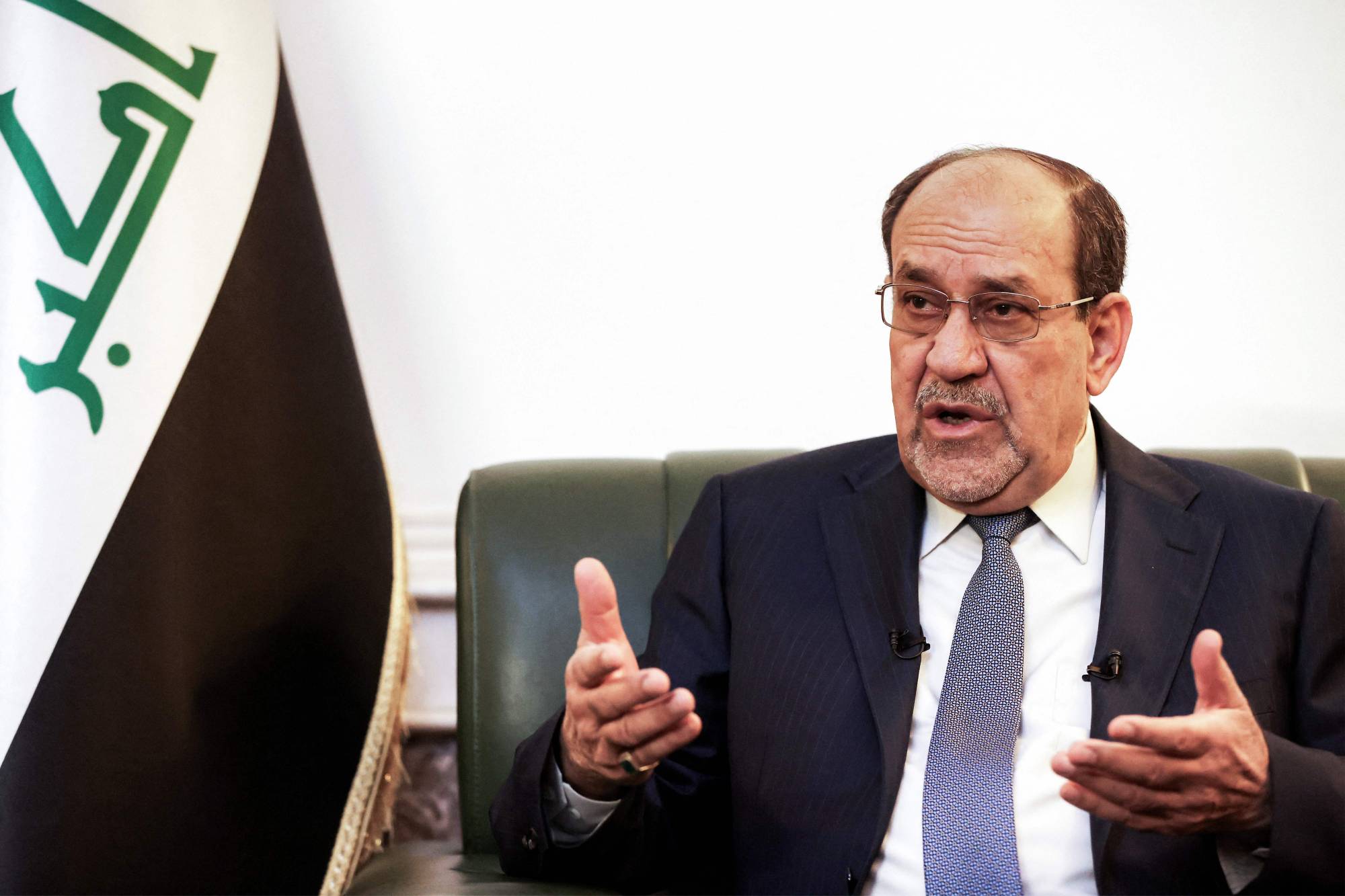
Iraq’s former PM and candidate for the premiership, Nouri al-Maliki, speaks during an interview with AFP at his office in the Green Zone in Baghdad on February 23, 2026. (AFP)

- 'One army under one command' -

Maliki -- who is Iraq's only two-term prime minister, serving from 2006 to 2014 -- also rejected claims that his relationship with the US was bad during his previous tenure.

Maliki at first enjoyed support from the American occupation following the 2003 invasion, but later fell out with Washington over his growing ties with Iran and allegations that he pushed a sectarian agenda.

Iraq's new premier will be expected to address Washington's longstanding demand that Baghdad rein in Tehran-backed factions that are designated terrorist groups by the US.

Maliki said that Washington has conveyed several messages to Iraqi leaders.

"They seek changes in the state's policies," he said.

Washington's concerns include the future of the Popular Mobilization Forces (PMF) -- a former paramilitary alliance that has integrated into the armed forces -- as well as disarming pro-Iran armed factions and accusations that some Iraqi entities are helping Iran evade US sanctions on oil exports.

Maliki sought to reassure the US on Monday.

"In fact, what America wants is not new. These are our demands," he said.

"We want weapons in the hands of the state. We want a centralized military force. We have said it repeatedly: we want one army under one command, directly under state authority.

"It's quite possible" to achieve a deal with pro-Iran armed factions, he added.

"There is a good basis for understanding with the factions" but this cannot happen "through force, war or confrontations," he said.

Maliki added that he believes factions "do not want to expose Iraq to any danger."

Washington has also demanded that the eventual Iraqi government exclude Iran-backed armed groups -- an issue that is under discussion, according to Maliki.

Some of these groups have increased their presence in the new parliament and have seen their political and financial clout increase.

"We want those who participate in the political process and the government to lay down their arms," Maliki said.

"Those who lay down their arms are welcome to be part of the next government."
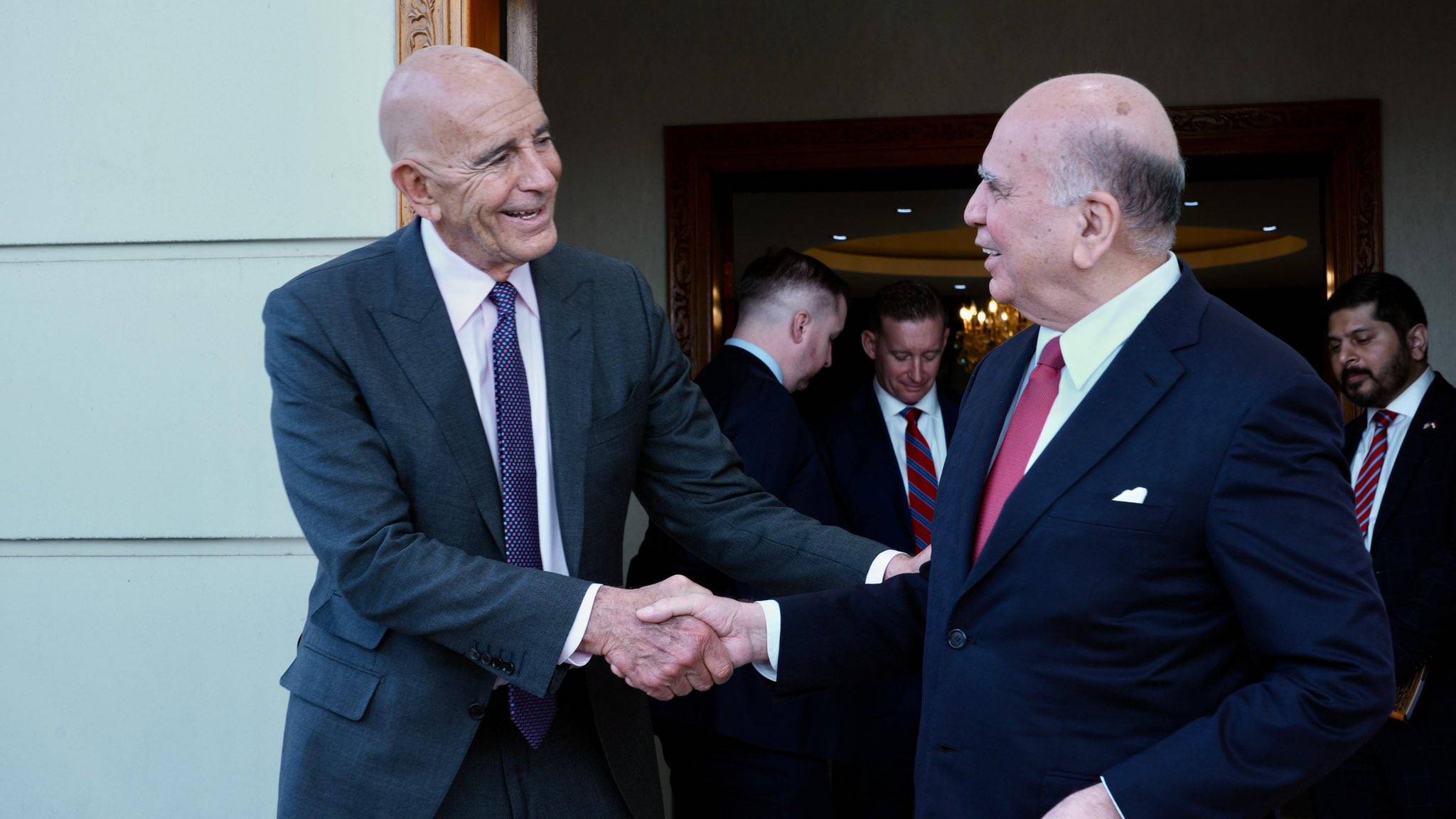
Iraqi Foreign Minister Fuad Hussein and US envoy Tom Barrack meet in Baghdad on Monday. (Iraq Foreign Ministry)

- No attacks -

After decades of conflict, Iraq has begun to enjoy some stability in recent years, yet its politics remain volatile, shaped not only by internal disputes but also by regional dynamics.

Today, all eyes are on negotiations between the US and Iran over Tehran's nuclear program, with a third round of talks scheduled for Geneva on Thursday.

With fears rising that Iraq could be dragged into a war if the US strikes Iran, Maliki vowed to prevent attacks on diplomatic missions in Iraq if he becomes prime minister.

"All countries can be assured that we will prevent any violation against their embassies or officially recognized interests in Iraq," Maliki said.

"We will not allow any party to target any country that maintains a diplomatic presence."

Previously, Iran-backed armed groups attacked US missions and troops in Iraq.

Maliki defended Iraq's relations with Iran, which he said "rest on the principle that Iraq's sovereignty is respected" and that "shared interests define this relationship".

"We share a 1,300-kilometer border and mutual interests with Iran," he added.

Despite its oil wealth, Iraq depends on imports from Iran to meet its energy needs.

Maliki warned that "if Iran cut off our natural gas supply... it would be a major catastrophe."
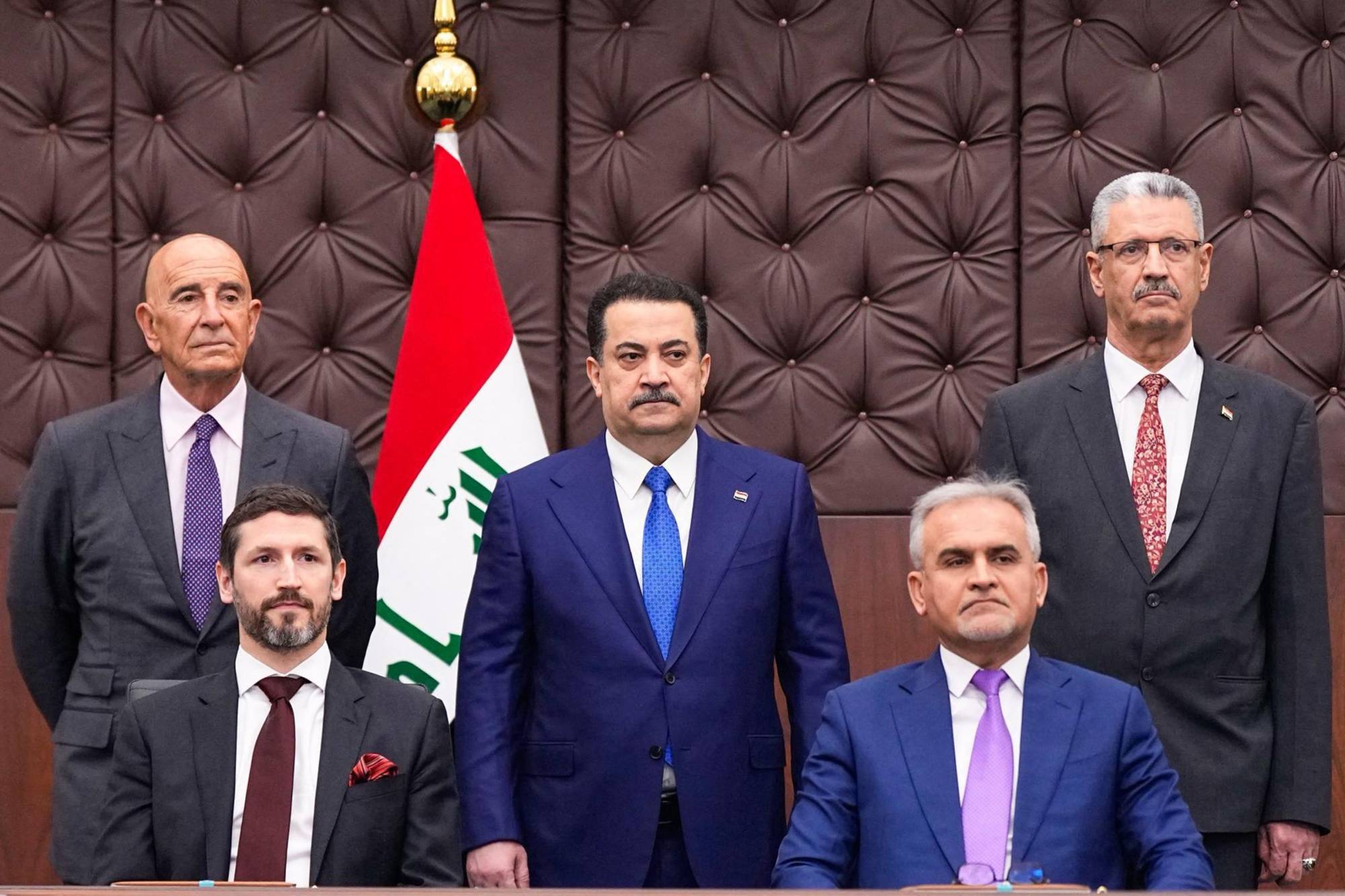
This handout picture made available by the Iraqi prime minister's office shows Iraq's Prime Minister Mohammed Shia al-Sudani (top C), Oil Minister Hayan Abdul Ghani al-Sawad (top R), US envoy Tom Barrack (top L), Chevron's Director of Business Development Joe Koch (bottom L), and the Basra Oil Company Director Bassem Abdul Karim (bottom R) attending the signing of agreements between Chevron Corporation and the Basra Oil Company at the government palace in Baghdad on February 23, 2026. (Iraqi Prime Minister’s Press Office / AFP)

- Barrack visits -

Meanwhile, US envoy Tom Barrack was in Iraq on Monday where he held talks with caretaker Prime Minister Mohammed Shia al-Sudani, Foreign Minister Fuad Hussein and President of the Supreme Judicial Council Faiq Zidan.

Sudani said the meeting with Barrack stressed the importance of dialogue and diplomacy to resolve disputes.

The officials discussed bilateral ties between Iraq and the US and developments in the region, as well as Baghdad’s efforts to support regional stability, especially in Syria, read a statement from Sudani’s office.

They also tackled opportunities for economic cooperation.

For his part, Barrack described the meeting with Sudani as "fruitful".

In a post on the X platform, he said he discussed with Sudani "continued Iraqi goals and objectives to build a sovereign, stable, and prosperous future that aligns with Trump’s desire and plan for peace and prosperity in the region."

"The necessity of effective leadership that aligns itself with the policies and practices of further stabilization for Iraq and the Iraqi people is key to our mutual goals," he remarked.

Barrack later held meetings with President of the Iraqi Kurdistan Region Nechirvan Barzani and Taqaddum Party leader Mohammed Halbousi.

During his visit, Iraq's foreign minister said Türkiye had agreed to take back Turkish citizens from among thousands of ISIS detainees transferred to Iraq from Syria when camps and prisons there were shut in recent weeks.

Also on Monday, Iraq and the US energy giant Chevron signed deals to manage and develop several oil fields, including one previously operated by Russia's Lukoil.

Sudani's media office said "two preliminary memoranda of principles" were signed with Chevron, the first of which was "concerning the transfer of management of the West Qurna 2 field," one of the world's largest oil fields.

The second agreement concerns the development of the Nasiriyah field and four exploratory blocks in Dhi Qar province in the country's south, as well as the Balad field in the northern province of Salah al-Din.

Sudani and Barrack attended the signing ceremony.


Strike Kills 2 Academics at Lebanese University as Israel Bombs Central Beirut

People stand amid debris in front of damaged buildings in the aftermath of a reported Israeli strike in Zuqaq al-Blat, central Beirut, Lebanon March 12, 2026. REUTERS/Mohamed Azakir
TT

Strike Kills 2 Academics at Lebanese University as Israel Bombs Central Beirut

People stand amid debris in front of damaged buildings in the aftermath of a reported Israeli strike in Zuqaq al-Blat, central Beirut, Lebanon March 12, 2026. REUTERS/Mohamed Azakir

An Israeli strike that hit in the vicinity of Lebanon’s only public university killed the director of the faculty of sciences Hussein Bazzi and professor Mortada Srour.

The campus is in Hadath, on the outskirts of Beirut’s southern suburbs, which Israel had warned last week should be evacuated.

It was not clear whether the campus was directly targeted, but smoke could be seen rising near the building’s courtyard in the aftermath.

Lebanese President Joseph Aoun condemned the bombing, which he said targeted the campus, as a crime and a “violation of international laws and norms that prohibit attacks on educational institutions and civilians.”

Israel’s military said Thursday night it had begun another wave of strikes on Lebanon’s capital, saying it was targeting Hezbollah sites.

Israeli strikes hit two buildings in busy residential and commercial districts near central Beirut.


How Israel Crippled Gaza's Fishing

A Palestinian man stands on the door of a refrigerator that he uses as a makeshift rowing boat, as he throws his fishing basket into the sea at the port of Gaza City on March 9, 2025. (Photo by BASHAR TALEB / AFP)
TT

How Israel Crippled Gaza's Fishing

A Palestinian man stands on the door of a refrigerator that he uses as a makeshift rowing boat, as he throws his fishing basket into the sea at the port of Gaza City on March 9, 2025. (Photo by BASHAR TALEB / AFP)

Fishermen in Gaza say they are facing their toughest conditions since the start of the Israeli war, with Israeli forces preventing them from accessing the sea to earn a living and exposing them to gunfire or arrest, both during periods of truce and even after the ceasefire reached last October.

Israeli forces target Gaza fishermen with live ammunition or detain some for allegedly violating bans on fishing or even diving. Restrictions imposed on Gaza residents also leave them largely unable to swim.

Nafez Jarbou, 53, a fisherman from the Beach refugee camp west of Gaza City, told Asharq Al-Awsat that Israeli naval boats destroyed his fishing vessel during the war. He supports a family of 16, including four relatives who worked with him in fishing, all of whom lost their livelihoods.

“When the first truce began in January 2025, we tried to return to fishing using another boat belonging to neighbors whose sons, also fishermen, were killed by Israeli forces,” Jarbou said. “But we were surprised to find we were still barred from fishing.”

Hope briefly returned after the ceasefire was announced. But Jarbou said that, like thousands of other fishermen, he encountered “severe restrictions.” He later tried to resume fishing with his sons within less than one nautical mile from Gaza City’s shoreline.

Israeli naval boats continued to pursue them, opening fire or attempting to arrest them and confiscate their boats, he said.

Diving replaces fishing

With traditional fishing routes effectively closed despite the ceasefire, Gaza’s fishing activity has sharply declined. Even fishing within a one-nautical-mile range has become increasingly restricted.

Faced with these limits, fishermen have turned to diving with simple, rudimentary equipment to avoid being pursued or targeted.

But Jarbou said diving prevents them from catching most types of fish.

“All we can catch now is small sardines, which are not in high demand,” he said.

According to the Gaza Fishermen’s Union, more than 5,000 fishermen worked in the sector before the war.

At least 235 have been killed during Israeli military operations, most in airstrikes that hit their homes or the homes of relatives.

Another 40 fishermen were killed, and dozens were wounded while working at sea at extremely short distances from shore, sometimes less than 500 meters, and in some cases just 200 meters. Israeli forces have also arrested around 43 fishermen.

Mohammed al-Habil, 31, from the Beach refugee camp, was recently released after being detained off Gaza City’s coast.

“We went through a long ordeal in prison after I was arrested with two of my relatives while working at sea to make a living,” he told Asharq Al-Awsat.

Al-Habil said interrogators did not focus on his fishing work but instead sought “information about Hamas members in my area.”

He added that Israeli forces have long targeted fishermen, even before the latest war, attempting to arrest them and recruit them as informants.

“Words cannot describe our living conditions,” he said. “We have joined the large army of unemployed in Gaza.”

He questioned the role of mediators overseeing the ceasefire in ensuring safety for fishermen and allowing them to work at least within two or three nautical miles, an area he said “would not pose any security threat to Israel.”

“Starvation policy”

Zakaria Bakr, head of the Union of Workers in Gaza’s fishing sector, said Israel is “deliberately depriving fishermen of work at sea to starve them,” describing the move as part of a collective punishment policy against the enclave.

Preventing fishing, even within limited distances, despite the ceasefire shows the main goal is to destroy what remains of the fishing sector, which has already suffered heavy damage since the war began, he said.

“What is happening is the destruction of fishermen by depriving them of their livelihoods,” Bakr told Asharq Al-Awsat.

Each fisherman supports at least four family members who depend on the fish they sell, fish that are now largely unavailable under current restrictions imposed by Israel, he said.

The Gaza Center for Human Rights said Israel has imposed strict restrictions aimed at the comprehensive destruction of the fishing sector’s infrastructure and deepening a policy of starvation affecting thousands of fishermen’s families.

The group said Israeli forces destroyed trawlers and large fishing vessels, the backbone of Gaza’s fish production, inside the main Gaza port and the harbors of Khan Younis and Rafah, putting them permanently out of service.

More than 95% of small boats and more than 100 larger vessels have been destroyed, along with fishing equipment and boat-building workshops, it said.


UN: Over 200 Civilians Reported Killed in Sudan Drone Strikes Since March 4

Residents receive aid from World Food Programme (WFP) at Al-Omada neighbourhood of Omdurman, the twin city of Khartoum on March 11, 2026. (Photo by Ebrahim Hamid / AFP)
TT

UN: Over 200 Civilians Reported Killed in Sudan Drone Strikes Since March 4

Residents receive aid from World Food Programme (WFP) at Al-Omada neighbourhood of Omdurman, the twin city of Khartoum on March 11, 2026. (Photo by Ebrahim Hamid / AFP)

UN rights chief Volker Turk said Thursday he was "appalled" at reports that more than 200 civilians had been killed by drone attacks in Sudan since March 4.

"It is deeply troubling that despite multiple reminders, warnings and appeals, parties to the conflict in Sudan continue to use increasingly powerful drones to deploy explosive weapons with wide-area impacts in populated areas," Turk said in a statement.

Dozens of civilians have been killed in drone strikes across southern Sudan over the past two days, medical sources told AFP on Wednesday, as some of the heaviest fighting of the nearly three-year war grips the region.

Sudan has been riven by conflict since April 2023, when a power struggle between the regular army and the Rapid Support Forces (RSF) plunged the country into a war that has killed tens of thousands and displaced millions.

Since the war broke out, both sides have been accused of war crimes, including targeting civilians and indiscriminately shelling residential areas.