


Somalia Finance Minister to Asharq Al-Awsat: We Settled $4.5 Bln in Debt with Saudi Support

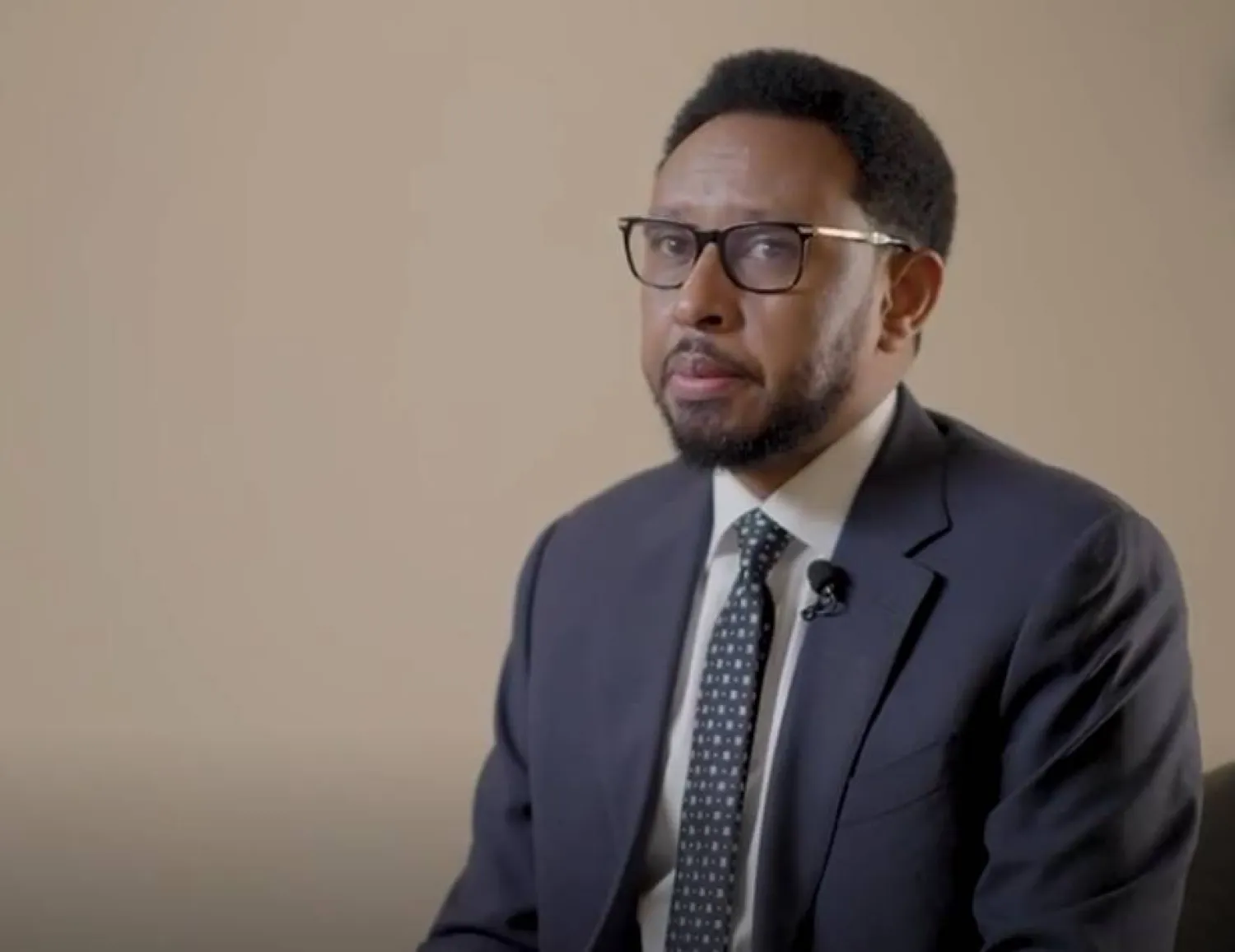
Somalia’s Minister of Finance Bihi Iman Egeh speaks to Asharq Al-Awsat.
TT

Somalia Finance Minister to Asharq Al-Awsat: We Settled $4.5 Bln in Debt with Saudi Support

Somalia’s Minister of Finance Bihi Iman Egeh speaks to Asharq Al-Awsat.

Somalia’s Minister of Finance Bihi Iman Egeh announced that the country has successfully settled around $4.5 billion in debt under the Heavily Indebted Poor Countries (HIPC) Initiative led by the International Monetary Fund (IMF). He attributed this milestone to major institutional and financial reforms, as well as increased domestic revenue mobilization.

In an interview with Asharq Al-Awsat, Egeh emphasized that Mogadishu views Riyadh as a key strategic partner in fostering economic growth and enhancing security and stability. He also praised Saudi Arabia’s pivotal role in facilitating Somalia’s debt relief efforts.

Egeh outlined Somalia’s priorities for the next phase, with a strong focus on attracting investments, particularly from Saudi Arabia, in key sectors such as livestock, renewable energy, the blue economy, and natural resources, including gold and minerals.

He said that in December 2023, Somalia reached the completion point of the HIPC Initiative—a process nearly a decade in the making. This achievement followed a series of reforms aimed at rebuilding state institutions, improving public financial management, and implementing broad economic policies. As a result, Somalia successfully restructured its debts, particularly those owed to members of the Paris Club and other international creditors.

Saudi Arabia’s role

Egeh confirmed that Arab financial institutions were part of the Paris Club negotiations and that Somalia had settled its obligations, including debts owed to the Saudi Fund for Development. He acknowledged Saudi Arabia’s critical role in facilitating and supporting the restructuring of Somalia’s debt.

The minister underscored the strong and ongoing coordination between Mogadishu and Riyadh, particularly in security matters. He revealed that a Somali delegation, including security officials, was currently in Saudi Arabia discussing strategies for combating terrorist groups.

Additionally, Somalia’s National Intelligence and Security Agency (NISA) has a mission in Jeddah to strengthen bilateral cooperation beyond financial matters, extending into military and intelligence coordination. Egeh stressed his country’s commitment to expanding this partnership to effectively respond to security threats, noting that terrorist groups operate across borders, posing a shared threat to regional and global stability.

Boosting investment and economic growth

Following its debt relief success, Somalia is now focused on economic development and attracting foreign investments. The government is preparing to sign a new program with the IMF to build on the progress made through debt relief and solidify economic reforms.

Egeh stated that Mogadishu has taken significant steps to improve the investment climate and regulatory framework, offering incentives to investors. He emphasized Saudi Arabia’s importance as a historical and geographical partner in the Red Sea region, positioning it as a priority market for Somali investments.

Key investment sectors

Somalia, home to Africa’s longest mainland coastline, offers vast opportunities in the blue economy, fisheries, and untapped natural resources. Egeh pointed to agriculture and livestock as particularly promising sectors for investment.

Saudi Arabia is Somalia’s largest trade partner, importing between three and five million livestock annually. The minister highlighted opportunities to modernize and expand this trade by upgrading the agricultural and livestock sectors.

He also pointed to significant potential in renewable energy, which could have a transformative impact on industries such as livestock farming and cold-chain logistics within the blue economy. Additionally, Somalia’s vast mineral wealth—including gold and other valuable minerals—positions the country as an attractive destination for investors.

General view of the Somali capital, Mogadishu. (Reuters)

Security concerns

Egeh noted Somalia’s history of security challenges, but stressed that over the past 15 to 20 years, the country has been on a steady path toward rebuilding its economy and strengthening security.

The Somali government has launched an aggressive military campaign against the extremist Al-Shabaab group, liberating more than 80 villages. Egeh stated that these security gains create a significant opportunity to attract investments and revitalize the economy.

According to the minister, Somalia has adopted a three-pronged strategy to combat Al-Shabaab and other extremist groups. The first involves countering their ideological influence by educating communities about the false narratives promoted by these organizations. The second targets their financial networks by cutting off funding sources. The third focuses on direct military engagement to dismantle their operational capabilities.

Egeh noted that his country has made significant progress in disrupting terrorist financing, shutting down thousands of suspicious accounts on electronic money platforms and in traditional banks. These measures have severely weakened Al-Shabaab’s ability to generate revenue through extortion and illegal taxation.

He pointed out that before the current Somali government took office, Al-Shabaab had access to substantial financial resources, posing a regional threat across Africa and the Middle East. However, recent countermeasures have significantly diminished the group’s ability to fund operations, both within Somalia and beyond.

Somalia is also engaged in a campaign against ISIS militants operating in the country, particularly in the northeastern regions. Egeh revealed that government forces have reclaimed significant territory and destroyed ISIS strongholds.

Potential Al-Shabaab links with Houthis

When asked about possible ties between Al-Shabaab and Yemen’s Iran-backed Houthi militias, Egeh said that while no direct connections have been confirmed, Somalia remains vigilant against any emerging alliances between terrorist groups.

He reiterated that his country’s primary goal is the complete eradication of both Al-Shabaab and ISIS to prevent them from destabilizing the broader region.



Libya PM Undergoes 'Successful' Treatment at Heart Hospital

Head of Libya's Government of National Unity (GNU) Abdulhamid Dbeibah. (GNU)
TT

Libya PM Undergoes 'Successful' Treatment at Heart Hospital

Head of Libya's Government of National Unity (GNU) Abdulhamid Dbeibah. (GNU)

Libya's Prime Minister Abdulhamid Dbeibah has undergone "successful" treatment at a heart hospital, his office said Saturday, but his specific ailment was not disclosed.

"I assure you that I am fine, by God's grace," said a statement posted on social media overnight.

The treatment was carried out at a facility in the northwestern Libyan city of Misrata on an undisclosed date, said AFP.

Dbeibah said he later travelled abroad for "additional medical checkups for reassurance", though this was not the primary reason for his trip.

Italian media outlets previously reported he had been admitted to a leading cardiac facility in Milan on Thursday for a general check-up.

"The matter is simply that I underwent some additional medical checkups for reassurance while I was abroad due to a prior external commitment," he said.

"The results confirmed the success of the treatment I received in Libya, praise be to God."

The prime minister leads a UN-recognized government based in Tripoli that controls western Libya, while the country's east is run by another administration backed by military strongman Khalifa Haftar.

Libya has remained divided since chaos erupted following the 2011 Arab Spring uprising that toppled longtime leader Muammar Gaddafi.


Eight Hezbollah Members Killed in Israel’s Friday Strikes on Lebanon

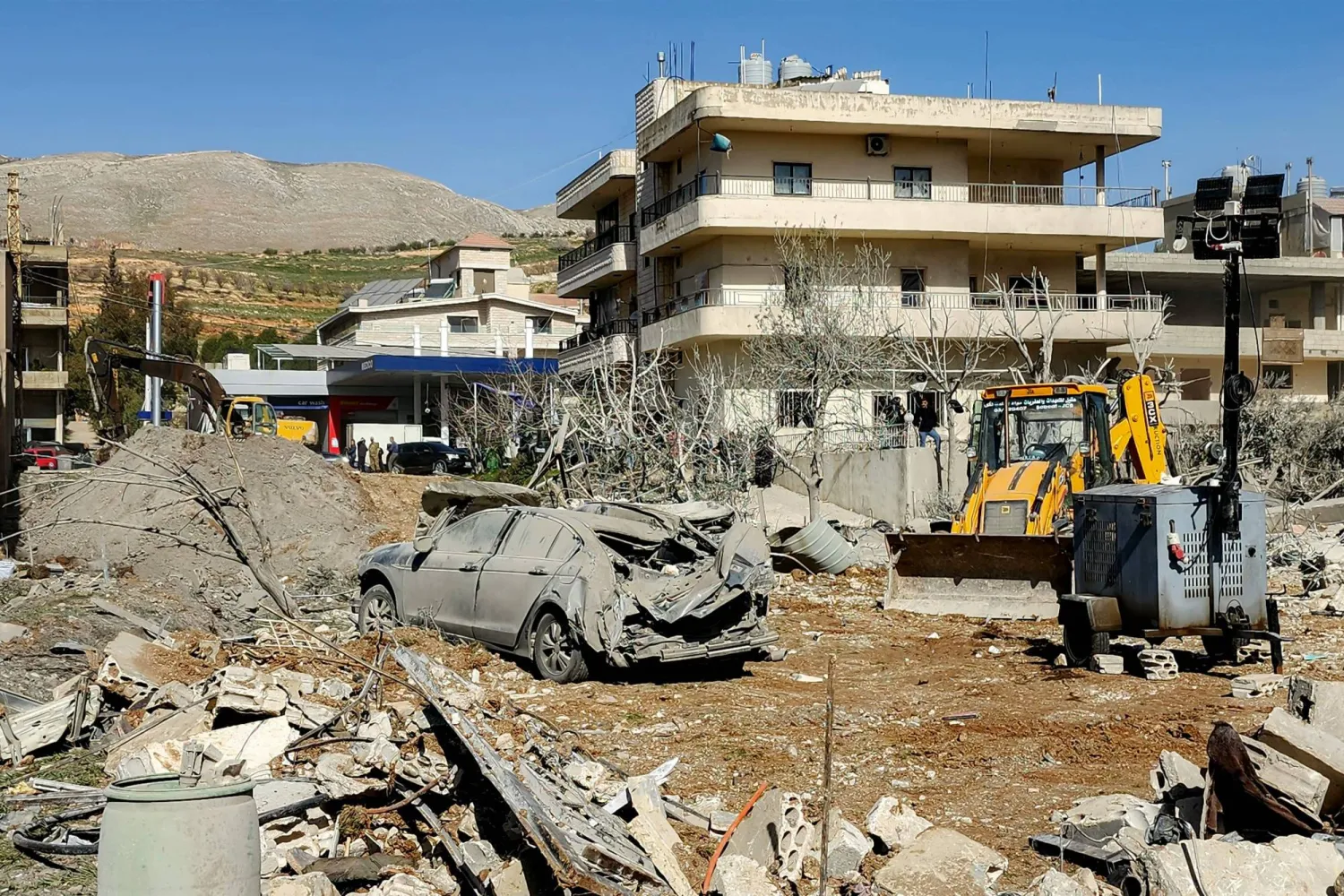
A bulldozer clears debris near heavily-damaged buildings in the village of Bednayel in Lebanon's eastern Bekaa Valley region on February 21, 2026, following Israeli strikes. (AFP)
TT

Eight Hezbollah Members Killed in Israel’s Friday Strikes on Lebanon

A bulldozer clears debris near heavily-damaged buildings in the village of Bednayel in Lebanon's eastern Bekaa Valley region on February 21, 2026, following Israeli strikes. (AFP)

Attacks carried out by Israel on Friday in eastern Lebanon killed eight members of Hezbollah, an official from the group told AFP on Saturday.

Lebanon's health ministry said Friday that a total of 10 people were killed in strikes that hit the eastern Bekaa region.

The Israeli military said it targeted "several terrorists of Hezbollah's missile array in three different command centers in the Baalbek area".

Lebanon's president on Saturday condemned the attacks, the latest despite a ceasefire with Hezbollah.

In a statement, Joseph Aoun called the attacks "a blatant act of aggression aimed at thwarting diplomatic efforts" by the United States and other nations to establish stability.

A lawmaker from Hezbollah called on Beirut to suspend meetings of a multinational committee tasked with monitoring the truce.

Washington is one of five members on the committee overseeing the ceasefire implemented in November 2024, with the body scheduled to meet again next week.

Israel has repeatedly bombed Lebanon despite the ceasefire, usually saying it is targeting Hezbollah but occasionally also the group's Palestinian ally Hamas.

The Friday attacks on southern and eastern Lebanon killed 12 people, according to the health ministry, 10 of them in the east of the country.

Israel's military said it struck "several terrorists of Hezbollah's missile array in three different command centers in the Baalbek area".

Hezbollah said a commander was killed in the raids. Its lawmaker Rami Abu Hamdan said on Saturday the group "will not accept the authorities acting as mere political analysts, dismissing these as Israeli strikes we have grown accustomed to before every meeting of the committee".

He called on Beirut to "suspend the committee's meetings until the enemy ceases its attacks".

Hezbollah, while weakened following war with Israel, remains a strong political force in Lebanon represented in parliament.

Lebanon's government last year committed to disarming the Iran-backed group, with the army saying last month it had completed the first phase of the plan covering the area near the Israeli border.

Israel, which accuses Hezbollah of rearming since the war, has called the Lebanese army's progress on disarming the group insufficient.


Ramadan’s First Friday Prayers Are Held at Jerusalem’s Al-Aqsa Mosque

Palestinians worshippers gather at Al-Aqsa Mosque compound for the first Friday prayers during the holy month of Ramadan, in the Old City of Jerusalem, 20 February 2026. (EPA)
TT

Ramadan’s First Friday Prayers Are Held at Jerusalem’s Al-Aqsa Mosque

Palestinians worshippers gather at Al-Aqsa Mosque compound for the first Friday prayers during the holy month of Ramadan, in the Old City of Jerusalem, 20 February 2026. (EPA)

Tens of thousands of Palestinians gathered under heavy Israeli restrictions at Jerusalem's Al-Aqsa Mosque compound for the first Friday prayers of the Muslim holy month of Ramadan, including some who were allowed to enter from the occupied West Bank.

The Ramadan prayers at Al-Aqsa took place for the first time since a shaky ceasefire deal between Israel and Hamas went into effect in October. It was the first opportunity many had to leave the West Bank and pray at the site in Jerusalem’s Old City since Ramadan last year.

Israel restricted the number of Palestinians allowed to enter from the West Bank to 10,000 on Friday, and only allowed men over 55 and women over 50 as well as children up to 12. It has imposed similar restrictions in the past, citing security concerns.

The hilltop, which Jews refer to as the Temple Mount, is the holiest site in Judaism and was home to the ancient biblical temples. Muslims call the site the Noble Sanctuary. Today it is home to Al-Aqsa Mosque, the third-holiest site in Islam.

It has frequently been a flashpoint in the Israeli-Palestinian conflict.

Israeli police said more than 3,000 police were deployed across Jerusalem. They said their presence was not meant to show aggression or force but was aimed at providing help in case of an emergency.

Many Palestinians view the heightened Israeli security presence, and increasing visits by religious and nationalist Israeli Jews, as a provocation. They fear that Israel intends to take over or partition the compound. The Israeli government denies having any such plans.

Jerusalem’s Islamic Waqf, the Jordanian religious authority that administers the compound, said there were 80,000 in attendance. In normal times, Ramadan Friday prayers at Al-Aqsa can draw up to 200,000.

Ezaldeen Mustafah, a Palestinian from the West Bank, was among those lamenting the restrictions.

“We need more people than this,” he said.

Some Palestinians from the West Bank on Friday said they were turned away from crossing into Jerusalem even though they had permits. Jihad Bisharat said he was told his permit had been canceled and was sent back. Israel's army didn't immediately respond to a request for comment.

The Old City, home to major religious sites sacred to Jews, Christians and Muslims, is in east Jerusalem, which Israel captured in the 1967 Mideast war, along with the West Bank and the Gaza Strip. The Palestinians want all three territories for a future state with its capital in east Jerusalem. Israel annexed east Jerusalem, a move not recognized by most of the international community, and considers the entire city to be its capital.

Ramadan in Gaza

Many Palestinians said the month’s typically festive spirit is eluding them as they struggle with grief and losses following two years of conflict in Gaza sparked by Hamas' Oct. 7, 2023, attack into Israel.

“All the mosques have been bombed,” said Ramiz Firwana, a Gaza resident who gathered with other worshippers for a Friday sermon and prayers held in schoolyard.

On Thursday evening, families sat amid the rubble and destruction for iftar, the meal held at the end of the daily dawn-to-dusk fast.

“Despite the displacement, the pain and the destruction, we want to rejoice and live,” said Mohammad Kollab, from Khan Younis. “We are not a people destined only for destruction and killing."

Israel’s military offensive has killed more than 72,000 Palestinians, according to Gaza’s Health Ministry, and caused widespread destruction and displaced most of the territory’s residents. Israel launched the offensive after Hamas-led militants killed some 1,200 people, mostly civilians, and took another 251 hostage in the initial attack.

The Oct. 10 US-brokered ceasefire deal has brought an end to major military operations and the release of the remaining hostages. But Palestinians, including many civilians, are still being killed in near-daily strikes that Israel says are aimed at militants who threaten or attack its forces.