Report Says Israeli Settlers Used Grazing to Grab Swathes of West Bank Landhttps://english.aawsat.com/arab-world/5124462-report-says-israeli-settlers-used-grazing-grab-swathes-west-bank-land
Report Says Israeli Settlers Used Grazing to Grab Swathes of West Bank Land
20 July 2022, Israel, Barkan: Right-wing settlers march to build a settlement in the West Bank near Barkan. (dpa)
TT
TT
Report Says Israeli Settlers Used Grazing to Grab Swathes of West Bank Land
20 July 2022, Israel, Barkan: Right-wing settlers march to build a settlement in the West Bank near Barkan. (dpa)
A report by Israeli settlement watchdogs says settlers have used grazing to seize control of 14 percent of the occupied West Bank through the establishment of shepherding outposts in recent years.
In their report, "The Bad Samaritan", Israeli NGOs Peace Now and Kerem Navot said that in the past three years, 70 percent of all land seized by settlers was "taken under the guise of grazing activities".
Settlers in the West Bank, which Israel has occupied since 1967, use herding to establish a presence on agricultural lands used by Palestinian communities and gradually deny them access to these areas, according to the report.
To force Palestinians out, settlers resort to harassment, intimidation and violence, "with the backing of the Israeli government and military", the watchdogs said.
"Israeli authorities make living conditions very difficult, but settler violence is really the main trigger why people leave lately -- they have nothing to protect themselves", said Allegra Pacheco, director of the West Bank Protection Consortium, a group of international NGOs.
"People get very worried about their families and their safety", and have no recourse when settlers start occupying their lands, she told AFP.
Excluding Israeli-annexed east Jerusalem, the West Bank is home to around 490,000 Israelis living in settlements and outposts considered illegal under international law.
Around three million Palestinians live in the West Bank.
On Friday, the UN's Office for the Coordination of Humanitarian Affairs (OCHA) said that "Israeli settlers injured 23 Palestinians in one week, mainly in Bedouin and herding communities".
That same week, between March 11 and 17, "two Palestinian families were displaced, and at least two houses, eight vehicles and 180 Palestinian-owned trees and saplings were vandalized" in incidents involving settlers.
More than 60 entire Palestinian shepherding communities throughout the West Bank have been expelled using such methods since 2022, the report added.
These communities are overwhelmingly in the West Bank's Area C, which under the Oslo Accords signed in the 1990s falls under full Israeli control.
In recent months, several Israeli far-right politicians including some in Israeli Prime Minister Benjamin Netanyahu's government have suggested taking advantage of the friendly US administration under President Donald Trump to annex part or all of the West Bank in 2025.
"The systematic and violent displacement of Palestinians from hundreds of thousands of dunam of land in recent years has undoubtedly laid the groundwork to facilitate such ambitions", the new report said of annexation, using a traditional measure of land area equivalent to 1,000 square meters.
Saudi Envoy Says Adherence to Taif Accord is Key to Any Settlement in Lebanonhttps://english.aawsat.com/arab-world/5267688-saudi-envoy-says-adherence-taif-accord-key-any-settlement-lebanon
Saudi Envoy Says Adherence to Taif Accord is Key to Any Settlement in Lebanon
Saudi Ambassador to Lebanon Walid Bukhari meets Grand Mufti Sheikh Abdul Latif Derian (X)
Saudi Ambassador to Lebanon Walid Bukhari said adherence to the 1989 Taif Agreement is the backbone to any settlement in Lebanon, alongside the need to reinforce civil peace and prioritize wisdom and reason.
Bukhari made the remarks during visits to Grand Mufti Sheikh Abdul Latif Derian, Deputy Head of the Higher Islamic Shiite Council Sheikh Ali al-Khatib and Druze spiritual leader Sheikh Sami Abi al-Muna.
During his meeting with Derian, Bukhari stressed Saudi Arabia’s commitment to Lebanon’s unity in facing current challenges, saying the Kingdom was pursuing diplomatic efforts to help Lebanon through its crisis and stood by the Lebanese state and its institutions in support of solutions that promote security, stability and prosperity.
Derian, for his part, praised Saudi Arabia’s role in the region, particularly in supporting Lebanon’s stability, security and unity under exceptional circumstances.
He said rebuilding the state was the only path to saving Lebanon by restoring its authority across all its territory, confining weapons to the Lebanese army and adhering to the Taif accord while strengthening national unity.
Derian also welcomed diplomatic efforts by President Joseph Aoun and Prime Minister Nawaf Salam, with the support of Arab and international partners, to halt the war in Lebanon and reach a settlement that ensures stability.
In a second stop, Bukhari met Ali al-Khatib at the Higher Islamic Shiite Council, where they reviewed developments in Lebanon and the region and prospects for the coming phase.
Bukhari voiced optimism about the future and stressed the need to strengthen civil peace in Lebanon, saying this had been a focus of recent Saudi efforts and expressing confidence in “people of wisdom and reason.”
He stressed that what is needed today is a path agreed by Lebanon’s three top leaders to safeguard civil peace, while praising the wisdom and experience of Parliament Speaker Nabih Berri at every critical juncture.
Bukhari said a return to the Taif accord was the main gateway to agreement on broad principles that protect every Lebanese component and avoid excluding any party, recalling late parliament speaker Hussein Husseini’s saying that “the alternative to Taif is implementing Taif.”
Khatib, for his part, praised Saudi Arabia’s role in strengthening civil peace in Lebanon and repeated that “we have no separate political project of our own.”
He said hopes rested on Saudi Arabia’s role in curbing Israeli and Western overreach, calling for cooperation among major Arab and Islamic states to forge a project capable of confronting the Zionist plan.
He added that the Arab and Islamic worlds needed a front to protect them and that Saudi Arabia was central to that effort, expressing hope such cooperation would lead to greater integration while preserving each state’s particularities.
Bukhari also met Abi al-Muna to discuss broader developments in light of continued military operations, efforts to stop the war, Saudi Arabia’s role in helping Lebanon overcome its difficult circumstances, the importance of preserving civil peace and national unity, and the outcome of the recent visit to Lebanon by Saudi Foreign Ministry adviser Yazid bin Farhan.
Officials Exert Efforts to Unify Lebanon’s Stance on Negotiations with Israelhttps://english.aawsat.com/arab-world/5267684-officials-exert-efforts-unify-lebanon%E2%80%99s-stance-negotiations-israel
Officials Exert Efforts to Unify Lebanon’s Stance on Negotiations with Israel
Lebanese President Joseph Aoun receives MP Melhem Riachi (Lebanese Presidency)
Efforts are underway to unify Lebanon’s position on negotiations with Israel amid disagreements on how to approach the issue, particularly as Hezbollah objects to the process and wages what critics describe as a systematic campaign against President Joseph Aoun and Prime Minister Nawaf Salam, even as both enjoy broad support among most political factions.
A meeting between Aoun, Parliament Speaker Nabih Berri and Salam is expected to be held this week in an effort to consolidate Lebanon’s position.
Meanwhile, Israeli Foreign Minister Gideon Saar said his country had no intention of seizing Lebanese territory.
Speaking at a joint news conference with Serbian Foreign Minister Marko Djuric, Saar said: “Israel has no territorial ambitions in Lebanon. Our presence in areas along our northern border serves one purpose only: protecting our citizens,” referring to the deployment of Israeli forces in parts of southern Lebanon.
His remarks came as the Israeli military continues air and ground operations against Hezbollah despite the ceasefire.
Aoun has drawn broad domestic backing since a first-of-its-kind statement Monday in which he accused Hezbollah of betrayal, saying: “The traitor is the one who dragged his country into war in pursuit of foreign interests.”
In a sign of support, MP Melhem Riachi visited him as an envoy of Lebanese Forces leader Samir Geagea.
After the meeting, Riachi said: “We held wide-ranging talks on current developments, particularly negotiations between Lebanon and Israel aimed at securing a ceasefire and containing the situation in the south.”
“I expressed full support for the president’s efforts,” he added.
Referring to reports about a possible meeting involving Aoun and Israeli Prime Minister Benjamin Netanyahu in Washington, Riachi said: “We encourage him to meet (US) President Donald Trump, and if other meetings are to take place, they should come at the appropriate time .... We have no objection to any step that spares Lebanon and its people, especially our people in the south.”
Echoing his remarks, the political bureau of the Kataeb Party, meeting under the chairmanship of MP Sami Gemayel, said Aoun’s position “expressed the will of the Lebanese, who reject a militia - Hezbollah - unilaterally imposing its will on the Lebanese in service of the interests of the Islamic Republic of Iran.”
It added that the roadmap laid out by Lebanon to reach peace is being translated in practice through the negotiating track launched under Arab and international sponsorship.
The political bureau called for creating the conditions necessary for the Israeli withdrawal, the end to attacks, the return of detainees, the end to war, the deployment of the Lebanese army and the launch of reconstruction.
Asharq Al-Awsat Reveals Details of New Gaza Proposalhttps://english.aawsat.com/arab-world/5267680-asharq-al-awsat-reveals-details-new-gaza-proposal
Asharq Al-Awsat Reveals Details of New Gaza Proposal
People fetch drinking water at the Bureij camp for Palestinian refugees in the central Gaza Strip on April 28, 2026. (Photo by Eyad Baba / AFP)
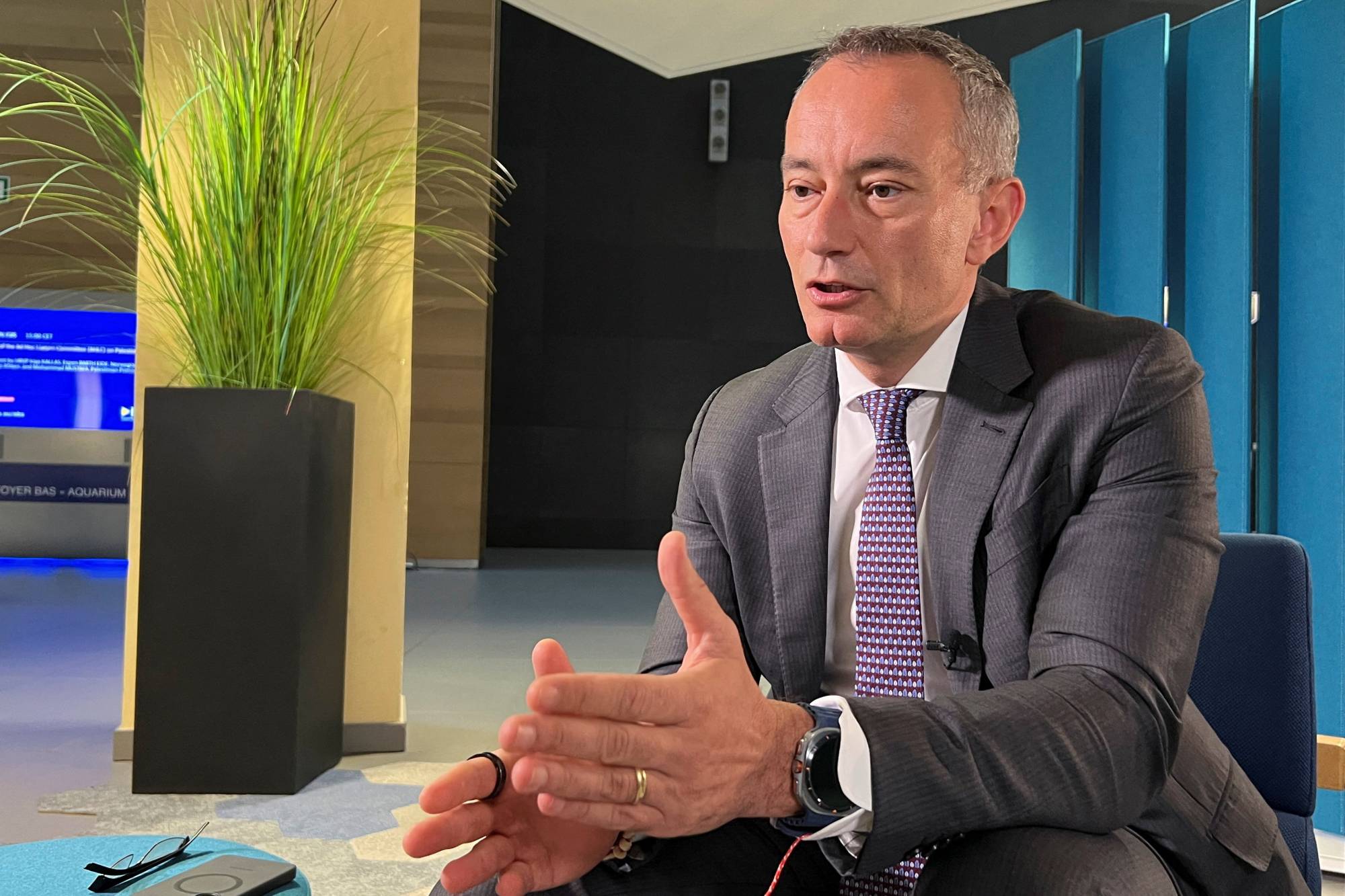
Asharq Al-Awsat has obtained details of a new proposal drafted by representatives of the Board of Peace, including the board’s high representative, Nickolay Mladenov, mediators from Egypt, Qatar and Türkiye, as well as the United States, concerning the Gaza Strip, particularly on the issue of disarmament.
The document - described as a “roadmap” for completing implementation of US President Donald Trump’s comprehensive peace plan for Gaza - has 15 provisions to carry out the second phase of the ceasefire agreement that entered into force on Oct. 10, 2025.
A senior Hamas source told Asharq Al-Awsat the proposal had also been conveyed to Israel, and meetings in Cairo could begin Wednesday to discuss responses from all parties, including Hamas and other factions.
The source declined to clarify Hamas’ position following internal consultations. Other sources said Monday that Mladenov would visit Israel before arriving in Egypt on Tuesday for discussions on Israel’s position on the proposal.
Nickolay Mladenov, the Board of Peace's lead envoy for Gaza, speaks during an interview with Reuters during a visit to Brussels, Belgium April 20, 2026. REUTERS/Christian Levaux
The document calls for establishing a committee known as the Implementation Verification Committee, to be created by the High Representative for Gaza and composed of guarantor states, the International Stabilization Force and the Board of Peace, to ensure all parties fulfill their obligations. The committee would be reinforced through an enhanced monitoring mechanism.
In its first provision, the document stresses the importance of all parties fully implementing UN Security Council Resolution 2803 and Trump’s comprehensive plan, describing them as an agreed international framework to guide the process toward restoring civilian life, enabling Palestinian governance, reconstruction, security and economic recovery, and creating conditions for a credible path to Palestinian self-determination and statehood.
The proposal adopts Palestinian demands recently presented by a Hamas and factional delegation, requiring Israel to complete all outstanding commitments from the first phase in full and without delay before moving to the second phase, under the supervision of the verification committee.
According to the document, movement from one stage of the second phase to the next would be conditional on completing all obligations in the preceding stage, under monitoring by the verification committee.
It grants the Board of Peace a mandate to oversee governance, reconstruction and development in Gaza until a reformed Palestinian authority can resume its responsibilities and conditions are created for a credible path to Palestinian statehood.
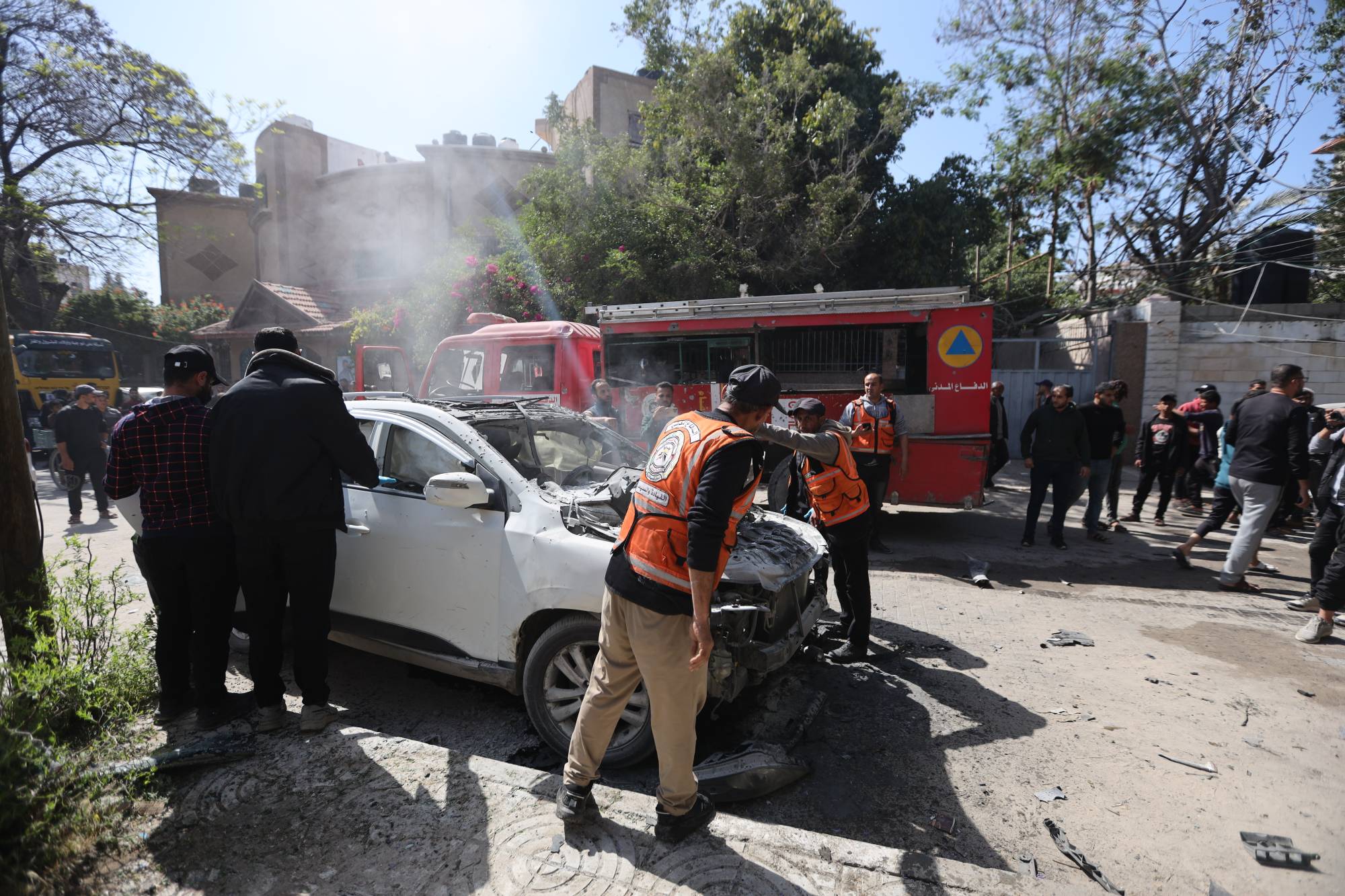
28 April 2026, Palestinian Territories, Gaza: Palestinian Civil Defense personnel and civilians inspect a vehicle after it was targeted by an Israeli missile on Gaza. Photo: Hadi Daoud/APA Images via ZUMA Press Wire/dpa
The Board of Peace would also be authorized to establish the International Stabilization Force and make arrangements necessary to implement the plan’s objectives.
The document explicitly states Hamas and all Palestinian factions would have no direct or indirect role in governing Gaza. Current civil servants affiliated with Hamas serving in civilian ministries would be dealt with legally and fairly, with full respect for their rights.
It says Gaza must be governed according to the principle of one authority, one law and one weapon, with arms permitted only for individuals authorized by the national committee, while all armed groups would cease military activities.
Newly trained police personnel would be integrated into existing police structures and subjected to security vetting. Those who fail to meet standards would be offered alternative unarmed roles or compensation packages. All police weapons would be transferred to committee control upon its entry into Gaza.
On weapons control, the document outlines a phased disarmament process linked to an agreed implementation timetable, monitored and supported by the office of the High Representative and the verification committee.
The process would be under Palestinian leadership, with weapons transferred to the national committee. All armed groups would participate in inventorying infrastructure and collecting all weapons, though they would not be required to transfer weapons to Israel. The process would be monitored by the verification committee.
The national committee for administering Gaza would have sole authority to register weapons, issue and revoke licenses, and collect unlicensed arms, primarily personal weapons.
Through a gradual process using buyback programs, reintegration assistance and social support, the national committee would oversee weapons collection, with factions committed to cooperating.
The document says surrender of personal weapons by armed members would occur only in parallel with the handover of militia weapons, under conditions ensuring security and police capacity to guarantee personal safety.
It also calls for signing a social peace agreement to prevent internal fighting and violence, ban shows of force, military parades and armed demonstrations, and halt retaliatory acts.
Regarding the International Stabilization Force, the document says it would deploy between areas controlled by Israeli forces and areas under the national committee’s control, but would not conduct policing activities. It would be permitted to support disarmament and humanitarian operations and provide protection for them.
The proposal calls for Israel to complete a phased withdrawal toward Gaza’s borders according to an agreed and implementable timetable, linked to verified progress in the disarmament process.
The national committee would address any security breaches in areas where weapons have been collected.
It also says reconstruction of the enclave would proceed through the entry of building materials into areas where disarmament has been carried out and which are effectively under the administration of the national committee.
لم تشترك بعد
انشئ حساباً خاصاً بك لتحصل على أخبار مخصصة لك ولتتمتع بخاصية حفظ المقالات وتتلقى نشراتنا البريدية المتنوعة