


50 Years after Lebanon's Civil War Began, a Bullet-riddled Bus Stands as a Reminder

FILE - A militiaman aims his rifle down an alley at Christian forces on the other side of the Green Line, in Beirut, Lebanon, Jan. 4, 1982. (AP Photo, File)
TT

50 Years after Lebanon's Civil War Began, a Bullet-riddled Bus Stands as a Reminder

FILE - A militiaman aims his rifle down an alley at Christian forces on the other side of the Green Line, in Beirut, Lebanon, Jan. 4, 1982. (AP Photo, File)

It was an ordinary day in Beirut. In one part of Lebanon's capital, a church was inaugurated, with the leader of the Christian Kataeb party there. In another, Palestinian factions held a military parade. Kataeb and Palestinians had clashed, again, that morning.

What happened next on April 13, 1975, would change the course of Lebanon, plunging it into 15 years of civil war that would kill about 150,000 people, leave 17,000 missing and lead to foreign intervention. Beirut became synonymous with snipers, kidnappings and car bombs.

Lebanon has never fully grappled with the war's legacy, and in many ways it has never fully recovered, 50 years later. The government on Sunday marked the anniversary with a small ceremony and minute of silence, a rare official acknowledgement of the legacy of the conflict.

The massacre Unrest had been brewing. Palestinian militants had begun launching attacks against Israel from Lebanese territory. Leftist groups and many Muslims in Lebanon sympathized with the Palestinian cause. Christians and some other groups saw the Palestinian militants as a threat.

At the time, Mohammad Othman was 16, a Palestinian refugee in the Tel al-Zaatar camp east of Beirut.

Three buses had left camp that morning, carrying students like him as well as militants from a coalition of hardline factions that had broken away from the Palestinian Liberation Organization. They passed through the Ein Rummaneh neighborhood without incident and joined the military parade.

The buses were supposed to return together, but some participants were tired after marching and wanted to go back early. They hired a small bus from the street, Othman said. Thirty-three people packed in.

They were unaware that earlier that day, small clashes had broken out between Palestinians and Kataeb Party members guarding the church in Ein Rummaneh. A bodyguard for party leader Pierre Gemayel had been killed.

Suddenly the road was blocked, and gunmen began shooting at the bus “from all sides,” Othman recalled.

Some passengers had guns they had carried in the parade, Othman said, but they were unable to draw them quickly in the crowded bus.

A camp neighbor fell dead on top of him. The man’s 9-year-old son was also killed. Othman was shot in the shoulder.

“The shooting didn’t stop for about 45 minutes until they thought everyone was dead,” he said. Othman said paramedics who eventually arrived had a confrontation with armed men who tried to stop them from evacuating him, The Associated Press said.

Twenty-two people were killed.

Conflicting narratives

Some Lebanese say the men who attacked the bus were responding to an assassination attempt against Gemayel by Palestinian militants. Others say the Kataeb had set up an ambush intended to spark a wider conflict.

Marwan Chahine, a Lebanese-French journalist who wrote a book about the events of April 13, 1975, said he believes both narratives are wrong.

Chahine said he found no evidence of an attempt to kill Gemayel, who had left the church by the time his bodyguard was shot. And he said the attack on the bus appeared to be more a matter of trigger-happy young men at a checkpoint than a “planned operation.”

There had been past confrontations, "but I think this one took this proportion because it arrived after many others and at a point when the authority of the state was very weak,” Chahine said.

The Lebanese army had largely ceded control to militias, and it did not respond to the events in Ein Rummaneh that day. The armed Palestinian factions had been increasingly prominent in Lebanon after the PLO was driven out of Jordan in 1970, and Lebanese Christians had also increasingly armed themselves.

“The Kataeb would say that the Palestinians were a state within a state,” Chahine said. “But the reality was, you had two states in a state. Nobody was following any rules."

Selim Sayegh, a member of parliament with the Kataeb Party who was 14 and living in Ein Rummaneh when the fighting started, said he believes war had been inevitable since the Lebanese army backed down from an attempt to take control of Palestinian camps two years earlier.

Sayegh said men at the checkpoint that day saw a bus full of Palestinians with “weapons apparent” and "thought that is the second wave of the operation” that started with the killing of Gemayel's bodyguard.

The war unfolded quickly from there. Alliances shifted. New factions formed. Israel and Syria occupied parts of the country. The United States intervened, and the US embassy and Marine barracks were targeted by bombings. Beirut was divided between Christian and Muslim sectors.

In response to the Israeli occupation of southern Lebanon, a Shiite militant group was formed in the early 1980s with Iranian backing: Hezbollah. It would grow to be arguably the most powerful armed non-state group in the region.

Hezbollah was the only militant group allowed to keep its weapons after Lebanon's civil war, given special status as a “resistance force” because Israel was still in southern Lebanon. After the group was badly weakened last year in a war with Israel that ended with a ceasefire, there has been increasing pressure for it to disarm.

The survivors

Othman said he became a fighter after the war started because “there were no longer schools or anything else to do.” Later he would disarm and became a pharmacist.

He remembers being bewildered when a peace accord in 1989 ushered in the end of civil war: “All this war and bombing, and in the end they make some deals and it’s all over.”

Of the 10 others who survived the bus attack, he said, three were killed a year later when Christian militias attacked the Tel al-Zaatar camp. Another was killed in a 1981 bombing at the Iraqi embassy. A couple died of natural causes, one lives in Germany, and he has lost track of the others.

The bus has also survived, as a reminder.

Ahead of the 50th anniversary of the attack, it was towed from storage on a farm to the private Nabu Museum in Heri, north of Beirut. Visitors took photos with it and peered into bullet holes in its rusted sides.

Ghida Margie Fakih, a museum spokesperson, said the bus will remain on display indefinitely as a “wake-up call” to remind Lebanese not to go down the path of conflict again.

The bus “changed the whole history in Lebanon and took us somewhere that nobody wanted to go,” she said.

Israel Intensifies Ceasefire Violations, Destroying and Burning Occupied Lebanese Villages

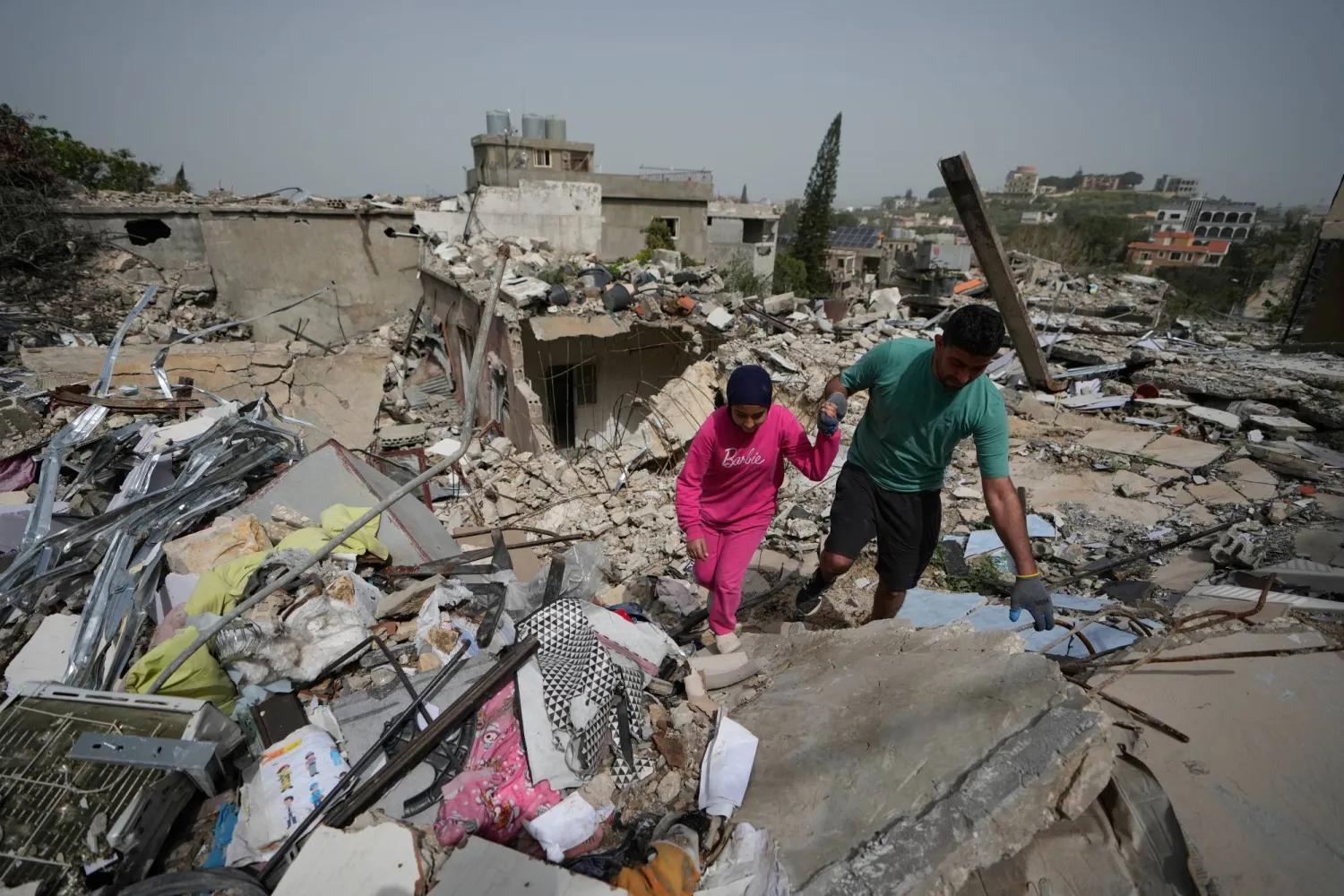
Residents walk on the rubble of destroyed houses on the second day of a ceasefire between Hezbollah and Israel in Jibchit village, south Lebanon, Saturday, April 18, 2026.(AP Photo/Mohammed Zaatari)
TT

Israel Intensifies Ceasefire Violations, Destroying and Burning Occupied Lebanese Villages

Residents walk on the rubble of destroyed houses on the second day of a ceasefire between Hezbollah and Israel in Jibchit village, south Lebanon, Saturday, April 18, 2026.(AP Photo/Mohammed Zaatari)

Israeli violations of the US-brokered ceasefire on the Lebanon front continue, as military operations and airstrikes persist against targets Israel claims are affiliated with Hezbollah. This has forced residents who had returned to some southern villages to leave again immediately, fearing a rapid return to fighting.

The yellow line

These violations coincide with the Israeli army’s announcement of the creation of a “yellow line” in southern Lebanon, similar to the one in Gaza, effectively preventing residents from returning to 55 Lebanese towns located within this line.

On Saturday, the Israeli army said it had established a separating “yellow line” in southern Lebanon, similar to the line dividing its forces from areas controlled by Hamas in Gaza. It stated that it had targeted suspected militants who approached its forces along this line.

The army said that over the past 24 hours, its forces operating south of the yellow line had identified individuals it described as militants who violated the ceasefire and approached from the north of the line in what it called a direct threat. This marked the first reference to the line since the ceasefire took effect.

It added that its forces struck those individuals in several areas of southern Lebanon immediately after detecting them, in order to eliminate the threat, stressing that it is authorized to act against threats despite the ceasefire.

In this context, military and security expert Brig. Gen. Fadi Daoud told Asharq Al-Awsat that the Israeli security line is unofficial but effectively constitutes a dangerous point of friction. He said it is known in the field as the Israeli technical line along the Lebanon-Israel border. It is not an internationally recognized boundary but a security measure imposed by Israel that extends beyond the Blue Line and is used to impose facts on the ground, and could quickly trigger clashes.

An unstable situation

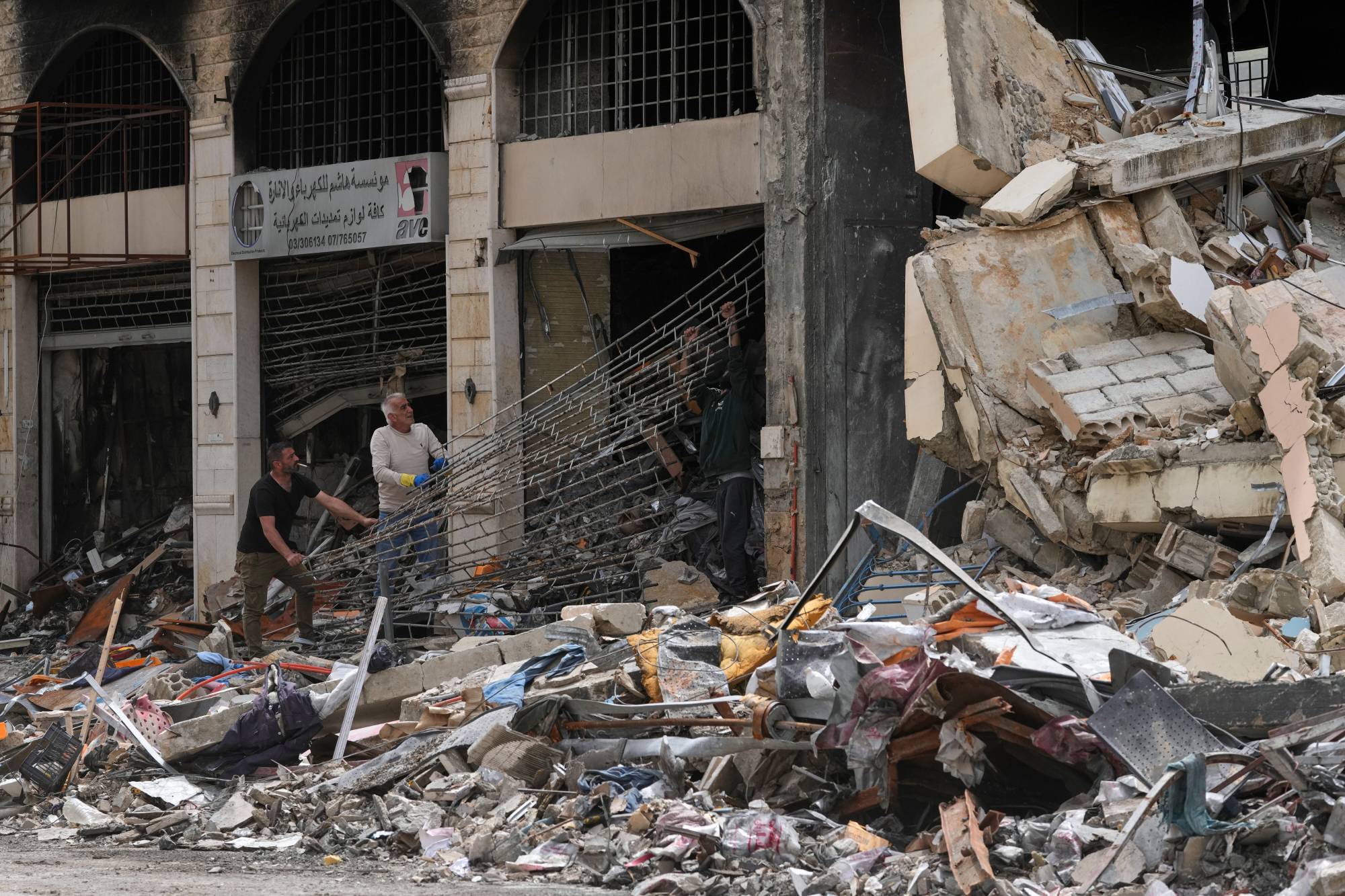
Amid the developments imposed by the recent war, it has become difficult to quantify Israeli violations, as UNIFIL forces are unable to enter towns under full Israeli control. A security source told Asharq Al-Awsat that violations are not limited to artillery shelling, drone strikes, or clashes with Hezbollah fighters, but also include the deliberate booby-trapping and complete demolition of homes under the pretext of destroying the group’s infrastructure.

The source described the situation in the south as unstable, warning of concerns about a return to a cycle of fighting. The source added that the Lebanese side had been monitoring developments through the mechanism committee, but the committee is currently not in place, leaving no mechanism to address new Israeli attacks.

On the ground, one person was killed in the town of Kounine and others were wounded by a suspicious object believed to be a cluster munition left over from Israeli bombardment, just hours after the ceasefire came into effect. Artillery shelling continues to be heard in several villages in the central sector, while Israeli forces fired bursts of gunfire toward the town of Aitaroun.

Field reports indicate that the town of Khiam continues to come under artillery fire. Israeli forces have also carried out demolitions in Khiam, Qantara, Shamaa, Bint Jbeil, and Bayyada. Explosions and sweeping fire were also reported in the vicinity of Bint Jbeil.

Lebanese citizens remove rubble from their destroyed shops on the second day of a ceasefire between Hezbollah and Israel in Nabatiyeh town, south Lebanon, Saturday, April 18, 2026.(AP Photo/Mohammed Zaatari)

Two tracks of operations in the south

The ceasefire terms, which took effect at midnight between Thursday and Friday, have imposed a new and more difficult reality compared with the cessation of hostilities agreement reached between Lebanon and Israel on November 27, 2024.

Daoud said Israeli operations south of the Litani River are proceeding along two parallel tracks aimed at establishing a new reality on the ground. The first track involves efforts by the Israeli army to entrench its presence in villages it has taken control of, alongside continuing a policy of widespread destruction similar to what it previously carried out in Gaza.

He said the Israeli army is focusing on demolishing buildings in villages it controls in the first and second defensive lines, uprooting trees including olive trees, and setting forests on fire to turn them into completely scorched areas. He added that Israel is also clearing the rubble of destroyed homes and transporting it for recycling, indicating an intention to fundamentally alter the nature of the area.

The battle for Bint Jbeil

The second track centers, according to Daoud, on the battle for Bint Jbeil. He said the battle has two main dimensions: a symbolic one, as Hezbollah has called the city the “capital of the resistance,” and a strategic one due to its geographic location near the border, allowing whoever controls it to influence both northern Israel and southern Lebanon.

The importance of Bint Jbeil is not limited to symbolism but extends to its surroundings. Daoud said controlling the city effectively means controlling surrounding roads and towns, as it provides a tactical advantage that allows fire control over the northeastern and western sectors of the area. He added that operations inside Bint Jbeil will continue regardless of the ceasefire.

He also suggested that if a US green light is given, Israel may continue operations under what is described as “low-intensity warfare” or guerrilla-style operations, aimed at completing control over remaining Hezbollah positions in the city.

Daoud stressed that Israel’s less visible operations reflect a scorched-earth policy, turning occupied towns south of the Litani into fully devastated areas, mirroring the operational pattern seen in Gaza.


Israel Intensifies Ceasefire Violations, Destroying and Burning Occupied Lebanese Villages

Residents walk on the rubble of destroyed houses on the second day of a ceasefire between Hezbollah and Israel in Jibchit village, south Lebanon, Saturday, April 18, 2026.(AP Photo/Mohammed Zaatari)
TT

Israel Intensifies Ceasefire Violations, Destroying and Burning Occupied Lebanese Villages

Residents walk on the rubble of destroyed houses on the second day of a ceasefire between Hezbollah and Israel in Jibchit village, south Lebanon, Saturday, April 18, 2026.(AP Photo/Mohammed Zaatari)

Israeli violations of the US-brokered ceasefire on the Lebanon front continue, as military operations and airstrikes persist against targets Israel claims are affiliated with Hezbollah. This has forced residents who had returned to some southern villages to leave again immediately, fearing a rapid return to fighting.

The yellow line

These violations coincide with the Israeli army’s announcement of the creation of a “yellow line” in southern Lebanon, similar to the one in Gaza, effectively preventing residents from returning to 55 Lebanese towns located within this line.

On Saturday, the Israeli army said it had established a separating “yellow line” in southern Lebanon, similar to the line dividing its forces from areas controlled by Hamas in Gaza. It stated that it had targeted suspected militants who approached its forces along this line.

The army said that over the past 24 hours, its forces operating south of the yellow line had identified individuals it described as militants who violated the ceasefire and approached from the north of the line in what it called a direct threat. This marked the first reference to the line since the ceasefire took effect.

It added that its forces struck those individuals in several areas of southern Lebanon immediately after detecting them, in order to eliminate the threat, stressing that it is authorized to act against threats despite the ceasefire.

In this context, military and security expert Brig. Gen. Fadi Daoud told Asharq Al-Awsat that the Israeli security line is unofficial but effectively constitutes a dangerous point of friction. He said it is known in the field as the Israeli technical line along the Lebanon-Israel border. It is not an internationally recognized boundary but a security measure imposed by Israel that extends beyond the Blue Line and is used to impose facts on the ground, and could quickly trigger clashes.

An unstable situation

Amid the developments imposed by the recent war, it has become difficult to quantify Israeli violations, as UNIFIL forces are unable to enter towns under full Israeli control. A security source told Asharq Al-Awsat that violations are not limited to artillery shelling, drone strikes, or clashes with Hezbollah fighters, but also include the deliberate booby-trapping and complete demolition of homes under the pretext of destroying the group’s infrastructure.

The source described the situation in the south as unstable, warning of concerns about a return to a cycle of fighting. The source added that the Lebanese side had been monitoring developments through the mechanism committee, but the committee is currently not in place, leaving no mechanism to address new Israeli attacks.

On the ground, one person was killed in the town of Kounine and others were wounded by a suspicious object believed to be a cluster munition left over from Israeli bombardment, just hours after the ceasefire came into effect. Artillery shelling continues to be heard in several villages in the central sector, while Israeli forces fired bursts of gunfire toward the town of Aitaroun.

Field reports indicate that the town of Khiam continues to come under artillery fire. Israeli forces have also carried out demolitions in Khiam, Qantara, Shamaa, Bint Jbeil, and Bayyada. Explosions and sweeping fire were also reported in the vicinity of Bint Jbeil.

Two tracks of operations in the south

The ceasefire terms, which took effect at midnight between Thursday and Friday, have imposed a new and more difficult reality compared with the cessation of hostilities agreement reached between Lebanon and Israel on November 27, 2024.

Daoud said Israeli operations south of the Litani River are proceeding along two parallel tracks aimed at establishing a new reality on the ground. The first track involves efforts by the Israeli army to entrench its presence in villages it has taken control of, alongside continuing a policy of widespread destruction similar to what it previously carried out in Gaza.

He said the Israeli army is focusing on demolishing buildings in villages it controls in the first and second defensive lines, uprooting trees including olive trees, and setting forests on fire to turn them into completely scorched areas. He added that Israel is also clearing the rubble of destroyed homes and transporting it for recycling, indicating an intention to fundamentally alter the nature of the area.

The battle for Bint Jbeil

The second track centers, according to Daoud, on the battle for Bint Jbeil. He said the battle has two main dimensions: a symbolic one, as Hezbollah has called the city the “capital of the resistance,” and a strategic one due to its geographic location near the border, allowing whoever controls it to influence both northern Israel and southern Lebanon.

The importance of Bint Jbeil is not limited to symbolism but extends to its surroundings. Daoud said controlling the city effectively means controlling surrounding roads and towns, as it provides a tactical advantage that allows fire control over the northeastern and western sectors of the area. He added that operations inside Bint Jbeil will continue regardless of the ceasefire.

He also suggested that if a US green light is given, Israel may continue operations under what is described as “low-intensity warfare” or guerrilla-style operations, aimed at completing control over remaining Hezbollah positions in the city.

Daoud stressed that Israel’s less visible operations reflect a scorched-earth policy, turning occupied towns south of the Litani into fully devastated areas, mirroring the operational pattern seen in Gaza.


Lebanon President, PM Discuss Readiness for Israel Talks

Vehicles line up as displaced people make their way to return to their homes after a 10-day ceasefire between Lebanon and Israel went into effect, in Sidon, Lebanon, April 18, 2026. REUTERS/Aziz Taher
TT

Lebanon President, PM Discuss Readiness for Israel Talks

Vehicles line up as displaced people make their way to return to their homes after a 10-day ceasefire between Lebanon and Israel went into effect, in Sidon, Lebanon, April 18, 2026. REUTERS/Aziz Taher

Lebanon's president and prime minister discussed on Saturday preparations for the first direct negotiations with Israel in decades, as southerners headed home after the ceasefire in the Israel-Hezbollah war.

In a statement, the office of President Joseph Aoun said he and Prime Minister Nawaf Salam conducted "an assessment of the post-ceasefire phase and the ongoing efforts to consolidate it", and discussed "Lebanese readiness for the anticipated negotiations" with Israel.

Their meeting came a day after a strongly-worded speech to the nation from Aoun stating that the country was entering a new phase to work on "permanent agreements" with Israel and insisting that direct talks were not a "concession" -- an apparent rebuttal of Hezbollah criticism.

The 10-day ceasefire seeking to end more than six weeks of war between Hezbollah and Israel has been in place since midnight on Thursday (2100 GMT) after being announced by US President Donald Trump.

More than 2,300 people have been killed in Israeli attacks and more than a million displaced since Hezbollah dragged Lebanon into the Middle East conflict last month.

Iran-backed Hezbollah and its supporters strongly oppose the negotiations, and have rejected several government decisions over the past year, including Beirut's commitment to disarming the group in 2025.

As the truce entered its second day, displaced people were still flocking to the south, which saw the brunt of the fighting, with roads packed with cars.

Lebanon's military and other local bodies are working to open roads that were blocked due to Israeli strikes.

In the heavily bombed southern suburbs of Beirut, families came to inspect their homes and grab belongings, though neighborhoods in the area remained largely empty, according to an AFP correspondent, with people hesitant to return.

Among the residents briefly visiting was Samah Hajoul, who is currently staying in a tent on Beirut's seafront.

"We do not feel safe to return, for fear that something might happen at night and I would not be able to carry my children and flee with them," she told AFP.

She only visited her home, which sustained minor damage, to "bathe the children and get summer clothes" as temperatures started to rise.

"We will wait and see what happens during the days of the truce. If the ceasefire is consolidated, we will return to our homes," she added, saying that dozens of families staying in nearby tents were doing the same.

During his meeting with Aoun, Salam expressed hope that "the displaced will be able to return safely to their homes as soon as possible after the ceasefire holds".

He stressed that the government was working to "facilitate this return, especially by repairing the destroyed bridges, opening roads, and providing supplies in the areas where the return will be safe and possible".
