


Italy Urges Israel to Stop Offensive in Gaza, Respect Humanitarian Law 

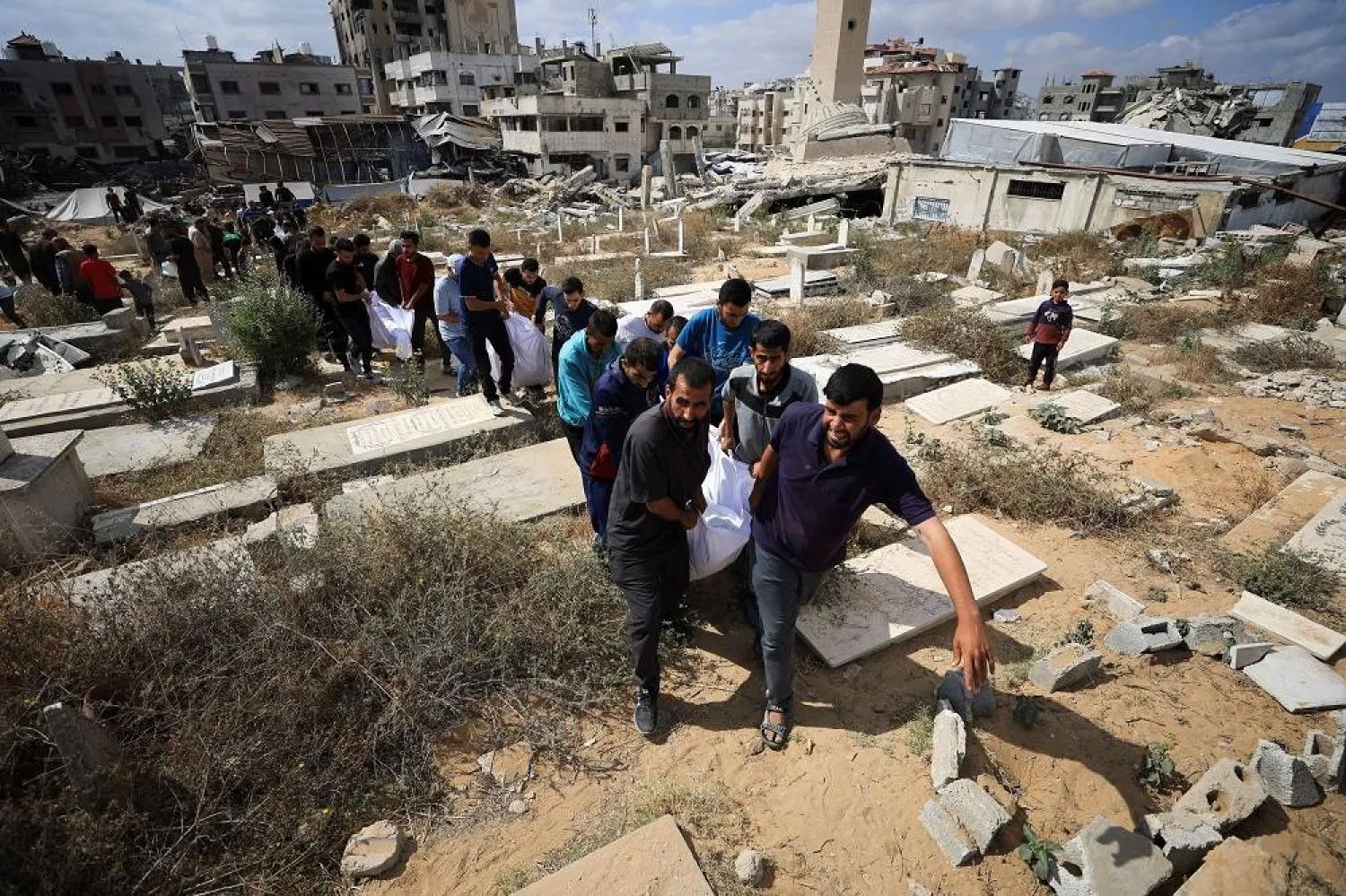
Mourners carry the bodies of members of the Al-Arabeed family killed in Israeli strikes, at a cemetery, in Gaza City, May 28, 2025. (Reuters)
TT

Italy Urges Israel to Stop Offensive in Gaza, Respect Humanitarian Law 

Mourners carry the bodies of members of the Al-Arabeed family killed in Israeli strikes, at a cemetery, in Gaza City, May 28, 2025. (Reuters)

Israel's continued assault on the Gaza Strip has become unacceptable and must stop immediately, Italy's foreign minister said on Wednesday, warning against any move to forcibly displace Palestinians from the enclave.

Foreign Minister Antonio Tajani spoke to parliament about the situation in Gaza amid mounting Western criticism of Israel, which invaded the Palestinian territory after the Oct. 7, 2023 attacks by Hamas on its southern communities.

"The legitimate reaction of the Israeli government to a terrible and senseless act of terrorism is unfortunately taking absolutely dramatic and unacceptable forms, which we call on Israel to stop immediately," Tajani told parliament.

Italy has been a vocal supporter of Israel, but there has been growing unease within the right-wing coalition government over the relentless and long-running military campaign.

In all, more than 54,000 Palestinians have been killed in Israel's air and ground war, Gaza health authorities say.

"The bombing must end, humanitarian assistance must resume as soon as possible, respect for international humanitarian law must be restored," Tajani told a heated debate in the lower house of parliament.

On Gaza, the government has come under attack from the opposition parties, which have announced a demonstration in Rome on June 7, demanding sanctions against Israel and that Italy formally recognizes the State of Palestine.

"The levels of political, moral and intellectual squalor that all of you, Italian and European ruling classes, are reaching, will condemn you as those who are complicit in extermination, genocide and inhuman crime," said Riccardo Ricciardi, a lawmaker from the 5-Star Movement.

Tajani said a Palestinian state could still be created following negotiations involving Israel, and Italy wanted to keep a dialogue open with Israeli Prime Minister Benjamin Netanyahu's government.

But he reiterated that Italy was against displacing Palestinians from Gaza, an option US President Donald Trump proposed earlier this year and which was swiftly rejected by Arab countries.

"The expulsion of Palestinians from Gaza is not and will never be an acceptable option," Tajani said.

He reiterated that Italy might be prepared to take part in an eventual Arab-led peacekeeping mission in Gaza.



Iraq Deadlock Persists Over Next Prime Minister

 The Shorja wholesale market, as the US administration suspends shipments of US dollars to Iraq, in central Baghdad, Iraq, April 23, 2026. (Reuters)
The Shorja wholesale market, as the US administration suspends shipments of US dollars to Iraq, in central Baghdad, Iraq, April 23, 2026. (Reuters)
TT

Iraq Deadlock Persists Over Next Prime Minister

 The Shorja wholesale market, as the US administration suspends shipments of US dollars to Iraq, in central Baghdad, Iraq, April 23, 2026. (Reuters)
The Shorja wholesale market, as the US administration suspends shipments of US dollars to Iraq, in central Baghdad, Iraq, April 23, 2026. (Reuters)

Iraq's main Shiite alliance failed on Friday to agree on a new candidate for prime minister after US pressure stymied the chances of frontrunner Nouri al-Maliki.

Leaders of the Coordination Framework -- a ruling coalition of Shiite groups with varying ties to Iran who had initially nominated Maliki -- have been locked in intense discussions to settle the question of the premiership, but to no avail.

They have met three times this week.

After Friday's meeting, the INA state news agency reported that they would meet again on Saturday to "decide on the candidate for the prime minister".

In January, US President Donald Trump threatened to stop supporting Iraq if Maliki -- a two-time former premier with close ties to Iran -- returned to the post.

In Iraq, a nomination by the largest Shiite bloc effectively brings a candidate to power through presidential appointment, but Trump's threats reshuffled the cards.

Although the Coordination Framework has not yet officially withdrawn its backing for Maliki, its leaders are discussing other potential candidates.

They include incumbent premier Mohammed Shia al-Sudani, intelligence chief Hamid al-Shatri, and Bassem al-Badri who heads a committee that bars members of Saddam Hussein's Baath party from public office.

Iraq has long walked a tightrope between the competing influences of its allies, neighboring Iran and its archfoe the United States.


Aoun: Lebanon Rejects Being A Bargaining Chip in Regional Conflicts

 Lebanese President Joseph Aoun delivers his address at an informal European Union leaders’ meeting in Cyprus (AP)
Lebanese President Joseph Aoun delivers his address at an informal European Union leaders’ meeting in Cyprus (AP)
TT

Aoun: Lebanon Rejects Being A Bargaining Chip in Regional Conflicts

 Lebanese President Joseph Aoun delivers his address at an informal European Union leaders’ meeting in Cyprus (AP)
Lebanese President Joseph Aoun delivers his address at an informal European Union leaders’ meeting in Cyprus (AP)

Lebanese President Joseph Aoun said Lebanon “refuses to be a bargaining chip in regional conflicts,” stressing it “negotiates in its own name, in defense of its national interests and sovereignty,” as Beirut pursues a US-sponsored diplomatic track backed by European and Arab support to reach a lasting end to the war and ensure arms are held exclusively by the state.

Aoun made the remarks in Lebanon’s address to an informal meeting of European Union leaders, attended by southern neighbors and convened by Nikos Christodoulides during Cyprus’ EU presidency.

He said Lebanon had “engaged in a diplomatic negotiation process under US sponsorship, with support from the European Union and Arab countries,” aimed at a “sustainable solution” that ends Israeli attacks and secures a full Israeli withdrawal behind internationally recognized borders, allowing the state to extend authority over all its territory.

“Lebanon today refuses to be a bargaining chip in regional conflicts. It negotiates in its own name, in defense of its national interests and sovereignty,” he said, adding the country “places great importance on de-escalation and achieving stability and peace,” and that diplomacy, not escalation, is the only path to a lasting solution.

Severe humanitarian situation

Aoun described conditions on the ground as “extremely dangerous,” citing “more than 1,300 evacuation orders affecting 311 towns and over 6,800 airstrikes up to April 11,” leaving “more than 10,000 casualties, killed and wounded.”

He accused Israel of “violating international law” by targeting medical teams, hospitals, schools, journalists and places of worship, and by the “systematic destruction” of villages and civilian infrastructure to prevent residents from returning. Displacement has “exceeded one million,” he said.

Only 13% of the displaced are in shelters, mostly in public schools and universities, increasing pressure on the education system, he added. Lebanon still hosts around one million Syrian refugees, placing “significant strain” on infrastructure, services and host communities. He described the crisis as “not a conventional humanitarian crisis, but an existential one by all measures.”

Economic losses mount

More than 150,000 people are expected to have no homes to return to after the war.

Aoun urged the EU to convene an international conference on reconstruction and recovery, alongside boosting humanitarian funding, and called for reviving a France-backed conference to support the Lebanese army, which he described as “a guarantor of national unity and a cornerstone of local and regional stability.”

Syrian refugees

Aoun called for coordination with Syrian authorities, backed by international partners, to step up efforts for the safe and dignified return of Syrian refugees, saying Syria’s recovery offers “a real opportunity” to advance the process gradually and in an organized manner.

He said Lebanon is “not merely a humanitarian case,” but is directly tied to regional stability, migration, counterterrorism and energy security, urging stronger cooperation with Europe.

Nicosia meetings: French and Italian support

On the sidelines, Aoun met French President Emmanuel Macron, briefing him on efforts to end the conflict and ease the suffering of the Lebanese people.

He said Lebanon had pressed in talks at the US State Department and the White House for a ceasefire, followed by a three-week extension to halt hostilities, stop the destruction of homes in villages occupied by Israeli forces, and end attacks on medics, Red Cross and civil defense personnel, journalists and civilians.

Aoun also outlined Lebanon’s post-ceasefire position, thanking France for aid to displaced Lebanese and expressing hope for continued support from France and EU countries.

Macron reaffirmed France’s backing, saying he had contacted European leaders and partners to support Lebanon’s push to consolidate a ceasefire and begin bilateral negotiations, adding Paris would continue efforts to bolster Lebanon’s position.

Aoun also met Italian Prime Minister Giorgia Meloni, briefing her on ceasefire contacts and two rounds of talks in Washington, the first attended by US Secretary of State Marco Rubio and the second by US President Donald Trump.

“The option of war leads to no result,” he said.

Meloni reaffirmed Italy’s support for Lebanon, particularly for direct bilateral negotiations, and said Rome was ready to assist efforts to achieve stability, while continuing aid.


Gaza Reconstruction Back on the Table, Parallel Track to the Board of Peace

Palestinians walk amid the rubble of destroyed buildings in the Jabalia refugee camp in northern Gaza (AFP)
TT

Gaza Reconstruction Back on the Table, Parallel Track to the Board of Peace

Palestinians walk amid the rubble of destroyed buildings in the Jabalia refugee camp in northern Gaza (AFP)

The reconstruction of the Gaza Strip has returned to the agenda in recent days during Egyptian talks with international parties, amid a stalemate in implementing the ceasefire and earlier reports of funding problems facing the “Board of Peace” led by U.S. President Donald Trump.

Those reports were later denied, but without producing tangible steps toward even early recovery.

Egyptian experts told Asharq Al-Awsat that Cairo is pushing the file forward, either by opening parallel tracks to the Board of Peace’s reconstruction plan or by breaking the deadlock in the ceasefire phases, while preserving the agreement’s effectiveness as attention shifts to the “Iran war.”

Egyptian Foreign Minister Badr Abdelatty met Japan’s envoy for Gaza reconstruction, Takeshi Okubo, days ago, discussing “early recovery and reconstruction efforts in light of the ongoing regional escalation.”

Foreign Ministry spokesperson Ambassador Tamim Khallaf said Abdelatty stressed the need to accelerate early recovery through practical projects with immediate impact on Palestinians’ lives, including medicines, construction materials, desalination plants, mobile power units, and adequate temporary housing, taking into account realities on the ground and residents’ needs.

The issue also featured during Abdelatty’s mid-April visit to Washington, where he discussed with Stefan Emblad ways to boost cooperation on early recovery and reconstruction.

Abdelatty called for a major role for the World Bank in ensuring sustainable living conditions for Palestinians, citing its experience in reconstruction. He stressed the need to prioritize urgent projects and affirmed Egypt’s readiness to fully cooperate with the Board of Peace and the bank.

Ashraf Harbi of the Egyptian Council for Foreign Affairs said reviving the reconstruction file aims to create parallel paths to the Board of Peace’s steps, which have yet to begin, adding that Cairo is counting on international and European institutions to push early recovery.

He said Egypt is also seeking to break the ceasefire deadlock and sustain momentum on the Palestinian issue and the “Gaza agreement,” amid fears of a complete freeze as global attention turns to the Iran war.

In recent weeks, Cairo hosted talks between Hamas and the Board of Peace’s representative in Gaza, Nickolay Mladenov, focused largely on Hamas disarmament, but without agreement.

Mladenov said arrangements acceptable to all parties “will take some time.”

A Reuters report in early April said the Board of Peace had received only a small share of the $17 billion pledged for Gaza, delaying Trump’s plan for the devastated territory.

The Board said it faces no funding obstacles and that all requests were met “immediately and in full,” adding it is focused on enabling a national committee to manage Gaza, restoring governance, and expanding aid.

Days before the Iran war erupted in February, Washington hosted the Board of Peace’s first meeting, where countries pledged billions for Gaza’s reconstruction and administration after two years of war.

The plan envisions large-scale reconstruction alongside Hamas disarmament and an Israeli withdrawal, paving the way for a Palestinian national committee to take over governance.

Ahmed Fouad Anwar, also of the Egyptian Council for Foreign Affairs, said Cairo is stepping up efforts to overcome Israeli obstacles that have delayed a technocratic committee from taking over in Gaza and hindered the formation of a “stabilization force,” both of which are tied to reconstruction and early recovery.

He said delays in implementing the ceasefire are also linked to funding for reconstruction and development.

Cairo is working to establish a practical starting point to boost humanitarian and development support through the World Bank or the Japan International Cooperation Agency, aiming to restore hope for Palestinians facing harsh conditions.

Anwar added that the faltering first phase of the ceasefire, Israel’s withdrawal from only 55 percent of Gaza, and the focus on the Iran war and its economic and political fallout, including the risk of renewed fighting, are shaping the Palestinian landscape and require intensified action on multiple tracks.

International institutions estimate Gaza’s reconstruction cost at about $70 billion after widespread destruction of infrastructure and buildings, leaving the enclave’s future dependent on funding and political consensus.

The World Health Organization said on Friday that rebuilding Gaza’s health system will require $10 billion over five years, with 1,800 health facilities damaged, some fully and others partially.