



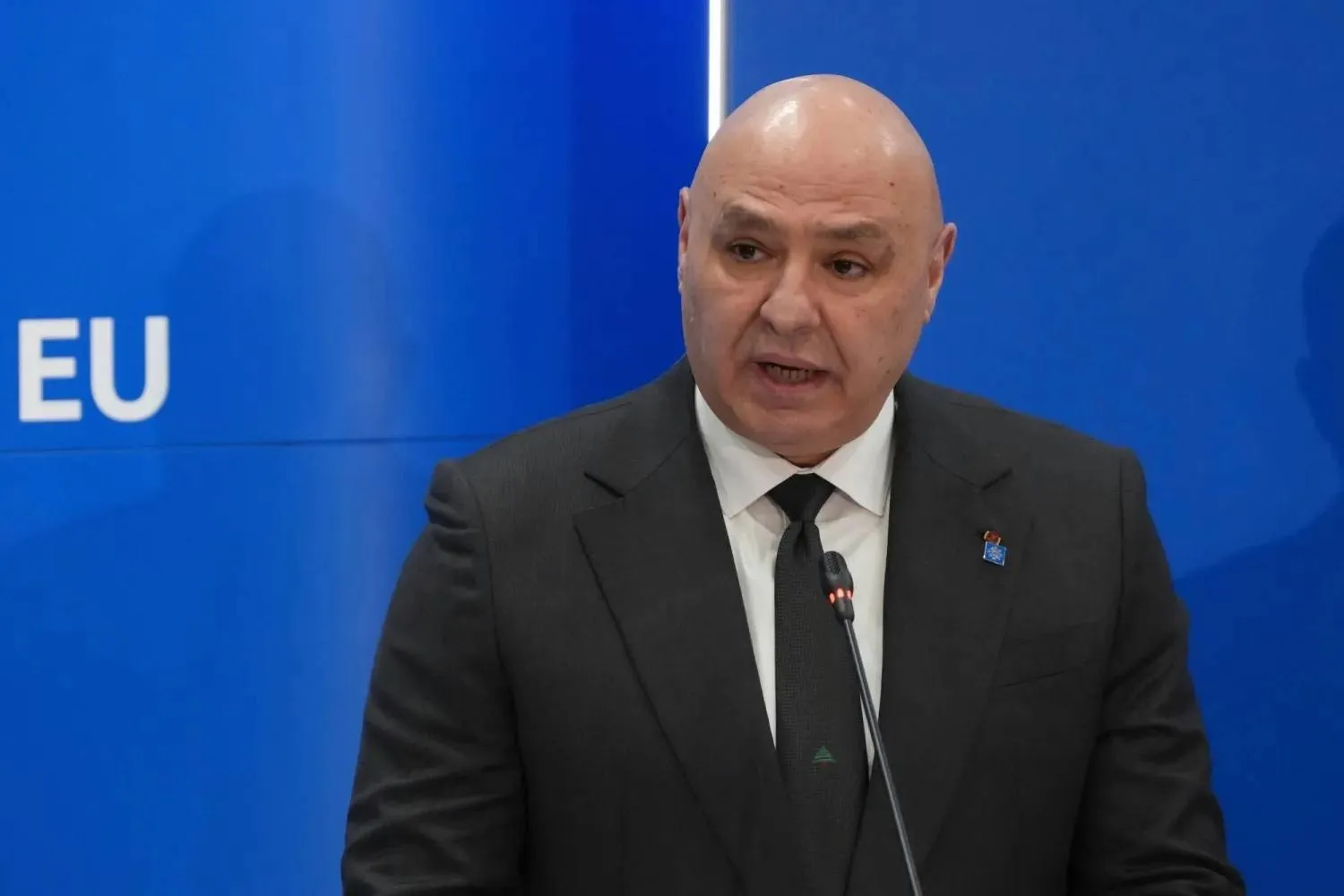

Lebanese President Joseph Aoun said Lebanon “refuses to be a bargaining chip in regional conflicts,” stressing it “negotiates in its own name, in defense of its national interests and sovereignty,” as Beirut pursues a US-sponsored diplomatic track backed by European and Arab support to reach a lasting end to the war and ensure arms are held exclusively by the state.
Aoun made the remarks in Lebanon’s address to an informal meeting of European Union leaders, attended by southern neighbors and convened by Nikos Christodoulides during Cyprus’ EU presidency.
He said Lebanon had “engaged in a diplomatic negotiation process under US sponsorship, with support from the European Union and Arab countries,” aimed at a “sustainable solution” that ends Israeli attacks and secures a full Israeli withdrawal behind internationally recognized borders, allowing the state to extend authority over all its territory.
“Lebanon today refuses to be a bargaining chip in regional conflicts. It negotiates in its own name, in defense of its national interests and sovereignty,” he said, adding the country “places great importance on de-escalation and achieving stability and peace,” and that diplomacy, not escalation, is the only path to a lasting solution.
Severe humanitarian situation
Aoun described conditions on the ground as “extremely dangerous,” citing “more than 1,300 evacuation orders affecting 311 towns and over 6,800 airstrikes up to April 11,” leaving “more than 10,000 casualties, killed and wounded.”
He accused Israel of “violating international law” by targeting medical teams, hospitals, schools, journalists and places of worship, and by the “systematic destruction” of villages and civilian infrastructure to prevent residents from returning. Displacement has “exceeded one million,” he said.
Only 13% of the displaced are in shelters, mostly in public schools and universities, increasing pressure on the education system, he added. Lebanon still hosts around one million Syrian refugees, placing “significant strain” on infrastructure, services and host communities. He described the crisis as “not a conventional humanitarian crisis, but an existential one by all measures.”
Economic losses mount
More than 150,000 people are expected to have no homes to return to after the war.
Aoun urged the EU to convene an international conference on reconstruction and recovery, alongside boosting humanitarian funding, and called for reviving a France-backed conference to support the Lebanese army, which he described as “a guarantor of national unity and a cornerstone of local and regional stability.”
Syrian refugees
Aoun called for coordination with Syrian authorities, backed by international partners, to step up efforts for the safe and dignified return of Syrian refugees, saying Syria’s recovery offers “a real opportunity” to advance the process gradually and in an organized manner.
He said Lebanon is “not merely a humanitarian case,” but is directly tied to regional stability, migration, counterterrorism and energy security, urging stronger cooperation with Europe.
Nicosia meetings: French and Italian support
On the sidelines, Aoun met French President Emmanuel Macron, briefing him on efforts to end the conflict and ease the suffering of the Lebanese people.
He said Lebanon had pressed in talks at the US State Department and the White House for a ceasefire, followed by a three-week extension to halt hostilities, stop the destruction of homes in villages occupied by Israeli forces, and end attacks on medics, Red Cross and civil defense personnel, journalists and civilians.
Aoun also outlined Lebanon’s post-ceasefire position, thanking France for aid to displaced Lebanese and expressing hope for continued support from France and EU countries.
Macron reaffirmed France’s backing, saying he had contacted European leaders and partners to support Lebanon’s push to consolidate a ceasefire and begin bilateral negotiations, adding Paris would continue efforts to bolster Lebanon’s position.
Aoun also met Italian Prime Minister Giorgia Meloni, briefing her on ceasefire contacts and two rounds of talks in Washington, the first attended by US Secretary of State Marco Rubio and the second by US President Donald Trump.
“The option of war leads to no result,” he said.
Meloni reaffirmed Italy’s support for Lebanon, particularly for direct bilateral negotiations, and said Rome was ready to assist efforts to achieve stability, while continuing aid.


