Hamas security bodies were reeling after a swift Israeli operation shortly before noon on Tuesday seized Moin Al-Arabeed, a senior security official in the movement and its government, and took him into Israel.
Israeli reports said interrogating Al-Arabeed could yield an “intelligence trove.”
A day after the raid, Israeli Prime Minister Benjamin Netanyahu visited Israeli troops in Gaza and said Israel would not withdraw from the Palestinian enclave.
“We control the area. We will not retreat. We will remain on this line,” Netanyahu said from the “Yellow Line,” which separates areas held by Israeli forces from those administered by Hamas.
The raid, carried out by a Shin Bet force, nearly unraveled when Al-Arabeed, members of his family — including his wife and daughter — and his bodyguards exchanged fire with the Israelis in an attempt to thwart it.
The operation took place in a residential block known as the Villas in Gaza City’s Al-Katiba district, an area considered safe. Sources told Asharq Al-Awsat that the headquarters of Gaza’s Internal Security Service, which Al-Arabeed headed, was no more than 250 meters from the scene.
The neighborhood also houses many displaced people and armed Palestinian families. Some of those weapons were used days earlier in a major dispute in which gunfire continued for hours and at least one person was killed.
Hamas sources in Gaza told Asharq Al-Awsat that a broad committee had been formed to investigate the raid and determine how the Israeli force entered the area.
Investigators collected videos recorded by residents and displaced people nearby, as well as security-camera footage from homes and apartment buildings, to reconstruct each stage of the operation, the sources said.
What happened during the raid?
Two security sources told Asharq Al-Awsat that Al-Arabeed was leaving his home with a bodyguard when the Israeli special force opened fire on them. His wife then spotted the raiders.
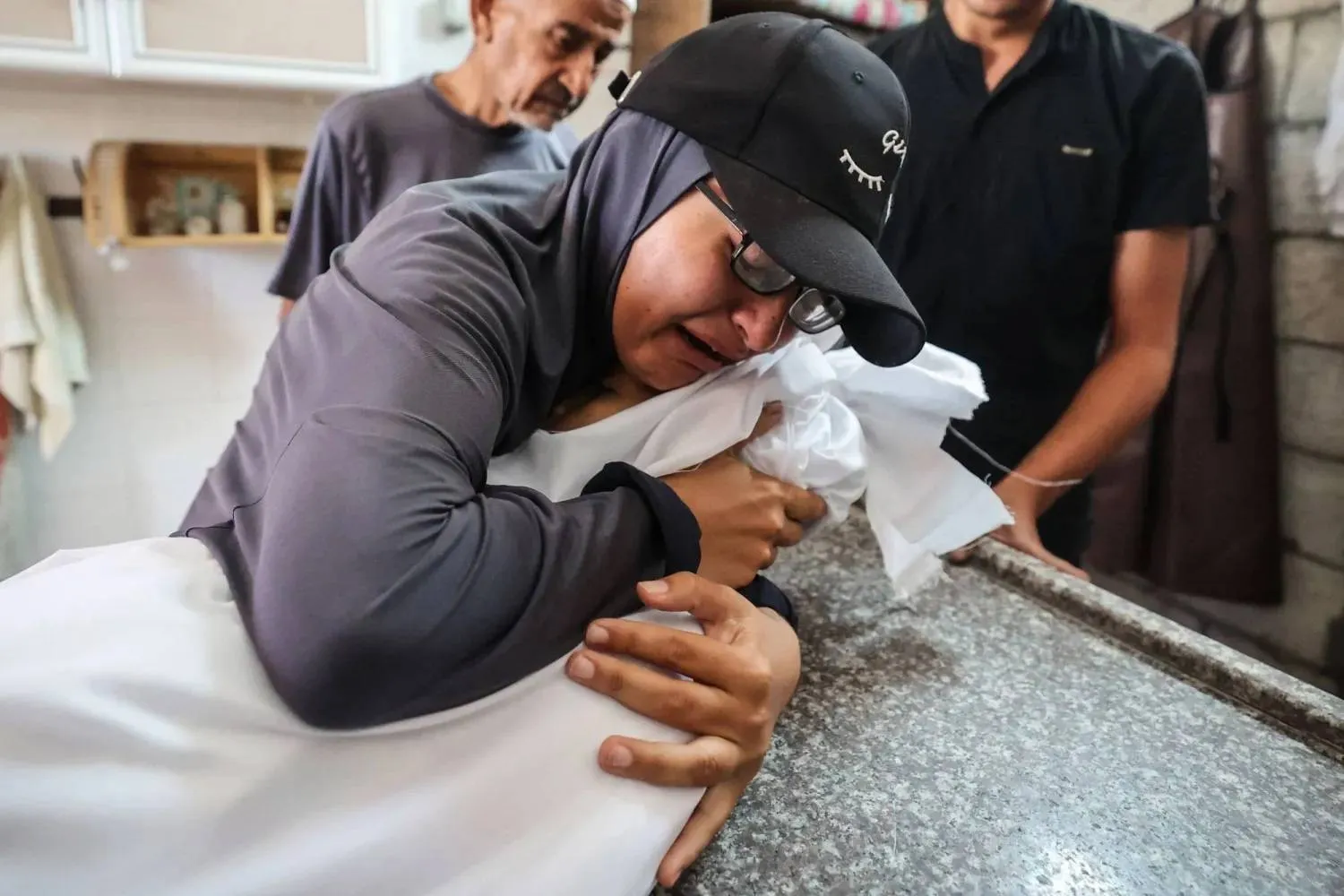
“His wife, who was killed in the attack, opened fire at the Israeli force,” one source said. “Two of her sons then joined the exchange of fire and tried to give their father a chance to withdraw despite his leg injury. Both were seriously wounded.”
A second security source said surveillance footage and witness accounts showed the force pursuing and wounding Al-Arabeed before seizing him and taking him out of Gaza City toward Israeli-controlled territory.
Warplanes and drones flew intensively overhead to cover the force’s withdrawal, the source said.
A source from a Palestinian faction said one of Al-Arabeed’s sons, who married four months ago, had an eye removed after being struck directly in it. His other son, who had been due to sign his marriage contract on Tuesday, was seriously wounded.
Their sister suffered moderate injuries, while their mother was shot directly in the head during the exchange of fire, the source said.
At least two bodyguards who were in the house’s rear courtyard also were wounded after engaging the Israeli force.
Drones fired more than five missiles, while small quadcopters dropped more than 14 bombs in and around the area to create a diversion and protect the force, the source said.
A video recorded by residents showed a wounded Al-Arabeed crawling and apparently trying to escape. The vehicle carrying the special force reached him, and he opened fire toward it. The Israelis returned fire and threw a bomb toward him before seizing him.
Israel hails an ‘intelligence trove’
Israeli officials celebrated the raid, with Netanyahu praising it on Tuesday evening and alleging that Al-Arabeed was behind the holding of Israeli hostages and efforts to rebuild Hamas’s capabilities in Gaza.
A senior Hamas source denied to Asharq Al-Awsat that Al-Arabeed had played any role in matters involving the Israelis held by the movement during the war.
Nitzan Shapira, military correspondent for Israel’s Channel 12, said information Al-Arabeed might disclose during questioning could be an “intelligence trove” for Israel.
Channel 12 said Al-Arabeed was in good condition after receiving treatment at an Israeli hospital and had begun undergoing questioning. Israeli security officials believe his senior Hamas role could make him a valuable source of information, it said.
The channel said the Shin Bet carried out the operation alone and that none of the armed gangs in Gaza took part.
The Shin Bet had tracked Al-Arabeed for a long time before obtaining what the channel called “golden intelligence” and finding the right opportunity to arrest him.
The operation was conducted under intense secrecy, and officials planned to conceal its details. But reports from Palestinian sources about the nature of the attack forced the security agencies to disclose them, Channel 12 said.
Field sources told Asharq Al-Awsat on Tuesday that the Israeli force may have been in the area for at least two days before the raid.
Israel’s Kan public broadcaster said the Shin Bet had located Al-Arabeed several weeks earlier. Israel considered killing him in an airstrike but concluded that a special operation could bring him to Israel for questioning.
The raid was planned over several months and directed from the Shin Bet’s special operations room, Kan said.
Citing sources, the broadcaster said Israel decided to take Al-Arabeed alive because of his role in rebuilding Hamas and because he was among those obstructing efforts to dismantle and disarm the movement.
The operation was coordinated with the Americans and approved by Netanyahu and Israeli Defense Minister Israel Katz, according to the report.
Intelligence was not the only objective
Israeli sources told Channel 12 that the raid was intended not only to gather intelligence but also to make senior Hamas leaders feel hunted, even during a period of relative calm in Gaza.
Israel’s Maariv newspaper said the operation had made Hamas realize that its leaders were exposed to Israeli intelligence and that Israel could reach every home and tunnel.
An Israeli security official told the newspaper that Al-Arabeed’s position was comparable to that of brothers Mohammed and Yahya Sinwar, who controlled Hamas’s military wing.
An informed Hamas source rejected that account but told Asharq Al-Awsat that Al-Arabeed was not merely an ordinary officer or security official.
Maariv cited sources describing the raid as strategic. Israel could have killed Al-Arabeed from the air, as it had done with others, but chose to seize him for the information he could provide.
The operation was likely to produce results depending on that information, the newspaper said.
Haaretz said Al-Arabeed’s capture was highly valuable from Israel’s perspective. His interrogation could reveal, for example, what Hamas knows about the network of agents Israel currently operates in Gaza.
The newspaper linked the issue to lessons from the Oct. 7, 2023, attacks, saying investigations found that agents had conducted very little operational activity before the war.
Haaretz said Hamas was likely to take steps to limit the intelligence damage caused by Al-Arabeed’s capture.
Hamas sources told Asharq Al-Awsat on Tuesday that Al-Arabeed was responsible for files involving suspected collaborators with Israel.
He also handled several sensitive security matters, including the arrest of ISIS loyalists and others, and oversaw investigations into armed gangs.