


Under Pressure, Hezbollah Weighs Scaling Back its Arsenal

Hezbollah supporters hold portraits of Iran's Supreme Leader Ali Khamenei and Hezbollah flags as they gather outside the Iranian Embassy in Beirut, Lebanon, Wednesday, June 25, 2025, to honor Iran for what organizers described as "breaking American and Israeli aggression." (AP Photo/Hassan Ammar)
TT

Under Pressure, Hezbollah Weighs Scaling Back its Arsenal

Hezbollah supporters hold portraits of Iran's Supreme Leader Ali Khamenei and Hezbollah flags as they gather outside the Iranian Embassy in Beirut, Lebanon, Wednesday, June 25, 2025, to honor Iran for what organizers described as "breaking American and Israeli aggression." (AP Photo/Hassan Ammar)

Hezbollah has begun a major strategic review in the wake of its devastating war with Israel, including considering scaling back its role as an armed movement without disarming completely, three sources familiar with the deliberations say.

The internal discussions, which aren't yet finalized and haven't previously been reported, reflect the formidable pressures the Iran-backed Lebanese militant group has faced since a truce was reached in late November.

Israeli forces continue to strike areas where the group holds sway, accusing Hezbollah of ceasefire violations, which it denies. It is also grappling with acute financial strains, US demands for its disarmament and diminished political clout since a new cabinet took office in February with US support.

The group's difficulties have been compounded by seismic shifts in the regional power balance since Israel decimated its command, killed thousands of its fighters and destroyed much of its arsenal last year.

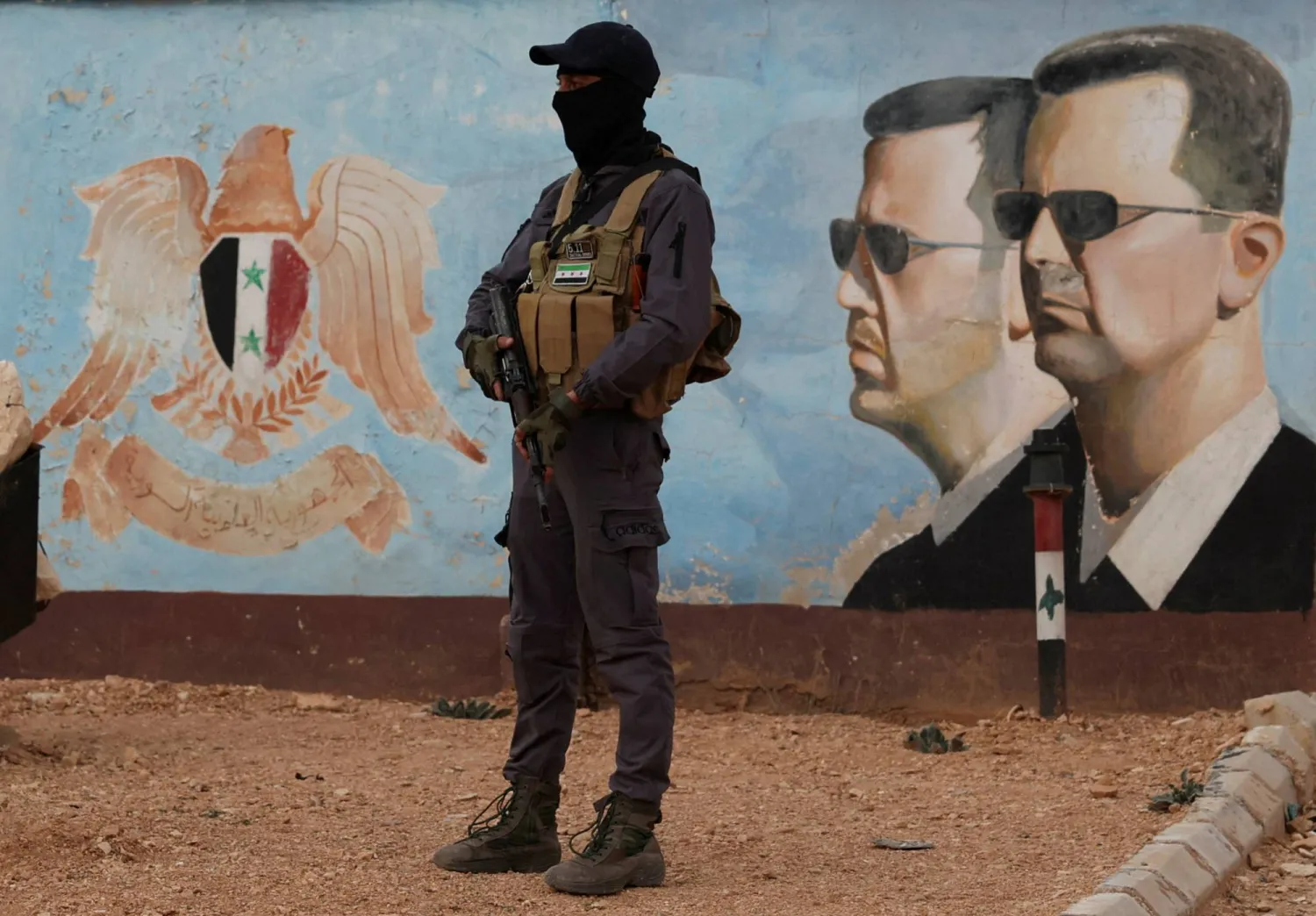
Hezbollah's Syrian ally, Bashar al-Assad, was toppled in December, severing a key arms supply line from Iran. Tehran is now emerging from its own bruising war with Israel, raising doubts over how much aid it can offer, a regional security source and a senior Lebanese official told Reuters.

Another senior official, who is familiar with Hezbollah's internal deliberations, said the group had been holding clandestine discussions on its next steps. Small committees have been meeting in person or remotely to discuss issues including its leadership structure, political role, social and development work, and weapons, the official said on condition of anonymity.

The official and two other sources familiar with the discussions indicated Hezbollah has concluded that the arsenal it had amassed to deter Israel from attacking Lebanon had become a liability.

Hezbollah "had an excess of power," the official said. "All that strength turned into a weak point."

Under the leadership of Hassan Nasrallah, who was killed last year, Hezbollah grew into a regional military player with tens of thousands of fighters, rockets and drones poised to strike Israel. It also provided support to allies in Syria, Iraq and Yemen.

Israel came to regard Hezbollah as a significant threat. When the group opened fire in solidarity with its Palestinian ally Hamas at the start of the Gaza war in 2023, Israel responded with airstrikes in Lebanon that escalated into a ground offensive.

Hezbollah has since relinquished a number of weapons depots in southern Lebanon to the Lebanese armed forces as stipulated in last year's truce, though Israel says it has struck military infrastructure there still linked to the group.

Hezbollah is now considering turning over some weapons it has elsewhere in the country - notably missiles and drones seen as the biggest threat to Israel - on condition Israel withdraws from the south and halts its attacks, the sources said.

But the group won't surrender its entire arsenal, the sources said. For example, it intends to keep lighter arms and anti-tank missiles, they said, describing them as a means to resist any future attacks.

Hezbollah's media office did not respond to questions for this article.

Isreal's military said it would continue operating along its northern border in accordance with the understandings between Israel and Lebanon, in order eliminate any threat and protect Israeli citizens. The US State Department declined to comment on private diplomatic conversations, referring questions to Lebanon's government. Lebanon's presidency did not respond to questions.

For Hezbollah to preserve any military capabilities would fall short of Israeli and US ambitions. Under the terms of the ceasefire brokered by the US and France, Lebanon's armed forces were to confiscate "all unauthorized arms", beginning in the area south of the Litani River - the zone closest to Israel.

Lebanon's government also wants Hezbollah to surrender the rest of its weapons as it works to establish a state monopoly on arms. Failure to do so could stir tensions with the group's Lebanese rivals, which accuse Hezbollah of leveraging its military might to impose its will in state affairs and repeatedly dragging Lebanon into conflicts.

All sides have said they remain committed to the ceasefire, even as they traded accusations of violations.

PART OF HEZBOLLAH'S 'DNA'

Arms have been central to Hezbollah's doctrine since it was founded by Iran's Revolutionary Guard Corps to fight Israeli forces who invaded Lebanon in 1982, at the height of the 1975-1990 Lebanese civil war. Tensions over the Shi'ite Muslim group's arsenal sparked another, brief civil conflict in 2008.

The United States and Israel deem Hezbollah a terrorist group.

Nicholas Blanford, who wrote a history of Hezbollah, said that in order to reconstitute itself, the group would have to justify its retention of weapons in an increasingly hostile political landscape, while addressing damaging intelligence breaches and ensuring its long-term finances.

"They've faced challenges before, but not this number simultaneously," said Blanford, a fellow with the Atlantic Council, a US think tank.

A European official familiar with intelligence assessments said there was a lot of brainstorming underway within Hezbollah about its future but no clear outcomes. The official described Hezbollah's status as an armed group as part of its DNA, saying it would be difficult for it to become a purely political party.

Nearly a dozen sources familiar with Hezbollah's thinking said the group wants to keep some arms, not only in case of future threats from Israel, but also because it is worried that Sunni Muslim jihadists in neighboring Syria might exploit lax security to attack eastern Lebanon, a Shi'ite-majority region.

Despite the catastrophic results of the latest war with Israel - tens of thousands of people were left homeless and swathes of the south and Beirut's southern suburbs were destroyed - many of Hezbollah's core supporters want it to remain armed.

Um Hussein, whose son died fighting for Hezbollah, cited the threat still posed by Israel and a history of conflict with Lebanese rivals as reasons to do so.

"Hezbollah is the backbone of the Shi'ites, even if it is weak now," she said, asking to be identified by a traditional nickname because members of her family still belong to Hezbollah. "We were a weak, poor group. Nobody spoke up for us."

Hezbollah's immediate priority is tending to the needs of constituents who bore the brunt of the war, the sources familiar with its deliberations said.

In December, Secretary General Naim Qassem said Hezbollah had paid more than $50 million to affected families with more than $25 million still to hand out. But there are signs that its funds are running short.

One Beirut resident said he had paid for repairs to his apartment in the Hezbollah-controlled southern suburbs after it was damaged in the war only to see the entire block destroyed by an Israeli airstrike in June.

"Everyone is scattered and homeless. No one has promised to pay for our shelter," said the man, who declined to be identified for fear his complaints might jeopardize his chances of receiving compensation.

He said he had received cheques from Hezbollah but was told by the group's financial institution, Al-Qard Al-Hassan, that it did not have funds available to cash them. Reuters could not immediately reach the institution for comment.

Other indications of financial strain have included cutbacks to free medications offered by Hezbollah-run pharmacies, three people familiar with the operations said.

SQUEEZING HEZBOLLAH FINANCES
Hezbollah has put the onus on Lebanon's government to secure reconstruction funding. But Foreign Minister Youssef Raji, a Hezbollah critic, has said there will be no aid from foreign donors until the state establishes a monopoly on arms.

A State Department spokesperson said in May that, while Washington was engaged in supporting sustainable reconstruction in Lebanon, "this cannot happen without Hezbollah laying down their arms".

Israel has also been squeezing Hezbollah's finances.

The Israeli military said on June 25 that it had killed an Iranian official who oversaw hundreds of millions of dollars in transfers annually to armed groups in the region, as well as a man in southern Lebanon who ran a currency exchange business that helped get some of these funds to Hezbollah.

Iran did not comment at the time, and its UN mission did not immediately respond to questions from Reuters.

Since February, Lebanon has barred commercial flights between Beirut and Tehran, after Israel's military accused Hezbollah of using civilian aircraft to bring in money from Iran and threatened to take action to stop this.

Lebanese authorities have also tightened security at Beirut airport, where Hezbollah had free rein for years, making it harder for the group to smuggle in funds that way, according to an official and a security source familiar with airport operations.

Such moves have fueled anger among Hezbollah's supporters towards the administration led by President Joseph Aoun and Nawaf Salam, who was made prime minister against Hezbollah's wishes.

Alongside its Shi'ite ally, the Amal Movement, Hezbollah swept local elections in May, with many seats uncontested. The group will be seeking to preserve its dominance in legislative elections next year.

Nabil Boumonsef, deputy editor-in-chief of Lebanon's Annahar newspaper, said next year's poll was part of an "existential battle" for Hezbollah.

"It will use all the means it can, firstly to play for time so it doesn't have to disarm, and secondly to make political and popular gains," he said.



Sudan Drone Attack on Darfur Market Kills 10

Sudanese refugee girls carry water supplies near a polling station in the refugee camp of Zamzam, on the outskirts of el-Fasher, Darfur, Sudan, on April 13, 2010. (AP)
TT

Sudan Drone Attack on Darfur Market Kills 10

Sudanese refugee girls carry water supplies near a polling station in the refugee camp of Zamzam, on the outskirts of el-Fasher, Darfur, Sudan, on April 13, 2010. (AP)

A drone attack on a busy market in Sudan's North Darfur state killed 10 people over the weekend, first responders said on Sunday, without saying who was responsible.

The attack comes as fighting intensified elsewhere in the country, leading aid workers to be evacuated on Sunday from Kadugli, a besieged, famine-hit city in the south.

Since April 2023, Sudan's army and the paramilitary Rapid Support Forces have been locked in a conflict which has killed tens of thousands of people, displaced nearly 12 million and created the world's largest displacement and hunger crisis.

The North Darfur Emergency Rooms Council, one of hundreds of volunteer groups coordinating aid across Sudan, said a drone strike hit Al-Harra market in the RSF-controlled town of Malha on Saturday.

The attack killed 10 people, it said.

The council did not identify who carried out the attack, which it said had also sparked "fire in shops and caused extensive material damage".

There was no immediate comment from either the Sudanese army or the RSF.

The war's current focal point is now South Kordofan and clashes have escalated in Kadugli, the state capital, where a drone attack last week killed eight people as they attempted to flee the army-controlled city.

A source from a humanitarian organization operating in Kadugli told AFP on Sunday that humanitarian groups had "evacuated all their workers" from the city because of the security conditions.

The evacuation followed the United Nations' decision to relocate its logistics hub from Kadugli, the source said on condition of anonymity, without specifying where the staff had gone.

- Measles outbreak -

Kadugli and nearby Dilling have been besieged by paramilitary forces since the war erupted.

Last week, the RSF claimed control of the Brno area, a key defensive line on the road between Kadugli and Dilling.

After dislodging the army in October from the western city of el-Fasher -- its last stronghold in the Darfur region -- the RSF has shifted its focus to resource-rich Kordofan, a strategic crossroads linking army-held northern and eastern territories with RSF-held Darfur in the west.

Like Darfur, Kordofan is home to numerous non-Sudanese Arab ethnic groups. Much of the violence that followed the fall of el-Fasher was reportedly ethnically targeted.

Communications in Kordofan have been cut, and the United Nations declared a famine in Kadugli last month.

According to the UN's International Organization for Migration, more than 50,000 civilians have fled the region since the end of October.

Residents have been forced to forage for food in nearby forests, according to accounts gathered by AFP.

Doctors without Borders (MSF) said on Sunday that measles was spreading in three of the four states in Darfur, a vast region covering much of western Sudan.

"A preventable measles outbreak is spreading across Central, South and West Darfur," the organization said in a statement.

"Since September 2025, MSF teams have treated more than 1,300 cases. Delays in vaccine transport, approvals and coordination, by authorities and key partners are leaving children unprotected."


Foreign Press Group Welcomes Israel Court Deadline on Gaza Access

A Palestinian man carries the body of his 5-month-old brother, Ahmed Al-Nader, who was reportedly killed the previous day along with other family members in an Israeli shelling on a school-turned-shelter in the Tuffah neighborhood of Gaza City, ahead of his funeral on December 20, 2025. (AFP)
TT

Foreign Press Group Welcomes Israel Court Deadline on Gaza Access

A Palestinian man carries the body of his 5-month-old brother, Ahmed Al-Nader, who was reportedly killed the previous day along with other family members in an Israeli shelling on a school-turned-shelter in the Tuffah neighborhood of Gaza City, ahead of his funeral on December 20, 2025. (AFP)

The Foreign Press Association in Jerusalem on Sunday welcomed the Israeli Supreme Court's decision to set January 4 as the deadline for Israel to respond to its petition seeking media access to Gaza.

Since the start of the Gaza war in October 2023, sparked by Palestinian group Hamas's attack on Israel, Israeli authorities have prevented foreign journalists from independently entering the devastated territory.

Israel has instead allowed, on a case-by-case basis, a handful of reporters to accompany its troops into the blockaded Palestinian territory.

The Foreign Press Association (FPA), which represents hundreds of foreign journalists in Israel and the Palestinian territories, filed a petition to the supreme court last year, seeking immediate access for international journalists to the Gaza Strip.

On October 23, the court held a first hearing on the case, and decided to give Israeli authorities one month to develop a plan for granting access.

Since then, the court has given several extensions to the Israeli authorities to come up with their plan, but on Saturday it set January 4 as a final deadline.

"If the respondents (Israeli authorities) do not inform us of their position by that date, a decision on the request for a conditional order will be made on the basis of the material in the case file," the court said.

The FPA welcomed the court's latest directive.

"After two years of the state's delay tactics, we are pleased that the court's patience has finally run out," the association said in a statement.

"We renew our call for the state of Israel to immediately grant journalists free and unfettered access to the Gaza Strip.

"And should the government continue to obstruct press freedoms, we hope that the supreme court will recognize and uphold those freedoms," it added.


One Dead in Israeli Strikes on South Lebanon

Smoke rises from the site of a series of Israeli airstrikes that targeted the outskirts of the southern Lebanese village of al-Katrani on December 18, 2025. (AFP)
TT

One Dead in Israeli Strikes on South Lebanon

Smoke rises from the site of a series of Israeli airstrikes that targeted the outskirts of the southern Lebanese village of al-Katrani on December 18, 2025. (AFP)

Israeli strikes in south Lebanon on Sunday killed one person and wounded another, the Lebanese health ministry said, as Israel's military said it targeted Hezbollah members.

Israel has kept up regular strikes on Lebanon, usually saying it is targeting Hezbollah infrastructure or operatives, despite a November 2024 ceasefire that sought to end more than a year of hostilities with the Iran-backed group that erupted over the Gaza war.

It has also kept troops in five south Lebanon areas that it deems strategic.

The health ministry in Beirut said "two Israeli enemy strikes today, on a vehicle and a motorbike in the town of Yater" killed one person and wounded another.

Yater is around five kilometers (three miles) from the border with Israel.

In separate statements, the Israeli military said it "struck a Hezbollah terrorist in the area of Yater", adding shortly afterwards that it "struck an additional Hezbollah terrorist" in the same area.

Also on Sunday, Lebanon's army said in a statement that troops had discovered and dismantled "an Israeli spy device" in Yaroun, elsewhere in south Lebanon near the border.

Under heavy US pressure and amid fears of expanded Israeli strikes, Lebanon has committed to disarming Hezbollah and plans to do so south of the Litani River, about 30 kilometers from the border with Israel, by year end.

Israel has questioned the Lebanese military's effectiveness and has accused Hezbollah of rearming, while the group itself has rejected calls to surrender its weapons.

During a visit to Israel on Sunday, US Senator Lindsey Graham also accused Hezbollah of rearming.

"My impression is that Hezbollah is trying to make more weapons... That's not an acceptable outcome," Graham said in a video statement issued by Israeli Prime Minister Benjamin Netanyahu's office.

More than 340 people have been killed by Israeli fire in Lebanon since the ceasefire, according to an AFP tally of Lebanese health ministry reports.

This week at talks in Paris, Lebanon's army chief agreed to document the military's progress in disarming Hezbollah, the French foreign ministry said.

On Friday, Lebanese and Israeli civilian representatives took part in a meeting of the ceasefire monitoring committee for a second time, after holding their first direct talks in decades earlier this month under the committee's auspices.

Israel said Friday's meeting was part of broader efforts to ensure Hezbollah's disarmament and strengthen security in border areas.