

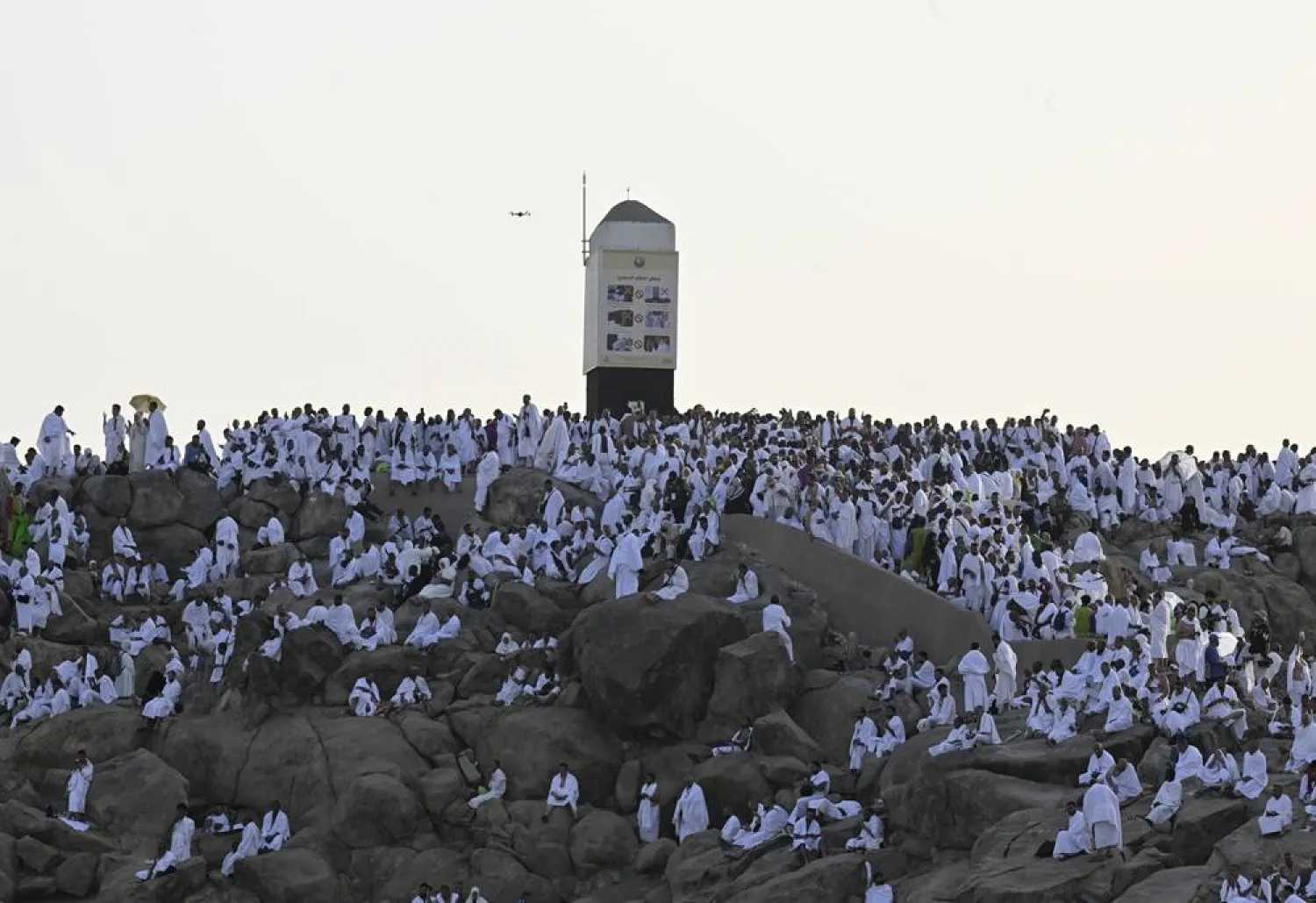

Saudi Arabia Says over 1.7 Million Pilgrims Performed this Year’s Hajj

Muslim pilgrims gather at Jabal al-Rahmah (Mount of Mercy) in the Arafat region near Makkah, Saudi Arabia, 26 May 2026. (EPA)
TT

Saudi Arabia Says over 1.7 Million Pilgrims Performed this Year’s Hajj

Muslim pilgrims gather at Jabal al-Rahmah (Mount of Mercy) in the Arafat region near Makkah, Saudi Arabia, 26 May 2026. (EPA)

Saudi Arabia's General Authority for Statistics (GASTAT) announced on Tuesday that 1,707,301 pilgrims were preset at this year’s Hajj.

International pilgrims totaled 1,546,655, while domestic pilgrims, comprising citizens and residents, reached 160,646.

A total of 893,396 male and 813,905 female pilgrims were tallied.

Regarding international pilgrims, GASTAT said that 1,485,729 arrived through air entry points, 54,429 arrived through land crossings, and 6,497 arrived through sea entry points.

GASTAT relied on the Ministry of Interior's administrative records as its primary source for this year's Hajj, utilizing a unified, register-based model adopted over the past six years to ensure highly accurate and reliable statistical data.



Hajj Pilgrims Head to Muzdalifah after Arafat, as Mina Prepares for Their Return

Muslim pilgrims pray on Saudi Arabia's Mount Arafat, also known as Jabal al-Rahma or Mount of Mercy, during the climax of the Hajj pilgrimage early on May 26, 2026. (AFP)
TT

Hajj Pilgrims Head to Muzdalifah after Arafat, as Mina Prepares for Their Return

Muslim pilgrims pray on Saudi Arabia's Mount Arafat, also known as Jabal al-Rahma or Mount of Mercy, during the climax of the Hajj pilgrimage early on May 26, 2026. (AFP)

Hajj pilgrims began heading to Muzdalifah at sunset on Tuesday, the ninth day of Dhu al-Hijjah, to spend the night there after standing on the plain of Arafat and completing the greatest pillar of the Hajj.

The move came after pilgrims spent the Day of Tarwiyah in Mina, following the Sunnah of the Prophet Mohammed.

Saudi security and service teams were deployed across the holy sites to manage the movement from Arafat to Muzdalifah, where pilgrims will remain until dawn on Wednesday, the first day of Eid al-Adha.

They will then head to Mina to stone Jamarat al-Aqaba, sacrifice their animals, shave or shorten their hair, and stay there for the remaining days of the pilgrimage.

In a solemn scene, about 1.7 million pilgrims, according to the General Authority for Statistics, poured into Arafat from the early morning hours of the ninth day of Dhu al-Hijjah to perform Hajj’s central rite.

Dressed in white, they chanted the talbiyah and prayed for forgiveness and mercy on one of the most solemn days of the Hajj.

Muslim pilgrims gather at Jabal al-Rahmah (Mount of Mercy) in the Arafat region near Makkah, Saudi Arabia, 26 May 2026. (EPA)

Their hearts were united by one purpose, seeking pardon, forgiveness, and spiritual renewal. Their colors, nationalities, and languages differed, but their prayers rose as one, pleading for mercy and deliverance from hellfire.

The pilgrims performed the noon and afternoon prayers combined and shortened, with one call to prayer and two iqamahs, at Al-Namirah Mosque in Arafat, in keeping with the Sunnah of the Prophet.

They listened to the Arafat sermon, delivered this year by Sheikh Dr. Ali Al-Hudhaifi, imam and preacher.

Prince Saud bin Mishal bin Abdulaziz, deputy governor of the Makkah Region and deputy chairman of Saudi Arabia’s Permanent Committee for Hajj and Umrah, said at Arafat that the Kingdom’s leadership gives great attention to serving pilgrims and harnessing all technical and human resources so they can perform their rituals safely and smoothly from arrival to departure.

He said Saudi Arabia had been honored with the responsibility of serving the Grand Mosque and its visitors, and had made serving pilgrims a deeply rooted mission passed down through generations and supported by the care of its leadership.

Speaking on behalf of Custodian of the Two Holy Mosques King Salman bin Abdulaziz and Prince Mohammed bin Salman, Crown Prince and Prime Minister, Prince Saud welcomed the pilgrims and said the Day of Arafat embodies the highest meanings of unity and equality.

Saudi Arabia had mobilized all its capabilities and resources to develop projects, prepare facilities, deploy modern technologies, and harness national talent and human expertise to help pilgrims perform their rituals with ease, he stressed.

He said the Kingdom would continue developing the Hajj system and improving services for pilgrims, guided by its noble mission toward Islam and Muslims.

Prince Saud praised pilgrims for their cooperation and adherence to instructions, urging them to maintain awareness and discipline to help ensure the best services and complete their spiritual journey in comfort and calm.

He also commended workers from various sectors serving pilgrims, saying their sincere efforts reflect the noble values and humanitarian principles of Saudi citizens, as well as the honor of serving pilgrims in pursuit of divine reward.

Muslim pilgrims make their way to Jabal al-Rahmah (Mount of Mercy) in the Arafat region near Makkah, Saudi Arabia, 26 May 2026. (EPA)

Carefully planned security operation

The movement of pilgrims from Arafat to Muzdalifah was smooth and flexible, with convoys monitored directly by security teams to organize them according to movement and grouping plans, guide them, and ensure their safety.

The security plan was designed to ease the flow of crowds through the Al-Mashaaer Al-Mugaddassah Metro line, buses, and pedestrian routes, as part of an integrated service system for pilgrims.

Saudi Arabia’s Interior Ministry is tracking pilgrim movements across the holy sites through an advanced digital system that has improved field decision-making, crowd management, service efficiency, and pilgrim safety.

The system uses advanced technologies and smart operating systems to monitor crowd density, pedestrian movement, and transport in key locations. It analyzes live operational indicators using artificial intelligence to improve movement and respond to field developments.

Security operations and control centers linked to the digital system strengthen coordination among security, service, and health agencies at the holy sites through real-time monitoring.

They also help improve performance, maintain services during the Hajj season, forecast crowd density, and manage pilgrim movement.


Saudi, Qatari FMs Discuss Latest Regional Developments

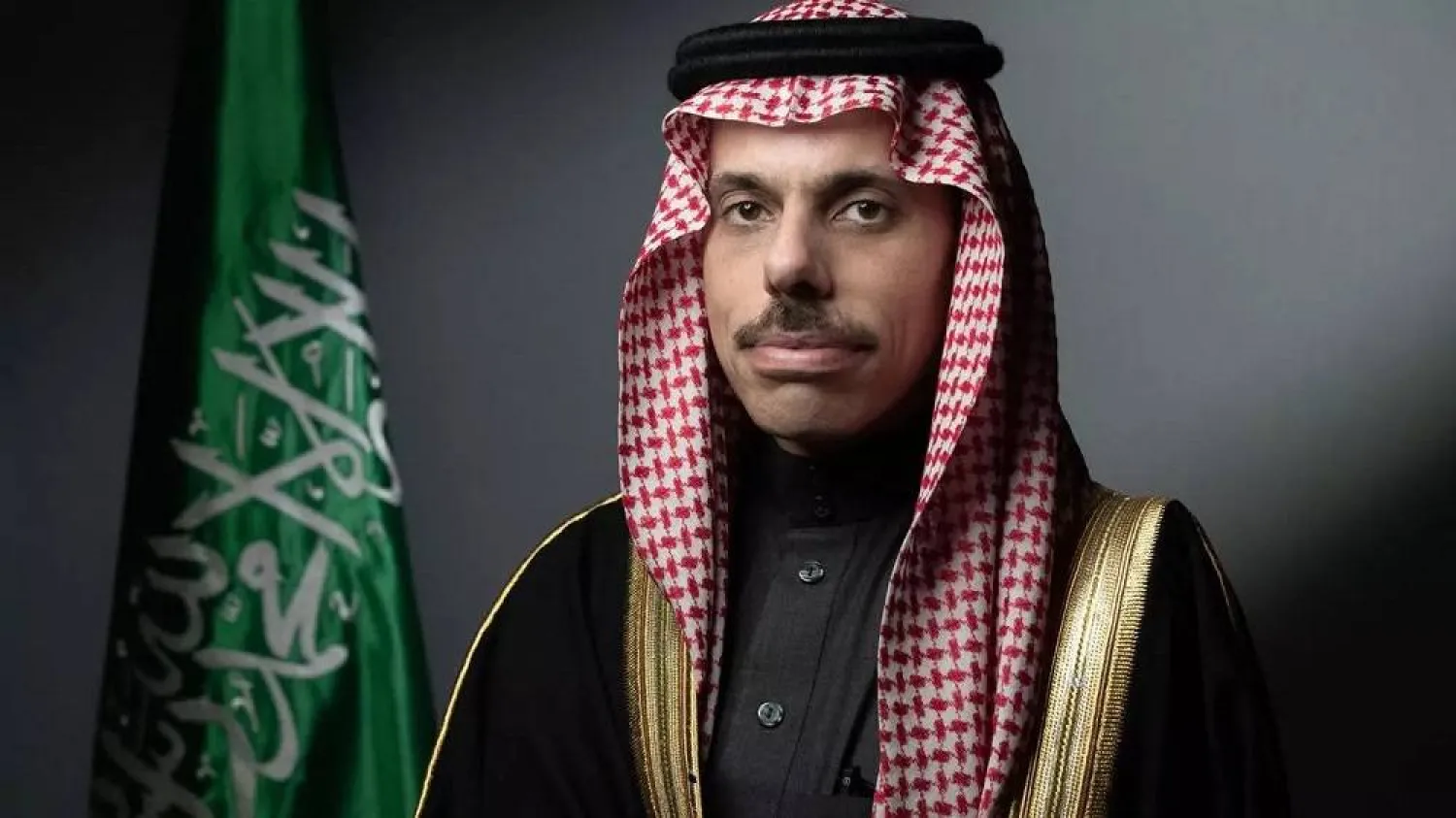
 13 February 2026, Bavaria, Munich: Saudi Minister of Foreign Affairs Prince Faisal bin Farhan bin Abdullah speaks during a panel session at the Munich Security Conference. (dpa)
13 February 2026, Bavaria, Munich: Saudi Minister of Foreign Affairs Prince Faisal bin Farhan bin Abdullah speaks during a panel session at the Munich Security Conference. (dpa)
TT

Saudi, Qatari FMs Discuss Latest Regional Developments

 13 February 2026, Bavaria, Munich: Saudi Minister of Foreign Affairs Prince Faisal bin Farhan bin Abdullah speaks during a panel session at the Munich Security Conference. (dpa)
13 February 2026, Bavaria, Munich: Saudi Minister of Foreign Affairs Prince Faisal bin Farhan bin Abdullah speaks during a panel session at the Munich Security Conference. (dpa)

Saudi Minister of Foreign Affairs Prince Faisal bin Farhan bin Abdullah received on Tuesday a telephone call from Qatari Prime Minister and FM Sheikh Mohammed bin Abdulrahman bin Jassim Al Thani.

They discussed the latest developments in the region and bilateral coordination and consultation over them.


Masjid al-Namirah: The Mosque Where Only One Prayer is Held Each Year

Sheikh Ali bin Abdulrahman Al-Huthaify, in his Day of Arafat sermon, called for the glorification of God's rites, adherence to calmness and order, and avoidance of anything that undermines the spirit of the pilgrimage. (Asharq Al-Awsat)
TT

Masjid al-Namirah: The Mosque Where Only One Prayer is Held Each Year

Sheikh Ali bin Abdulrahman Al-Huthaify, in his Day of Arafat sermon, called for the glorification of God's rites, adherence to calmness and order, and avoidance of anything that undermines the spirit of the pilgrimage. (Asharq Al-Awsat)

Masjid al-Namirah is considered one of the most prominent Islamic landmarks associated with the Hajj season, drawing the attention of millions of Muslims on the ninth day of Dhu al-Hijjah each year to listen to the Arafat Sermon and perform the Dhuhr and Asr prayers combined and shortened behind the imam and khatib of Masjid al-Haram.

The mosque is located in the plain of Arafat, west of Jabal al-Rahmah, and takes its name from the Namirah area where it was built. It has acquired major religious and historical significance because of its connection to the Farewell Sermon delivered by Prophet Muhammad, peace be upon him, during the Farewell Pilgrimage.

Hundreds of thousands of pilgrims gather at Masjid al-Namirah from the early morning hours to listen to the Arafat Sermon. (SPA)

Masjid al-Namirah is distinguished by a unique characteristic, as only one congregational prayer is held there each year: the prayer on the Day of Arafat. The mosque and its courtyards are filled with hundreds of thousands of pilgrims who arrive from the early morning hours to listen to the Arafat Sermon, regarded as one of the most spiritually significant moments of the Hajj season.

Large numbers of pilgrims arrived to perform the ritual of standing at Arafat amid an integrated system of services and organization, while the Arafat Sermon was broadcast live to countries around the world in multiple languages, reflecting the immense Islamic significance of the occasion.

Masjid al-Namirah hosted the Day of Arafat sermon delivered by Sheikh Ali bin Abdulrahman Al-Huthaify, who spoke about the meanings of piety, preparation for the Day of Judgment, and the importance of attaining salvation through obedience to God and avoidance of sins and wrongdoing, on what is considered one of the greatest days of the year in Islam.

Masjid al-Namirah is one of the most prominent Islamic landmarks associated with the Hajj season. (SPA)

The Arafat preacher stressed that the Hajj season brings Muslims together from every corner of the world in unified worship and shared rituals, calling for the glorification of God's rites, adherence to calmness and order, and avoidance of anything that disrupts the spirit of the pilgrimage.

He also emphasized that the Day of Arafat is among the greatest occasions for prayers to be answered, urging Muslims to increase their remembrance of God and supplication on this blessed day, particularly the phrase: "There is no god but Allah alone, without partner. To Him belongs sovereignty and praise, and He has power over all things."

The Arafat preacher urged pilgrims to maintain calmness, avoid overcrowding, follow the instructions of the organizing authorities, and adhere to crowd movement regulations and grouping schedules in order to serve the public interest, prevent harm and disorder, protect lives, and facilitate the performance of the rituals.

Sheikh Dr. Al-Huthaify noted that Hajj embodies manifestations of acquaintance, harmony, cooperation, and solidarity among Muslims as they perform the rituals together despite differences in language, color, and nationality, united as brothers in faith.

Sheikh Al-Huthaify said that Hajj is free of political slogans and partisan calls, and is instead devoted entirely to submission to God, adherence to the Prophet's teachings, and purity both outwardly and inwardly.

In his sermon, Sheikh Ali bin Abdulrahman Al-Huthaify also reviewed the rites of Hajj, beginning with the standing at Arafat, regarded as the greatest pillar of Hajj, followed by the overnight stay in Muzdalifah, then proceeding to Mina for the stoning of the Jamarat, the sacrificial offering, shaving the head, and Tawaf al-Ifadah.

During the Days of Tashreeq, pilgrims stone the three Jamarat with seven pebbles at each site every day. It is preferable to remain until the 13th day of Dhu al-Hijjah, although pilgrims may depart earlier on the 12th day. Before leaving, pilgrims perform the Farewell Tawaf.

The mosque is considered one of the largest in the world, covering a total area of more than 110,000 square meters. It includes hundreds of entrances, restroom facilities, and modern air-conditioning and audio systems, enabling it to accommodate the massive numbers of pilgrims on the Day of Arafat.

Large numbers of pilgrims arrive to perform the Standing at Arafat ritual amid an integrated system of services. (SPA)

Saudi authorities annually ensure that the mosque is fully prepared with healthcare, organizational, and technical services to guarantee pilgrims' comfort and enable them to perform their rituals with ease and reassurance as part of the Kingdom's extensive efforts to serve pilgrims during the Hajj season.

The mosque features a distinctive Islamic architectural design, extending 340 meters from east to west and 240 meters from north to south. It includes six minarets, each 60 meters high, three domes, ten main entrances, and 64 gates to ensure smooth crowd movement.

The mosque has also been equipped with the latest technological and service systems, including advanced audio and live-broadcast systems to transmit the Arafat Sermon and the Dhuhr and Asr prayers around the world, in addition to air-conditioning and ventilation systems, shaded courtyards, digital screens, and safety and surveillance systems designed to provide a safe and comfortable environment for pilgrims on the greatest day of Hajj.