


RSF Shelling On Camp Kills 8 in Sudan's Darfur, Say Rescuers

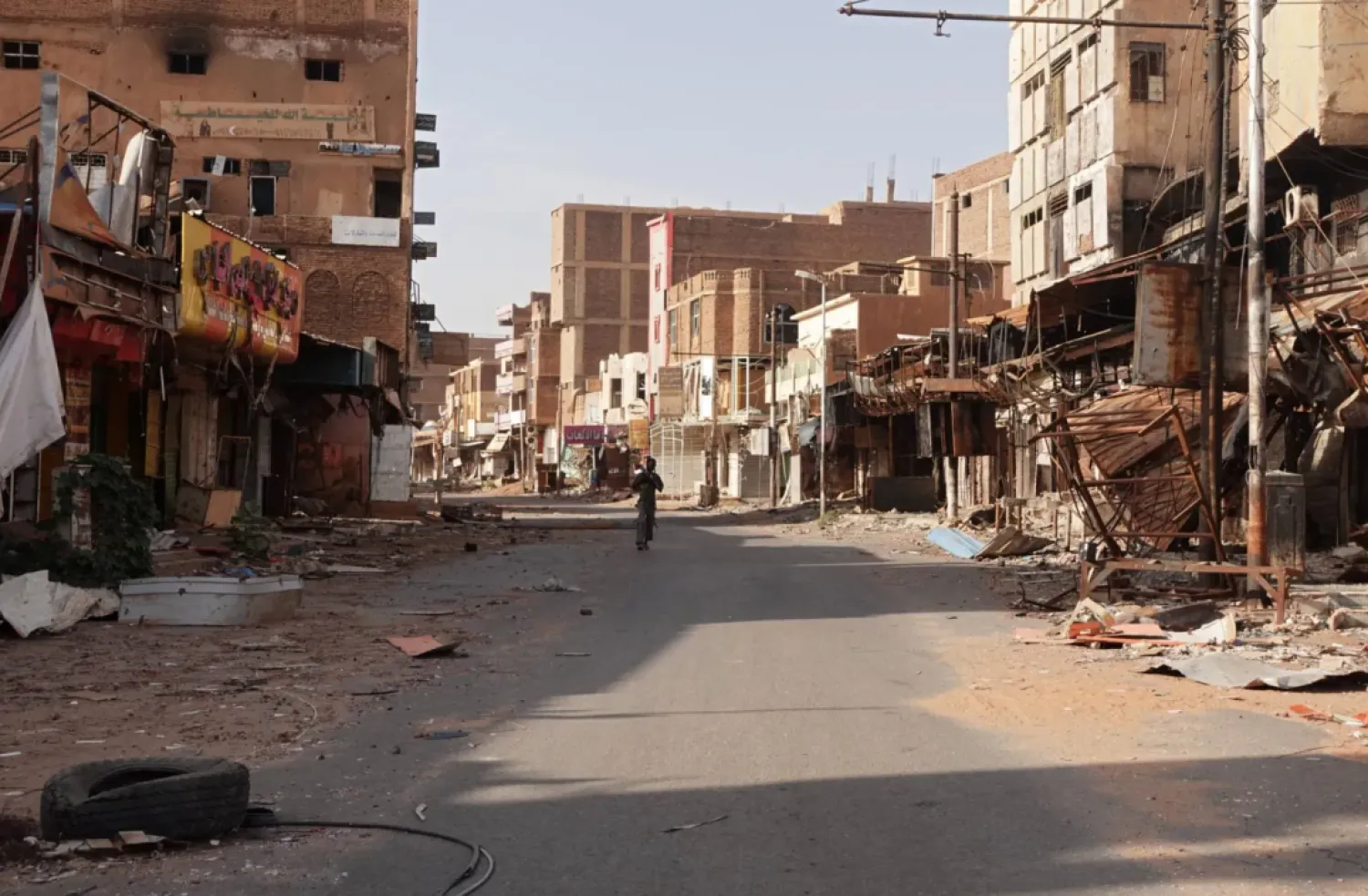
A view of a street in the city of Omdurman damaged in the year-long civil war in Sudan, April 7, 2024. REUTERS/El Tayeb Siddig
TT

RSF Shelling On Camp Kills 8 in Sudan's Darfur, Say Rescuers

A view of a street in the city of Omdurman damaged in the year-long civil war in Sudan, April 7, 2024. REUTERS/El Tayeb Siddig

Rapid Support Forces (RSF) shelled a displacement camp in Sudan's Darfur region on Thursday, killing eight civilians and injuring others, a local rescue group said.

The bombardment hit Abu Shouk camp, which hosts tens of thousands of displaced people on the outskirts of El Fasher, the besieged capital of North Darfur.

El-Fasher remains the last major stronghold in Sudan's western Darfur region not under the control of the RSF, who have been at war with the regular army since April 2023, AFP reported.

"The Abu Shouk camp witnessed heavy artillery bombardment by the RSF... killing eight people," the camp's Emergency Response Room said in a statement.

In recent weeks, El-Fasher, which has been under RSF siege since last year, has been locked in intense fighting between warring sides in a region also gripped by famine.

Thursday's offensive comes just days after a series of attacks by the RSF targeted another battleground region of Sudan.

More than 450 people, including 35 children, were killed in several villages of North Kordofan, southwest of the capital Khartoum, according to a statement released this week by the UN's children agency.

"No child should ever experience such horrors," said UNICEF Executive Director Catherine Russell. "Violence against children is unconscionable and must end now."

On Sunday, the RSF claimed to have killed more than 470 army personnel near the town of El-Obeid, also in North Kordofan, in a statement posted to its Telegram channel.

Independent verification of casualties in Sudan remains difficult due to restricted access to its conflict zones.

Now in its third year, the conflict has killed tens of thousands and forced millions to flee, creating what the United Nations describes as the world's largest displacement crisis.

In December last year, famine was officially declared in three displacement camps near El-Fasher, namely Zamzam, Abu Shouk and Al-Salam, according to the UN.

Since the Sudanese army regained control of the capital Khartoum in March, the RSF has shifted its operations westward, focusing on Darfur and Kordofan in a bid to consolidate territorial gains.

In April, RSF fighters seized the Zamzam displacement camp, located near Abu Shouk.

The assault forced nearly 400,000 people to flee, according to UN figures, effectively emptying one of the country's largest camps for the displaced.

Sudanese analyst Mohaned el-Nour told AFP the RSF aims to redefine its role in the conflict.

"Their goal is no longer to be seen as a militia, but as an alternative government in western Sudan, undermining the legitimacy of the authorities in Port Sudan."

He added that the recent surge in violence in North Kordofan was likely intended to divert the army's attention from El Fasher, where the military is trying "at all costs" to maintain.



Turkey's PKK Says Will 'Not Abandon' Syrian Kurds

Kurdish children and their families fleeing a government advance through Kurdish-controlled areas arrive in the Kurdish Syrian city of Qamishli on January 19, 2026. (Photo by Delil SOULEIMAN / AFP)
TT

Turkey's PKK Says Will 'Not Abandon' Syrian Kurds

Kurdish children and their families fleeing a government advance through Kurdish-controlled areas arrive in the Kurdish Syrian city of Qamishli on January 19, 2026. (Photo by Delil SOULEIMAN / AFP)

Outlawed Kurdish militants in Türkiye will "never abandon" Kurds in Syria following an offensive by Damascus, a leader of the PKK armed group said, quoted by the Firat news agency Tuesday.

Syrian forces began an offensive nearly two weeks ago which pushed Kurdish-led SDF forces out of the northern city of Aleppo, and expanded over the weekend to push deep into territory that has been held by Kurdish forces for over a decade.

"You should know that we will not leave you alone. Whatever the cost, we will never leave you alone.. we as the entire Kurdish people and as the movement, will do whatever is necessary," Murat Karayilan of the Kurdistan Workers' Party (PKK) was quoted as saying by Firat.

A close ally of Syria's new leadership that overthrew Bashar al-Assad in December 2024, the Turkish government is simultaneously leading a drive to reach a settlement with the PKK -- listed as a terror group by Türkiye and its Western allies.

Karayilan said the Damascus-led offensive was an "attempt to nullify" the peace process in Türkiye.

"This decision by international powers to enable these attacks, will be a black mark for the US, the UK, Germany, France and other international coalition states," he said.

On Monday, at least 500 people rallied in Türkiye’s Kurdish-majority city of Diyarbakir against the Syrian offensive. Clashes erupted when police tried to break up the protest.

The pro-Kurdish DEM party, the third largest force in the Turkish parliament, called for a rally on Tuesday in the town of Nusaybin, located on the border with Syria.


Israel Begins Demolitions Inside UNRWA Headquarters in East Jerusalem

A photograph shows a demolished structure inside the headquarters of the United Nations Relief and Works Agency (UNRWA) in the Sheikh Jarrah neighborhood of Israeli-annexed east Jerusalem on January 20, 2026. (AFP)
TT

Israel Begins Demolitions Inside UNRWA Headquarters in East Jerusalem

A photograph shows a demolished structure inside the headquarters of the United Nations Relief and Works Agency (UNRWA) in the Sheikh Jarrah neighborhood of Israeli-annexed east Jerusalem on January 20, 2026. (AFP)

Israeli bulldozers began demolishing structures inside the headquarters of the UN agency for Palestinian refugees (UNRWA) in east Jerusalem on Tuesday, an AFP photographer saw, with the Israeli foreign ministry defending the move.

"UNRWA-Hamas had already ceased its operations at this site and no longer had any UN personnel or UN activity there. The compound does not enjoy any immunity and the seizure of this compound by Israeli authorities was carried out in accordance with both Israeli and international law," the foreign ministry said in a statement.

Israel has repeatedly accused UNRWA of providing cover for Hamas, claiming that some of its employees took part in the group's October 7, 2023 attack on Israel, which sparked the war in Gaza.


Hamas Leaders Prepare for 'Safe Exit' from Gaza, Amid Doubts Over Return

A Palestinian child is seen as fighters from Hamas’ Qassam Brigades search for the bodies of Israeli hostages in the Jabalia refugee camp in northern Gaza, last December. (EPA)
TT

Hamas Leaders Prepare for 'Safe Exit' from Gaza, Amid Doubts Over Return

A Palestinian child is seen as fighters from Hamas’ Qassam Brigades search for the bodies of Israeli hostages in the Jabalia refugee camp in northern Gaza, last December. (EPA)

Sources within Hamas in Gaza revealed that senior figures in the movement are preparing for a “safe exit” from the enclave following arrangements related to Gaza’s future under the second phase of the ceasefire agreement, which the United States announced had begun last week.

Three Hamas sources told Asharq Al-Awsat that several prominent political and military leaders who survived the war are preparing to leave the territory. One source said the departure would be voluntary and carried out under specific arrangements, with full coordination with the Hamas leadership abroad. Another source noted that other leaders, particularly military figures, categorically reject leaving Gaza under any circumstances.

Throughout nearly two years of war, Hamas officials have repeatedly stated their rejection of removing the movement’s leadership from the Strip.

The sources separately provided Asharq Al-Awsat with the names of several leaders believed likely to depart, though it is refraining from publishing them due to the inability to contact them promptly. Some of these figures were recently appointed to leadership positions in Hamas’ political bureau in Gaza as part of new organizational arrangements aimed at rebuilding and restructuring the movement.

According to the same sources, a number of former prisoners released in the 2011 exchange deal for Israeli soldier Gilad Shalit — who now oversee key portfolios within Hamas leadership — are expected to be among those traveling to Türkiye.

However, a senior Hamas leader based outside Gaza denied the reports, telling Asharq Al-Awsat that the issue of leaders leaving the Strip “has not been raised.”

Another source inside Gaza declined to comment, saying only that he had no knowledge of the matter.

Sources in Gaza said the exit would likely be “without return, at least for several years,” with those leaders likely to end up residing in several countries. Other sources said some leaders would leave temporarily to hold meetings in Egypt with security officials on critical issues related to Gaza’s governmental security forces and other key files, before returning to the Strip.

In September, Israeli Prime Minister Benjamin Netanyahu said in an interview with Fox News that Israel was considering providing safe passage for Hamas leaders to leave Gaza under certain conditions, as part of a plan being prepared by US President Donald Trump, which entered into force in October.

Israel’s public broadcaster reported that Hamas leaders would most likely head to Qatar or Türkiye if they left Gaza. Israel’s Channel 12 previously reported that Hamas officials told US officials they were prepared to accept a limited relocation of military leaders and some operatives from Gaza.

On Jan. 14, US envoy Steve Witkoff officially announced the launch of the second phase of the ceasefire, which includes Hamas relinquishing control of Gaza, establishing a Palestinian technocratic committee to administer the enclave, initiating a comprehensive disarmament process, and launching large-scale reconstruction projects.

Hamas welcomed the announcement, saying it had fulfilled all requirements for completing the first phase and moving to the second, while continuing discussions with mediators over options regarding its weapons and those of other Palestinian factions.