


Legal Complaints Target Hezbollah Officials in Lebanese Courts

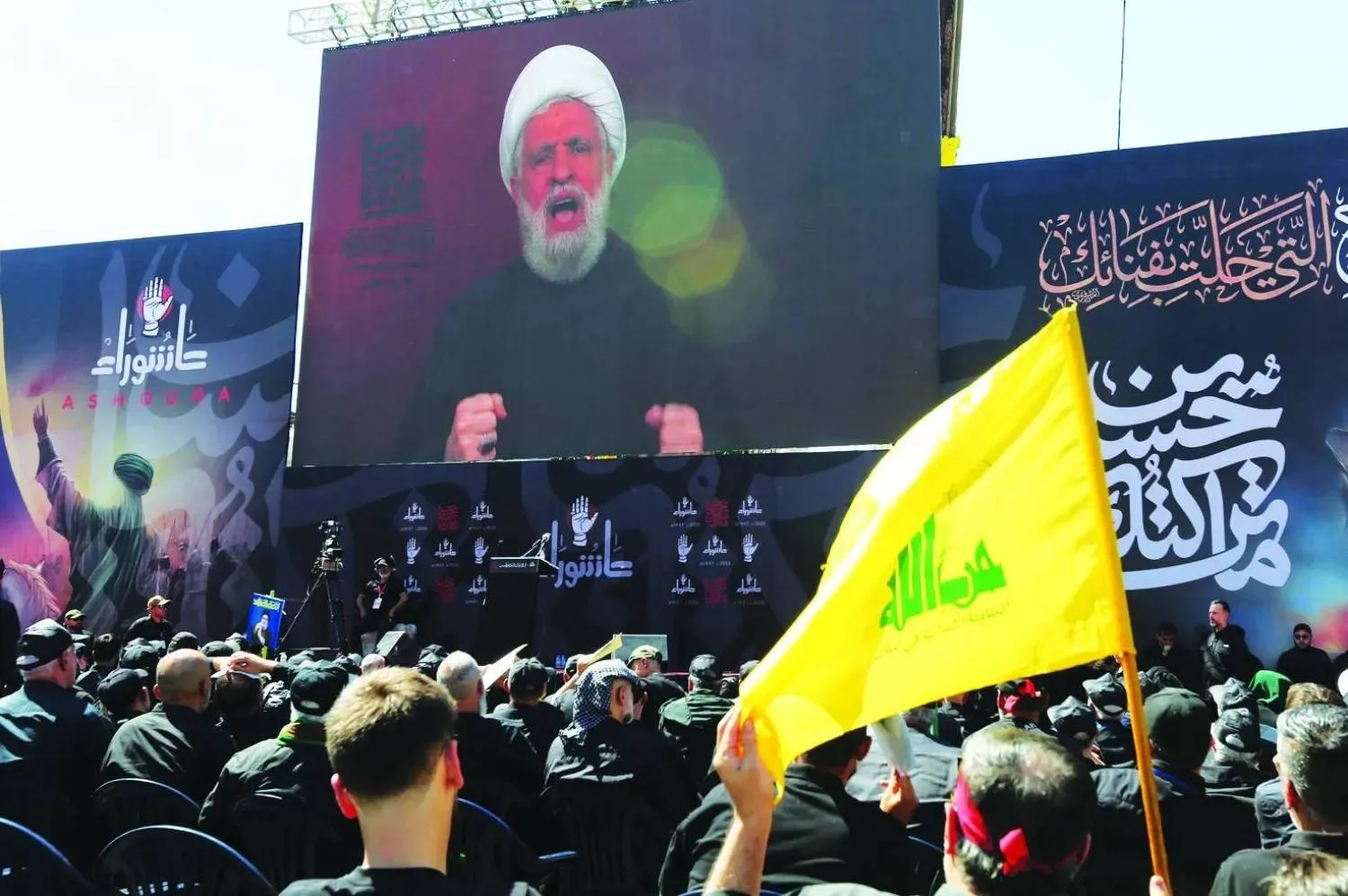
Hezbollah leader Naim Qassem addresses a televised speech to supporters during Ashura Day celebrations in southern Beirut, Lebanon, 06 July 2025. EPA/WAEL HAMZEH
TT

Legal Complaints Target Hezbollah Officials in Lebanese Courts

Hezbollah leader Naim Qassem addresses a televised speech to supporters during Ashura Day celebrations in southern Beirut, Lebanon, 06 July 2025. EPA/WAEL HAMZEH

Legal complaints are mounting against Hezbollah officials in Lebanon, accusing them of threatening national security and inciting violence against citizens, calling for the disarmament of all non-state actors, including the powerful Iran-backed group.

The latest complaint was filed by Sami Gemayel, head of the Kataeb Party and an MP, against Hezbollah's deputy chief for the Bekaa region, Faisal Shukr.

In the filing submitted to the Court of Cassation, Shukr is accused of “death threats, inciting violence and sectarian strife, and endangering Lebanon’s sovereignty and unity.”

The complaint centers on remarks made by Shukr during a speech at a Hezbollah-organized Ashura procession in the Bekaa on July 6. “Whoever calls for disarming the party, we will rip their soul out,” Shukr said in a video now submitted as evidence.

Gemayel’s legal team argued that the speech amounted to “direct incitement to violence and civil strife,” calling for Shukr’s arrest and prosecution.

This is the second high-profile legal action against Hezbollah in recent days. A group of lawyers, journalists, and activists had earlier filed a complaint against Hezbollah Secretary-General Naim Qassem.

The complaint cited Qassem’s open declaration of support for Iran during its confrontation with the United States following the Gaza war.

The plaintiffs say his statements constitute “a direct threat to Lebanon’s state policy” and “an incitement to rebellion that endangers Lebanese lives.”

While these legal actions may not advance quickly, observers say they mark a significant shift in Lebanon’s political landscape. For years, few dared to challenge Hezbollah through the courts - even after the group’s 2008 military takeover of parts of Beirut and a string of political assassinations targeting its critics.

But the judiciary, which once routinely dismissed complaints against the group, is now formally registering them. A judicial source told Asharq Al-Awsat that while investigations depend on the strength of the evidence, claims that the judiciary is biased in favor of Hezbollah are “not entirely accurate.”

“All serious cases are documented,” the source said. “But summoning individuals for questioning is easier when their whereabouts are known. That’s not always the case with Hezbollah officials.”

Beyond high-level political disputes, a number of Lebanese citizens, particularly southerners living abroad, have begun filing lawsuits against Hezbollah for allegedly endangering civilians during the recent war.

The complaints accuse the group of storing weapons under residential buildings and digging tunnels beneath homes without the owners’ knowledge, which plaintiffs say turned these areas into targets for Israeli airstrikes.

A legal source said many lawyers refused to take on these cases for fear of reprisals by Hezbollah supporters.

“Some plaintiffs were attacked simply for inspecting the ruins of their homes,” the source said, adding that business owners also claimed their shops were looted during the conflict and blamed Hezbollah for failing to protect property in areas under its control.

However, the judiciary has not yet launched formal investigations into these complaints. The legal source acknowledged that lawsuits filed against Hezbollah as an organization, without naming specific individuals, make it harder for courts to initiate proceedings.

The growing number of complaints reflects what some legal experts call a historic shift. Political activist and lawyer Elie Kairouz said the public is beginning to shed its fear of challenging Hezbollah, as the party’s once-firm grip on the state, security agencies, and judiciary weakens.

“The old consensus that the army, people, and resistance form Lebanon’s defense doctrine is gone,” Kairouz told Asharq Al-Awsat. “Today, the government is calling for exclusive state control over weapons and is working to enforce that.”

He said Hezbollah’s narrative of defending Lebanon and deterring Israel has lost traction along with the reverence once attached to its weapons.

“The real turning point,” he said, “will be when courts stop merely registering these lawsuits and begin issuing rulings. Only then can Lebanese citizens be truly protected.”



Israel’s Zamir: Lebanon is the Main Combat Arena

First responders gather at the site of an Israeli airstrike in the village of Habbouch, southern Lebanon on April 10, 2026. (Photo by Abbas FAKIH / AFP)
TT

Israel’s Zamir: Lebanon is the Main Combat Arena

First responders gather at the site of an Israeli airstrike in the village of Habbouch, southern Lebanon on April 10, 2026. (Photo by Abbas FAKIH / AFP)

The head of Israel’s military, Lt. Gen. Eyal Zamir, has said that the “main combat arena is in Lebanon.”

The mission is to keep weakening Hezbollah, Zamir said.

He was speaking on Thursday to Israeli troops inside Lebanon, on the outskirts of the town of Bint Jbeil.

“Our main combat arena is here in Lebanon,” he stated.

Zamir said the army’s mission is to “continue deepening the damage and to continue weakening Hezbollah.”

He added that the objective is to remove the direct threat to residents of northern Israel.

Israeli Prime Minister Benjamin Netanyahu has offered a potential boost to ceasefire efforts in the region when saying he had approved direct talks with Lebanon.

The announcement came after Israel’s pounding of Beirut Wednesday killed more than 300 people. The negotiations are expected next week in Washington.


Macron Meets Pope Leo to Talk Lebanon, Middle East War

 French President Emmanuel Macron and his wife Brigitte Macron are welcomed as they arrive at the San Damaso courtyard to meet Pope Leo XIV at the Vatican, April 10, 2026. (Reuters)
French President Emmanuel Macron and his wife Brigitte Macron are welcomed as they arrive at the San Damaso courtyard to meet Pope Leo XIV at the Vatican, April 10, 2026. (Reuters)
TT

Macron Meets Pope Leo to Talk Lebanon, Middle East War

 French President Emmanuel Macron and his wife Brigitte Macron are welcomed as they arrive at the San Damaso courtyard to meet Pope Leo XIV at the Vatican, April 10, 2026. (Reuters)
French President Emmanuel Macron and his wife Brigitte Macron are welcomed as they arrive at the San Damaso courtyard to meet Pope Leo XIV at the Vatican, April 10, 2026. (Reuters)

French President Emmanuel Macron arrived Friday at the Vatican for his first meeting with Pope Leo XIV, a private audience expected to be dominated by the Iran war.

The French leader, who arrived with his wife Brigitte after flying to Rome on Thursday, will meet the US pontiff and the Vatican's secretary of state, Pietro Parolin.

Macron and the leader of the world's 1.4 billion Catholics were due above all to discuss "the resolution of the crisis in the Middle East", a spokesman for Macron's office told reporters.

They are particularly focused on Lebanon, where deadly Israeli strikes threatened this week's temporary truce between the US and Iran.

Leo XIV visited Lebanon late last year as part of his first trip abroad, which also included Türkiye, and has repeatedly prayed for the victims of conflict there.

Macron has also made numerous appeals for Lebanon to be included in the ceasefire.

He discussed the conflict on Thursday evening with representatives of the Catholic community of Sant'Egidio, an informal diplomatic channel of the Holy See that is very active on Middle Eastern and humanitarian issues.

"Macron is a man of peace," and "can do a lot" to "support" the Lebanese authorities, the community's founder, Andrea Riccardi, told reporters, adding that Lebanon "must not be left alone".

In recent days, both Macron and the Chicago-born pontiff have spoken out against US President Donald Trump over the war, which began with Israel-US attacks on Iran.

Leo condemned as "unacceptable" threats to civilian targets -- while not citing Trump by name -- while Macron said there was "too much talk, and it's all over the place".

Both welcomed the truce and have urged a diplomatic solution to the war, which has expanded across the Middle East and roiled the global economy.

The US government on Thursday denied a report that the Vatican's US envoy was summoned in January for a "bitter" dressing down over a speech by the pope condemning "diplomacy based on force", in remarks widely viewed as aimed at the Trump administration.

Macron is expected to invite Leo, a more reserved character than his predecessor, to visit France soon.

Friday's meeting at the Vatican comes three days before the pope's visit to the former French colony of Algeria, the first ever by a pontiff.


World Food Program Warns Lebanon Facing Food Security Crisis Due to Iran War

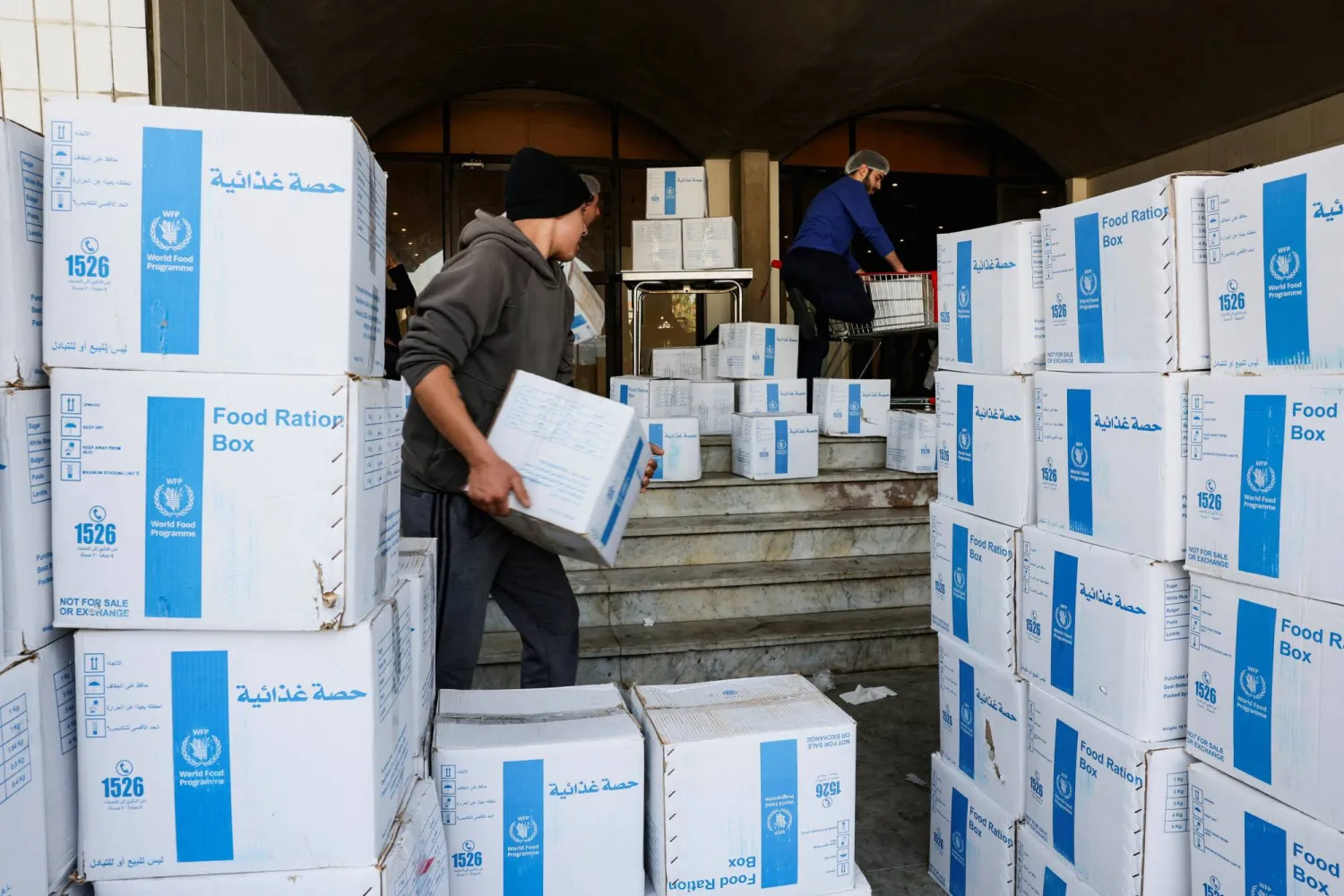
Volunteers carry World Food Program (WFP) boxes of aid supplies in a school-turned-shelter in Beirut, following an escalation between Hezbollah and Israel amid the US-Israeli conflict with Iran, Lebanon, March 12, 2026. REUTERS/Mohamed Azakir
TT

World Food Program Warns Lebanon Facing Food Security Crisis Due to Iran War

Volunteers carry World Food Program (WFP) boxes of aid supplies in a school-turned-shelter in Beirut, following an escalation between Hezbollah and Israel amid the US-Israeli conflict with Iran, Lebanon, March 12, 2026. REUTERS/Mohamed Azakir

Lebanon is facing a food security crisis as the Iran war disrupts supplies of goods inside the country, the United Nations World Food Program said on Friday. 

A fragile two-day-old ceasefire has halted the campaign of US and Israeli airstrikes on Iran, but it has not so far calmed a parallel war waged by Israel against Iran's Hezbollah allies in Lebanon. 

"What we're witnessing is not just a displacement crisis, it is rapidly becoming a ‌food security ‌crisis," said World Food Program country director Allison ‌Oman, ⁠speaking via video ⁠link from Beirut. 

She warned that food was becoming increasingly unaffordable due to rising prices and demand among displaced families. 

PRICE OF VEGETABLES HAS SOARD 

The price of vegetables has soared by more than 20% and bread prices have increased by 17% since March 2, the WFP said. 

"What we're now seeing is ⁠a very worrying combination: prices are rising, incomes ‌are disrupted and demand is increasing ‌as displacement continues for many families," Oman stated. 

Lebanon faces a two-layered ‌crisis, in which some markets have fully collapsed - especially in ‌the south, where more than 80% of markets are no longer functioning - while those in Beirut are under increasing strain, Oman said. 

Many traders in conflict-affected areas in southern parts of Lebanon are reporting ‌less than one week of essential food stocks remaining, she added. 

The ability to deliver food ⁠aid into ⁠hard-to-reach areas in the south, which has faced heavy bombardment by Israeli airstrikes since March 2, was becoming increasingly difficult. 

While the Qasmiyeh bridge, which was previously struck, is now operational, movement remains difficult. Ten WFP convoys have reached the south to provide aid to some of the estimate 50,000 to 150,000 in need of humanitarian support in that part of the country. 

"This escalation is pushing vulnerable communities even closer to the edge," said Oman, adding that, due to this latest escalation, about 900,000 people across Lebanon were facing food insecurity - a number that was set to rise.