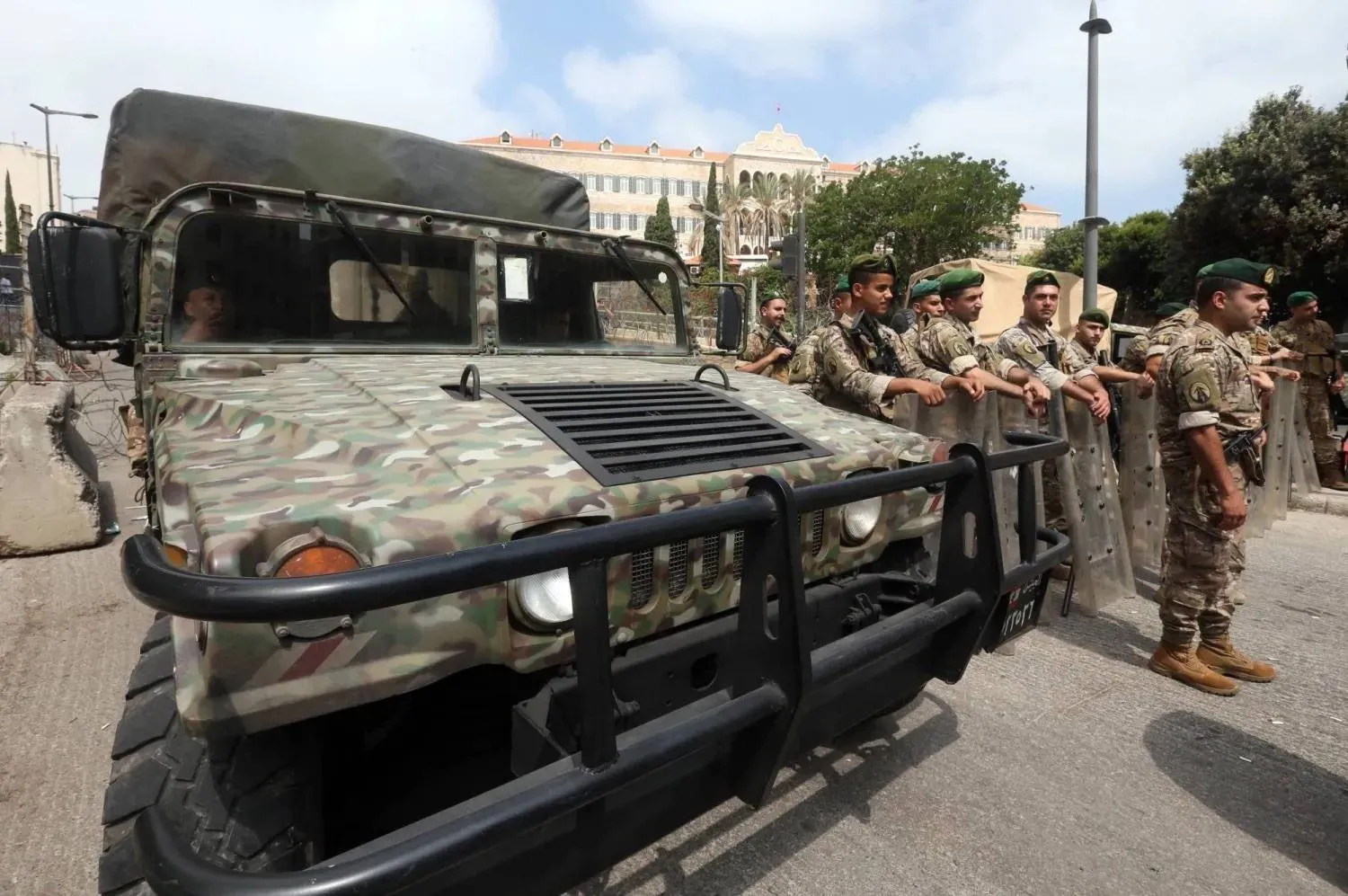
Lebanese Authorities Uncover Hamas and Jamaa Islamiyya Training Camp in Aley

Lebanese soldiers deployed in downtown Beirut. (EPA file)
TT

Lebanese Authorities Uncover Hamas and Jamaa Islamiyya Training Camp in Aley

Lebanese soldiers deployed in downtown Beirut. (EPA file)

Lebanese security authorities have uncovered a covert military training camp in the Aley district, reportedly operated by members of the Palestinian Hamas movement and Lebanon’s al-Jamaa al-Islamiya.

The discovery comes amid a broader national crackdown on extremist cells, including ISIS affiliates, which have been attempting to reestablish a foothold in Lebanon.

According to a senior judicial source who spoke to Asharq Al-Awsat, the Lebanese Army dismantled the camp three weeks ago following the arrest of an armed group on the outskirts of the town of Tabbiyat in Mount Lebanon.

Although more than ten suspects have been detained, the military judiciary has yet to formally charge them.

The source revealed that the camp was fully equipped with weapons and training facilities and hosted Lebanese and foreign fighters. Among the detainees are individuals with significant militant experience, sons of former fighters who battled Israel in the south and were later assassinated. Most of the suspects are from Beirut, with some of Jordanian nationality.

Parallel to these discoveries, the army announced the arrest of a new ISIS cell. In a statement, the military said it had detained three Lebanese nationals involved in plotting attacks against army positions.

The suspects were reportedly acting under the direction of ISIS operatives based abroad.

Interrogations are ongoing, and authorities are working to apprehend additional members of the cell.

The arrest comes amid a resurgence of concern over extremist activity in Lebanon, especially following renewed instability in neighboring Syria.

However, another judicial source downplayed the threat, saying recent media reports about an alleged suicide bombing plot in Beirut’s southern suburbs were exaggerated.

The source confirmed the arrest of two Syrian nationals, Khaled al-Zoubi and Mohammed al-Ajlouni, who had illegally entered Lebanon after the collapse of Syrian government control in certain areas.

They had taken refuge in Sidon and were allegedly preparing to plant an explosive device on a motorcycle in a crowded area. However, no evidence was found that they possessed the necessary weapons or explosives to carry out such an attack.

The source emphasized that while many of the detainees show signs of radicalization, few possess the capabilities to act.

“ISIS does not activate cells without providing weapons and clearly defined targets. Most recent claims of plots have been overblown and possibly politically motivated, particularly after the unrest in Syria’s Sweida province,” he said.

Meanwhile, recent arrests of Syrians in the Beirut suburb of Bourj al-Barajneh and the Bekaa town of Shmestar were initially linked to ISIS, but later disproven.

Security sources clarified that the detainees were involved in human smuggling and were not connected to any militant group. Their arrests coincided with Ashoura commemorations, prompting suspicion.

“Security concerns are valid,” one official said, “but they must not be used to incite fear or mislead the public.”


Syria: Israeli Forces Shell Quneitra Countryside

An Israeli military vehicle is seen near the border between the Israeli-occupied Golan Heights and Syria, May 4, 2025. REUTERS/Shir Torem/File Photo
TT

Syria: Israeli Forces Shell Quneitra Countryside

An Israeli military vehicle is seen near the border between the Israeli-occupied Golan Heights and Syria, May 4, 2025. REUTERS/Shir Torem/File Photo

Israeli forces fired several artillery shells on Wednesday at the area around eastern Tell al-Ahmar in the southern Quneitra countryside in southern Syria.

The Syrian Arab News Agency (SANA) said that “occupation forces fired two projectiles that landed on agricultural land around eastern Tell al-Ahmar, causing no injuries".

Israel continues to violate the 1974 Disengagement Agreement through repeated incursions into southern Syria, raids on and arrests of civilians, land bulldozing and shelling, among other attacks, the agency said.

Syria has repeatedly called for Israeli forces to withdraw from its territory, stressing that all measures taken by Israel are null and void and have no legal effect under international law. Damascus has also urged the international community to fulfil its responsibilities and compel Israel to withdraw fully from southern Syria.


Report: Baghdad Closes Border Crossing with Iran Under US Pressure

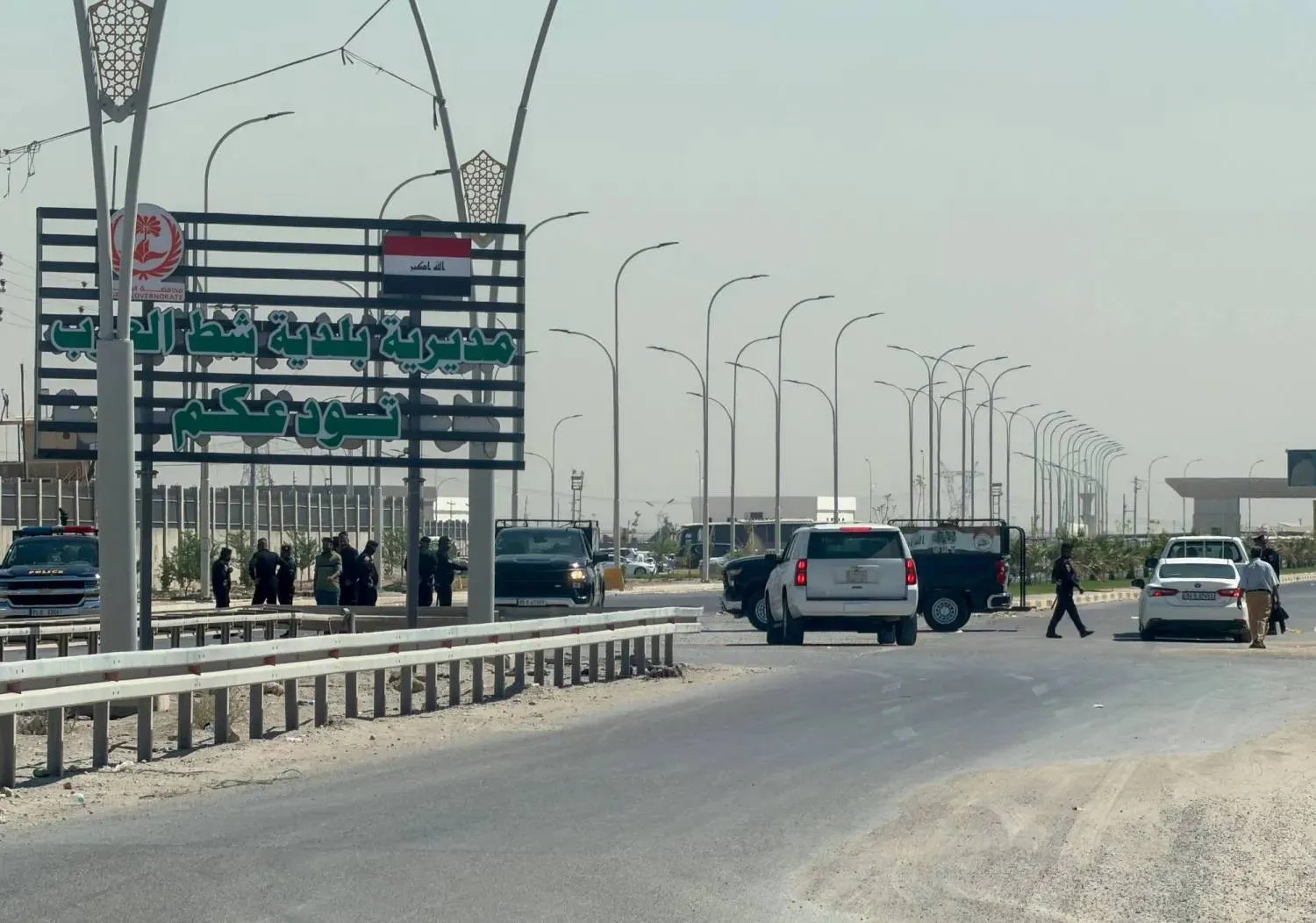
 Security personnel stand near the Shalamsheh border crossing between Iraq and Iran, after Iraqi authorities ordered its closure as a precautionary measure following the latest drone attacks on Saudi Arabia, in Basra, Iraq, September 12, 2026. (Reuters)
Security personnel stand near the Shalamsheh border crossing between Iraq and Iran, after Iraqi authorities ordered its closure as a precautionary measure following the latest drone attacks on Saudi Arabia, in Basra, Iraq, September 12, 2026. (Reuters)
TT

Report: Baghdad Closes Border Crossing with Iran Under US Pressure

 Security personnel stand near the Shalamsheh border crossing between Iraq and Iran, after Iraqi authorities ordered its closure as a precautionary measure following the latest drone attacks on Saudi Arabia, in Basra, Iraq, September 12, 2026. (Reuters)
Security personnel stand near the Shalamsheh border crossing between Iraq and Iran, after Iraqi authorities ordered its closure as a precautionary measure following the latest drone attacks on Saudi Arabia, in Basra, Iraq, September 12, 2026. (Reuters)

Iraqi authorities on Wednesday closed a border crossing with Iran "until an unspecified date", an Iraqi source told AFP, with two other sources saying the US is pressuring Baghdad to close more crossings in order to tighten the screws on Tehran. 

A source at Iraq's border crossings authority told AFP Wednesday that the al-Sheeb crossing "has been closed since this morning until an unspecified date", without specifying the reason. 

The Iranian judiciary's Mizan Online website confirmed the closure, adding that it came "following a decision by the Iraqi prime minister's office". 

The two countries are bound by close political, religious and economic ties and share a border of more than 1,400 kilometers (850 miles) with at least eight official crossings. 

Washington has been seeking to increase economic pressure on Iran since the outbreak of the Middle East war in February, and has imposed sanctions on entities it accuses of being linked to Tehran. 

Two political sources told AFP that the United States is pressuring the Iraqi government to close all border crossings with Iran. 

One of the sources said "the US Treasury Department raised this with (Prime Minister Ali) al-Zaidi when he was in New York" last month to attend the UN General Assembly. 

The source said "all border crossings will be closed except for one crossing in federal territory and one crossing in the Kurdistan region", which is semi-autonomous. 

The second source added that "the United States has asked all countries bordering Iran to do the same". 

Iranian authorities have acknowledged disruptions on the border with Pakistan. 

"Regarding Pakistan, yes, there have been disruptions to border exchanges with some neighboring countries," Iranian interior ministry spokesperson Ali Zeinivand said on Wednesday. 

"Some of these disruptions are naturally occurring and happen in various periods, even when there is no war or sanctions." 


Arab League Chief Condemns Israeli Attacks on South Lebanon, Urges Action

Arab League Secretary-General Nabil Fahmy listens to a Lebanese Army officer pointing out areas occupied by Israeli forces in Zawtar al-Gharbiyeh, South Lebanon, alongside Social Affairs Minister Haneen Sayed (AP). 
TT

Arab League Chief Condemns Israeli Attacks on South Lebanon, Urges Action

Arab League Secretary-General Nabil Fahmy listens to a Lebanese Army officer pointing out areas occupied by Israeli forces in Zawtar al-Gharbiyeh, South Lebanon, alongside Social Affairs Minister Haneen Sayed (AP). 

Arab League Secretary-General Nabil Fahmy condemned Israeli attacks on South Lebanon as “unacceptable,” calling for concrete Arab action to support the country, strengthen its army and help displaced residents return home.

Fahmy made the remarks during a visit to the southern city of Tyre, where he met senior Lebanese Army officers at the Benoit Barakat barracks, accompanied by Social Affairs Minister Haneen Sayed.

Fahmy said he had chosen Lebanon as one of his first foreign destinations since taking office to see firsthand the challenges facing its people.

His visit to the south, he explained, was meant to reassure residents that the Arab world and the international community recognized their suffering and were prepared to provide tangible support.

He pointed to a September resolution by the Arab League’s ministerial council that addressed Lebanon’s crisis and its underlying causes, particularly repeated Israeli attacks on civilians and infrastructure.

After touring the town of Zawtar and the city of Nabatieh, Fahmy described the destruction he witnessed as “distressing.”

He accused Israel of systematically demolishing residential areas, seizing land and seeking to displace civilians, potentially paving the way for further occupation.

Despite the devastation, he expressed confidence that Lebanese residents would remain attached to their land.

The Arab League was working with the Lebanese government to explore reconstruction efforts and ways to restore stability, he added.

While rebuilding would require action across several sectors, Fahmy stressed that Arab solidarity could not be limited to statements of condemnation.

“This is the beginning of a sustained process, not the end of the road,” he said, reaffirming the League’s commitment to Lebanon.

Army seeks support, post-UNIFIL arrangements

Brig. Gen. Nicolas Tabet, commander of the Lebanese Army’s South Litani Sector, welcomed the visit as a sign of Arab solidarity at a time of mounting security and humanitarian challenges.

He said Israeli attacks had left widespread destruction and displaced thousands of Lebanese, while continued occupation and security threats prevented families from returning safely to their villages.

The situation was also hampering the army’s deployment to the internationally recognized border.

Tabet called for Arab and international pressure to halt Israeli attacks, secure a full withdrawal from Lebanese territory and uphold the country’s sovereignty.

Despite difficult conditions and limited resources, the army remained committed to its duties, he said, urging the Arab League to mobilize diplomatic support, strengthen the military and help rebuild the south.

He also called for lasting security arrangements after the mandate of the United Nations Interim Force in Lebanon (UNIFIL) ends.

Such arrangements, developed with the UN and international partners, would be essential to preventing a security vacuum and implementing Security Council Resolution 1701.

Describing Fahmy’s visit as a rare and welcome gesture, Tabet said it offered reassurance that Lebanon had not been left to face its challenges alone.