Lebanon’s Finance Minister: No Sale of State Assets, But Strategic Partnerships Ahead

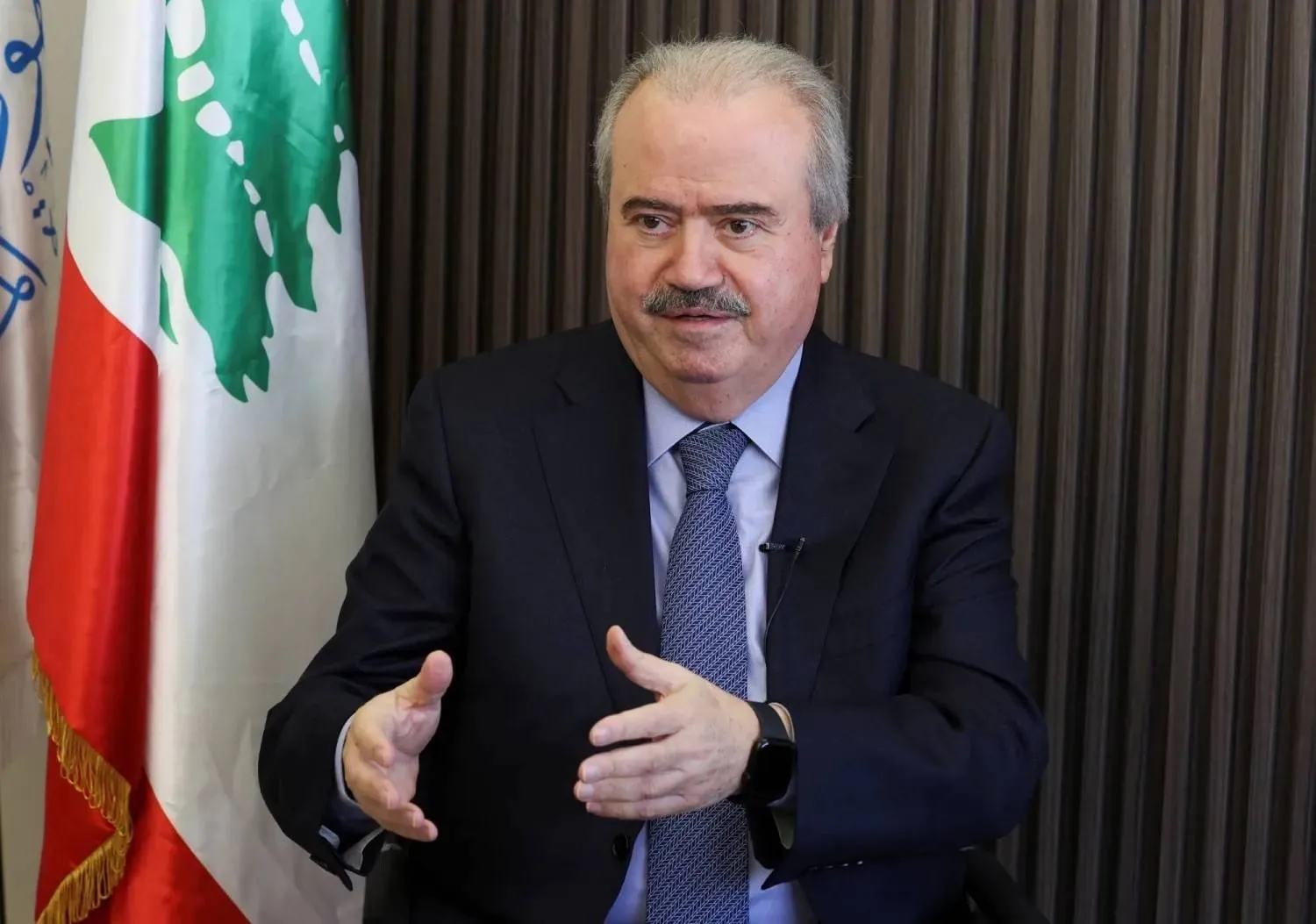
Finance Minister Yassin Jaber (Reuters) 
TT

Lebanon’s Finance Minister: No Sale of State Assets, But Strategic Partnerships Ahead

Finance Minister Yassin Jaber (Reuters) 

Lebanon is preparing to take a major step toward restoring financial stability by the end of this month, with Parliament expected to approve a draft law to restructure the banking sector. This legislation follows the adoption of the banking secrecy law and paves the way for tackling the long-delayed “financial gap” law, a critical component in resolving Lebanon’s severe economic, monetary, and financial crises.

In an interview with Asharq Al-Awsat, Finance Minister Yassin Jaber emphasized that there is no justification for further delays. The government has already reorganized Lebanon’s monetary institutions, enabling them to assess bank conditions, categorize depositors, and prepare comprehensive financial data required for the next steps. These measures will help fairly distribute losses estimated at around $73 billion.

Jaber described the banking and financial reform process as the toughest challenge facing the government of Prime Minister Nawaf Salam, the first under President Joseph Aoun. These reforms coincide with critical efforts to resolve political challenges, including ending daily Israeli aggressions and consolidating state control over arms.

The minister stressed the need to end a prolonged state of denial, which has fueled piecemeal responses to a deep-rooted crisis. Lebanon, he warned, risks being downgraded to a “blacklisted” status globally if urgent reforms are not enacted.

One of the government’s top priorities, Jaber explained, is addressing the financial gap -larger than twice the GDP - by clarifying responsibilities for the losses, including the role of the Central Bank and commercial banks. The upcoming law will outline these responsibilities and enable better coordination among the Central Bank, its oversight bodies, and relevant stakeholders.

Despite severe liquidity shortages, Lebanon will not sell its public assets, Jaber stated firmly.

“The country is not bankrupt,” he said, echoing assurances from both the President and Prime Minister. Instead, the focus will be on optimizing the use of state assets and attracting strategic partnerships, especially in electricity, telecommunications, ports, and other vital sectors, without resorting to privatization.

Efforts are also underway to modernize public finance. The 2026 budget will include measures to boost revenues through tighter customs enforcement and more efficient tax collection. Jaber said ministries are contributing to a medium-term fiscal framework for 2026–2029 to better align spending with economic goals.

Jaber concluded by reaffirming the government’s commitment to transforming Lebanon from a debt-driven, consumption-based economy into a productive one centered on public-private partnership projects.

He noted that the government is continuing to appoint regulatory authorities in key sectors that are attractive to investors - moves that will pave the way for strategic partnerships, not asset sales, as he emphasized once more. These partnerships aim to improve the quality of essential services at fair costs, particularly in electricity, telecommunications, air and sea transport, real estate, and other vital areas.

Jaber also highlighted the importance of economic reforms in strengthening cooperation with international institutions such as the International Monetary Fund (IMF), the European Union, and the World Bank.


Hezbollah-linked Financial Institution Faces Systematic Israeli Military Campaign

Part of the building struck by an Israeli air strike in the Bashoura area, where the Israeli military said Hezbollah stores money beneath it (Asharq Al-Awsat)
TT

Hezbollah-linked Financial Institution Faces Systematic Israeli Military Campaign

Part of the building struck by an Israeli air strike in the Bashoura area, where the Israeli military said Hezbollah stores money beneath it (Asharq Al-Awsat)

The Al-Qard Al-Hasan Association, a financial institution linked to Hezbollah, is facing a systematic military campaign as part of what appears to be a renewed Israeli strategy aimed at undermining the group’s economic infrastructure and cutting off its funding sources.

After the association’s branches were targeted during the 2024 war between Israel and Hezbollah, the institution has once again become a primary target in the current conflict.

The renewed campaign appears aimed at eliminating its role entirely, after it resumed operations following the previous war.

Ongoing campaign

In addition to years of political pressure and sanctions, the Israeli army targeted several of the association’s branches in Beirut, the Bekaa Valley and southern Lebanon during the 2024 war, making the institution part of a broader multi-level confrontation involving military strikes, financial sanctions and political pressure.

During the 66-day war, most of the association’s branches were hit by Israeli air strikes. Despite this, the institution was able to resume operations after the ceasefire and continued to provide financial services.

Hezbollah also used the association to distribute aid and compensation to people affected by the war through checks issued in the group’s name. The group attempted to circumvent sanctions through an entity it called the Joud Foundation, intended to serve similar financial purposes.

But in February, the United States imposed sanctions on it, saying it was being used to ensure the flow of funds from Iran to Hezbollah.

Attempt to eliminate it completely

In the current war, Israel has intensified its strikes against the association in a systematic manner. The Israeli military has clearly stated that all Al-Qard Al-Hasan branches are considered targets, a pledge it has carried out through strikes on most buildings housing its offices.

This has become a source of concern for residents, particularly because many of the association’s offices are located in residential buildings. Residents have therefore demanded that the offices be closed.

Lebanese security authorities have attempted to limit losses resulting from attacks on the association’s branches.

In this context, a decision was taken to close its branch in Sidon, southern Lebanon, and remove its sign on Thursday, following demands from business owners and institutions on the street and in neighboring buildings.

Authorities also evacuated the association’s branch building in Beirut’s Noueiri district on Friday following a decision by the interior minister.

It is also clear that the Israeli army is no longer only pursuing the association’s branches but also money storage facilities. Israeli military spokesman Avichay Adraee said on Thursday, after a strike on a building in the Bashoura area near central Beirut, that Hezbollah had hidden millions of dollars beneath the civilian building to fund its “terrorist activities.”

He added that the site was guarded by armed men and that access to the storage facility was through the building’s parking lot.

While Israeli strikes in 2024 failed to destroy what is often described as “Hezbollah’s central bank,” Israel, which views the association as a central element in financing Hezbollah’s activities and harmful to the Lebanese economy in the service of Iranian interests, now appears intent on weakening it fundamentally.

The goal appears to be depriving the group of one of its most important sources of economic and social influence in Lebanon.

Drying up resources a long and complex process

However, financial and economic affairs researcher Professor Maroun Khater said it is unlikely that Al-Qard Al-Hasan could be completely eliminated.

“Experience shows that such networks are often capable of adapting and finding alternative channels, which makes the process of cutting off resources long and complex,” Khater told Asharq Al-Awsat.

“For this reason, it is difficult to conclude that the blows suffered by Al-Qard Al-Hasan have led to the complete collapse of Hezbollah’s financial system, due both to the nature of the association itself and the diversity of funding sources that international reports say the group relies on.”

Khater added that despite the pressure, the association relies on a broad social network of depositors and borrowers who have used its services as an alternative to the traditional banking system, even before Lebanon’s banking sector effectively collapsed in 2019.

“This social base, along with political and security protection, has given it a certain capacity to endure, albeit within a limited scope, and has so far allowed it room to reorganize its activities whenever it is hit,” he said.

Fate of funds unclear

Khater also stressed that it would be simplistic to view the association as Hezbollah’s only source of funding.

Research centers and international institutions estimate that the group’s financing relies on a mix of sources, including foreign support, local economic networks, and donations, as well as various financial and commercial activities.

Some resources are also believed to move through individuals or private institutions that may remain outside full regulatory oversight, whether inside Lebanon or abroad.

For this reason, Khater said, it remains difficult to determine the true scale of the wealth accumulated by Hezbollah over past decades or to know what has happened to portions of its funds, gold reserves or other assets.

A parallel banking system under pressure

The Al-Qard Al-Hasan Association was founded in 1983 and operates more than 30 branches across Lebanon, including in Beirut, southern Lebanon and the Bekaa Valley. A broad segment of the public relies on it to obtain small loans or cash liquidity in exchange for gold or other assets pledged as collateral.

As Lebanon’s financial crisis worsened after 2019, the association’s role expanded, functioning in many ways as Hezbollah’s “parallel banking system.”

While banks suspended lending, Al-Qard Al-Hasan said it had issued 212,000 loans totaling $553 million in 2020 and 2021.

The US Treasury froze the association’s assets in 2007 and imposed additional sanctions in 2021 on several individuals linked to it, accusing the organization of collecting foreign currency to help Hezbollah build a support base.

The Treasury says that although the association claims to serve the Lebanese public, it actually transfers funds illegally through fictitious accounts and intermediaries, exposing Lebanese financial institutions to potential sanctions.

Lebanese authorities have also tightened restrictions. In 2025, Lebanon’s central bank instructed banks and financial institutions not to deal with unlicensed entities subject to sanctions, including Al-Qard Al-Hasan.


Iraq PM Vows to Prevent Attacks After French Soldier Killed

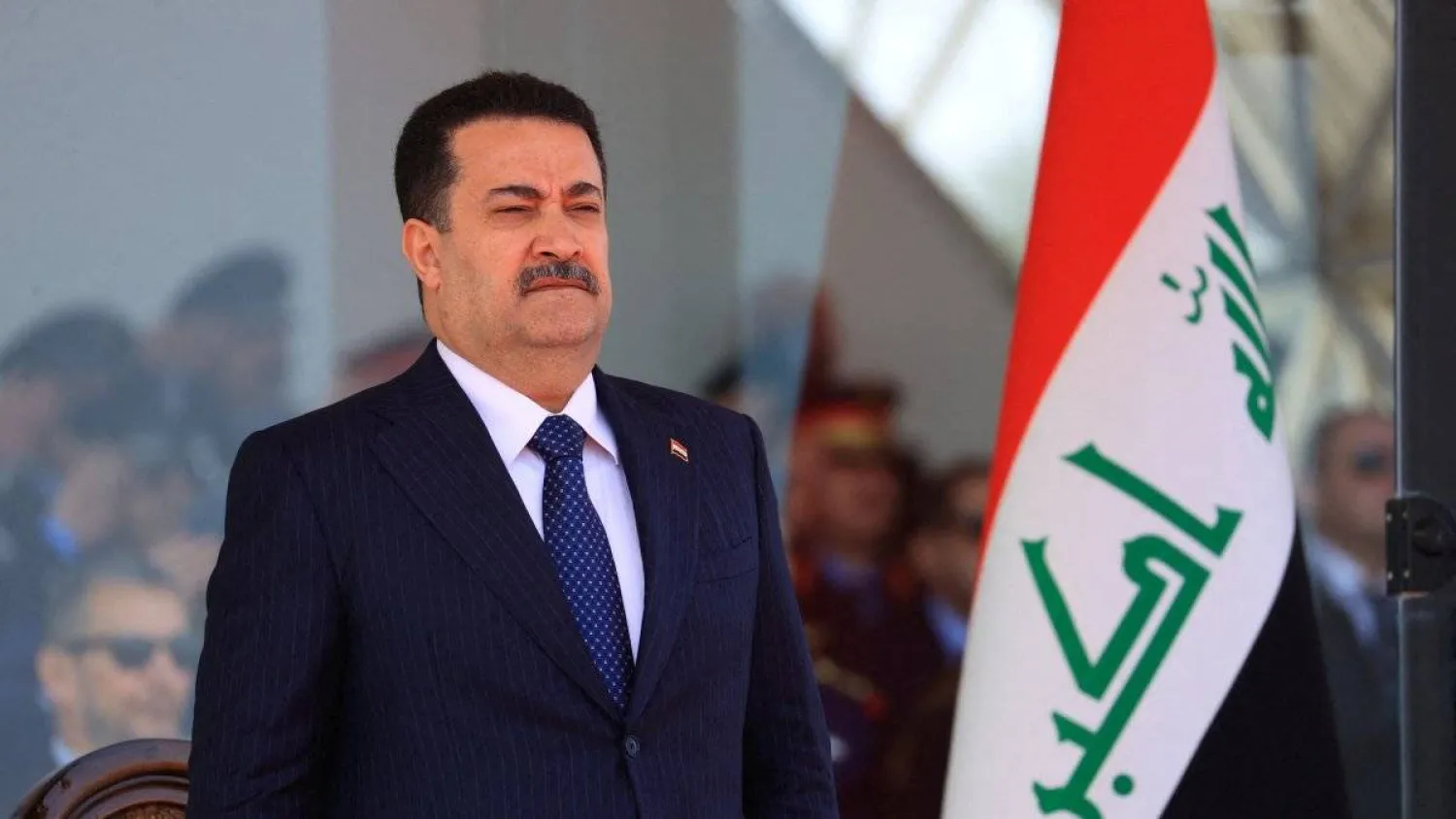
Iraqi Prime Minister Mohammed Shia al-Sudani attends an event in Baghdad, Iraq, Jan. 9, 2024. (Reuters)
TT

Iraq PM Vows to Prevent Attacks After French Soldier Killed

Iraqi Prime Minister Mohammed Shia al-Sudani attends an event in Baghdad, Iraq, Jan. 9, 2024. (Reuters)

Iraq's Prime Minister Mohammed Shia al-Sudani vowed on Friday to prevent attacks after the killing of a French soldier in an attack in the autonomous Kurdistan region.

Sudani expressed his "solidarity" with France in a phone call with French President Emmanuel Macron.

He said that "the necessary measures will be taken to prevent the recurrence of such incidents", and an investigation will be conducted into the attack.

The president of Iraq's Kurdistan region Nechirvan Barzani, in a call with Macron, also expressed his condolences and called for the Iraqi government to "set limits on outlaw groups".


Syria, Lebanon Test Ties Amid Regional Escalation

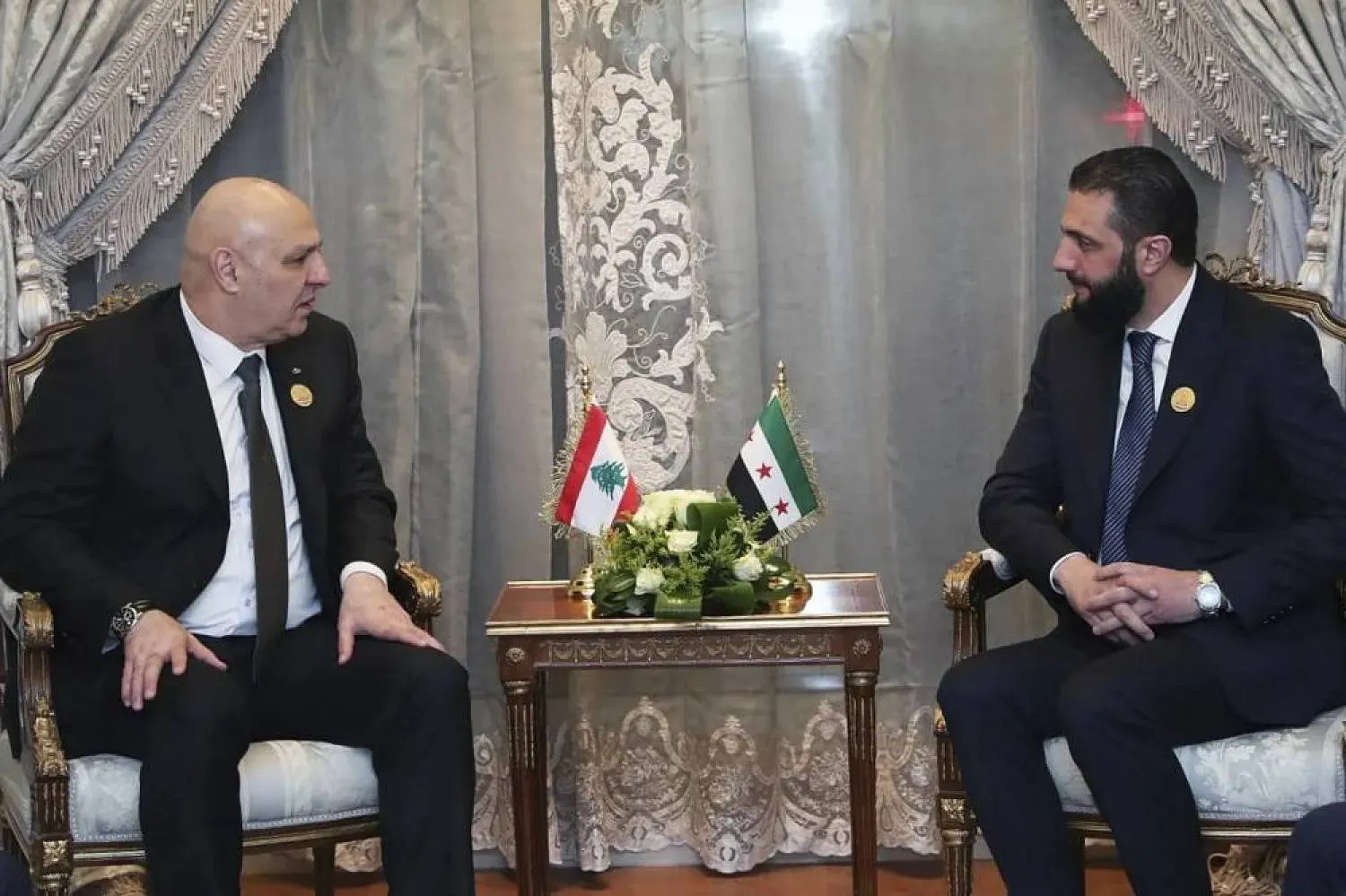
Lebanese President Joseph Aoun meets with Syrian President Ahmed al-Sharaa during the Arab Summit in Egypt, March 4, 2025 (AP)
TT

Syria, Lebanon Test Ties Amid Regional Escalation

Lebanese President Joseph Aoun meets with Syrian President Ahmed al-Sharaa during the Arab Summit in Egypt, March 4, 2025 (AP)

Before a March 10 phone call between Syrian President Ahmed al-Sharaa and Lebanese President Joseph Aoun to discuss regional developments and their impact on the security and stability of both countries and the wider region, it appeared the two leaders had not been in direct contact since each assumed the presidency a little over a year ago.

In the days before speaking with Aoun, al-Sharaa contacted several Lebanese political figures. On March 6, he spoke with Prime Minister Nawaf Salam and former Progressive Socialist Party leader Walid Jumblatt. On March 8, he called Kataeb Party leader MP Sami Gemayel.

During those calls, al-Sharaa expressed “solidarity with the Lebanese people in these difficult circumstances Lebanon is going through.”

He said the reinforcement of the Syrian military presence along the Syrian-Lebanese border on March 3 was intended solely to strengthen border control and safeguard Syria’s internal security. He described the steps as similar to measures taken along the Syrian-Iraqi border.

The contacts came against the backdrop of war in the region and broader regional developments, and included discussions on the future of Syrian-Lebanese relations. Al-Sharaa stressed the importance of continued coordination between the two countries.

According to the Kataeb Party’s official website, the call between al-Sharaa and Gemayel took place in a positive atmosphere and included discussion of opening a new chapter in bilateral relations.

Al-Sharaa said ties between Syria and Lebanon should rest on “mutual respect between the two states,” alongside stronger economic cooperation and integration that serves the interests of both peoples.

However, the two days following the March 8 call triggered speculation that relations between the two countries were strained because of current and past issues.

Al-Sharaa moved to dispel that speculation with a direct call to Aoun. The following day, French President Emmanuel Macron said he had spoken with both leaders and welcomed the dialogue, saying “the coordination launched by the Lebanese and Syrian leaderships is important” and that France would continue to support it.

Overall, the contacts have raised cautious optimism about neighborly relations at a sensitive moment.

Asharq Al-Awsat asked Syrian analysts how they see relations between the two countries evolving in the near term amid ongoing regional developments.

Foundations of the relationship

Bassam Barabandi, a Syrian analyst and former diplomat based in Washington, said Damascus approaches relations with Lebanon on several foundations.

First is non-interference in Lebanon’s internal politics. Second is border security, particularly preventing Hezbollah from operating inside Syria or transferring weapons through Syrian territory, as well as halting drug smuggling through Syria, which requires direct cooperation with Lebanon.

Third is the issue of Syrians held in Lebanese prisons, which he said is under discussion.

Barabandi said contacts between the two sides, including the call between al-Sharaa and Aoun, produced understandings on several issues, notably mutual non-interference in internal affairs and handling files related to Syrian fugitives in Lebanon and Syrian refugees.

He noted that Lebanon’s political system requires engagement with multiple actors, since the president is only one part of a broader governing structure. Communicating Syrian assurances or positions, therefore, requires outreach to different political leaders.

In that context, al-Sharaa contacted Gemayel to thank him for efforts aimed at accelerating solutions for Syrians detained in Lebanon, and in recognition of his political weight among Christians.

The Syrian president also contacted Jumblatt, Lebanon’s top Druze leader.

Further contacts with other figures could follow if needed, Barabandi said.

He added that the Syrian government supports steps taken by the Lebanese government regarding Hezbollah, particularly efforts related to disarming the group.

Expanding dialogue

Jumaa Mohammed Laheeb, director of research and studies at the Syrian Future Movement, said the current dynamic between Damascus and Beirut reflects a dual reality: relatively advanced security and political coordination alongside political uncertainty.

That uncertainty is most evident in sensitive files, particularly those related to detainees, he said. In that context, al-Sharaa’s call with Salam can be understood.

Laheeb said the call and Syria’s expression of support for Lebanon amid the regional escalation focused on two main issues: border control and reassuring the Lebanese government that Syrian military deployments aim to strengthen control within Syrian territory rather than stoke tensions in Lebanon.

Such communication reflects effective operational channels between the two governments, particularly after understandings reached in recent years on smuggling and border crossings. But those channels alone cannot resolve politically and historically sensitive files such as detainees and the missing, he said.

Laheeb said the Lebanese presidency sits at the center of complex domestic balances involving Hezbollah’s influence, as well as Christian, Sunni and Druze segments.

Al-Sharaa’s initial reluctance to call Aoun directly — while opening communication with figures such as Jumblatt and Gemayel — reflects a Syrian effort to broaden the range of Lebanese actors it engages with.

Damascus appears to be seeking greater regional legitimacy by opening dialogue with forces opposed to Hezbollah’s dominance, he said. But key decisions on issues such as detainees, refugees and border security still pass through domestic circles in which Hezbollah retains considerable influence.

The detainee file, he said, remains a bargaining chip rather than a purely humanitarian priority, leading to delays and partial solutions rather than a comprehensive settlement.

Testing relations with Damascus

Syrian researcher Ahmad Abazid said Damascus does not want to become involved in the current war or intervene militarily against Hezbollah. However, he said the Syrian government has, from the outset, made support for the Lebanese state a cornerstone of its relationship with Lebanon, alongside what he described as genuine hostility toward Hezbollah.

For that reason, he said, it is natural for Damascus to support Aoun’s initiative to disarm the group.

At the same time, Abazid argued Hezbollah would be the weaker side in any confrontation with the new Syrian army. The history of relations between the group and Syrian opposition would likely push many fighters to confront Hezbollah if such a battle emerged, he said.

He also pointed to rising tensions. Hezbollah said Syrian territory had been used as the launch point for a second Israeli operation in the Lebanese town of Nabi Sheet in the Bekaa Valley. Shortly afterward, the Syrian army said Hezbollah had fired artillery shells at the Sarghaya region in western Syria.

Abazid said the escalation could reflect two possible dynamics. One is an Iranian attempt to spread instability across the region during the current war to increase pressure on all sides, particularly Arab states.

The other is that Hezbollah feels threatened by the Syrian side, especially as Lebanese actors have refrained from launching military initiatives against the group and after remarks by US envoy Tom Barrack suggesting possible Syrian intervention in Lebanon.