


Hezbollah-linked Financial Institution Faces Systematic Israeli Military Campaign

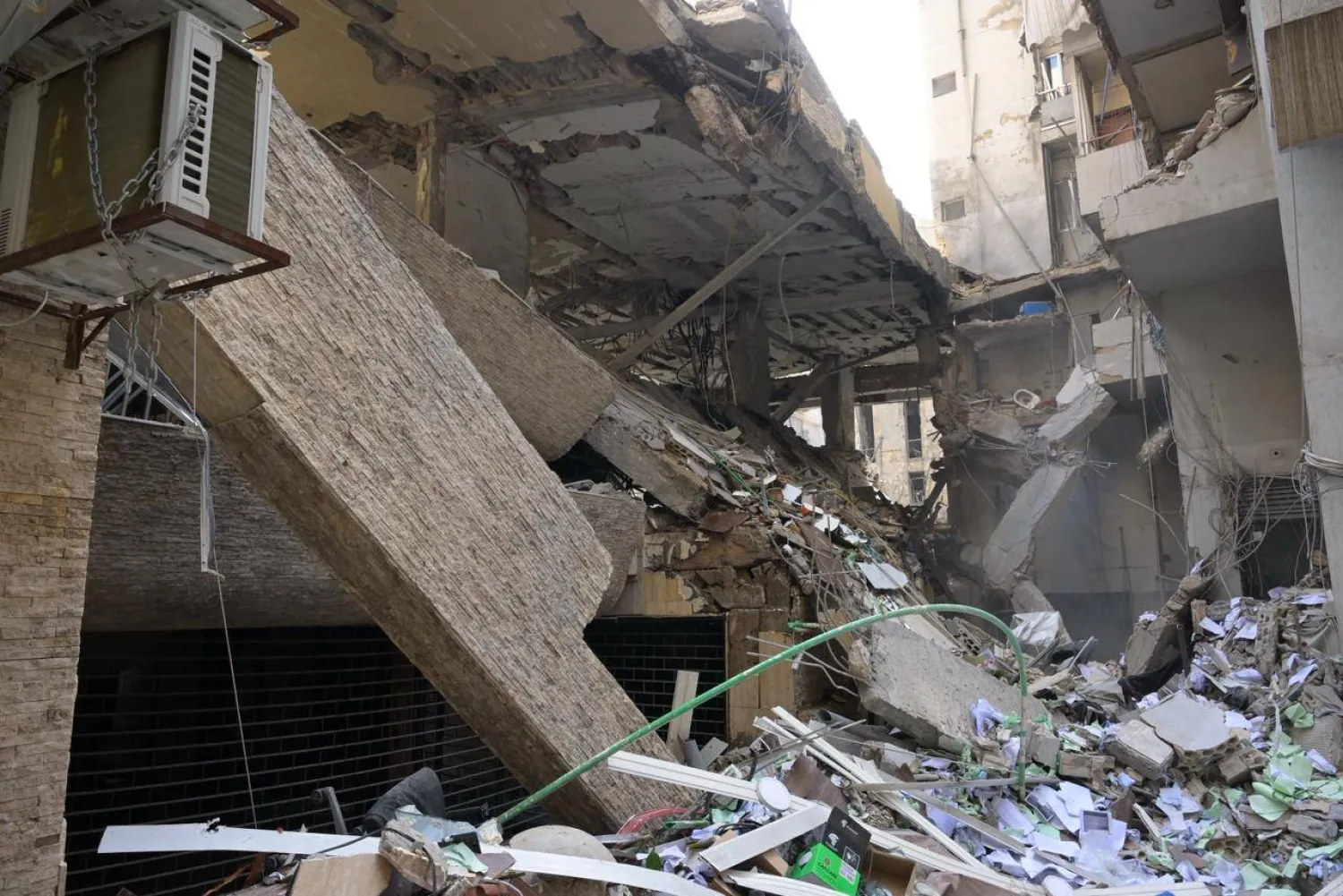
Part of the building struck by an Israeli air strike in the Bashoura area, where the Israeli military said Hezbollah stores money beneath it (Asharq Al-Awsat)
TT

Hezbollah-linked Financial Institution Faces Systematic Israeli Military Campaign

Part of the building struck by an Israeli air strike in the Bashoura area, where the Israeli military said Hezbollah stores money beneath it (Asharq Al-Awsat)

The Al-Qard Al-Hasan Association, a financial institution linked to Hezbollah, is facing a systematic military campaign as part of what appears to be a renewed Israeli strategy aimed at undermining the group’s economic infrastructure and cutting off its funding sources.

After the association’s branches were targeted during the 2024 war between Israel and Hezbollah, the institution has once again become a primary target in the current conflict.

The renewed campaign appears aimed at eliminating its role entirely, after it resumed operations following the previous war.

Ongoing campaign

In addition to years of political pressure and sanctions, the Israeli army targeted several of the association’s branches in Beirut, the Bekaa Valley and southern Lebanon during the 2024 war, making the institution part of a broader multi-level confrontation involving military strikes, financial sanctions and political pressure.

During the 66-day war, most of the association’s branches were hit by Israeli air strikes. Despite this, the institution was able to resume operations after the ceasefire and continued to provide financial services.

Hezbollah also used the association to distribute aid and compensation to people affected by the war through checks issued in the group’s name. The group attempted to circumvent sanctions through an entity it called the Joud Foundation, intended to serve similar financial purposes.

But in February, the United States imposed sanctions on it, saying it was being used to ensure the flow of funds from Iran to Hezbollah.

Attempt to eliminate it completely

In the current war, Israel has intensified its strikes against the association in a systematic manner. The Israeli military has clearly stated that all Al-Qard Al-Hasan branches are considered targets, a pledge it has carried out through strikes on most buildings housing its offices.

This has become a source of concern for residents, particularly because many of the association’s offices are located in residential buildings. Residents have therefore demanded that the offices be closed.

Lebanese security authorities have attempted to limit losses resulting from attacks on the association’s branches.

In this context, a decision was taken to close its branch in Sidon, southern Lebanon, and remove its sign on Thursday, following demands from business owners and institutions on the street and in neighboring buildings.

Authorities also evacuated the association’s branch building in Beirut’s Noueiri district on Friday following a decision by the interior minister.

It is also clear that the Israeli army is no longer only pursuing the association’s branches but also money storage facilities. Israeli military spokesman Avichay Adraee said on Thursday, after a strike on a building in the Bashoura area near central Beirut, that Hezbollah had hidden millions of dollars beneath the civilian building to fund its “terrorist activities.”

He added that the site was guarded by armed men and that access to the storage facility was through the building’s parking lot.

While Israeli strikes in 2024 failed to destroy what is often described as “Hezbollah’s central bank,” Israel, which views the association as a central element in financing Hezbollah’s activities and harmful to the Lebanese economy in the service of Iranian interests, now appears intent on weakening it fundamentally.

The goal appears to be depriving the group of one of its most important sources of economic and social influence in Lebanon.

Drying up resources a long and complex process

However, financial and economic affairs researcher Professor Maroun Khater said it is unlikely that Al-Qard Al-Hasan could be completely eliminated.

“Experience shows that such networks are often capable of adapting and finding alternative channels, which makes the process of cutting off resources long and complex,” Khater told Asharq Al-Awsat.

“For this reason, it is difficult to conclude that the blows suffered by Al-Qard Al-Hasan have led to the complete collapse of Hezbollah’s financial system, due both to the nature of the association itself and the diversity of funding sources that international reports say the group relies on.”

Khater added that despite the pressure, the association relies on a broad social network of depositors and borrowers who have used its services as an alternative to the traditional banking system, even before Lebanon’s banking sector effectively collapsed in 2019.

“This social base, along with political and security protection, has given it a certain capacity to endure, albeit within a limited scope, and has so far allowed it room to reorganize its activities whenever it is hit,” he said.

Fate of funds unclear

Khater also stressed that it would be simplistic to view the association as Hezbollah’s only source of funding.

Research centers and international institutions estimate that the group’s financing relies on a mix of sources, including foreign support, local economic networks, and donations, as well as various financial and commercial activities.

Some resources are also believed to move through individuals or private institutions that may remain outside full regulatory oversight, whether inside Lebanon or abroad.

For this reason, Khater said, it remains difficult to determine the true scale of the wealth accumulated by Hezbollah over past decades or to know what has happened to portions of its funds, gold reserves or other assets.

A parallel banking system under pressure

The Al-Qard Al-Hasan Association was founded in 1983 and operates more than 30 branches across Lebanon, including in Beirut, southern Lebanon and the Bekaa Valley. A broad segment of the public relies on it to obtain small loans or cash liquidity in exchange for gold or other assets pledged as collateral.

As Lebanon’s financial crisis worsened after 2019, the association’s role expanded, functioning in many ways as Hezbollah’s “parallel banking system.”

While banks suspended lending, Al-Qard Al-Hasan said it had issued 212,000 loans totaling $553 million in 2020 and 2021.

The US Treasury froze the association’s assets in 2007 and imposed additional sanctions in 2021 on several individuals linked to it, accusing the organization of collecting foreign currency to help Hezbollah build a support base.

The Treasury says that although the association claims to serve the Lebanese public, it actually transfers funds illegally through fictitious accounts and intermediaries, exposing Lebanese financial institutions to potential sanctions.

Lebanese authorities have also tightened restrictions. In 2025, Lebanon’s central bank instructed banks and financial institutions not to deal with unlicensed entities subject to sanctions, including Al-Qard Al-Hasan.



Macron Urges Israel to Hold 'Direct Talks' with Lebanon amid More War Casualties

Firefighters and first aid responders work inside an apartment that was targeted by an Israeli airstrike in the Burj Hammoud area on the northern outskirts of Beirut on March 14, 2026. (Photo by IBRAHIM AMRO / AFP)
TT

Macron Urges Israel to Hold 'Direct Talks' with Lebanon amid More War Casualties

Firefighters and first aid responders work inside an apartment that was targeted by an Israeli airstrike in the Burj Hammoud area on the northern outskirts of Beirut on March 14, 2026. (Photo by IBRAHIM AMRO / AFP)

French President Emmanuel Macron on Saturday said Lebanon was ready to engage in "direct talks" with Israel and offered to host negotiations in Paris.

"The Lebanese government has signaled its willingness to engage in direct talks with Israel," he said on X.

"France is ready to facilitate these talks by hosting them in Paris," Macron said, adding he had spoken to the president and prime minister of Lebanon.

He called on Israel to "seize this opportunity ⁠to launch ceasefire discussions, to find a lasting solution and to allow the Lebanese authorities to put in place their engagements for Lebanon's sovereignty."

Macron also urged Israel ⁠to ⁠stop its offensive and on Hezbollah to stop its actions.

"Everything must be done to stop Lebanon from descending into chaos," he said.

A photograph shows the site of an overnight Israeli airstrike that targeted Beirut's southern suburbs, on March 14, 2026. (Photo by AFP)

At least 12 medical personnel were killed in an Israeli strike on a healthcare center in the town of Borj Qalaouiya in southern Lebanon, the Lebanese state news agency reported on Saturday, citing the health ministry.

The Israeli army said that a day earlier it struck Hezbollah operatives "who were bringing rockets into a weapons depot" in Majdal, around seven kilometers from Borj Qalaouiya.

Also, an Israeli strike hit an apartment building in a northern Beirut suburb that had been targeted a day earlier, Lebanese state media said.

The National News Agency said "an Israeli strike targeted the Nabaa-Burj Hammoud area for a second day."

The same building had been struck on Friday without causing casualties.

The NNA also reported on Friday that Israeli shells hit a United Nations base hosting Nepali peacekeepers in the southern border town of Mais al-Jabal.


Egypt Renews Call for Joint Arab Force, Warns of ‘Total Chaos’

Egyptian Foreign Minister Badr Abdelatty (Egyptian Foreign Ministry)
TT

Egypt Renews Call for Joint Arab Force, Warns of ‘Total Chaos’

Egyptian Foreign Minister Badr Abdelatty (Egyptian Foreign Ministry)

Egypt renewed calls to form a joint Arab force capable of effectively confronting threats and risks facing Arab states, warning of “the dangers of the conflict widening in the region and the possibility of sliding into comprehensive chaos.”

It also reaffirmed its solidarity with the Gulf states and rejected any attempt by non-Arab regional powers or actors outside the region to impose regional security arrangements on Arab countries.

The remarks came as Egyptian Foreign Minister Badr Abdelatty participated in the fourth joint ministerial meeting between Egypt and the Gulf Cooperation Council's foreign ministers, held virtually on Thursday evening.

The meeting was chaired by Bahraini Foreign Minister Abdullatif bin Rashid Al Zayani, the current chair of the GCC ministerial council, and attended by GCC Secretary-General Jassim Albudaiwi.

In a statement on Friday, Egyptian Foreign Ministry spokesman Tamim Khallaf said Abdelatty reaffirmed Egypt’s “firm and strong support” for the “brotherly Gulf states” and its solidarity with them in confronting the “unacceptable and unjustified attacks” they faced from Iran in recent days.

He stressed Egypt’s “categorical rejection of any pretexts aimed at undermining the sovereignty or capabilities of the brotherly Gulf states, Jordan and Iraq,” saying “the security of the Gulf states is an integral part of Egyptian and Arab national security, and Egypt stands by its brothers in this delicate regional moment.”

Abdelatty also stressed the “utmost importance” of de-escalation, calming tensions and prioritizing diplomacy and dialogue. He underlined the need to ensure freedom of international maritime navigation and voiced “complete rejection of any attempts to obstruct it,” warning such moves would pose a direct threat to regional stability and global trade flows.

Khallaf said Abdelatty also renewed calls to activate Arab national security frameworks and deepen joint cooperation, urging swift practical steps and new mechanisms to safeguard the security and sovereignty of Arab states, including Gulf countries. These steps include accelerating the activation of the Arab League’s 1950 Joint Defense and Economic Cooperation Treaty and forming a joint Arab force.

Abdelatty told a meeting of the Egyptian cabinet on Tuesday that Egypt is currently leading initiatives to establish a joint Arab force to protect Arab national security, according to Cairo News television.

GCC foreign ministers praised what they described as the “principled, strong and supportive positions” of the Egyptian leadership, particularly Cairo’s unequivocal condemnation of attacks targeting Gulf states and its declaration of full solidarity with them at this sensitive moment.

They also commended Egypt’s continued support for the Palestinian cause and its pivotal role in backing Arab issues, strengthening joint Arab action and safeguarding regional security and stability amid current challenges.

Khallaf said the ministers also reviewed institutional ties between Egypt and the GCC, praising the “qualitative leap” in relations since the signing of a memorandum of understanding on political consultations and the adoption of a joint action plan for 2024-2028.

They also highlighted momentum generated by the Egyptian-Gulf Trade and Investment Forum hosted by Cairo last November and discussed efforts to elevate relations to a comprehensive strategic partnership that would strengthen economic, trade and investment cooperation for the mutual benefit of the region’s peoples.


Is Burhan Heading for a Showdown with Sudan’s Islamists?

A circulating image shows Yasser al-Atta with the commander of the Islamist al-Baraa bin Malik militia fighting alongside the army
TT

Is Burhan Heading for a Showdown with Sudan’s Islamists?

A circulating image shows Yasser al-Atta with the commander of the Islamist al-Baraa bin Malik militia fighting alongside the army

The designation of Sudan’s Islamists as a terrorist entity places the country’s military leadership before difficult and narrowing choices, particularly as these currents are deeply embedded within the ruling system and wield growing influence in decision-making circles, including inside the military itself.

That reality makes any potential confrontation highly risky at a time when Sudan is already facing a fragile and volatile situation on all fronts.

The development raises key questions about what comes next: Could army commander Abdel Fattah al-Burhan move to curb the Islamists’ influence or remove them from the military? And how might they respond if targeted and the confrontation escalates?

The United States announced last Monday that it had designated the Muslim Brotherhood in Sudan a terrorist organization, accusing it of receiving support from Iran. To avoid confusion over the name, the US State Department specified the “Sudanese Islamic Movement” and included its military wing, the al-Baraa bin Malik Corps, citing links to Iran’s Revolutionary Guard Corps.

Since the fall of ousted president Omar al-Bashir after the 2019 popular uprising, Islamists and their dissolved National Congress Party have split into several civilian and military factions. When war erupted in April 2023, they regrouped in new military formations to fight alongside the Sudanese army against the Rapid Support Forces.

Ali Karti, Secretary General of the Sudanese Islamic Movement and a former foreign minister, is accused of acting as the real driver behind the army through Islamist elements within its ranks in a bid to return to power. The army and Burhan have repeatedly denied those accusations.

Some Islamist leaders say the movement has regained influence inside the institutions of the “deep state” and that confronting it would require extensive intelligence and security efforts. They also acknowledge that Islamists have become a heavy burden on the army, while Burhan appears hesitant to take a decisive stance against them.

Sources familiar with the matter say the administration of US President Donald Trump had earlier decided to designate the group but delayed announcing the move to allow time for efforts to secure a ceasefire between the army and the Rapid Support Forces.

Rising regional tensions, particularly the US-Israel confrontation with Iran, and statements by Islamist leaders fighting alongside the army declaring support for Tehran, accelerated the decision.

Those statements reportedly embarrassed Burhan before regional allies, prompting him to deny any official ties between the army and the groups and to vow to be held accountable.

Sources say the designation explicitly linked “Islamist battalions” in Sudan to training and military support from Iran’s Revolutionary Guards, potentially making them a target of US policies as the regional conflict widens.

At the same time, activists circulated an old video of Sovereignty Council member and assistant commander-in-chief Yasser al-Atta speaking about six Islamist battalions fighting within the army’s ranks.

Possible scenarios

Circles close to the Islamists expect the movement to “bend with the storm,” avoiding public positions that could trigger direct confrontation with the military authorities, particularly as any battlefield setback could allow the Rapid Support Forces to advance.

Despite that caution, those circles say Islamists remain influential, holding sway within security agencies, intelligence services and military intelligence. Their reach also extends into state institutions, including the judiciary and the public prosecution, making their removal costly and complex.

Opponents of the Islamic Movement say the army may struggle to implement the requirements of the US designation - such as freezing accounts or restricting the movement of leaders - because of the movement’s ideological penetration within the officer corps. That infiltration dates back to the 1970s and persisted for three decades under Bashir’s former “Salvation” government.

In this view, the army could try to navigate the sanctions through political maneuvering and continued cooperation with Islamists to soften their impact. But such an approach may test the international community's patience.

Babiker Faisal, head of the executive office of the Federal Gathering, says the army faces three main choices: deny the presence of Islamists within its institutions, a line Burhan has consistently taken; maneuver between the international community and the Islamists by reassuring both sides; or take a decisive step to exclude them and confront them directly.

Faisal believes Burhan is likely to pursue the maneuvering option, pointing to the Sudanese Foreign Ministry’s silence over the designation while calling instead for the Rapid Support Forces to be labeled a terrorist organization.

But he warns the approach may only buy time. The most significant aspect of the designation, he says, is its direct military link between the Islamic Movement and Iran — an issue that has become a top priority for the US administration.

A direct confrontation, he argues, would be extremely difficult given the Islamists’ grip on key state institutions and security bodies. That could push them to fight to the end in what they would see as an existential battle, especially after the decline of Brotherhood-linked movements in several regional countries.

Civilian forces opposed to the war say all possibilities remain open, including the direct targeting of Islamists, depending on regional developments or giving the army time to distance itself from them gradually.

They argue that excluding the Islamic Movement from any future political process is the shortest path to ending the war and restoring stability in Sudan.