


Israeli Fire Kills Dozens in Gaza, Officials Say, as Aid Delivery Remains Chaotic After New Measures 

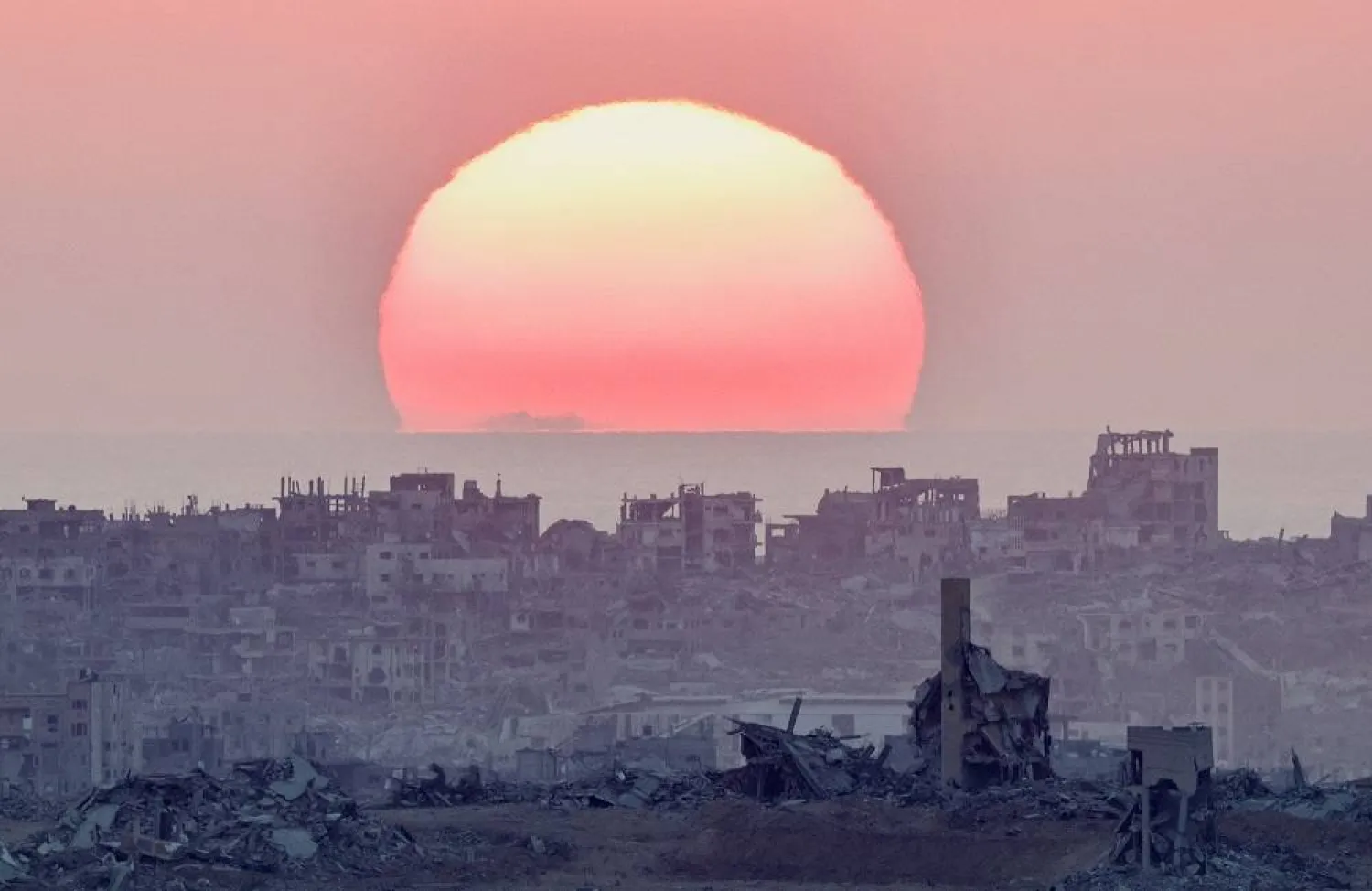
The sun sets over north Gaza, as seen from the Israeli side of the border, July 28, 2025. (Reuters)
TT

Israeli Fire Kills Dozens in Gaza, Officials Say, as Aid Delivery Remains Chaotic After New Measures 

The sun sets over north Gaza, as seen from the Israeli side of the border, July 28, 2025. (Reuters)

Israeli strikes or gunfire killed at least 78 Palestinians across the Gaza Strip on Monday, including a pregnant woman whose baby was delivered after her death but also died, local health officials said. Dozens were killed while seeking food, even as Israel moved to ease restrictions on the entry of aid.

Under mounting pressure over the spiraling hunger crisis in Gaza, Israel said over the weekend that the military would pause operations in Gaza City, Deir al-Balah and Muwasi for 10 hours a day and designate secure routes for aid delivery. International airdrops of aid have also resumed.

Aid agencies say the new measures are not enough to counter worsening starvation in the territory.

Martin Penner, a spokesperson for the UN food agency, told The Associated Press that all 55 of its aid trucks that entered on Sunday were unloaded by crowds before reaching their destination. Another UN official said nothing on the ground has changed and no alternative routes were allowed.

Israel said it would continue military operations alongside the new humanitarian measures.

Newborn dies after complex surgery

A baby girl died hours after being delivered in a complex emergency cesarean. She had been placed in an incubator and was breathing with assistance from a ventilator, AP footage showed.

Her mother, Soad al-Shaer, who had been seven months pregnant with her, was among 12 Palestinians killed in an Israeli airstrike on a house and neighboring tents in the Muwasi area of Khan Younis, according to Nasser Hospital, which received the bodies.

Another strike hit a two-story house in Khan Younis, killing at least 11 people, more than half of them women and children, according to the hospital. At least five others were killed in strikes elsewhere in Gaza, according to other hospitals.

The Israeli military did not immediately respond to a request for comment on most of the strikes. It said it was not aware of one strike in Gaza City during the pause that health officials said killed one person.

Israel says it only targets fighters and blames civilian deaths on Hamas because the gunmen operate in densely populated areas. The daily airstrikes across the territory frequently kill women and children.

Israel allows more aid to enter

Images of emaciated children have sparked outrage around the world, including from Israel's close allies. US President Donald Trump on Sunday called the images of emaciated and malnourished children in Gaza “terrible.”

Israel has restricted aid to varying degrees throughout the war. In March, it cut off the entry of all goods, including fuel, food and medicine, to pressure Hamas to free hostages.

Israel partially lifted those restrictions in May but also pushed ahead on a new US-backed aid delivery system that has been wracked by chaos and violence. Traditional aid providers have encountered a breakdown in law and order surrounding their deliveries.

COGAT, the Israeli military body in charge of coordinating aid shipments, said UN agencies collected 120 trucks for distribution on Sunday and that another 180 trucks had been allowed into Gaza.

The United Nations and aid groups say the territory needs 500-600 trucks a day to meet its needs. Israel's blockade and military operations have destroyed nearly all food production in the territory of roughly 2 million Palestinians.

Aid groups say airdrops are ineffective

Also on Monday, two air force planes from Jordan and the United Arab Emirates airdropped 17 tons of humanitarian aid in Gaza — an amount that would fill less than a single aid truck.

Aid groups say airdrops are often ineffective and dangerous, with falling parcels landing on people or in combat zones or other dangerous areas.

“At the moment, 2 million people are trapped in a tiny piece of land, which makes up just 12% of the whole strip; if anything lands in this area, people will inevitably be injured,” said Jean Guy Vataux, emergency coordinator in Gaza for Doctors Without Borders.

“If the airdrops land in areas where Israel has issued displacement orders, people will be forced to enter militarized zones, once again risking their lives for food,” he added.

The head of the UN agency for Palestinian refugees, Philippe Lazzarini, warned that airdrops are “expensive, inefficient and can even kill starving civilians,” and would not address the crisis.

Dozens killed seeking aid, officials say

At least 25 people were killed by Israeli forces while seeking aid from a truck convoy passing through the southern Gaza Strip, according to health officials and witnesses. There was no immediate comment from the Israeli military.

Four children were among those killed, according to records at Nasser Hospital, which received the bodies. The shooting occurred in a military corridor Israel has carved out between the southern cities of Khan Younis and Rafah. It was not immediately clear who had supplied the convoy.

Survivors at the hospital said Israeli forces had fired toward the crowds. More than 1,000 Palestinians have been killed by Israeli fire while seeking aid since May, according to the UN human rights office, witnesses and local health officials.

The Israeli military has said it only fires warning shots at people who approach its forces.

The Awda hospital in central Gaza said it received the bodies of seven Palestinians who it said were killed by Israeli fire close to an aid distribution site run by the Gaza Humanitarian Foundation, an Israeli-backed American contractor. The hospital said 20 others were wounded close to the site. GHF did not immediately respond to a request for comment.

Fares Awad, head of the Gaza Health Ministry’s emergency service, said at least five Palestinians were killed and about 30 others were wounded by Israeli gunfire while waiting for aid trucks from the Zikim Crossing near Gaza City.

Hamas started the war with its Oct. 7, 2023, attack, in which Palestinian fighters killed some 1,200 people and abducted 251 others. They still hold 50, and Israel believes that more than half the remaining hostages are dead. Most of the rest were released in ceasefires or other deals.

Israel’s retaliatory offensive has killed more than 59,800 Palestinians, according to Gaza’s Health Ministry. Its count doesn’t distinguish between fighters and civilians. The ministry operates under the Hamas government. The UN and other international organizations see it as the most reliable source of data on casualties.



Israeli Fire Kills 11, Including Journalists, Gaza Health Officials Say

 Mourners react during the funeral of Palestinians who, according to medics, were killed by Israeli strikes on Wednesday, at Al-Aqsa Martyrs Hospital, in Deir al-Balah, central Gaza Strip, January 21, 2026. REUTERS/Mahmoud Issa
Mourners react during the funeral of Palestinians who, according to medics, were killed by Israeli strikes on Wednesday, at Al-Aqsa Martyrs Hospital, in Deir al-Balah, central Gaza Strip, January 21, 2026. REUTERS/Mahmoud Issa
TT

Israeli Fire Kills 11, Including Journalists, Gaza Health Officials Say

 Mourners react during the funeral of Palestinians who, according to medics, were killed by Israeli strikes on Wednesday, at Al-Aqsa Martyrs Hospital, in Deir al-Balah, central Gaza Strip, January 21, 2026. REUTERS/Mahmoud Issa
Mourners react during the funeral of Palestinians who, according to medics, were killed by Israeli strikes on Wednesday, at Al-Aqsa Martyrs Hospital, in Deir al-Balah, central Gaza Strip, January 21, 2026. REUTERS/Mahmoud Issa

Israeli fire killed 11 Palestinians, including two boys and three journalists, in Gaza on Wednesday, local medics ​said, and the Israeli military said it had "eliminated" a Palestinian militant who posed a threat to soldiers.

In the latest violence disrupting a brittle, three-month-old ceasefire, Palestinian health officials said an Israeli airstrike killed three Palestinian journalists travelling in a car in the central Gaza Strip.

The three were on an assignment sponsored by the Egyptian Committee, which supervises Egypt's relief work in Gaza, to film tent encampments built by Egypt for displaced Palestinians, other local journalists told Reuters.

An Egyptian security source confirmed the vehicle belonged to the committee but gave no further details. The Israeli military did not immediately respond to a request ‌for comment.

Israel and Hamas ‌have traded blame for multiple breaches of the October truce after ‌two ⁠years ​of war ‌that devastated Gaza and caused a humanitarian disaster, and remain at odds over the next steps in US President Donald Trump's 20-point peace plan.

Earlier on Wednesday, Palestinian medics said three people, including a 10-year-old boy, were killed as a result of Israeli tank shelling east of Deir Al-Balah in central Gaza. Two others, a boy of 13 and a woman, were killed in two Israeli shooting incidents in eastern Khan Younis in Gaza's south, they said.

Three other Palestinians were killed in other shootings across the coastal enclave, taking Wednesday's ⁠death toll to at least 11, the health ministry of the Hamas-run Gaza said.

Residents said the two incidents occurred in Palestinian-controlled areas. The ‌ceasefire brought about a partial Israeli military withdrawal, leaving Israeli forces holding ‍about 53% of the enclave, but they ‍have been gradually expanding their presence in recent weeks, leading to further displacement of Palestinian families, residents ‍told Reuters.

There was also no immediate Israeli military comment on the two incidents.

Earlier on Wednesday, it said in a statement that Israeli forces had killed a "terrorist" who entered an area under their control, posing an imminent threat to soldiers operating there.

TRUMP PLAN STRUGGLES TO MOVE BEYOND FIRST STAGE

The US-brokered October deal has not progressed beyond ​the first-phase ceasefire, under which major fighting stopped, some Israeli forces pulled back, and Hamas freed hostages in return for Palestinian detainees and convicted prisoners.

Under future phases whose details ⁠have yet to be hammered out, Hamas is supposed to disarm, Israeli forces withdraw further and an internationally backed administration installed to rebuild the ruined, densely populated territory.

But no timetable has been set to implement the plan.

Trump was due on Thursday to preside over a ceremony celebrating the Board of Peace, a group he formed with the stated goal of redeveloping the coastal enclave.

Israel says it can only move into the second phase after Hamas hands over the remains of the last Israeli hostage.

On Wednesday, Hamas Gaza spokesperson Hazem Qassem said the Islamist group had shared all information it had on the body of the last hostage and searched for it but in vain, blaming what it called Israeli military obstruction.

More than 460 Palestinians and three Israeli soldiers have been reported killed in clashes since the ceasefire took effect.


Egyptian President Says Palestinian Cause Remains Top Priority

Egypt's President Abdel Fattah al-Sisi delivers a speech during the World Economic Forum (WEF) annual meeting in Davos on January 21, 2026.  (AFP)
Egypt's President Abdel Fattah al-Sisi delivers a speech during the World Economic Forum (WEF) annual meeting in Davos on January 21, 2026. (AFP)
TT

Egyptian President Says Palestinian Cause Remains Top Priority

Egypt's President Abdel Fattah al-Sisi delivers a speech during the World Economic Forum (WEF) annual meeting in Davos on January 21, 2026.  (AFP)
Egypt's President Abdel Fattah al-Sisi delivers a speech during the World Economic Forum (WEF) annual meeting in Davos on January 21, 2026. (AFP)

Egyptian President Abdel Fattah al-Sisi on Wednesday said the Palestinian cause is still “at the forefront of priorities” in the Middle East.

He told a panel at Davos that resolving Palestinian cause “is the core of regional stability, and a cornerstone to achieve a just and comprehensive peace.”

The Egyptian leader lauded US President Donald Trump’s efforts to help reach a ceasefire that stropped the Israel-Hamas war in Gaza in October.

The two leaders are expected to meet at Davos, said the Egyptian Presidency on Tuesday.

This ‌will be ‌the first ‌meeting ⁠between ​the ‌two leaders since the US announced it was launching the second phase of its plan to end the war in Gaza.

Sisi and ⁠Trump met in the ‌Red Sea resort ‍of Sharm ‍el-Sheikh in October during a ‍summit convened by Egypt to sign a ceasefire deal aimed at ending the ​war.


Israel’s Netanyahu Agrees to Join Trump’s Board of Peace

12 July 2025, Jerusalem: Benjamin Netanyahu, Prime Minister of Israel, speaks at the press conference after talks at the seat of government. (dpa)
TT

Israel’s Netanyahu Agrees to Join Trump’s Board of Peace

12 July 2025, Jerusalem: Benjamin Netanyahu, Prime Minister of Israel, speaks at the press conference after talks at the seat of government. (dpa)

Prime Minister Benjamin Netanyahu of Israel said Wednesday he had agreed to join US President Donald Trump’s Board of Peace, after his office earlier criticized makeup of the board’s executive committee.

The board, chaired by Trump, was originally envisioned as a small group of world leaders overseeing the Gaza ceasefire plan. The Trump administration’s ambitions have appeared to balloon into a more sprawling concept, with Trump extending invitations to dozens of nations and hinting it will soon broker global conflicts.

Netanyahu’s office had previously said the executive committee, which includes Türkiye, a key regional rival, wasn’t coordinated with the Israeli government and “is contrary to its policy,” without clarifying its objections.

Israel’s far-right finance minister, Bezalel Smotrich, has criticized the board and called for Israel to take unilateral responsibility for Gaza’s future.

Others who have joined the board are the UAE, Morocco, Vietnam, Belarus, Hungary, Kazakhstan and Argentina. Others, including the UK, Russia and the executive arm of the European Union, say they have received invitations but have not yet responded.

It came as Trump traveled to the World Economic Forum meeting in Davos, Switzerland, where he is expected to provide more details about the board. There are many unanswered questions. It was not immediately clear how many or which other leaders would receive invitations.

When asked by a reporter Tuesday if the board should replace the UN, Trump said, “It might.”

He asserted that the world body “hasn’t been very helpful” and “has never lived up to its potential” but also said the UN should continue ”because the potential is so great.”

That has created controversy, with some saying Trump is trying to replace the UN. French Foreign Minister Jean-Noel Barrot said Tuesday, “Yes to implementing the peace plan presented by the president of the United States, which we wholeheartedly support, but no to creating an organization as it has been presented, which would replace the United Nations.”

Told late Monday that French President Emmanuel Macron was unlikely to join, Trump said, “Well, nobody wants him because he’s going to be out of office very soon.” A day later, Trump called Macron “a friend of mine”, but reiterated that the French leader is “not going to be there very much longer.”

The executive board’s members include US Secretary of State Marco Rubio, Trump envoy Steve Witkoff, Trump’s son-in-law Jared Kushner, former British Prime Minister Tony Blair, Apollo Global Management CEO Marc Rowan, World Bank President Ajay Banga, and Trump’s deputy national security adviser Robert Gabriel.

The White House also announced the members of another board, the Gaza Executive Board, which, according to the ceasefire, will be in charge of implementing the tough second phase of the agreement. That includes deploying an international security force, disarming Hamas and rebuilding the war-devastated territory.

Nickolay Mladenov, a former Bulgarian politician and UN Mideast envoy, is to serve as the Gaza executive board’s representative overseeing day-to-day matters. Additional members include: Witkoff, Kushner, Blair, Rowan, Turkish Foreign Minister Hakan Fidan; Qatari diplomat Ali Al-Thawadi; Hassan Rashad, director of Egypt’s General Intelligence Agency; Emirati minister Reem Al-Hashimy; Israeli businessman Yakir Gabay; and Sigrid Kaag, the Netherlands’ former deputy prime minister and a Mideast expert.

The board also will supervise a newly appointed committee of Palestinian technocrats who will be running Gaza’s day-to-day affairs.