


'If the Baby Could Speak, She Would Scream': The Risky Measures to Feed Small Babies in Gaza

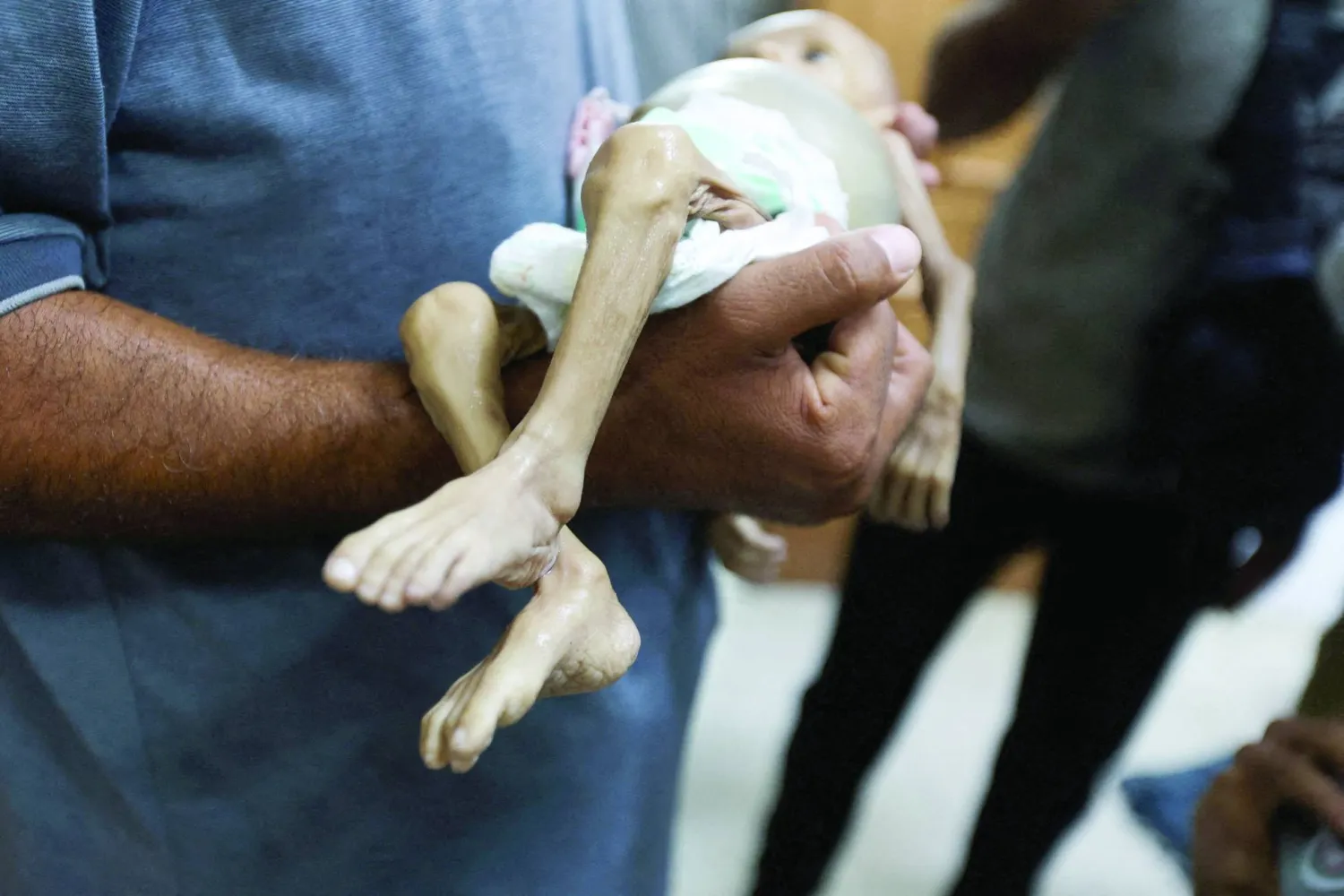
FILE PHOTO:  SENSITIVE MATERIAL. THIS IMAGE MAY OFFEND OR DISTURB    A man carries the body of Palestinian baby Zainab Abu Haleeb, who died due to malnutrition, according to health officials, at Nasser Hospital in Khan Younis, southern Gaza Strip, July 26, 2025. REUTERS/Ramadan Abed
FILE PHOTO: SENSITIVE MATERIAL. THIS IMAGE MAY OFFEND OR DISTURB A man carries the body of Palestinian baby Zainab Abu Haleeb, who died due to malnutrition, according to health officials, at Nasser Hospital in Khan Younis, southern Gaza Strip, July 26, 2025. REUTERS/Ramadan Abed
TT

'If the Baby Could Speak, She Would Scream': The Risky Measures to Feed Small Babies in Gaza

FILE PHOTO:  SENSITIVE MATERIAL. THIS IMAGE MAY OFFEND OR DISTURB    A man carries the body of Palestinian baby Zainab Abu Haleeb, who died due to malnutrition, according to health officials, at Nasser Hospital in Khan Younis, southern Gaza Strip, July 26, 2025. REUTERS/Ramadan Abed
FILE PHOTO: SENSITIVE MATERIAL. THIS IMAGE MAY OFFEND OR DISTURB A man carries the body of Palestinian baby Zainab Abu Haleeb, who died due to malnutrition, according to health officials, at Nasser Hospital in Khan Younis, southern Gaza Strip, July 26, 2025. REUTERS/Ramadan Abed

In a makeshift tent on a Gazan beach, three-month-old Muntaha's grandmother grinds up chickpeas into the tiniest granules she can to form a paste to feed the infant, knowing it will cause her to cry in pain, in a desperate race to keep the baby from starving.

"If the baby could speak, she would scream at us, asking what we are putting into her stomach," her aunt, Abir Hamouda said.

Muntaha grimaced and squirmed as her grandmother fed her the paste with a syringe, Reuters reported.

Muntaha's family is one of many in Gaza facing dire choices to try to feed babies, especially those below the age of six months who cannot process solid food.

Infant formula is scarce after a plummet in aid access to Gaza. Many women cannot breastfeed due to malnourishment, while other babies are separated from their mothers due to displacement, injury or, in Muntaha's case, death.

Her family says the baby's mother was hit by a bullet while pregnant, gave birth prematurely while unconscious in intensive care, and died a few weeks later. The director of the Shifa Hospital described such a case in a Facebook post on April 27, four days after Muntaha was born.

"I am terrified about the fate of the baby," said her grandmother, Nemah Hamouda. "We named her after her mother...hoping she can survive and live long, but we are so afraid, we hear children and adults die every day of hunger."

Muntaha now weighs about 3.5 kilograms, her family said, barely more than half of what a full-term baby her age would normally weigh. She suffers stomach problems like vomiting and diarrhoea after feeding.

Health officials, aid workers and Gazan families told Reuters many families are feeding infants herbs and tea boiled in water, or grinding up bread or sesame. Humanitarian agencies also reported cases of parents boiling leaves in water, eating animal feed and grinding sand into flour.

Feeding children solids too early can disrupt their nutrition, cause stomach problems, and risk choking, pediatric health experts say.

"It's a desperate move to compensate for the lack of food," said UNICEF spokesperson Salim Oweis. "When mothers can't breastfeed or provide proper infant formula they resort to grinding chickpeas, bread, rice, anything that they can get their hands on to feed their children... it is risking their health because these supplies are not made for infants to feed on."

BABY BOTTLES WITHOUT MILK

Gaza's spiraling humanitarian crisis prompted the main world hunger monitoring body on Tuesday to say a worst-case scenario of famine is unfolding and immediate action is needed to avoid widespread death. Images of emaciated Palestinian children have shocked the world.

Gazan health authorities have reported more and more people dying from hunger-related causes. The total so far stands at 154, among them 89 children, most of whom died in the last few weeks.

With the international furor over Gaza's ordeal growing, Israel announced steps over the weekend to ease aid access. But the UN World Food Program said on Tuesday it was still not getting the permissions it needed to deliver enough aid.

Israel and the US accuse the Hamas group of stealing aid - which the group deny - and the UN of failing to prevent it. The UN says it has not seen evidence of Hamas diverting much aid. Hamas accuses Israel of causing starvation and using aid as a weapon, which the Israeli government denies.

Humanitarian agencies say there is almost no infant formula left in Gaza. The cans available in the market cost over $100 – impossible to afford for families like Muntaha’s, whose father has been jobless since the war closed his falafel business and displaced the family from their home.

In the pediatric ward of Al-Aqsa Martyrs Hospital in the central Gaza city of Deir al-Balah, the infant formula supply is mostly depleted.

One mother showed how she poured thick tahini sesame paste into a bottle and mixed it with water.

"I am using this instead of milk, to compensate her for milk, but she won't drink it," said Azhar Imad, 31, the mother of four-month-old Joury.

"I also make her fenugreek, anise, caraway, any kind of herbs (mixed with water)," she said, panicked as she described how instead of nourishing her child, these attempts were making her sick.

Medical staff at the hospital spoke of helplessness, watching on as children's health deteriorated with no way to safely feed them.

"Now, children are being fed either water or ground hard legumes, and this is harmful for children in Gaza," said doctor Khalil Daqran.

"If the hunger continues ... within three or four days, if the child doesn't get access to milk immediately, then they will die," he said.



Reports: US to Withdraw All Troops from Syria

A US Army patrol in the Syrian city of Qamishli (Reuters file photo)
TT

Reports: US to Withdraw All Troops from Syria

A US Army patrol in the Syrian city of Qamishli (Reuters file photo)

The United States is planning to withdraw all of its 1,000 troops from Syria over the next two months, according to US media reports.

Washington will end its presence in the country after the Syrian government extended its control over the country and the Kurdish-led Syrian Democratic Forces once key to fighting ISIS pledged to integrate into the state, the Wall Street Journal reported.

Television network CBS also reported on the plan, citing unnamed US officials.

The decision comes after US forces recently withdrew from some bases
in Syria including Al-Tanf and Al-Shadadi, which were used in the US-led international coalition's fight against ISIS, AFP reported.

The US is building up its military capabilities near Iran, where officials have vowed to respond to any attack by laying siege to American military outposts in the region.

US media reported Wednesday that Washington will be ready to launch strikes against Iran as early as this weekend, though Trump has reportedly not made a final decision yet.

The Pentagon did not immediately respond to a request for comment.


Canada Eases Sanctions on Syria

13 February 2026, Bavaria, Munich: Anita Anand, Minister of Foreign Affairs of Canada, arrives at the Bavarian Hof for the 62nd Munich Security Conference. Photo: Felix Hörhager/dpa
TT

Canada Eases Sanctions on Syria

13 February 2026, Bavaria, Munich: Anita Anand, Minister of Foreign Affairs of Canada, arrives at the Bavarian Hof for the 62nd Munich Security Conference. Photo: Felix Hörhager/dpa

Canadian Minister of Foreign Affairs Anita Anand said on Wednesday that Canada had amended its economic sanctions on Syria ‌to ease ‌restrictions related ‌to the ⁠import and export ⁠of goods, investment activities and the provision of financial and other ⁠services, according to Reuters.

"The amendments also ‌remove ‌24 entities and ‌one individual from ‌the Syria Regulations to reduce barriers to economic activity and ‌to enable transactions with state-affiliated entities ⁠in ⁠key sectors critical to Syria’s recovery," Anand said in a statement.


Tetteh: Despite UN Engagement, No Progress in Libya Roadmap

Head of the United Nations Support Mission in Libya Hanna Tetteh Getty)
TT

Tetteh: Despite UN Engagement, No Progress in Libya Roadmap

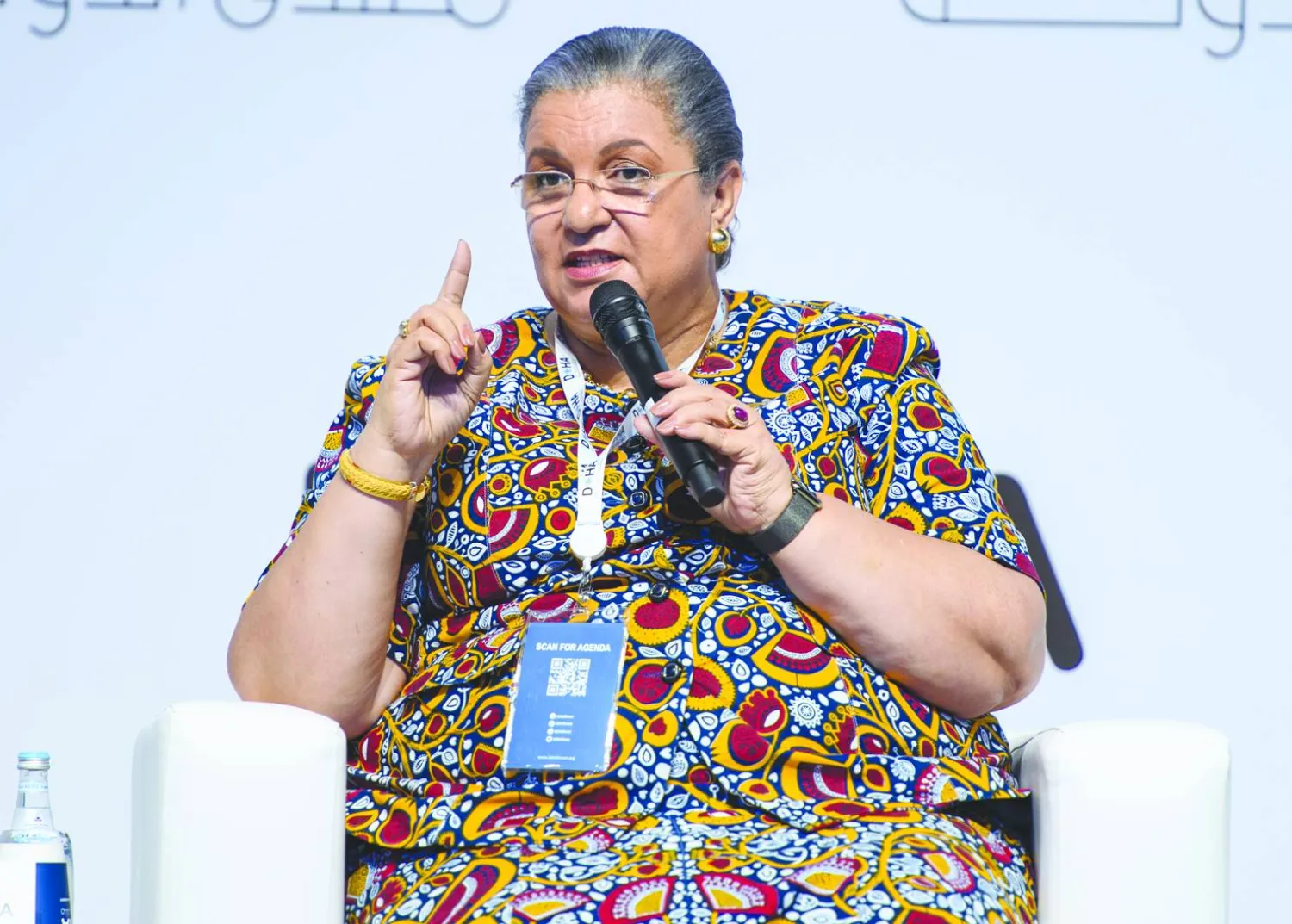
Head of the United Nations Support Mission in Libya Hanna Tetteh Getty)

The UN’s top envoy for Libya, Hanna Tetteh, has informed the Security Council that despite active United Nations engagement, the Libyan House of Representatives and the High Council of State have failed to make progress on the first steps of the agreed political roadmap, including establishing a mechanism to select the board of the High National Elections Commission (HNEC) and advancing electoral legislation.

Briefing the Council in New York on Wednesday, the Special Representative of the Secretary-General said: “Their inability to use their agreed mechanism and follow-on unilateral actions has further eroded their credibility."

Tetteh added that Libyan public perceptions reflect a growing belief that the bodies are “unable or unwilling” to deliver.

She told Council members that she has begun consultations with key actors on an alternative two-step approach aimed at restoring momentum. Should a smaller group of Libyan representatives fail to agree on the roadmap’s milestones, she warned, a broader convening would be required. “We cannot wait indefinitely,” she emphasized.

The UN envoy also issued a stark warning about escalating tensions within Libya’s judicial system.

She said “contradictory, parallel judicial decisions put into jeopardy the unity of the legal and judicial systems,” cautioning that the situation “is a red line that if crossed can undermine the unity of the state.”

She urged Libyan leaders to refrain from further escalatory steps and called on the Council to hold accountable those taking actions that threaten to fracture the judiciary.

Tetteh also warned that transnational criminal networks continue to expand, turning Libya into a major transit hub for drug trafficking and sustaining illicit economies linked to corruption and armed groups.