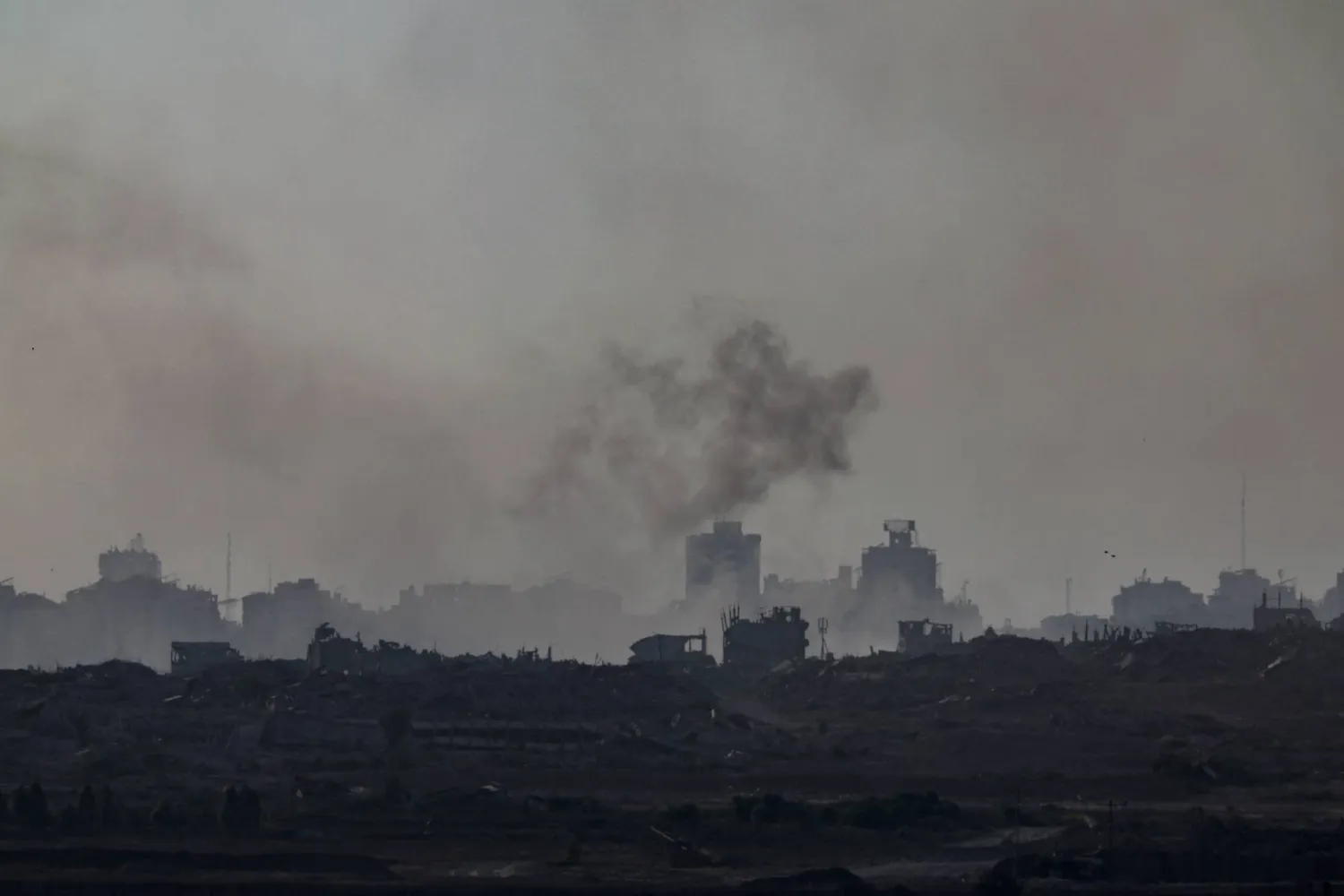

Israel said Friday it will intensify its 22-month war with Hamas by taking over Gaza City, drawing a dismissal from the group and renewed international calls to end the conflict, while stirring fears for Palestinian civilians and Israeli hostages still held in Gaza.
Israel’s air and ground war has killed tens of thousands of people in Gaza, displaced most of the population, destroyed vast areas and pushed the territory toward famine. The timing of another major ground operation is unclear. It will likely require mobilizing thousands of troops and forcibly evacuating civilians, almost certainly exacerbating the humanitarian catastrophe.
An official familiar with the plans to take over Gaza City said the operation would be “gradual” and that there is no start date. The official spoke on condition of anonymity to discuss sensitive matters.
Mediators from Egypt and Qatar are working on a new framework that will include the release of all hostages — dead and alive — in one go in return for an end of the war in Gaza and the withdrawal of Israeli forces from the strip, two Arab officials told The Associated Press.
Before Israel's Security Cabinet approved the plan to take over Gaza City, Prime Minister Benjamin Netanyahu had outlined more sweeping plans Thursday in an interview with Fox News, saying Israel planned to take control of all of Gaza. Israel already controls around three-quarters of the territory.
Hamas rejected Israel’s plans. “Expanding of aggression against our Palestinian people will not be a walk in the park,” the group said in a statement.
United Nations Secretary-General Antonio Guterres said Friday that Israel's Gaza control plan was a "dangerous escalation" that risked worsening conditions for ordinary Palestinians, his spokesperson said.
"The Secretary-General is gravely alarmed by the decision of the Israeli Government to 'take control of Gaza City'. This decision marks a dangerous escalation and risks deepening the already catastrophic consequences for millions of Palestinians," Guterres's spokesperson said in a statement.
Several countries have requested an emergency meeting of the UN Security Council over Israeli plans for Gaza City, two diplomatic sources told AFP Friday.
"As we speak, there will be a number of countries on our behalf and on their own behalf (that) will be requesting a meeting of the Security Council," the Palestinian ambassador to the UN Riyad Mansour had told reporters earlier.
Netanyahu had signaled plans for even broader war
International powers, including Israeli allies, have stepped up criticism of the war amid mounting shock over media reports showing starvation.
Germany said Friday it would not authorize the export of military equipment that could be used in Gaza until further notice.
Tensions could rise further if Netanyahu follows through on the more sweeping plans to take control of the entire territory, two decades after Israel’s unilateral withdrawal.
Asked in the interview with Fox News ahead of the Security Cabinet meeting if Israel would “take control of all of Gaza,” Netanyahu replied: “We intend to, in order to assure our security, remove Hamas there.” He added that Israel did not intend to “keep it.”
Israel's new plan may be aimed in part at pressuring Hamas to accept a ceasefire on Israel's terms.
It may also reflect the reservations of Israel’s military chief of staff, Lt. Gen. Eyal Zamir, who reportedly warned that expanding operations would endanger the remaining 20 or so living hostages held by Hamas and further strain Israel’s army after nearly two years of regional wars.
The military “will prepare to take control of Gaza City while providing humanitarian aid to the civilian population outside the combat zones,” Netanyahu's office said in a statement after the Security Cabinet meeting.
Amir Avivi, a retired brigadier general and chairman of Israel’s Defense and Security Forum, estimated it would take less than three months to mobilize some 30,000 troops, evacuate Palestinian civilians and take over Gaza City.
Hamas-led fighters triggered the war when they stormed into Israel on Oct. 7, 2023, killing around 1,200 people and abducting 251 people. Most of the hostages have been released in ceasefires or other deals but 50 remain inside Gaza. Israel believes around 20 of them to be alive.
Israel’s retaliatory campaign has killed over 61,000 Palestinians, according to Gaza’s Health Ministry, which does not say how many were fighters or civilians. The ministry is part of the Hamas-run government and staffed by medical professionals.
The United Nations and independent experts view the ministry’s figures as the most reliable estimate of casualties. Israel has disputed them without offering a toll of its own.
Mediators try again to end the war
The yet-to-be finalized framework for a ceasefire aims to address the contentious issue of what to do with Hamas’ weapons, with Israel seeking full disarmament and Hamas refusing. The official directly involved in the efforts said discussions are underway about “freezing arms,” which may involve Hamas retaining but not using its weapons. It also calls for the group to relinquish power in the strip.
A Palestinian-Arab committee would run Gaza and oversee the reconstruction efforts until the establishment of a Palestinian administration with a new police force, trained by two US allies in the Middle East, to take over the strip, the official said. It is unclear what role the Western-backed Palestinian Authority would play.
The second official said the US administration has been briefed on the broad lines of the framework.
A senior Hamas official, speaking on condition of anonymity because he wasn’t authorized to brief the media, said the group has yet to receive details on the latest efforts to revive ceasefire talks.
AP reached out to the governments in Qatar, Egypt and Israel as well as the White House for comment.
US envoy Steve Witkoff told hostage families during his recent visit that Israel was shifting its approach to pursue a comprehensive “all-or-nothing” deal aimed at ending the war and securing the release of hostages, a person who attended the meeting told the AP, speaking on the condition of anonymity as they were not authorized to speak about the private meeting.
‘There is nothing here to occupy’
Israel has repeatedly bombarded Gaza City and carried out numerous raids there, only to return to neighborhoods again and again as fighters regrouped. Today, it is one of the few areas in Gaza that hasn’t been turned into an Israeli buffer zone or placed under evacuation orders.
Umm Youssef from Gaza City said she had left the city for over 16 months before returning to her home.
“The area is all rubble. Rubble is an overstatement, it is a sandpile. There is nothing here to occupy. There is no life here,” she said.
A major ground operation there could displace tens of thousands of people and further disrupt efforts to deliver food to the hunger-stricken territory.
It’s unclear how many people are still in Gaza City, the territory's largest before the war. Hundreds of thousands fled under evacuation orders in the opening weeks of the conflict, but many returned during a ceasefire at the start of this year.