


Syria’s Minorities Demand Decentralized State, Constitution That Guarantees Pluralism
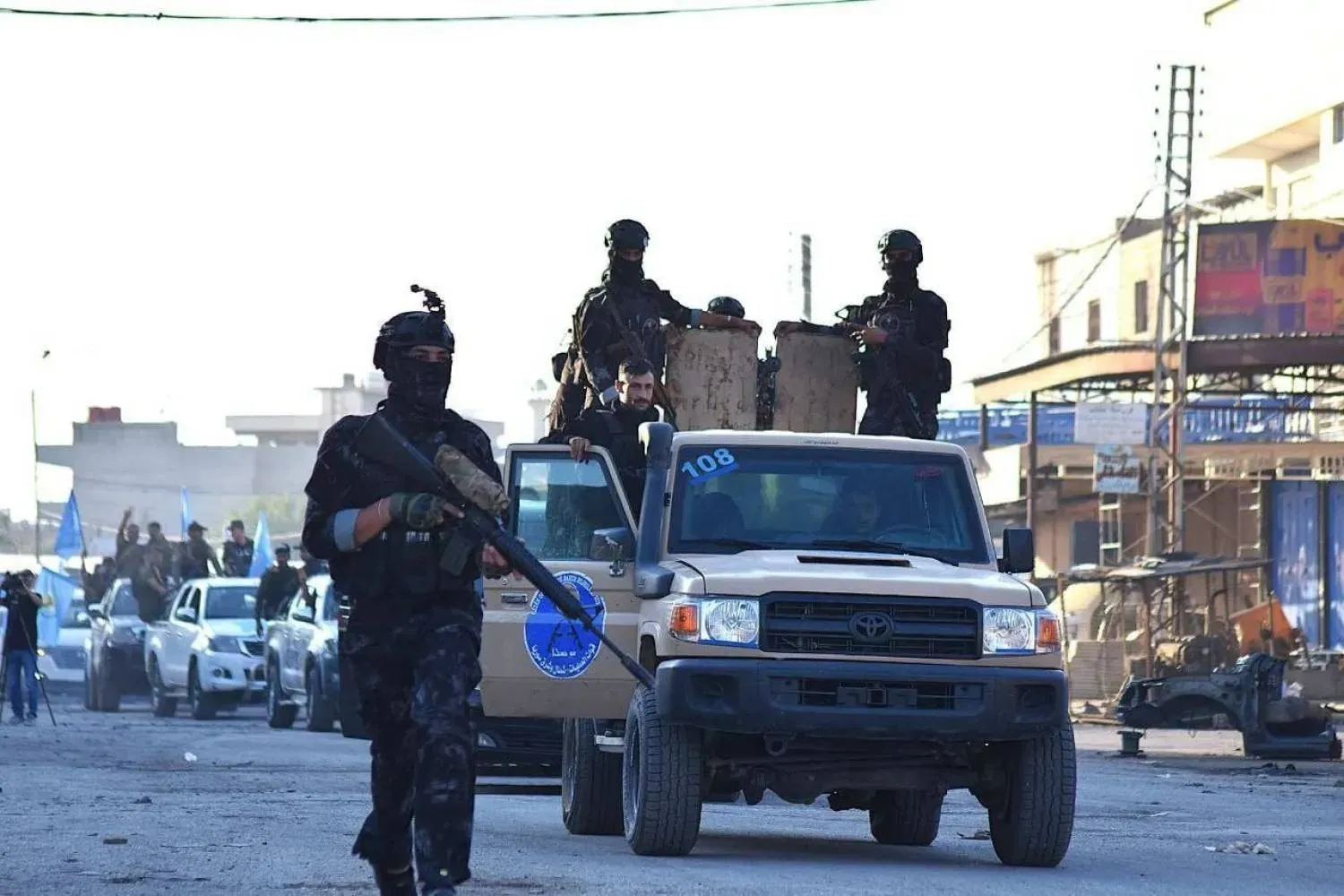
SDF forces in Hasakeh, Syria. (Asharq Al-Awsat file)
TT
TT
Syria’s Minorities Demand Decentralized State, Constitution That Guarantees Pluralism
SDF forces in Hasakeh, Syria. (Asharq Al-Awsat file)
Hundreds of representatives of Syria’s various ethnic and religious groups called Friday for the formation of a decentralized state and the drafting of a new constitution that guarantees religious, cultural and ethnic pluralism.
The declaration came at the conclusion of a one-day conference where some 400 representatives of Syria's ethnic and religious minorities gathered in an attempt to assert the rights of their communities in the country’s evolving political framework following the fall of President Bashar al-Assad last December.
The transition is to include elections scheduled for September and the eventual drafting of a constitution — a process that could take years. The post-Assad transition has so far been marred by violence against minorities, raising fears about the future.
Ghazal Ghazal, the spiritual leader of Syria’s Alawite minority, to whom Assad belongs, called for setting up a decentralized or federal system in Syria that protects religious and cultural rights of all components of the Syrian people.
The conference was held in Hasakeh, a northeastern Syrian city under the control of the Kurdish-led and US-backed Syrian Democratic Forces.
Elham Ahmad, a senior official with the autonomous administration in northeast Syria, said she hopes to see the emergence of a Syria built on cultural and ethnic pluralism.
“This conference sends a message of civil peace and national reconciliation,” she said.
Hakemat Habib, one of the conference organizers, said that central governments and “tyrannical regimes” over the past decades have failed and that a democratic and decentralized state agreed upon by all Syrians is the only way to move forward. “Syrian identity includes all Syrians,” he said.
Druze spiritual leader Sheikh Hikmat Al-Hijri, whose fighters clashed with pro-government gunmen last month, told the conference in a televised speech that “pluralism is not a threat but a treasure that strengthens unity.”
The interim government in Damascus did not comment on the conference.
Shells of Unknown Origin Land Near Military Airport in Damascus, Syrian State TV Sayshttps://english.aawsat.com/arab-world/5217749-shells-unknown-origin-land-near-military-airport-damascus-syrian-state-tv-says
Smoke billows following an Israeli strike on Damascus over the summer. (Reuters file)
TT
TT
Shells of Unknown Origin Land Near Military Airport in Damascus, Syrian State TV Says
Smoke billows following an Israeli strike on Damascus over the summer. (Reuters file)
Shells of unknown origin fell in the vicinity of Syria's Mezzah military airport in the capital Damascus on Tuesday, the state-run Al Ekhbariya TV reported.
Syria's state news agency earlier reported the sound of an explosion in the vicinity of Damascus and said the matter was under investigation.
The airbase sits at the gateway to parts of southern Syria.
Israeli Army Takes Journalists into a Tunnel in a Gaza City It Seized and Largely Flattenedhttps://english.aawsat.com/arab-world/5217718-israeli-army-takes-journalists-tunnel-gaza-city-it-seized-and-largely-flattened
Mattresses and a plastic chair lie on the floor inside a tunnel in Rafah, Gaza Strip, Monday, Dec. 8, 2025. (AP)
TT
TT
Israeli Army Takes Journalists into a Tunnel in a Gaza City It Seized and Largely Flattened
Mattresses and a plastic chair lie on the floor inside a tunnel in Rafah, Gaza Strip, Monday, Dec. 8, 2025. (AP)
One by one, the soldiers squeezed through a narrow entrance to a tunnel in southern Gaza. Inside a dark hallway, some bowed their heads to avoid hitting the low ceiling, while watching their step as they walked over or around jagged concrete, crushed plastic bottles and tattered mattresses.
On Monday, Israel's military took journalists into Rafah — the city at Gaza's southernmost point that troops seized last year and largely flattened — as the two-month-old Israel-Hamas ceasefire reaches a critical point. Israel has banned international journalists from entering Gaza since the war began more than two years ago, except for rare, brief visits supervised by the military, such as this one.
Soldiers escorted journalists inside a tunnel, which they said was one of Hamas' most significant and complex underground routes, connecting cities in the embattled territory and used by top Hamas commanders. Israel said Hamas had kept the body of a hostage in the underground passage: Hadar Goldin, a 23-year-old soldier who was killed in Gaza more than a decade ago and whose remains had been held there.
Hamas returned Goldin's body last month as part of a US-brokered ceasefire in the war triggered by the fighters' Oct. 7, 2023, attack on southern Israel in which 1,200 people were killed and hundreds taken hostage. Israel’s retaliatory offensive has killed more than 70,000 Palestinians, according to Gaza’s Health Ministry, which operates under the Hamas-run government. The ministry does not differentiate between civilians and combatants, but says roughly half the dead have been women and children.
Israel and Hamas are on the cusp of finishing the first phase of the truce, which mandated the return of all hostages, living and dead, in exchange for Palestinians held by Israel. The body of just one more hostage remains to be returned.
Mediators warn the second phase will be far more challenging since it includes thornier issues, such as disarming Hamas and Israel’s withdrawal from the strip. Israel currently controls more than half of Gaza.
Israeli Prime Minister Benjamin Netanyahu is set to travel to Washington this month to discuss those next steps with US President Donald Trump.
Buildings lie in ruins amidst the rubble in Rafah in the southern Gaza Strip, December 8, 2025. (Reuters)
Piles of rubble line Rafah's roads
Last year, Israel launched a major operation in Rafah, where many Palestinians had sought refuge from offensives elsewhere. Heavy fighting left much of the city in ruins and displaced nearly one million Palestinians. This year, when the military largely had control of the city, it systematically demolished most of the buildings that remained standing, according to satellite photos.
Troops also took control of and shut the vital Rafah crossing, Gaza’s only gateway to the outside world that was not controlled by Israel.
Israel said Rafah was Hamas’ last major stronghold and key to dismantling the group’s military capabilities, a major war aim.
On the drive around Rafah on Monday, towers of mangled concrete, wires and twisted metal lined the roads, with few buildings still standing and none unscathed. Remnants of people's lives were scattered the ground: a foam mattress, towels and a book explaining the Quran.
Last week, Israel said it was ready to reopen the Rafah crossing but only for people to leave the strip. Egypt and many Palestinians fear that once people leave, they won't be allowed to return. They say Israel is obligated to open the crossing in both directions.
Israel has said that entry into Gaza would not be permitted until Israel receives all hostages remaining in the strip.
Israeli soldiers gather next to the entrance of a tunnel where the army says the body of soldier Hadar Goldin was held in Rafah, Gaza Strip, Monday, Dec. 8, 2025. (AP)
Inside the tunnel
The tunnel that journalists were escorted through runs beneath what was once a densely populated residential neighborhood, under a United Nations compound and mosques. Today, Rafah is a ghost town. Underground, journalists picked their way around dangling cables and uneven concrete slabs covered in sand.
The army says the tunnel is more than 7 kilometers (4 miles) long and up to 25 meters (82 feet) deep and was used for storing weapons as well as long-term stays. It said top Hamas commanders were there during the war, including Mohammed Sinwar, who was believed to have run Hamas’ armed wing and was the younger brother of Yahya Sinwar, the Hamas leader who helped mastermind the Oct. 7 attack. Israel has said it has killed both of them.
“What we see right here is a perfect example of what Hamas did with all the money and the equipment that was brought into Gaza throughout the years," said Lt. Col. Nadav Shoshani. "Hamas took it and built an incredible city underground for the purposes of terror and holding bodies of hostages.”
Israel has long accused Hamas of siphoning off money for military purposes. While Hamas says the Palestinians are an occupied people and have a right to resist, the group also has a civilian arm and ran a government that provided services such as health care, a police force and education.
The army hasn’t decided what to do with the tunnel. It could seal it with concrete, explode it or hold it for intelligence purposes among other options.
Since the ceasefire began, three soldiers have been killed in clashes with about 200 Hamas fighters that Israeli and Egyptian officials say remain underground in Israeli-held territory.
Hamas has said communication with its remaining units in Rafah has been cut off for months and that it was not responsible for any incidents occurring in those areas.
Both Israel and Hamas have accused each other of repeated violations of the deal during the first phase. Israel has accused Hamas of dragging out the hostage returns, while Palestinian health officials say over 370 Palestinians have been killed in continued Israeli strikes since the ceasefire took effect.
Israel to Reopen Jordan Border Crossing for Passage of Aid and Goodshttps://english.aawsat.com/arab-world/5217624-israel-reopen-jordan-border-crossing-passage-aid-and-goods
Israel to Reopen Jordan Border Crossing for Passage of Aid and Goods
Allenby Bridge Crossing between West Bank and Jordan is closed, in the Israeli-occupied West Bank, September 24, 2025. REUTERS/Ammar Awad/File Photo
Israel is set to reopen the Allenby Crossing with Jordan to the passage of goods and aid on Wednesday, an Israeli security official said on Tuesday.
The border crossing has been closed to aid and goods since September, when a driver bringing humanitarian aid to Gaza opened fire and killed two Israeli military personnel before being killed by security forces, Reuters reported.
The security official said the crossing would have tightened screening for Jordanian drivers and truck cargo, and that a dedicated security force had been assigned to the crossing.
The Allenby Bridge is a key route for trade between Jordan and Israel and the only gateway for more than 3 million Palestinians in the Israeli-occupied West Bank to reach Jordan and the wider world.
The crossing reopened to passenger traffic shortly after the attack, but had remained closed to aid trucks. The UN says the crossing is a major route for bringing food, tents and other goods into Gaza.
لم تشترك بعد
انشئ حساباً خاصاً بك لتحصل على أخبار مخصصة لك ولتتمتع بخاصية حفظ المقالات وتتلقى نشراتنا البريدية المتنوعة
