
Syria’s judiciary has begun investigating four senior figures from the former regime accused of war crimes against Syrians, even as the National Transitional Justice Commission has yet to complete the formation of its council, raising questions over whether the move falls within a transitional justice framework, particularly in the absence of a dedicated law.
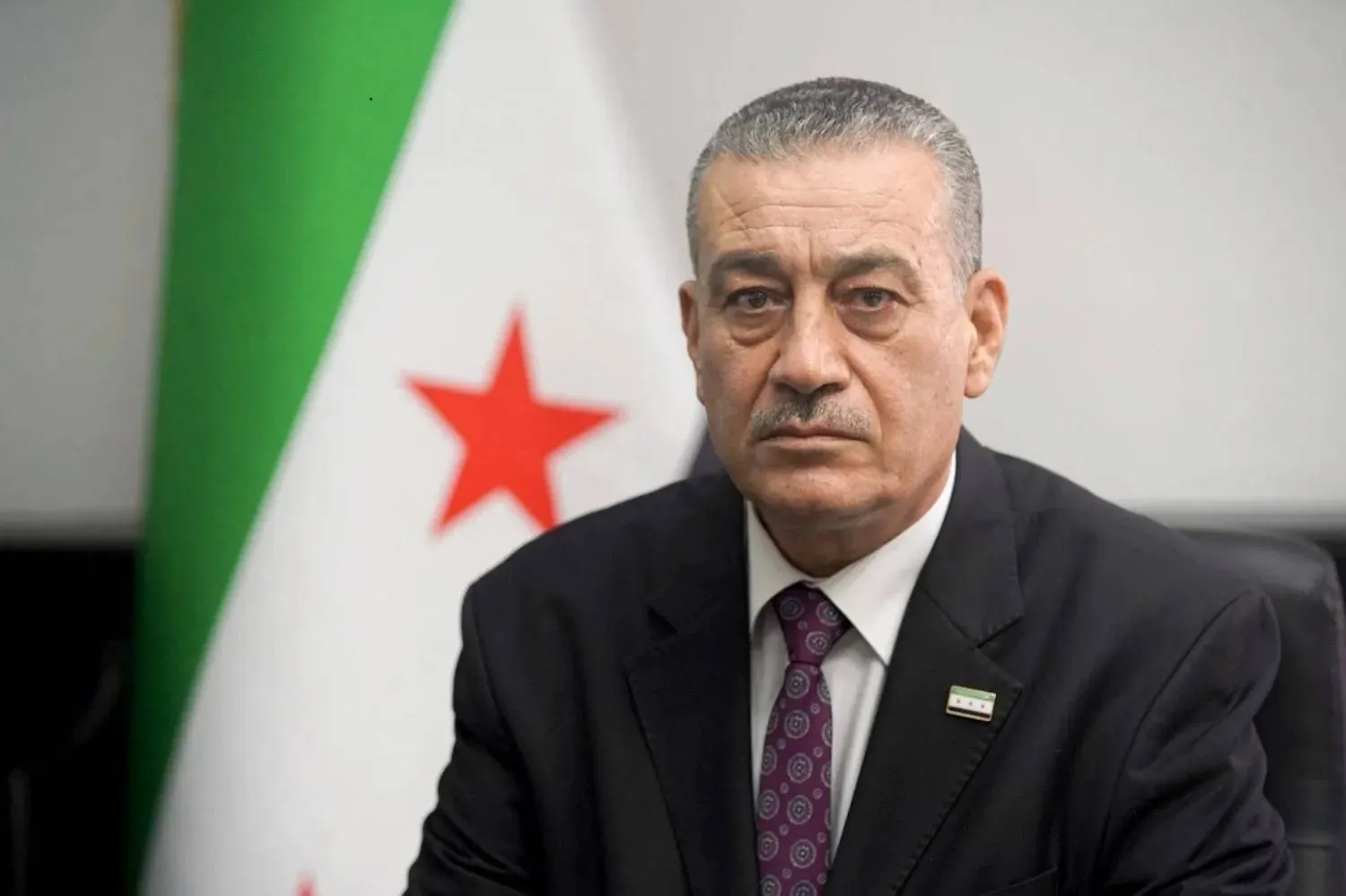
Commission head Brig. Gen. Abdul Basit Abdul Latif said the referrals are part of that process.
“Referring the four former regime figures to the courts falls within the path of transitional justice,” he told Asharq Al-Awsat, adding that the move was coordinated with the Ministry of Justice.
His remarks come amid doubts about the state’s willingness to hold former regime figures accountable.
Public Prosecutor Judge Hassan al-Turba said on July 30 that prosecutions had been launched against several defendants accused of crimes and violations against Syrians, as part of efforts to implement transitional justice, ensure accountability, and protect victims’ rights.
Those targeted include former officials under Bashar al-Assad: Atef Najib, Ahmad Badr al-Din Hassoun, Mohammad al-Shaar, and Ibrahim al-Huweija.
Justice process launched
On May 17, Syria’s president issued a decree establishing a transitional justice commission to uncover violations by the former regime, hold those responsible accountable, and provide redress to victims.
The decree describes transitional justice as a cornerstone for building a state governed by the rule of law, guaranteeing victims’ rights, and achieving national reconciliation.
The decree appointed Abdul Latif to lead the body and tasked him with forming a team and drafting internal regulations within 30 days. It grants the commission legal personality and financial and administrative independence, with authority to operate across Syria.
Abdul Latif, born in Deir al-Zor in 1963, studied law at the University of Aleppo and holds advanced degrees in police and legal sciences.
He headed the Qamishli district before defecting in 2012 and later served as secretary-general of the Syrian opposition National Coalition until the regime’s fall.
The commission will examine complaints related to the Assad government’s crackdown on protests that began in March 2011.
Alleged violations include chemical attacks, widespread aerial bombardment with barrel bombs, arbitrary detention, enforced disappearance, and systematic torture in detention centers, which rights groups say killed or disappeared hundreds of thousands of civilians.
Draft law in the works
Abdul Latif said a draft law on transitional justice and serious violations is being prepared and is expected after the upcoming parliamentary elections.
Trials will cover “all types of crimes defined in the decree,” including genocide, war crimes, torture, enforced disappearance, and the use of toxic and chemical gases, as defined under the Geneva Conventions.
On the prospect of prosecuting Bashar al-Assad and his brother Maher, who have fled abroad, Abdul Latif said Syrians are waiting for justice but warned that building legally sound cases will take time.
“Nothing is achieved easily,” he said.
Broad accountability
The commission is preparing to establish committees, compile case files, and refer them to the judiciary for the issuance of arrest warrants.Abdul Latif said it would work with international bodies to ensure justice and support for victims. Accountability will span both Hafez al-Assad and his son, covering 54 years of rule.
Abdul Latif said it would be “unethical” to ignore crimes under Hafez al-Assad, including the 1982 Hama massacre, as well as killings in Jisr al-Shughour, Aleppo’s Masharqa neighborhood, and abuses in Tadmor prison.
He said residents of Hama have asked whether the commission will address the largely overlooked massacres of the 1980s. “The commission will listen to all,” he said.
Focus on past crimes
The process will cover the period before Dec. 8, as stipulated in the decree. “Transitional justice addresses past crimes,” Abdul Latif said, noting that current violations fall under the transitional government’s ministries of defense, interior, and justice.
While the commission is not directly responsible for those cases, he did not rule out a role where relevant.
On crimes committed by non-Syrian armed groups before the regime’s fall, Abdul Latif said the decree targets violations by the former regime. However, any Syrian harmed by any group can file a complaint with the commission, which will review it.
Building the commission
Since mid-May, the commission has received about 120 applications. Fifteen will be selected to join the council alongside the chairman, bringing the total to 16 members.
Other applicants will be assigned to specialized teams supporting committee work, with victims at the center of the commission’s mandate.
Abdul Latif said he has met representatives from more than 20 countries and around 30 local and international civil society organizations in recent weeks. Discussions have focused on creating a compensation fund under Syrian sovereignty with international support, given the scale of destruction and the state’s limited capacity.
He said reconstruction could form part of compensation, at least through partial repairs to damaged homes.
Syrian organizations, he added, bring significant expertise in human rights, transitional justice, and the issue of missing persons. They will form a second pillar of the commission’s work, alongside a third made up of legal academics and historians tasked with documenting violations and preserving national memory.
Complaints mechanism
The commission is preparing to launch an online platform and dedicated phone lines to receive complaints, alongside a witness protection program.
Cases will be reviewed by specialized committees, including a truth-seeking body tasked with gathering evidence and building case files.
Drawing on global experience, Abdul Latif said some countries prioritized reconciliation while others focused on accountability.
Syria, he said, will pursue both tracks in parallel to ensure justice and pave the way for national reconciliation.
Globally, such processes have taken five to eight years. Syria’s decree sets a five-year mandate, with the possibility of extension.
“We hope to complete the work within five years,” Abdul Latif said.