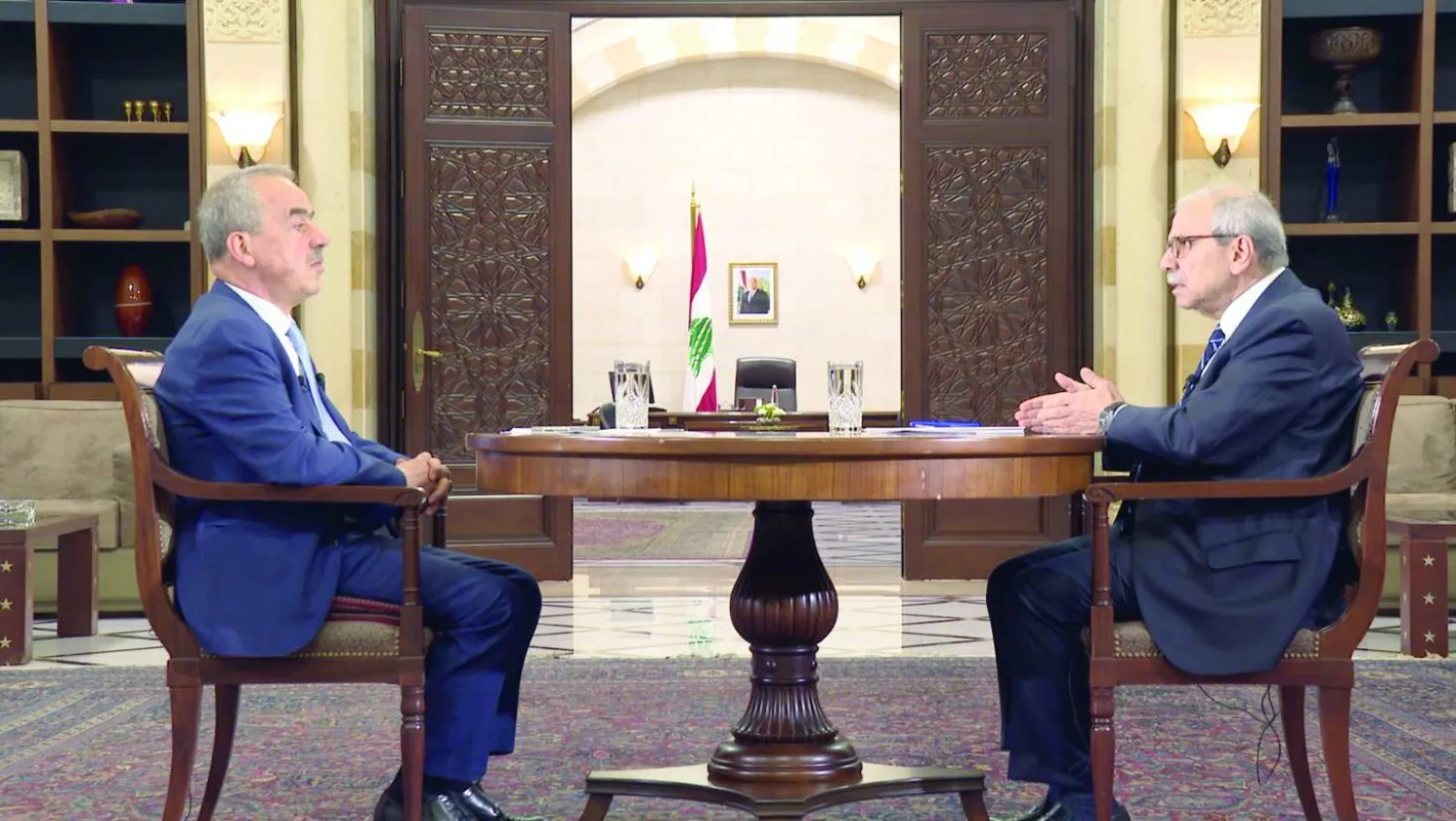

Lebanese Prime Minister Nawaf Salam stressed that the Lebanese state has restored the decisions of war and peace.
“These decisions are now being taken in Beirut, at cabinet, not anywhere else,” he told Asharq Al-Awsat in an extensive interview, the first installment of which was published on Saturday.
“No one is making dictates to us, not from Tehran or Washington,” he added.
Moreover, he underlined the right of the people to hold protests – a reference to Hezbollah supporters rallying against the government’s decision to disarm the Iran-backed group and limit the possession of weapons in the country to the state.
Salam said however, that protesters should not block main roads, including the one leading to Lebanon’s only functional airport in Beirut.
Asked if he believed that the Shiite ministers would resign from cabinet in wake of the decision to disarm Hezbollah, which is Shiite, he responded: “The government is united, but that does not mean that all of its 24 ministers share the same opinion over everything.”
If consensus is not reached over an issue, then disputes and differences are resolved through a vote and other constitutional measures, he explained.
“We are not opposed to anyone turning to the streets to express their views. (...) We respect the right to have a different opinion. But we draw the line at blocking roads. It is forbidden to impede the freedom of movement of the Lebanese people, especially in heading to vital areas, such as the airport or international highway,” he said.
Salam noted that several attempts to block the airport road have been successfully thwarted by the army.
Asked if he has been advised in recent weeks to increase his personal security, the PM replied: “I have a deep sense that the majority of the Lebanese people have confidence in our government. I am acting on this trust and my conscience is clear. I believe that any threats are being made by a small fraction of the Lebanese or some unruly people.”
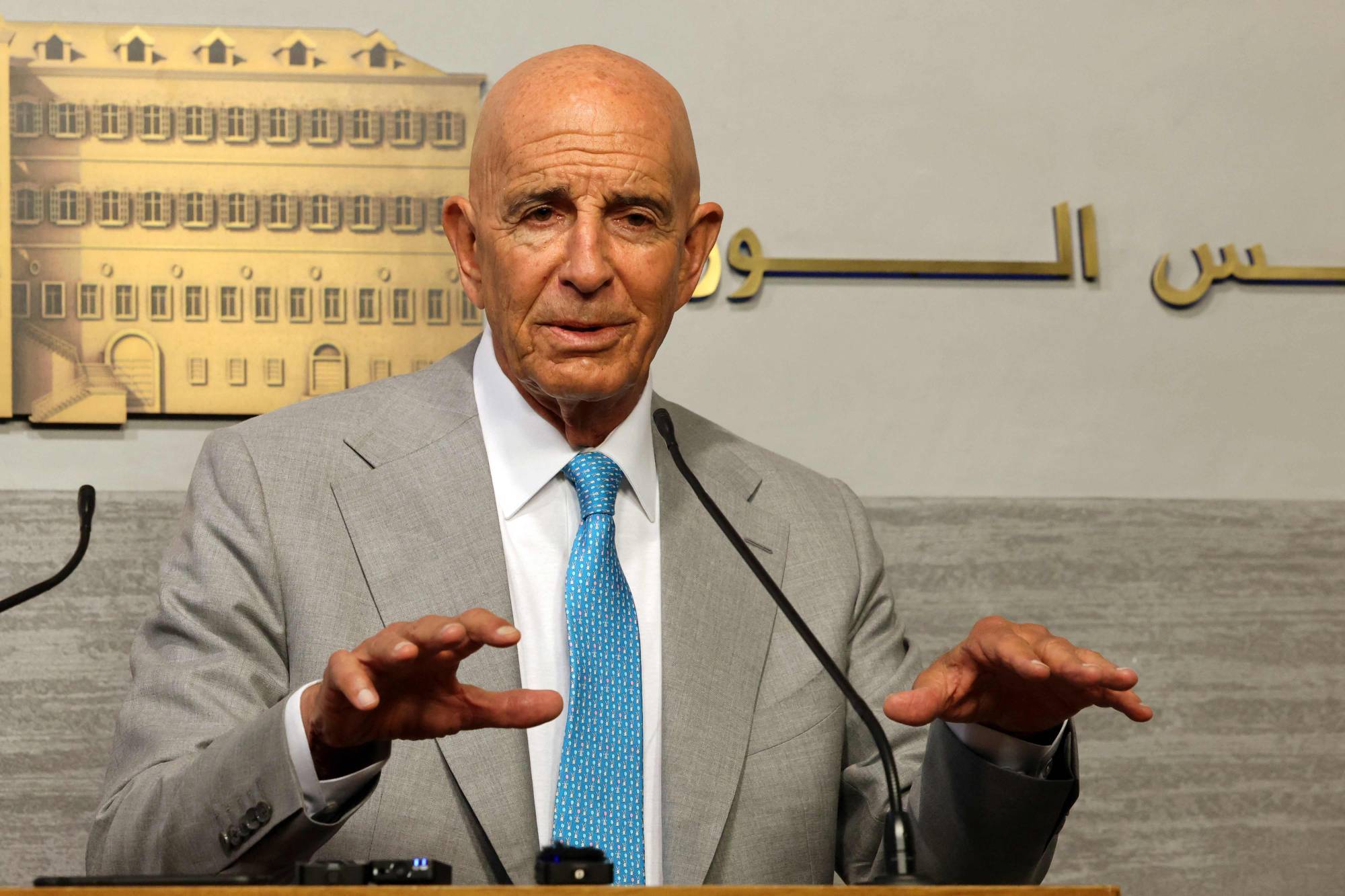
On US special envoy Tom Barrak’s upcoming highly anticipated visit to Lebanon in wake of the disarmament decision, Salam said the envoy had presented the government with a proposal, which was in turn submitted to cabinet.
“The cabinet actually received an amended version of the proposals – a ‘Lebanonized’ version,” the PM explained. “Not a single patriotic Lebanese citizen can be opposed to the goals listed in the proposal that was adopted by the cabinet.”
He revealed that he along with President Joseph Aoun and parliament Speaker Nabih Berri had direct input in the final drafting of the approved goals.
“No one is opposed to the first article on ending the hostilities immediately. No one is opposed to the complete Israeli withdrawal from Lebanese territories. No one is opposed to the return of the displaced people to their villages in the South. No one is opposed to the release of Lebanese detainees by Israel. No one is opposed to reconstruction and holding an international donor conference,” he stressed.
“Let them stop challenging the government about these issues. You are Lebanese. You have read the proposals. Tell me, what issues do you oppose? Let any Lebanese citizen tell me which articles they oppose. Does anyone oppose the international conference? Does anyone oppose the Israeli withdrawal? Does anyone oppose the return of the detainees or displaced? So why this uproar over the government decision?” he asked.
Asharq Al-Awsat countered that perhaps the uproar stems from removing Lebanon from the military conflict with Israel, to which Salam responded: “Lebanon was supposed to be removed from this equation with the adoption of United Nations Security Council resolution 1701. That was around 20 years ago.”
The ceasefire agreement last November and the government’s policy statement only consolidate the resolution, he stated.
“Who doesn’t want to get out of the military conflict with Israel? Up until the year 2000, the resistance (Hezbollah), which I salute, was the main actor in this conflict. Before that, other groups were involved, such as the Communist Party and Communist Action Organization in Lebanon.”
“Hezbollah was the main player in making the enemy withdraw from our occupied territories in 2000. Unfortunately, after that, we spent years discussing whether to deploy the army to the South or not. Why should it even be a contentious debate to allow the army to deploy in its land in the South to protect our people?” he wondered.
The deployment was met with objections and then doubts were raised about the army, continued the PM. “This was a wasted opportunity. The same thing happened with the decisions of war and peace. How could a decision be taken to drag Lebanon to a ‘support war’ (with Gaza)? This never should have happened. The state did not have a say in it,” he said.
“The decisions of war and peace have today returned to the state,” he declared. “Only we decide when to wage a war or not. This does not mean that weapons exist outside the authority of the state. We are now concerned with how to have state monopoly over them.”
War and peace
Asharq Al-Awsat said that the state’s reclaiming of the decisions of war and peace effectively means that “Lebanon has been taken out of the (Resistance) axis that has existed for decades.”
“Yes, I know that,” replied Salam. “They used to brag about certain issues, like saying Tehran controls four Arab capitals. I believe that that time is over. Lebanon’s decisions are being taken from Beirut, at cabinet, not anywhere else. No one dictates to us what to do; not from Tehran or Washington.”
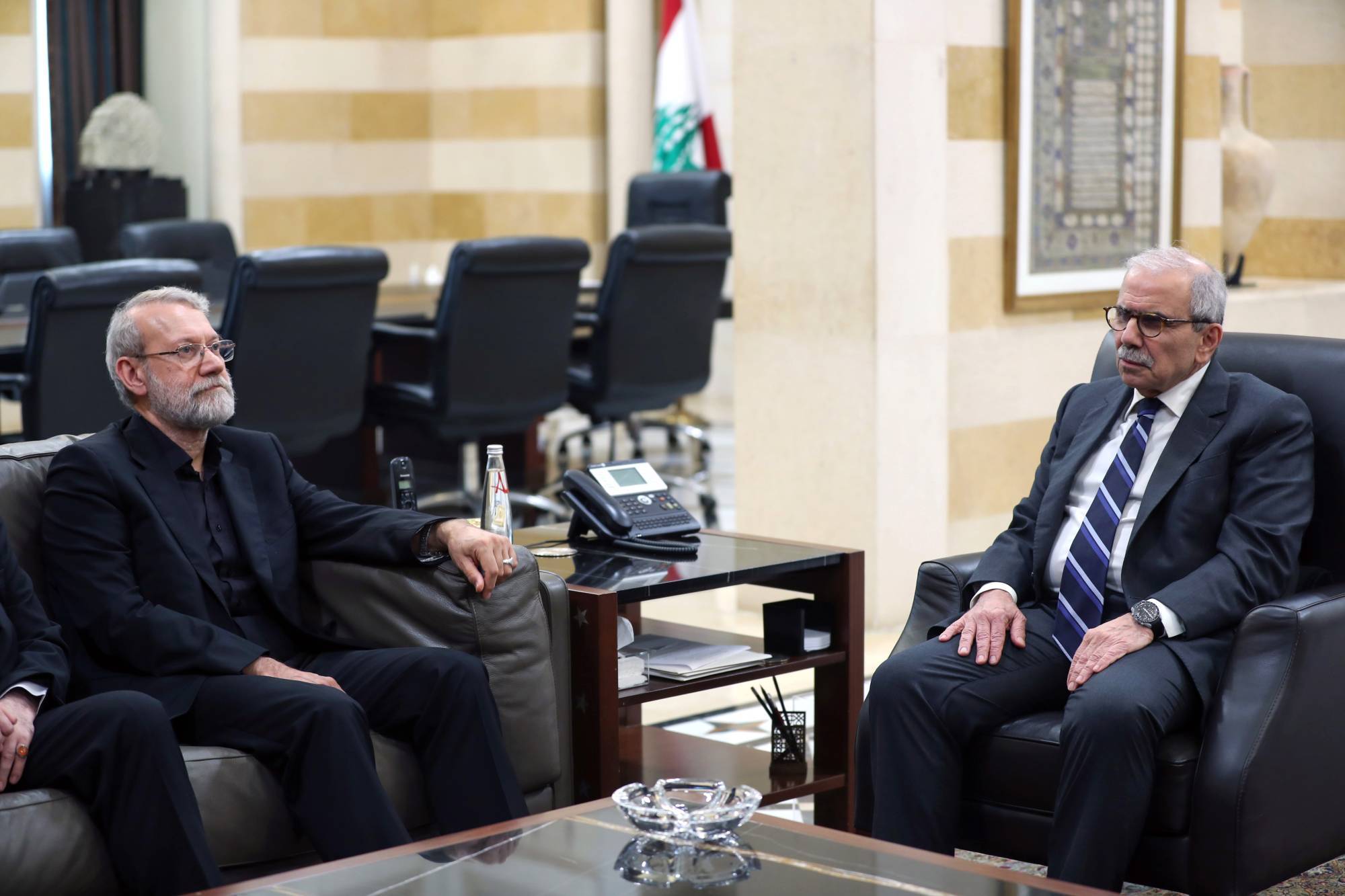
“Is that what you told (Secretary of Iran's Supreme National Security Council Ali) Larijani?” asked Asharq Al-Awsat.
“I issued a statement to clarify the discussions that we had. Of course, I strongly reproached him for the Iranian criticism of the Lebanese government’s disarmament decision,” said the PM. “I informed him that balanced relations between countries, especially between us and Iran, should be based on mutual respect and non-interference in internal affairs.”
“We have never allowed ourselves to meddle in Iranian internal affairs. I have never stated that I support one side against the other in Iran. I do not express my opinions on Iranian affairs. I do not express my views about Iran’s defense strategy or internal politics. What I am asking of Iran and any other party is to not meddle in our internal affairs.”
“Statements have been made, and unfortunately, some threatened the government. I told Larijani that this is completely unacceptable in any way, shape or form,” he stressed.
Relations with Washington
Turning to ties with Washington, Asharq Al-Awsat asked if Beirut was receiving the aspired backing from it, to which Salam replied: “Of course not. We had hoped and want to have greater support in making the Israeli enemy withdraw completely from Lebanese territories and stop its daily violations. The United States is the side that is most capable of influencing Israel and it is not doing that enough.”
“I do not feel useless when I hear an Israeli drone flying over Lebanon. I know that today I am incapable of preventing them from flying over Lebanon, but I do not want to embark on a new military adventure. What I can do is garner enough political and diplomatic support to stop these flights and Israel’s hostile acts. We have not reached that goal yet, but more contacts are needed with our Arab brothers, who are effective players on the international arena. Similar contacts are needed with the Europeans and the US,” he added.
He revealed that Barrack’s proposals demand that the US and France pressure Israel to pull out of Lebanon. “This is a positive point that I am revealing for the first time. Israel, meanwhile, has not committed to Barrack’s proposals. We are,” he stressed.
Moreover, Salam stated that the proposals stipulate that Israel would incur some form of penalty if it does not commit to the withdrawal. All parties involved will incur penalties for failing to meet their commitments. For Israel, the penalty would be condemnation by the Security Council, which would be a precedent. The US may actually be ready to condemn Israel for failing to respect its end of the deal.
Asked if Washington had broached the subject of holding negotiations to establish peace between Lebanon and Israel, Salam responded: “Our position is known and clear. The Arab Peace Initiative was adopted during the Beirut summit in 2002. We have no intention of engaging in normalization negotiations or anything of the sort beyond the initiative. This is our plain and simple answer whenever the Americans or others bring up the issue.”
“There is a need, now more than ever, to implement the initiative,” he urged.
Asked about what Lebanon will demand from Barrack during his visit, Salam said he “must guarantee that Israel cease its hostile operations and start withdrawing from Lebanese territories, especially the five points, as stipulated in his proposals.”
The PM added that Speaker Berri was involved in the discussions between him, Aoun and Barrack. “He had reservations about some issues, but was part of the discussions at various points. Aoun, Berri and I introduced amendments to the proposals.”
Relations with Iran
“Do you fear that relations may be severed with Iran?” asked Asharq Al-Awsat.
“Iran is a big country and we boast historic relations with it. I informed Larijani that these relations existed before the establishment of the Islamic Republic. (...) We are very keen on ties between Lebanon and Iran. Iran is among the most important neighbors to the Arab world. We want balanced relations similar to the ones with other neighbors,” Salam said.
Asharq Al-Awsat added: “Iran is the greatest loser with the change that had taken place in Syria. Perhaps it wants to compensate for this loss by maintaining its influence in Lebanon?”
Salam said: “We have an interest in having the best relations with Iran. The other Arab countries share this same interest. Were this not the case, Saudi Arabia would not have reached the Beijing agreement with Iran.”
Pending issues with Syria
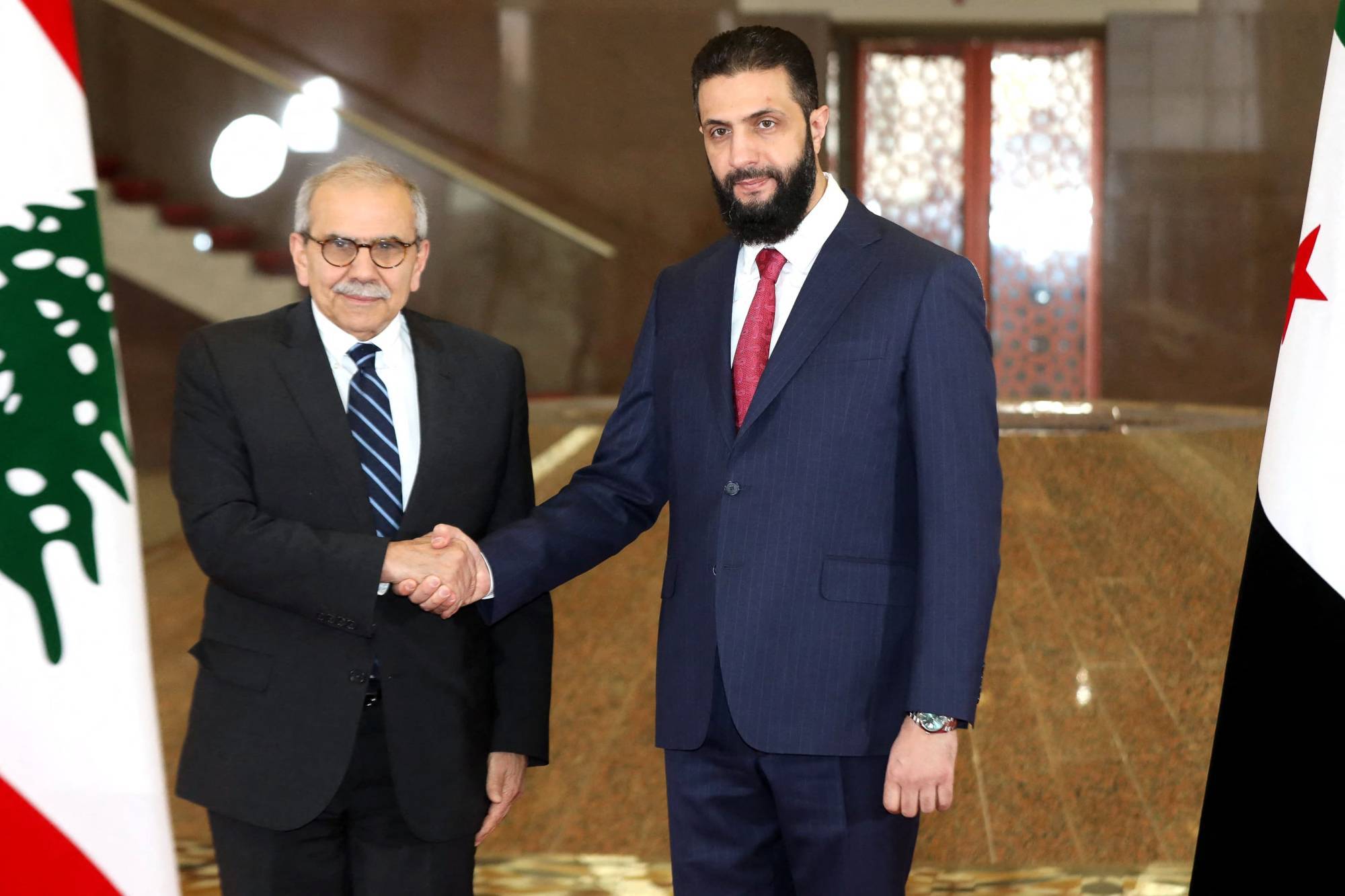
Turning to relations with Syria, Salam was asked about his meeting with interim President Ahmed al-Sharaa in Damascus earlier this year. He replied: “I told him that we have long suffered from Syria’s interference in our internal affairs. We are pleased with the change that has happened in Syria. I am also aware that they have suffered from the meddling by some Lebanese parties in their country.”
“We have both suffered. We are now ready to open a new chapter in Lebanese-Syrian relations based on mutual respect and non-interference in the affairs of the other,” the PM stressed.
The pending issues that exist between the two neighbors can only be resolved through joint efforts between them, he continued. “Progress has already been made over cross-border smuggling, especially the smuggling of drugs and weapons. The drugs were being smuggled to the Gulf, which has tarnished Lebanon’s image.”
He said that “major cooperation” was taking place over this issue and it has been sponsored by Saudi Arabia through a meeting between the defense ministers in Jeddah.
Furthermore, Salam added that efforts were ongoing with Syria over securing their shared border. Other issues remain pending, such as Syrian detainees held in Lebanon. “We are ready to discuss the issue with our Syrian brothers to reach a serious solution to this file. I informed them of this during my visit to Damascus. I reiterated this to Foreign Minister Asaad al-Shaibani when we met in Baghdad on the sidelines of the Arab summit.”
“We are both eager to put this file behind us. There is also the issue of Syria refugees in Lebanon. This should be resolved between us and the Syrians and concerned international organizations,” he went on to say. Tens of thousands of Syrians have already returned home in recent months.
“We have declared that we support their safe and dignified return,” he remarked.
Salam added that he requested from Sharaa any information Syrian authorities have over “internal issues that greatly concern Lebanon,” such as the case of the bombing of two mosques in the northern city of Tripoli in 2013 and the 2020 Beirut Port blast.
“Sharaa was very understanding of the requests. I believe we have a new opportunity with the new rulers in Syria to not just put the old relations between us, but to build a balanced relationship with our Syrian brothers,” he told Asharq Al-Awsat.
Asked about how he felt when he saw Sharaa seated at the presidential palace in Damascus instead of Bashar al-Assad, Salam replied: “I used to be Lebanon’s ambassador to the UN when Assad was in his post. Our position remains the same: We want for Syria what its own people want for it. We support what the Syrian people choose. We want to close the Assad chapter; Lebanon suffered a lot from it.”
Ties with Saudi Arabia
“What about relations with Saudi Arabia?” asked Asharq Al-Awsat.
“Lebanon and Saudi Arabia enjoy historic relations,” he said, citing its major role in the Taif Accords that helped end Lebanon’s 1975-90 civil war. He also singled out Prince Saud al-Faisal and his role in the Accords.
Ties between the two countries stretch before the agreement. “The issue isn’t just about bilateral relations. The Kingdom is now a major Arab Islamic international player,” stressed Salam. “We are very keen on relations with the Kingdom and are seeking the greatest support from it in terms of pressuring Iran or supporting Lebanon in its reconstruction and attracting investments.”
He hoped that Saudi Arabia would soon lift its ban on its citizens from traveling to Lebanon. “We can’t say that we have returned to the Arab world; the Arab world must also return to Lebanon. The lifting of the ban would be a very significant development.”
The PM also acknowledged the concerns over the smuggling of drugs to Saudi Arabia and the Kingdom’s ensuing decision to bar imports from Lebanon. Salam hoped that this issue would be resolved soon given that authorities have adopted tougher measures at various land and marine crossings.
“We do not want to smuggle captagon or other illicit material. This damages our image before it harms the Saudis and others. Lebanon’s image has already been tarnished. Our country used to export books, ideas and engineers to the Arab world. This is the image that we want to restore,” Salam said.
Turning to the Gulf countries, he stressed that he is proud of the strides they have made and the accomplishments they have achieved, “but at the same time, we lament the opportunities we have wasted.”
“Lebanon can be a natural partner to their rise,” he went on to say. He also noted the vision of Crown Prince Mohammed bin Salman, Saudi Crown Prince and Prime Minister, who wants to take the Arab world and Kingdom to “not just the 21st Century but its second half through investments in AI and technology.”
“Lebanon, through its universities and human capabilities, is a natural partner to this renaissance project,” he declared.
War on corruption
Returning to Lebanon, Asharq Al-Awsat asked whether the “war on corruption has started.” Salam said it is already underway. Two ministers are being persecuted, and one has been jailed on corruption charges. The other, unfortunately, managed to flee the country.
He noted that former public employees and judges are being persecuted for corruption.
“I am aware of how much Lebanon has suffered in recent years from the looting of public funds and waste that has taken place in several state sectors. We have a project to rebuild the country, which demands a number of issues that are founded on reforms.”
Asked if he regrets becoming prime minister, Salam said: “I have been concerned with public affairs for dozens of years. I grew up in a family that is concerned in public affairs. I have written extensively about reforms in Lebanon. I saw an opportunity and seized it so that I can translate into reality the ambitious reform pledges of this (Aoun’s) term.”
“I was encouraged by Aoun’s swearing in speech. I am today seeking to implement whatever I can,” he revealed.
Asked about online campaigns against him, the PM explained that they are being waged by thousands of bots. “They aren’t even real people. They accuse me of treason and of being a Zionist. Does anyone really believe these claims? Do I need to prove my loyalty to my nation or my stances against Israel? I forgive those making the accusations because they themselves know that they are not true.”
“However, I do not forgive those who are manipulating their supporters with such claims. This is very dangerous, not because of the personal injury to me – I don’t care about that – but because it could lead to civil strife in the country,” he warned.
“Those intimidating us with civil war should first concern themselves with removing the weapons that are the source of this strife,” he demanded.
“I sought last week to defuse tensions, but then came another party to stoke civil tensions by accusing me of being a Zionist and rallying their supporters. Let them cease such behavior, which only pits the people against each other. I am confident that the majority of the Lebanese people agree with me,” he said.