


Europeans Seek Clarity About Trump’s Iran War Aims Before Agreeing to His Warship Demands

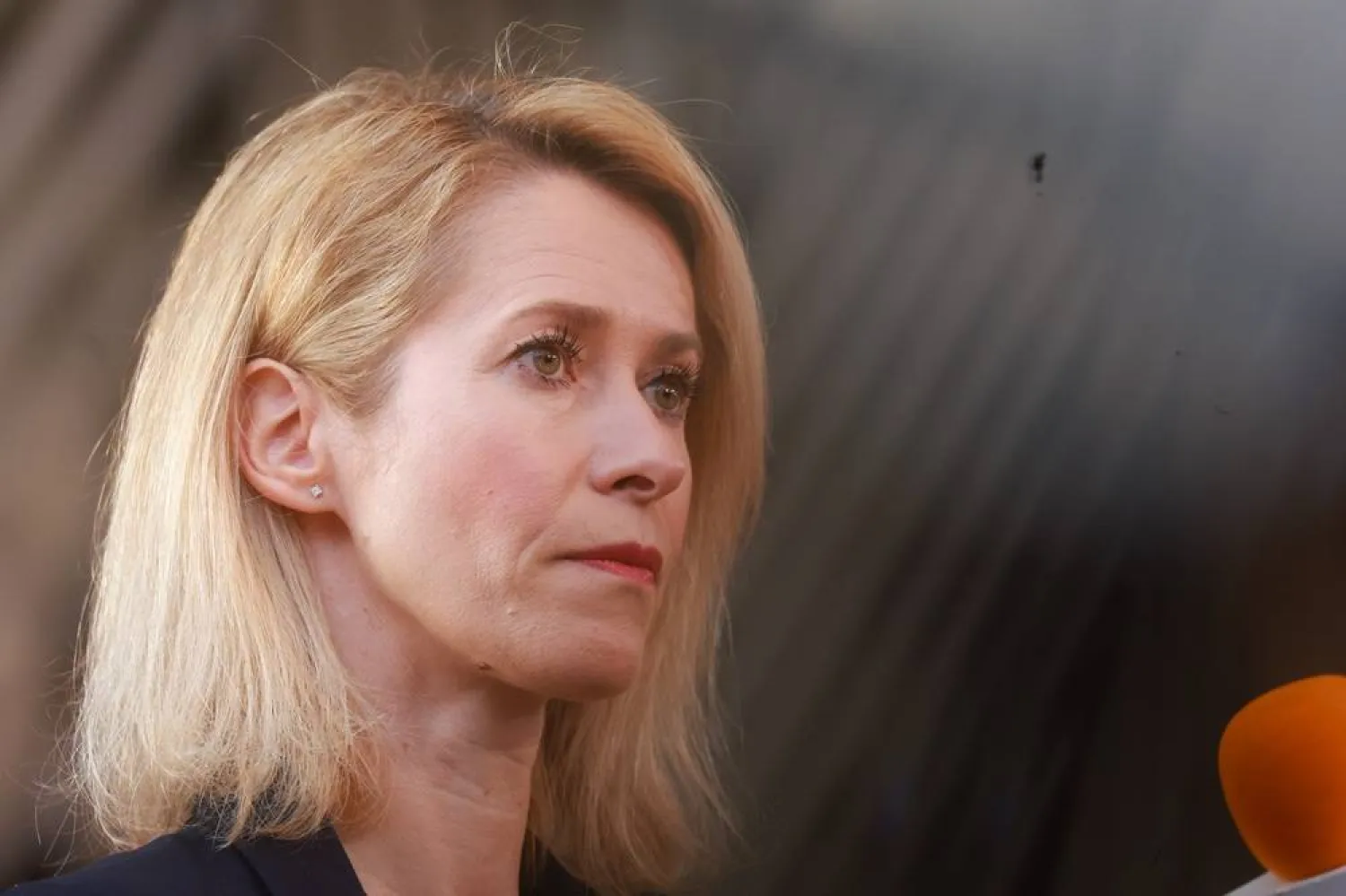
European Union High Representative for Foreign Affairs and Security Policy Kaja Kallas arrives ahead of a Foreign Affairs Council meeting at the Council of the European Union in Brussels, Belgium, 16 March 2026. (EPA)
TT

Europeans Seek Clarity About Trump’s Iran War Aims Before Agreeing to His Warship Demands

European Union High Representative for Foreign Affairs and Security Policy Kaja Kallas arrives ahead of a Foreign Affairs Council meeting at the Council of the European Union in Brussels, Belgium, 16 March 2026. (EPA)

European countries on Monday sought more details about US President Donald Trump's plans for the war on Iran and warned that NATO must not become involved it, as they weighed whether to agree to his call to send warships to help shore up security in the Gulf.

The cool response to Trump’s demand reflects wide caution about the US-Israeli war among allies kept in the dark before, and largely since, it was launched on Feb. 28.

Trump has asked partners, including France, China, Japan, South Korea and Britain, to help secure the Strait of Hormuz for global shipping. He said the United States was talking to “about seven” countries, but he wouldn’t say which ones and gave no indication of when such a coalition might be formed.

UK Prime Minister Keir Starmer insisted Britain “will not be drawn into the wider war,” and said British troops should only be sent into action that is legal and has “a proper thought-through plan.” But his country is considering other forms of help in conjunction with allies.

In an interview with the Financial Times, Trump also warned that “if there’s no response or if it’s a negative response, I think it will be very bad for the future of NATO.”

German Chancellor Friedrich Merz said that “NATO is a defensive alliance, not an interventionist one. And that is precisely why NATO has no business being involved here.” He said he hopes that NATO allies “will treat one another with the necessary respect within the alliance.”

Merz agreed that “this Iranian regime must come to an end,” but he said that "based on all the experience we have gained in previous years and decades, bombing it into submission is, in all likelihood, not the right approach.”

EU debates Trump's demand

Many are keen to know when the war will end.

At a meeting in Brussels, where European Union foreign ministers gathered to discuss Trump's demand, German Foreign Minister Johann Wadephul said it's important for the US and Israel to define “when they consider the military aims of their deployment to have been reached.”

“We need more clarity here,” Wadephul told reporters.

Estonian Foreign Minister Margus Tsahkna also said that US allies in Europe want to understand Trump’s “strategic goals. What will be the plan?”

Polish Foreign Minister Radek Sikorski invited the Trump administration to go through the proper channels.

“If there is a request via NATO, we will of course out of respect and sympathy for our American allies consider it very carefully,” he said. Sikorski made a reference to Article 4 of NATO's founding treaty, which allies can invoke if they believe their territory or security is under threat.

Acting in Europe's interests

Still, EU foreign policy chief Kaja Kallas said that “it is in our interest to keep the Strait of Hormuz open."

Kallas had urged the 27 member countries to expand the EU's Operation Aspides naval mission to protect shipping in the Red Sea up into the Persian Gulf. But after chairing the meeting, she said there had been “no appetite” to boost its mandate.

But Kallas said the EU would closely monitor threats to maritime security also in the Red Sea, where Aspides operates with three warships. “The risk that the Houthis get involved is real. So we must remain vigilant,” she said.

Yemen’s Iran-backed Houthi militants have so far remained on the sidelines of the war even as it has spread across the Middle East, raising questions about why, and perhaps when, the battle-hardened militants might join the fight.

It was not immediately clear whether some European countries might go it alone and form a “coalition of the willing” to provide military support on an ad hoc basis.

The war in Iran has driven up energy prices worldwide, with Brent crude up more than 40%. The conflict has also disrupted the wider global supply chain beyond oil, affecting things like pharmaceuticals from India, semiconductors from Asia and oil-derived products like fertilizers that come from the Middle East.

Cargo ships are stuck in the Gulf or making a much longer detour around the southern tip of Africa. Planes carrying air cargo out of the Middle East are grounded. And the longer the war drags on, the more likely that there will be shortages and price increases on a wide range of goods.

France has said it is working with countries — French President Emmanuel Macron mentioned partners in Europe, India and Asia — on a possible mission to escort ships through the strait but has stressed it must be when “the circumstances permit,” when fighting has subsided.

French senior officials, speaking anonymously on ongoing talks, said the Netherlands, Italy and Greece had shown interest and that Spain might be involved in some way.

Starmer said Britain is discussing with the US and allies in Europe and the Gulf the possibility of using its mine-hunting drones already in the region.



Ukraine Strike Kills 3 in Russian-occupied Crimea

A local woman, Olga, 35, and her daughter Natalia, 6, walk at the site of a Russian strike on a residential area in Kyiv, Ukraine, 02 June 2026, amid the Russian invasion. EPA/MAXYM MARUSENKO
TT

Ukraine Strike Kills 3 in Russian-occupied Crimea

A local woman, Olga, 35, and her daughter Natalia, 6, walk at the site of a Russian strike on a residential area in Kyiv, Ukraine, 02 June 2026, amid the Russian invasion. EPA/MAXYM MARUSENKO

A Ukrainian strike killed at least three people in Crimea, the region's Moscow-installed authorities said Thursday, a day after Kyiv targeted energy and military sites in Saint Petersburg where Russia was hosting an economic forum.

US Secretary of State Marco Rubio warned of a "real" risk of the Ukraine war escalating as Kyiv underlines its ability to strike deep inside Russian territory with the attacks.

Ukraine has described its strikes on Saint Petersburg as "fair" retaliation for a wave of Russian bombardment on its territory.

Sergey Aksyonov, the Moscow-installed head of the Crimea region, said early Thursday that preliminary reports showed a strike on non-residential buildings in Simferopol claimed three lives and wounded seven others, AFP said.

"Emergency services are currently at the scene," Aksyonov wrote on Telegram.

The strike came as 20,000 people from 130 countries were due at the three-day annual Saint Petersburg International Economic Forum (SPIEF) -- an event once dubbed "Russia's Davos".

President Vladimir Putin is to give a keynote address at the forum on Friday and Kremlin spokesman Dmitry Peskov vowed Russia would provide a "systemic" response to Ukraine's strikes on the city.

Black smoke from the strikes was visible from the conference venue as the first sessions started on Wednesday.

Valeria, a 32-year-old businesswoman from Moscow at the forum, told AFP she was used to the threat of attacks.

"We have been living under such attacks for many years now," she said.

- 'Real' escalation risk -

Ukrainian officials have said the Saint Petersburg attack on an oil terminal and the city's Kronstadt military base was meant to disrupt the conference.

"The Petersburg forum is opening with a nice plume of black smoke in the background after Ukrainian strikes," said Sergiy Sternenko, an adviser to the Ukrainian defense minister.

Ukrainian President Volodymyr Zelensky said his country was responding "accordingly" to Russian bombardment.

"It's just a matter of time before we can scale up the intensity of our responses," Zelensky said during a press conference in Kyiv with NATO chief Mark Rutte.

On Wednesday, a drone strike on a bus in Russian-occupied east Ukraine killed at least seven people, Moscow-installed officials said.

Two others were killed, one in the Bryansk region near the Ukraine border and another in the Russian-occupied Kharkiv region, they added.

Meanwhile, Russian attacks left at least 10 dead across Ukraine, local officials said.

Rubio said at a US Senate appropriations panel that Ukraine has "become increasingly effective at conducting long-range strikes deep into Russia".

It's "one of the things that reminds us of why it's important to try to bring this war to an end, if we can, because the risk of escalation is real, more real than it was two years ago," Rubio added.

Speaking earlier to the House Foreign Affairs Committee, Rubio lamented the lack of progress on ending the war, which began with Russia's full-scale invasion in February 2022.

"To this point, neither side has been willing to make concessions, particularly on the Russian side, necessary in order to bring peace about," he said.

"But we stand ready, and we've engaged and invested a tremendous amount of high-level time on that conflict over the last year," he added.

EU foreign affairs chief Kaja Kallas earlier told AFP that Ukraine's attacks had spooked the Kremlin.

"It clearly shows also panic on the Russian side -- why they are increasing the terrorist attacks that they're doing in Ukraine is because they don't know what to do with these things," Kallas said in an interview.

"Putin is losing money, men, and momentum, and that's why he's increasing attacks on civilians."


North Korea Unveils New Plant to Produce Fuel for Nuclear Weapons

This picture taken on June 3, 2026 and released by North Korea's official Korean Central News Agency (KCNA) on June 4, 2026 shows North Korean leader Kim Jong Un (front R) inspecting the newly-inaugurated nuclear materials production factory at an undisclosed location in North Korea. (Photo by KCNA VIA KNS / AFP)
TT

North Korea Unveils New Plant to Produce Fuel for Nuclear Weapons

This picture taken on June 3, 2026 and released by North Korea's official Korean Central News Agency (KCNA) on June 4, 2026 shows North Korean leader Kim Jong Un (front R) inspecting the newly-inaugurated nuclear materials production factory at an undisclosed location in North Korea. (Photo by KCNA VIA KNS / AFP)

North Korea on Thursday unveiled a new facility to produce nuclear bomb fuels, with leader Kim Jong Un announcing plans to bolster the country’s nuclear forces “at an exponential rate.”

Some experts still question whether North Korea has functioning nuclear missiles that can reach the US mainland. But the nuclear plant's disclosure implies that Kim is eager to cement his country's status as a nuclear power and has no intentions of placing his bomb program on a negotiating table.

After visiting the site on Wednesday, Kim said he and other top officials “confirmed the order of priority for implementing the ambitious future plan designed to beef up our state’s nuclear forces at an exponential rate,” according to the official Korean Central News Agency.

The site is likely a uranium enrichment plant KCNA said the facility used “more sophisticated technology” but didn’t provide further details like its location. South Korea’s Joint Chiefs of Staff assessed the site as a uranium enrichment plant and said it was closely coordinating with the United States to monitor North Korean nuclear activities.

KCNA photos showed Kim walking through narrow aisles lined with dense rows of silver tubes and pipes, in what appeared to be a centrifuge hall. Another image showed him speaking with senior officials in a meeting room, where a blurred graphic depicting a cone-shaped object was spread across a table. It wasn’t immediately clear whether the graphic showed a warhead design.

It's the third time that North Korea has disclosed a uranium enrichment site. In 2024, North Korea released photos of another covert uranium-enrichment plant. In 2010, North Korea showed one at its main Yongbyon nuclear complex to visiting American scholars.

Last September, South Korean Unification Minister Chung Dong-young said that North Korea was operating a total of four uranium enrichment facilities including the Yongbyon complex, and that they were running everyday.

During his plant visit, Kim said the urgency for bolstering up the country’s nuclear war deterrent, both in quality and quantity, has grown because of confrontations with “the most ferocious enemies,” an apparent reference to the US and South Korea.

According to The Associated Press, Kim said exercising “the position of a nuclear weapons state” is his country's “invariable” stand. He said North Korea’s nuclear materials production capacity has more than doubled compared with five years ago, a claim that cannot be verified independently.

Experts say Kim wants an international recognition as a nuclear state so that he could demand the lifting of UN economic sanctions. They say Kim would ultimately push for arms reductions talks with the US as a way to win concessions in return for a partial surrender of his nuclear capability.

President Donald Trump has repeatedly expressed his desire to resume diplomacy with Kim, but the North Korean leader responded the Americans must first drop its demand for North Korea to denuclearize as a precondition for talks.

Some question North Korea's nuclear program Since his first round of nuclear diplomacy collapsed in 2019, Kim has performed a provocative run of weapons tests and vowed repeatedly to “exponentially” expand the country’s nuclear arsenal.

This led to many experts believing North Korea now likely has nuclear missiles capable of striking the US mainland. But some still note North Korea hasn't proved it mastered last-remaining technological hurdles to obtain such missiles, including ensuring its warheads survive the conditions of atmospheric reentry. They say North Korea also need to perfect technologies to place multiple nuclear warheads on a single missile to defeat US missile shields.

A senior South Korean official told lawmakers in 2018 that North Korea was estimated to have manufactured between 20 and 60 nuclear weapons, but some experts now put the size of the North’s arsenal at more than 100 warheads.

In 2023, North Korea unveiled a type of battlefield nuclear warheads. Some analysts speculated the warhead’s unveiling might be a prelude to a nuclear test. But North Korea hasn't carried out a test, which would have been its seventh detonation overall and the first since September 2017.


Trump Confirms He Called Netanyahu Crazy in Phone Call

US President Donald Trump gives a thumbs up as he welcomes Israeli Prime Minister Benjamin Netanyahu at the White House in Washington, DC, US, September 29, 2025. (Reuters)
TT

Trump Confirms He Called Netanyahu Crazy in Phone Call

US President Donald Trump gives a thumbs up as he welcomes Israeli Prime Minister Benjamin Netanyahu at the White House in Washington, DC, US, September 29, 2025. (Reuters)

US President Donald Trump acknowledged having called Israeli Prime Minister Benjamin Netanyahu crazy in an expletive-filled phone exchange over fighting in Lebanon, while the US was trying to negotiate an end to hostilities with Iran.

In an interview broadcast Wednesday, Trump was asked whether he had called the longtime Israeli leader "effing crazy" and accused him of ingratitude, paraphrasing a report by Axios.

"I did," Trump told the "Pod Force One" podcast. "I wouldn't say angry. I was a little bit perturbed at his constantly fighting with Lebanon, you know."

Trump went on to say he and Netanyahu get along very well.

According to the Axios report, which cited an unidentified US official, Trump said to Netanyahu in a call on Monday: "You're ‌[expletive] crazy. You'd ‌be in prison if it weren't for me. I'm saving your ‌ass. ⁠Everybody hates you ⁠now. Everybody hates Israel because of this."

Trump said in the interview: "At some point I said, Bibi, we got to stop this. We got to stop it."

NETANYAHU CITES COMMON GOALS 

Netanyahu, asked about the Axios report, declined to offer details of the conversation but said his relationship with Trump had not changed. 

"We have common goals. Sometimes we have, as in the best of families, you have these tactical disagreements," he said in an interview on CNBC on Wednesday. 

"He's been the greatest friend that Israel has ever had in the White House, and he respects ⁠me; I respect him. We always find a way to work out our ‌differences." 

Iran has said it will not agree to a deal with the United States to end the war that Trump ⁠and Netanyahu launched in late February, unless a ceasefire also covers Lebanon, ‌which Israel invaded in March in pursuit of the ‌Iran-aligned Hezbollah group that fired across the border in support of Tehran.

Hostilities have continued despite a US-mediated agreement ‌announced on Monday that led Israel to step back from attacking the Hezbollah-controlled southern suburbs ‌of Beirut, and the group to halt cross-border strikes.

Israeli drone strikes killed at least six people in southern Lebanon and targeted a car just south of Beirut on Wednesday, Lebanese security sources said, while Israel said it intercepted a hostile aircraft likely fired by Hezbollah.

Trump bristled when asked if Netanyahu "tricked" him into attacking ‌Iran, saying his critics were "the enemy."

"I mean, I'm the one that started it," Trump said. "I started because we can't let them have ⁠a nuclear weapon."

"Now ⁠that pertains to Israel, because they probably would have been the first one to get hit. There would be no Israel. Tell you what, if there wasn't me, there would be no Israel right now."

Trump maintained that Israel would have been in a far worse position if he had not abandoned a 2015 accord reached by President Barack Obama and other world leaders with Iran, under which Tehran agreed to curb its nuclear program in return for the lifting of sanctions.

After Trump withdrew from that deal during his first White House term in 2018, Iran produced stockpiles of near-weapons-grade highly enriched uranium, which Trump now demands it relinquish. Trump's critics say Iran is now closer to making a nuclear weapon, and it will be hard for Trump to negotiate a better deal today.