


A Look at Gaza Ceasefire Talks After Hamas Accepts a New Proposal 

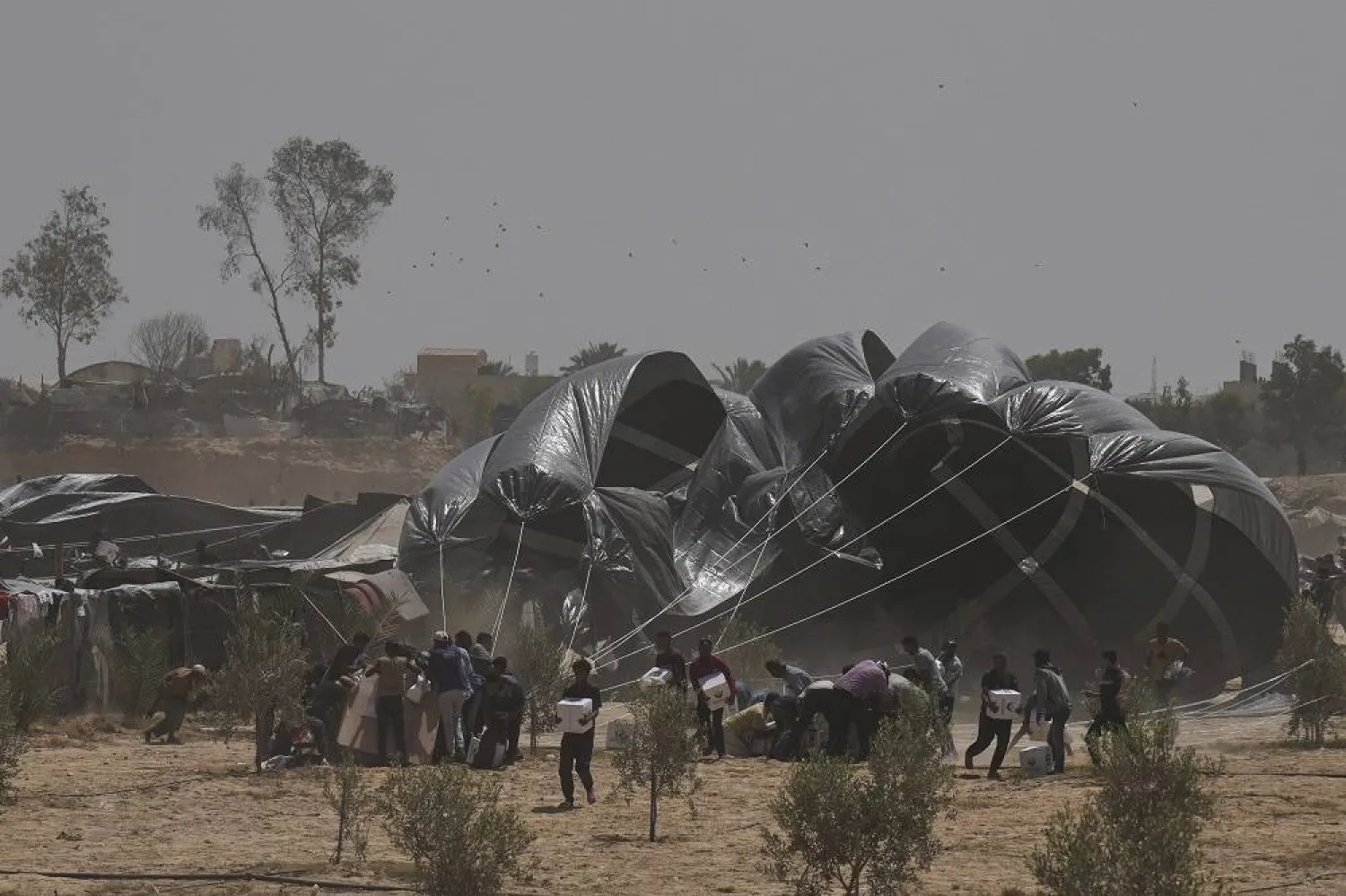
Palestinians rush to collect humanitarian aid packages from the United Arab Emirates, airdropped by parachutes into Deir al-Balah, central Gaza Strip, Tuesday, Aug. 19, 2025. (AP)
TT

A Look at Gaza Ceasefire Talks After Hamas Accepts a New Proposal 

Palestinians rush to collect humanitarian aid packages from the United Arab Emirates, airdropped by parachutes into Deir al-Balah, central Gaza Strip, Tuesday, Aug. 19, 2025. (AP)

Hamas says it has accepted a proposal from Arab mediators for a ceasefire in the 22-month war sparked by its Oct. 7, 2023, attack into Israel. Israel has not yet responded and says it is still committed to defeating the group.

The latest proposal developed by Egypt and Qatar contains only slight modifications to an earlier one advanced by the United States and accepted by Israel, according to Egyptian and Hamas officials who spoke on condition of anonymity to discuss the sensitive talks.

The deal would include a 60-day truce, the release of some of the hostages held by Hamas in return for hundreds of Palestinian prisoners, a flood of humanitarian aid into Gaza and talks on a lasting ceasefire.

Israel has vowed to continue the war until all the hostages are returned and Hamas is disarmed. President Donald Trump gave support to those goals Monday in a social media post, saying Hamas must be “confronted and destroyed” to ensure the return of the remaining hostages.

A ceasefire, a hostage release and an influx of aid The details of the latest proposal have not been made public, but the two Egyptian officials and two Hamas officials described the broad outlines to The Associated Press.

There would be a 60-day ceasefire in which Israeli forces would pull back to a buffer zone extending 800 meters (875 yards) into Gaza. The officials said Trump's Middle East envoy, Steve Witkoff, had proposed 1,500 meters (1,640 yards) and Hamas countered with 600 meters (656 yards) before the talks stalled last month.

Hamas would release 10 living hostages and the remains of 18 others in phases, in exchange for the release of around 1,700 Palestinians imprisoned by Israel, including 200 serving life sentences after being convicted of deadly attacks.

Hamas-led fighters took 251 people hostage in the Oct. 7 attack and killed around 1,200, mostly civilians. Fifty hostages are still in Gaza, around 20 of them believed by Israel to be alive, after most of the rest were released in ceasefires or other deals.

Israel would allow 600 trucks of humanitarian aid to enter each day, a major increase that could help arrest what experts have described as the territory's slide toward famine. Israel allowed a similar amount of aid to enter during a ceasefire earlier this year.

During the temporary ceasefire, the sides would negotiate a lasting truce, the release of the remaining hostages and the further withdrawal of Israeli forces.

Israel is committed to destroying Hamas Israeli Prime Minister Benjamin Netanyahu has said that while he will halt the fighting temporarily to facilitate the release of hostages, he will not end the war until Hamas has been defeated and disarmed.

Even then, he says Israel will maintain security control over Gaza and facilitate the relocation of much of its population to other countries through what he describes as voluntary emigration. Palestinians and much of the international community view it as forcible expulsion.

Earlier this month, Netanyahu announced plans to occupy Gaza City and other densely populated areas, which would likely result in even more casualties and further waves of mass displacement. Those threats were partly aimed at pressuring Hamas.

Israel's offensive has already killed over 62,000 Palestinians, according to Gaza's Health Ministry. The ministry does not say how many were civilians or combatants but says women and children make up around half of those killed. Vast areas of Gaza have been completely destroyed.

The ministry is part of the Hamas-run government and run by medical professionals. The UN and many independent experts view its figures as the most reliable estimate of wartime casualties. Israel disputes them but has not provided its own numbers.

Hamas is severely weakened but not defeated Hamas has suffered heavy losses through nearly two years of war.

Most of its top leaders have been killed, its rocket supplies have been vastly depleted, and Israel has regularly announced the destruction of tunnel complexes and other military infrastructure. Iran and Hamas' other regional allies are in disarray after Israeli and US strikes.

The Israeli military says it now controls at least 75% of Gaza, with much of the population and the remnants of Hamas' government and police force largely confined to Gaza City, built-up refugee camps from the 1948 war surrounding Israel's creation and Muwasi, a sprawling tent camp along the coast.

The hostages are Hamas' last bargaining chip and its only hope of emerging from the war with something it can try to portray as a victory.

The group has said it will only release the remaining captives in return for more Palestinian prisoners, a lasting ceasefire and a complete Israeli withdrawal. Hamas says it is willing to hand over power to other Palestinians but will not lay down its arms as long as Israel occupies lands the Palestinians want for a future state.

Israel says any arrangement that leaves Hamas intact and armed would allow it to eventually rebuild its forces and launch another Oct. 7-style attack.

The US role is crucial Israel has been tight-lipped about the talks, and it's unclear when it will respond. The Security Cabinet, which would need to approve any such deal, usually meets on Thursdays.

In the meantime, all eyes are on Washington.

Trump helped to get a previous ceasefire across the finish line in January after former President Joe Biden's administration and Arab mediators had spent months hammering it out. The US then offered its full support when Israel ended that truce and resumed its air and ground war in March.

Trump alone might be able to convince Israel to halt the war without trying to eradicate Hamas at the cost of countless more Palestinian lives and possibly the remaining hostages.

He says he wants to return the hostages and end the war but has not publicly pressured Israel. In a post Monday on his Truth Social website, Trump appeared once again to express full support for Netanyahu's endgame.

“We will only see the return of the remaining hostages when Hamas is confronted and destroyed!!! The sooner this takes place, the better the chances of success will be,” he wrote. “Play to WIN, or don’t play at all!”


EU Chief von der Leyen to Visit Syria, Lebanon This Week

European Commission President Ursula von der Leyen, addresses journalists during a visit to Sarajevo, Bosnia and Herzegovina, January 23, 2024. (Reuters)
TT

EU Chief von der Leyen to Visit Syria, Lebanon This Week

European Commission President Ursula von der Leyen, addresses journalists during a visit to Sarajevo, Bosnia and Herzegovina, January 23, 2024. (Reuters)

EU chief Ursula von der Leyen will visit Syria later this week on a first trip to the country since the fall of Bashar al-Assad, a spokeswoman said Monday.

Von der Leyen will head to Syria as part of a tour of the Middle East that will also see her visit Jordan and Lebanon, spokeswoman Paula Pinho said.


Israel Says Ban on Gaza Media Access Should Stay

A Palestinian woman holds her child beside piles of rubble while heading toward Gaza City on Friday. (AFP)
TT

Israel Says Ban on Gaza Media Access Should Stay

A Palestinian woman holds her child beside piles of rubble while heading toward Gaza City on Friday. (AFP)

Israeli authorities have told the Supreme Court that a ban on international media access to Gaza should remain in place, arguing it is necessary for security reasons, according to a government submission filed by the public prosecutor. 

Since the outbreak of the Gaza war in October 2023, triggered by an attack on Israel by the Palestinian group Hamas, Israeli authorities have barred foreign journalists from independently entering the devastated territory, said AFP. 

Instead, Israel has allowed only a limited number of reporters to enter Gaza on a case-by-case basis, embedded with its military forces inside the blockaded territory. 

The Foreign Press Association (FPA), which represents hundreds of foreign journalists working in Israel and the Palestinian territories, filed a petition with the Supreme Court in 2024 seeking immediate and unrestricted access for international media to the Gaza Strip. 

Since then the court has given several extensions to the Israeli authorities to come up with a plan, but at a hearing last month it set January 4 as a final deadline. 

Late on Sunday, the Israeli authorities filed their response with the court, a copy of which was obtained by AFP. 

In the submission, the government said the ban on media access to Gaza should continue, citing security risks in the territory. 

"Even at this time, entry of journalists into the Gaza Strip without escort, as requested in the petition, should not be permitted," said the government submission. 

"This is for security reasons, based on the position of the defense establishment, which maintains that a security risk associated with such entry still exists." 

The Israeli authorities said the ceasefire in Gaza, which came into effect on October 10, continues to face regular threats. 

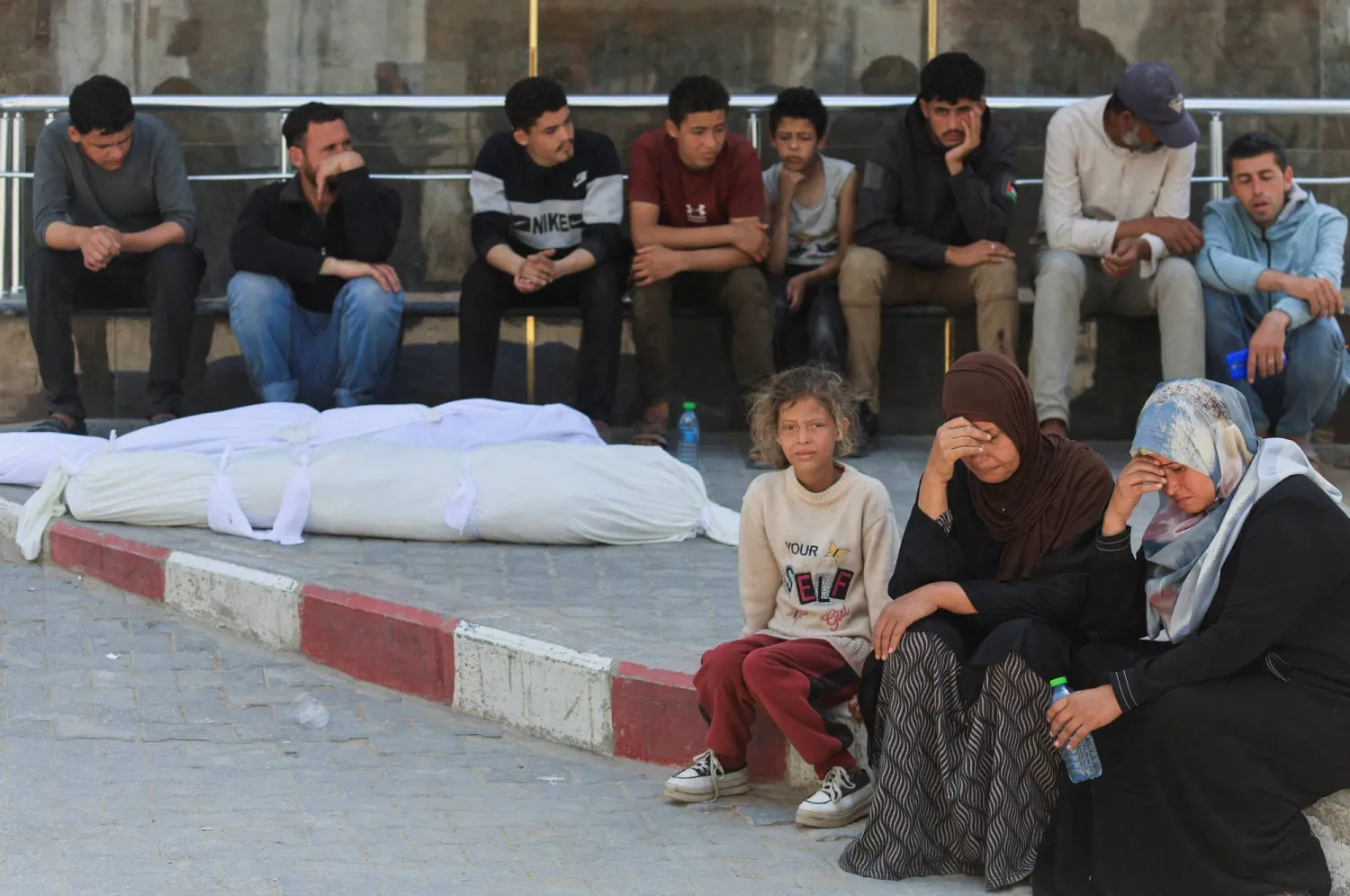
At least 420 Palestinians have been killed in Gaza by Israeli forces since the ceasefire took effect, according to Gaza's health ministry. 

The Israeli military said three of its soldiers have also been killed by militants during the same period. 

The Israeli authorities said in their submission that the search for the remains of the last hostage held in Gaza is ongoing, suggesting that allowing journalists into the territory at this stage could hinder the operation. 

The remains of Ran Gvili, whose body was taken to Gaza after he was killed during the Hamas attack on October 7, 2023, have still not been recovered despite the ceasefire. 

All other 250 hostages seized on that day - both the living and the deceased - have been returned to Israel. 

The Supreme Court is expected to issue a ruling on the matter, though it is unclear when a decision will be handed down. 


Calls in Lebanon for Immediate Action Against ‘Remnants’ of Assad Regime

The Masnaa border crossing between Lebanon and Syria. (AFP)
TT

Calls in Lebanon for Immediate Action Against ‘Remnants’ of Assad Regime

The Masnaa border crossing between Lebanon and Syria. (AFP)

Reports about the presence of “remnants of the former Syrian regime” in Lebanon have raised concerns that they could destabilize internal security or turn Lebanese territory into a platform for targeting Syria’s security and stability.

Authorities and security agencies have launched a broad campaign to verify these reports as voices across Lebanon warned of the presence of former Syrian officers in certain regions, particularly in the North and Bekaa Valley in the east.

The Lebanese Army Command regularly announces raids and security operations against suspects. The latest such operation was announced on Sunday, when dozens were detained, mostly Syrians, in northern Lebanon and the Bekaa.

In a statement, the Army Command said it carried out operations against wanted suspects, arresting nine Lebanese citizens and 35 Syrians in the regions of Akkar, Tripoli, Batroun, Baalbek and Hermel on charges including opening fire, possession of weapons, drug use, and human smuggling.

The army added that weapons, ammunition, drugs and military equipment were seized, and that investigations had begun under the supervision of the relevant judiciary.

Previously, a number of municipalities in northern Lebanon had issued statements urging security agencies to tighten measures in their areas, saying several former regime members have sought safety in their towns. They also spoke of the daily movement of suspicious vehicles.

Similar warnings have since emerged from the Bekaa. Dar al-Fatwa in Rashaya issued a statement on Sunday calling on the state to take “immediate, swift and decisive action to arrest the remnants of the Syrian regime in Lebanon and return them to Syria for trial.”

MP Wael Abou Faour, a member of the Democratic Gathering bloc, called on “the Lebanese security agencies to fulfill their duties with regard to the large number of officers from the remnants of the regime of former Syrian president Bashar al-Assad who are present in Lebanon.”

He stressed that despite the fall of the regime, “Lebanese-Syrian relations are governed by the Taif Agreement, which clearly stipulates that Lebanon must not be a base or a transit point for any attack on Syria’s security, and vice versa.”

“The Lebanese state must therefore act to uncover the truth and arrest officers from the remnants of the regime who are hiding in Lebanon.”