
An American delegation was Lebanon on Tuesday to follow up on the government's plan to impose state monopoly over arms, which calls on Iran-backed Hezbollah to disarm. The army will submit a plan on the disarmament on Sunday and the cabinet will convene on Tuesday to discuss it.
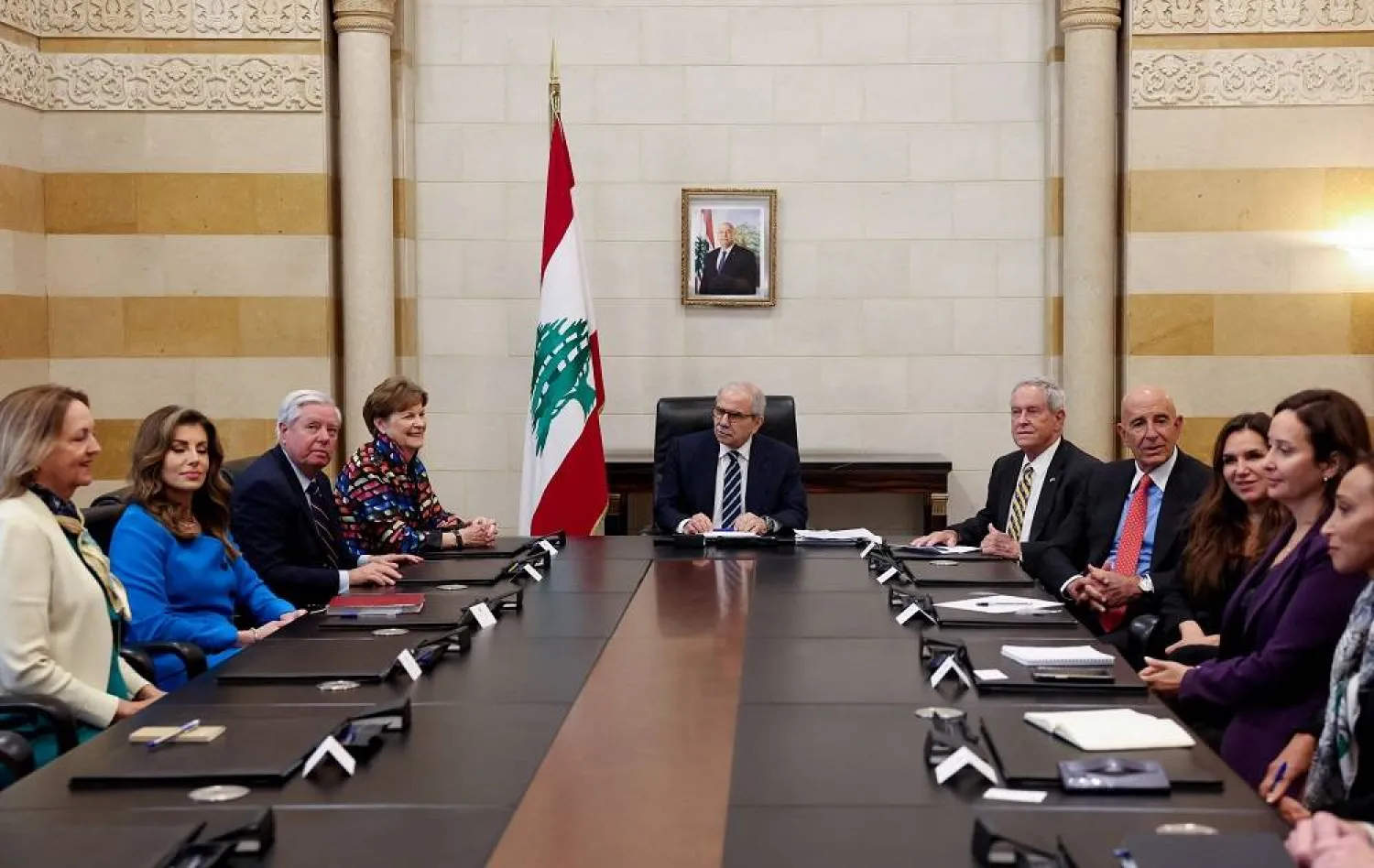
The delegation included Senators Jeanne Shaheen, Lindsey Graham, Joe Wilson, US envoy Tom Barrack and US Deputy Special Presidential Envoy to the Middle East Morgan Ortagus. They met with President Joseph Aoun, parliament Speaker Nabih Berri and Prime Minister Nawaf Salam.
Following talks with Aoun at the Baabda presidential palace, Barrack told reporters that the government will submit its proposal over the disarmament in the coming days and Israel will submit its own counter-proposal and what it will do with regards to withdrawing from territories it is occupying in southern Lebanon.
Its proposal will be presented to Lebanon, he said.
Asked if Israel will commit to stopping its hostile acts and strikes on Lebanon in wake of the government's disarmament decision, Ortagus said: "Every step that the Lebanese government takes, we will encourage the Israeli government to make the same step."
Barrack echoed these remarks, saying the Lebanese proposal would not involve military coercion but would focus on efforts to encourage Hezbollah to surrender its weapons, including addressing the economic impact on fighters funded by Iran.
"The Lebanese army and government are not talking about going to war. They are talking about how to convince Hezbollah to give up those arms," he stressed, while acknowledging that neither side has respected the ceasefire agreement.
Israel signaled on Monday it would scale back its military presence in southern Lebanon if Lebanon's armed forces took action to disarm Hezbollah.
Barrack, who met Israeli Prime Minister Benjamin Netanyahu on Sunday, described that development as "historic".
"What Israel has now said is: we don't want to occupy Lebanon. We're happy to withdraw from Lebanon, and we will meet those withdrawal expectations with our plan as soon as we see what is the plan to actually disarm Hezbollah," he said.
Hezbollah has vehemently rejected the government's disarmament decision.
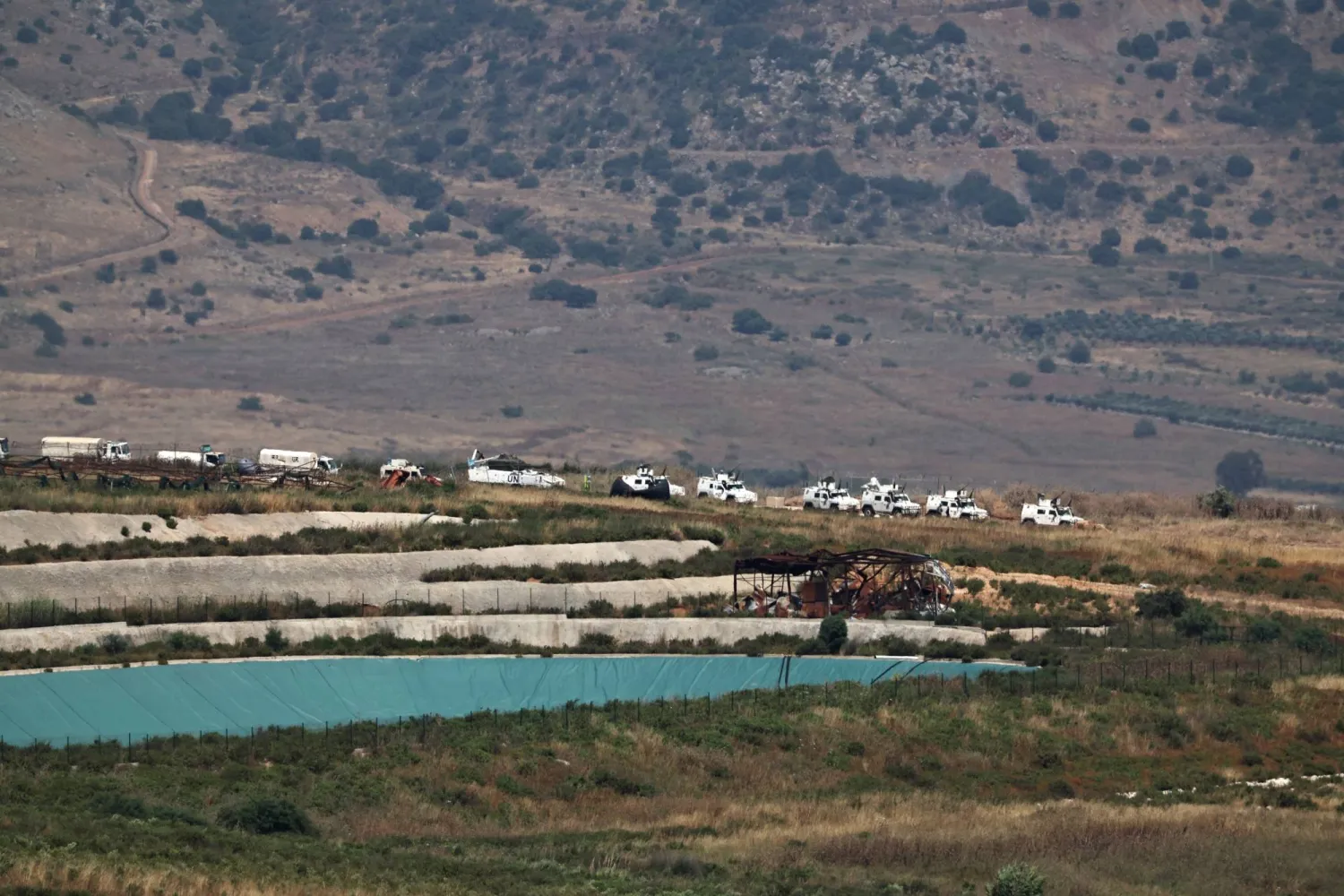
Informed ministerial sources told Asharq Al-Awsat that following the government move, Tel Aviv is expected to at least stop its daily violations in the South paving the way to withdrawing from the five points it still occupies.
Graham speaks of military and economic support
The sources added that Barrack and Oratgus' talks with Aoun focused on the issues between Lebanon and Israel, while the senators discussed economic and financial reforms.
Graham told reporters: "Don't ask me any questions about what Israel is going to do until you disarm Hezbollah. If you disarm Hezbollah, we'll have a good conversation. If you don't, it's a meaningless conversation."
"If I were the Israeli prime minister, I would be looking at Lebanon differently after Hezbollah was disarmed by the Lebanese people. That's your decision. Why do you need Israel to tell you to disarm Hezbollah? That's not Israel's decision. That's your decision," he continued.
"Whether they withdraw or not depends on what you do. So don't tell me anymore 'we're not going to disarm Hezbollah until Israel does something'. If that's the model, you're going to fail," he continued.
"The reason you disarm Hezbollah is because it's best for you. This country is going backward, not forward. If you don't follow through with disarming the Palestinians and Hezbollah and making the Lebanese army the central repository of arms for the nation, you're going nowhere," he stated.
"I came here because there's an opportunity. We all see Lebanon as at a point of change. We're here to tell you that we're buying into that change, that we support what you're trying to do," he continued.
"If you do make an effort to disarm Hezbollah, we'll be there trying to help. We'll try to help your military and try to help your economy. We think that's the right thing for you to do and it benefits the entire region, said Graham, who is a member of the Senate Appropriations Committee.
"If you're able to pull it off, Israel will look at you differently. If you're able to pull this off, there'll be a grand swell of support in Washington to help your economy and to help your military. (...) I came here because people who've been working this file tell me that Lebanon is moving in the right direction."
"I'm here to build on the success of others. Congress is looking at Lebanon differently because you're behaving differently. If you continue to go down this road, I think you will have a wonderful opportunity to secure your nation economically and military like anything I've seen."
"It all depends on what happens with the Hezbollah file and the Palestinian file," he stressed.
Renewed commitment to ceasefire
Aoun was briefed by the US delegation on their visits to Israel and Syria. He renewed Lebanon's commitment to the November ceasefire with Israel.
He expressed his gratitude to the American administration and Congress over their continued interest in Lebanon and commitment to assisting it.
Speaker Berri's office made a brief statement about his meeting with the US officials, saying they discussed developments in Lebanon and the region.
Salam stressed to the delegation that the government has embarked on the "irreversible" path to impose state monopoly over arms.
"This path is a Lebanese and national need. An agreement was reached over this issue in the Taif Accords, whose implementation has been delayed for decades during which Lebanon squandered several opportunities," said the PM's office in a statement.