
Setback in Hezbollah Arms Talks Puts Lebanon on Alert

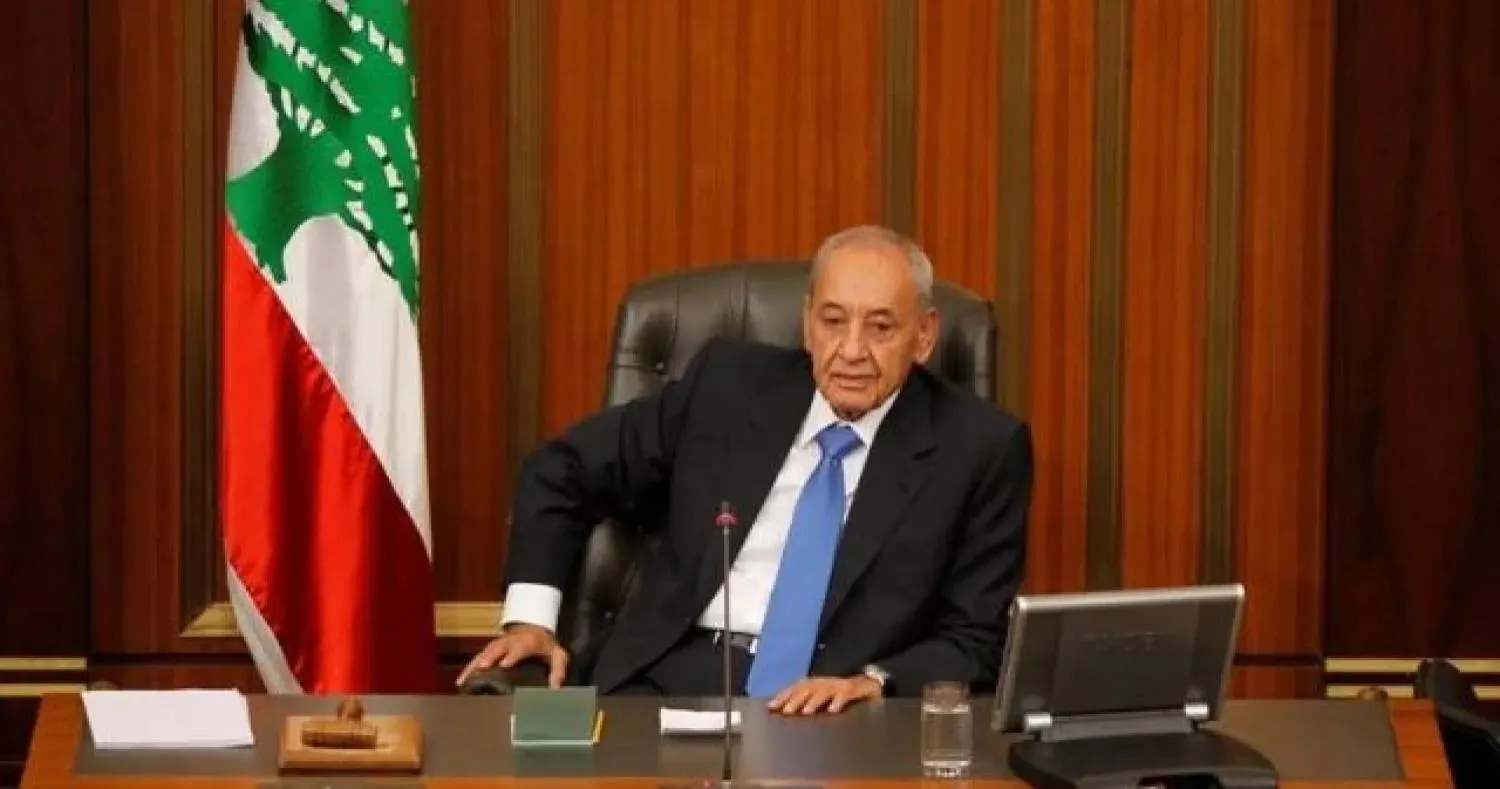
Parliament Speaker Nabih Berri (NNA)
TT

Setback in Hezbollah Arms Talks Puts Lebanon on Alert

Parliament Speaker Nabih Berri (NNA)

Lebanon has entered another waiting phase as political leaders brace for fallout from what appeared to be a setback in US mediation efforts with Israel, after American negotiators failed to secure clear commitments that could support Beirut’s plan to dismantle Hezbollah’s arsenal.

US deputy envoy for Middle East affairs Morgan Ortagus returned to Israel along with Senator Lindsey Graham for further talks, following a sharp Lebanese reaction to US demands that Hezbollah disarm before any discussion of Israeli concessions.

Parliament Speaker Nabih Berri voiced frustration over the outcome of the US delegation’s visit, telling Asharq Al-Awsat the Americans had brought “the opposite of what they promised,” referring to expectations that Washington would press Israel to respond to a step-by-step approach advocated by US envoy Tom Barrack.

Instead, he said, the delegation insisted that Hezbollah disarm before Israel takes any reciprocal action, such as withdrawing from Lebanese territory or halting cross-border attacks.

“The American delegation brought nothing from Israel, and things have become complicated again,” Berri said.

He declined to discuss next steps, stressing only that the situation was “not easy.” Asked about a Sept. 2 cabinet meeting to examine the army’s plan for Hezbollah’s disarmament, he replied: “Anything that leads to internal division is unacceptable.”

A senior Lebanese source said Tuesday’s cabinet session to review the army’s plan for disarming Hezbollah was still on schedule “for now,” but did not rule out a short delay if political tensions deepen.

The source said contacts were underway to ease the deadlock highlighted by Berri’s remarks and to revive “fruitful dialogue” with the Americans and Lebanon’s other allies in a bid to chart a roadmap out of the crisis.

Hezbollah urges government to ‘correct the mistake’

In its first reaction, Hezbollah accused Washington of seeking to dismantle Lebanon’s defenses and drag Beirut toward normalization with Israel, warning that the government had fallen into a “grave mistake” by entertaining US demands for the group’s disarmament.

Hussein al-Khalil, political aide to Hezbollah’s leader, said US pressure aimed to turn Lebanon into an “American-Israeli colony” and push it toward the Abraham Accords. He warned that involving the army in confronting Hezbollah would pit soldiers against their own people and risk “tearing down two pillars of the country, the army and the resistance.”

Khalil cautioned officials against “falling into deadly traps” that could spark civil war, recalling that Lebanon’s 1975–90 conflict was ended by the Taif Accord. He urged President Jospeh Aoun and other leaders to shield the army from internal strife and resist international proposals that “threaten Lebanon’s security, sovereignty and stability.”

US envoy cancels border tour

On Wednesday, Barrack scrapped a planned visit to Lebanon’s southern border after protesters in the area opposed his tour. He instead received a briefing from Brigadier General Nicolas Tabet, head of the South Litani sector, who described Israeli practices hindering the army’s full deployment along the frontier.

Lebanon’s state news agency said Barrack arrived by helicopter at an army base in the southern town of Marjayoun amid tight security. It later reported he canceled stops in the nearby town of Khiam, bombed by Israel during its last war with Hezbollah, and in the coastal city of Tyre.

Photos and footage showed Hezbollah supporters waving the group’s flags and carrying portraits of fighters killed in Israeli strikes as they protested Barrack’s visit, blocking roads and denouncing what they called Washington’s “biased policies.”

The Lebanese army had deployed in the area, including at the northern entrance of Khiam, to secure the envoy’s trip amid calls for demonstrations. Some protesters stomped on a painted Star of David on the road, beside graffiti reading “America the Great Satan” in Arabic and “Barrack is an animal” in English, according to AFP.

Meanwhile, Israeli violations continued in south Lebanon, where a powerful pre-dawn explosion was heard after the Israeli army detonated an object inside the border town of Kfarkila, with echoes felt across nearby villages in Marjayoun district.

An Israeli drone also dropped leaflets over several southern towns, including Adaisseh and Kfarkila, warning “village officials linked to Hezbollah” and urging residents to “stay away from them because they are a target.”



Egyptian Gaza Relief Group Says Israeli Strike on Photographers Was Deliberate

An aid distribution point in northern Gaza operated by the Egyptian Relief Committee (Egyptian Relief Committee)
TT

Egyptian Gaza Relief Group Says Israeli Strike on Photographers Was Deliberate

An aid distribution point in northern Gaza operated by the Egyptian Relief Committee (Egyptian Relief Committee)

The spokesperson for the Egyptian Relief Committee in Gaza, Mohamed Mansour, said Israel deliberately targeted three photojournalists while they were carrying out a humanitarian mission inside the Netzarim camp, an area located about six kilometers away from Israeli army forces.

Mansour told Asharq Al-Awsat that the attack was “a continuation of Israeli pressure on the committee’s work since it began operating, as part of the occupation’s efforts to tighten restrictions on anyone attempting to provide relief work and humanitarian services to the people of Gaza.”

The Israeli army killed three photojournalists on Wednesday who were working as a media team for the Egyptian Relief Committee for Gaza.

Field sources told Asharq Al-Awsat that the victims were Mohammed Salah Qashta, Abdul Raouf Shaat, and Anas Ghneim.

They were carrying out a filming mission using a small drone and cameras to document stages of work at camps that the Egyptian committee is helping to establish.

Mansour stressed that “the targeting of the photographers will only increase the committee’s determination to provide relief services and shelter to the Palestinian people.”

He said the committee would continue its work as usual to be “a genuine support for the people of the Strip, amid extremely complex security conditions.”

Israeli Army Radio reported, citing sources, that Egypt sent an angry message to Israel following the attack in Gaza in which Palestinians working for the Egyptian committee for the reconstruction were killed.

According to the radio report, Egypt expressed its protest that the attack took place outside the boundaries of the so-called yellow line, in an area that does not pose a threat to Israeli forces.

For its part, the Israeli army claimed it had targeted suspects operating a “Hamas-affiliated drone” in central Gaza.

In a statement on Wednesday, the army said: “Following the identification of the drone and due to the threat it posed to the forces, the Israeli army precisely struck the suspects who were operating the drone.”

The army said the details were under review.


Israel Launches Wave of Fresh Strikes on Lebanon

Smoke and sparks ascend from the site of an Israeli airstrike that targeted a building in the southern Lebanese village of Kfour on January 21, 2026. (AFP)
TT

Israel Launches Wave of Fresh Strikes on Lebanon

Smoke and sparks ascend from the site of an Israeli airstrike that targeted a building in the southern Lebanese village of Kfour on January 21, 2026. (AFP)

Israel launched fresh strikes on what it said were Hezbollah targets in south Lebanon after raids earlier Wednesday killed two people, the latest violence despite a year-old ceasefire with the group.

The state-run National News Agency said Israeli warplanes launched raids on buildings in several south Lebanon towns including Qanarit and Kfour, after the Israeli army issued evacuation warnings to residents identifying sites it intended to strike there.

An AFP photographer was slightly wounded along with two other journalists who were working near the site of a heavy strike in Qanarit.

The Israeli army said it was striking Hezbollah targets in response to the group's "repeated violations of the ceasefire understandings".

Under heavy US pressure and fears of expanded Israeli strikes, Lebanon has committed to disarming Hezbollah.

But Israel has criticized the Lebanese army's progress as insufficient and has kept up regular strikes, usually saying it is targeting members of the Iran-backed group or its infrastructure.

Earlier Wednesday, the health ministry said an Israeli strike on a vehicle in the town of Zahrani, in the Sidon district, killed one person.

An AFP correspondent saw a charred car on a main road with debris strewn across the area and emergency workers in attendance.

Later, the ministry said another strike targeting a vehicle in the town of Bazuriyeh in the Tyre district killed one person.

Israel said it struck Hezbollah operatives in both areas.

A Lebanese army statement decried the Israeli targeting of "civilian buildings and homes" in a "blatant violation of Lebanon's sovereignty" and the ceasefire deal.

It also said such attacks "hinder the army's efforts" to complete the disarmament plan.

This month, the army said it had completed the first phase of its plan to disarm Hezbollah, covering the area south of the Litani river, around 30 kilometers (20 miles) from the Israeli border.

Most of Wednesday's strikes were north of the river.

More than 350 people have been killed by Israeli fire in Lebanon since the ceasefire, according to an AFP tally of health ministry reports.

The November 2024 truce sought to end more than a year of hostilities, but Israel accuses Hezbollah of rearming, while the group has rejected calls to surrender its weapons.


Syria’s Rifaat Al-Assad, ‘Butcher of Hama’, Dies Aged 88, Say Sources

Rifaat al-Assad, uncle of deposed Syrian ruler Bashar al-Assad. (AP file)
TT

Syria’s Rifaat Al-Assad, ‘Butcher of Hama’, Dies Aged 88, Say Sources

Rifaat al-Assad, uncle of deposed Syrian ruler Bashar al-Assad. (AP file)

Rifaat al-Assad, uncle of deposed Syrian ruler Bashar al-Assad and dubbed the "Butcher of Hama" for suppressing an uprising in the 1980s, has died aged 88, two sources close to the family said Wednesday.

Once a pillar of the Assad family's dynastic rule, Rifaat "died after suffering from influenza for around a week", one source who worked in Syria's presidential palace for over three decades told AFP.

A second source, an ex-officer of Syria's army in the Assad era, confirmed the death, saying Rifaat had moved to the United Arab Emirates after his nephew's government was toppled by opposition factions in December 2024, without specifying if he died there.

Rifaat's role in a February 1982 massacre as part of a crackdown on an armed revolt by the Muslim Brotherhood earned him the nickname "the Butcher of Hama", referring to the central Syrian city.

His brother Hafez al-Assad, who ruled Syria at the time, launched the campaign, which government forces carried out under the command of Rifaat, who was the head of the elite "Defense Brigades".

The death toll from 27 days of violence, which took place under a media blackout, has never been formally established, though estimates range from 10,000 to 40,000.

Swiss prosecutors had accused Rifaat of a long list of crimes, including ordering "murders, acts of torture, inhumane treatment and illegal detentions" while an officer in the Syrian army.

He also served as vice president under his brother Hafez but went into exile in 1984 after a failed attempt to overthrow him, moving to Switzerland then France.

He later presented himself as an opponent of his nephew Bashar, who succeeded Hafez in 2000.

In 2021, he returned to Syria from France to escape a four-year prison sentence for money laundering and misappropriation of Syrian public funds.

Two years later, he appeared in a family photo alongside Bashar, the ruler's wife Asma and other relatives.

Shortly after Bashar's ouster, Rifaat crossed into Lebanon and then flew out of Beirut airport, a Lebanese security source said at the time, without specifying his final destination.