
The night was warm and lovely as the Abu Samra family gathered outside their home in northern Gaza in September 2023, the smell of mint from the garden filling the air.
As always, the family patriarch recounted how, as a 10-year-old in 1948, he was forced from his village in what is now Israel, one of hundreds of thousands of Palestinians displaced in what they call the Nakba — “the catastrophe.”
The patriarch, Abdallah Abu Samra, had told the story often, each time focusing on different details to ensure his family would remember them. One day, he hoped, they would all return.
Within weeks, that prospect seemed more distant than ever.
Hamas waged its surprise attack on Israel, storming across the border on Oct. 7, killing about 1,200 people — most of them civilians, according to the Israeli government — and seizing about 250 others as hostages. Israel then launched its war in Gaza, killing tens of thousands and leaving generations of Palestinians to experience displacement and hunger, and the fear that they would never see their homes again.
The Abu Samra family and many other Gazans say they have always lived in the shadow of the Nakba. And from the first moments of the war, as Israeli warplanes started dropping bombs and fliers ordering mass evacuations, their worries of another Nakba rose.
Bigger Nakba Now
“We are in a bigger Nakba now,” said Abu Samra, a retired teacher.
Israelis have long objected to the characterization of the 1948 conflict as a catastrophe.
The mass displacement nearly 80 years ago — and the rival narratives about it — are among the most intractable issues in the long conflict between the two sides, with Palestinians and their descendants demanding, and Israel rejecting, the right to return to the land they fled in 1948.
In the current war in Gaza, Prime Minister Benjamin Netanyahu’s government says that because Hamas has burrowed deep into — and under — Gaza’s neighborhoods and infrastructure, residents must leave civilian areas. It has said that its displacement orders are temporary, to get civilians out of harm’s way and mitigate casualties.
The Palestinians haven’t been driven out of Gaza itself. But Israel’s displacement of civilians and destruction of neighborhoods “appears to be a push for a permanent demographic shift in Gaza that is in defiance of international law and is tantamount to ethnic cleansing,” said the UN’s human rights chief, Volker Türk.
Israel is also encouraging what it calls “voluntary” emigration for people to leave Gaza entirely but has not found countries willing to take in large numbers. Human rights experts say that any mass, so-called voluntary emigration would also constitute a kind of ethnic cleansing because conditions in Gaza have become so unlivable that many Gazans will have no real choice but to leave.
Most of Gaza Destroyed
The Abu Samra family, about 20 in all, said they began fleeing on the first day of the war, when Israeli bombs struck so close to their home that the walls shook. It was the start of a cycle of displacements, until they eventually split up to find shelter. Some relatives died in Israeli strikes, the family said. Others fled to neighboring Egypt and now wonder if they will ever return home, or if there will be anything left to return to.
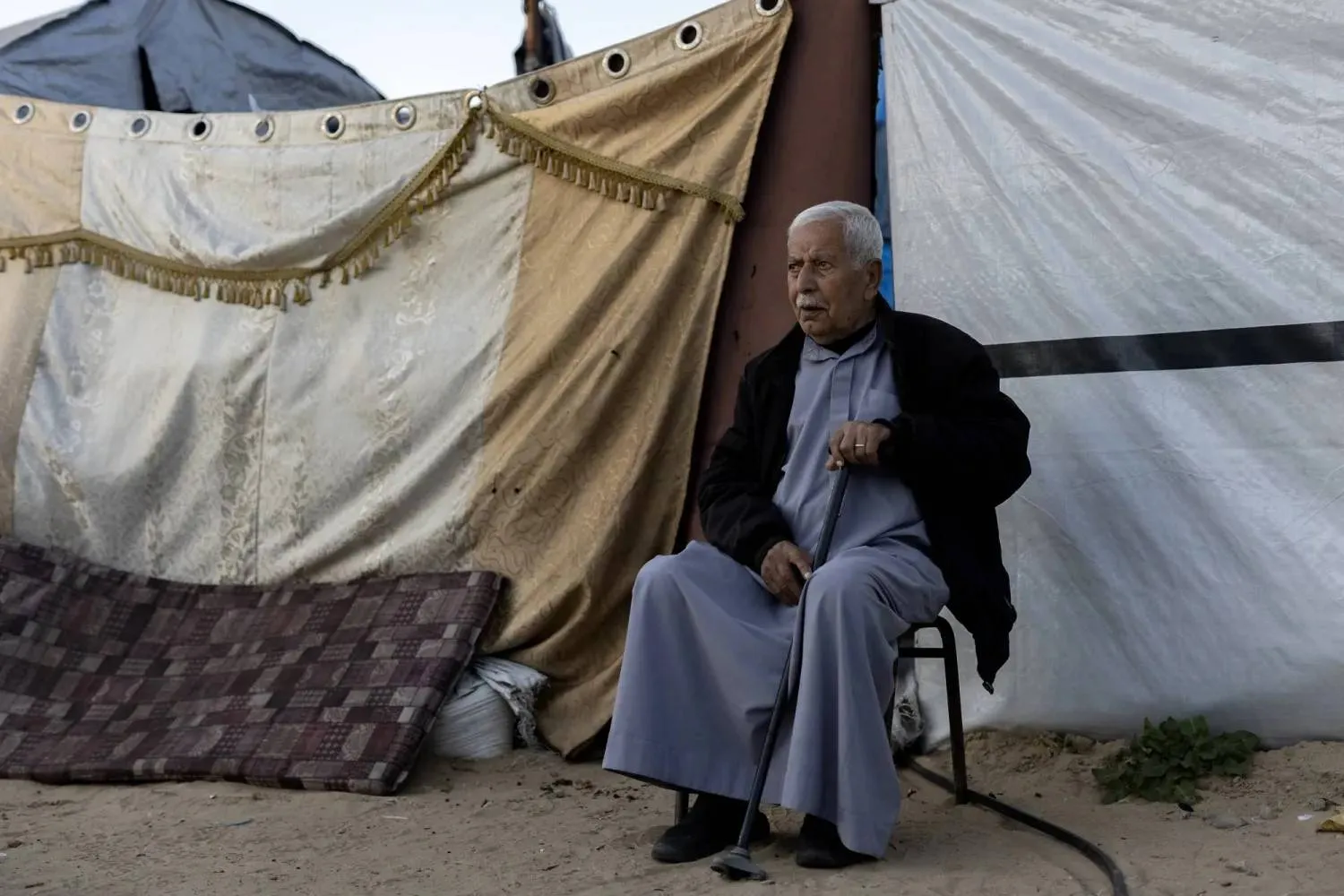
Abu Samra, now 87 and frail, has been stuck in southern Gaza, in a tent of tarps, a curtain and blankets. Once again, he is scared, hungry and separated from most of his family, just as he was as a boy.
“I always think, talk, and dream” of going home, he said.
For a brief window this year, a cease-fire allowed some Gazans to go back to their neighborhoods. Many found only rubble. Nearly 80 percent of buildings have been damaged or destroyed, with more being cleared as Israel now expands its military campaign. The World Bank estimated that it could take 80 years to rebuild the homes that have been destroyed.
“With the news and what is happening, we are losing hope that we’ll ever be able to return,” said Ghada Abu Samra, 25, Abu Samra’s granddaughter, who managed to flee to Egypt.
For many Palestinians, the Nakba is not only a traumatic memory but also a matter of identity. About 1.7 million of the 2.2 million people in Gaza are either refugees from the war surrounding the establishment of Israel in 1948 or their descendants, according to the UN.
Gaza Nakba 2023
The key to a house, often called the key of return, is such a powerful symbol for Palestinians that many families hold onto theirs, even for homes inside Israel that no longer exist.
In the current war in Gaza, incendiary comments by Israeli leaders raised Palestinian fears that history was about to repeat itself.
“We are now rolling out the Gaza Nakba,” the Israeli agriculture minister, Avi Dichter, said a few weeks into the war. “Gaza Nakba 2023.”
Israel says it opened humanitarian corridors to allow people to find safety, and that it communicated its evacuation orders in fliers, text messages and phone calls.
Human rights groups counter that the war has rendered so much of Gaza uninhabitable that it is leading to permanent displacement, a potential war crime.
Some, like Human Rights Watch, call the displacement an intentional part of Israeli policy that amounts to a crime against humanity.
Israel has rejected the accusations as deliberate misrepresentations.
Key Is Most Important Thing
In January, when Israel and Hamas struck a brief cease-fire deal, members of the Abu Samra family cried tears of joy, thinking it might offer a chance to go back home.
They had grown up on Abu Samra’s stories of displacement in 1948, and before the current war, some had even felt a twinge of resentment at the older generation for leaving what is now Israel and winding up in Gaza.
Abu Samra had spent his early childhood living off about 100 acres his father owned in the farming village of Iraq Suwaydan — about 15 miles north of the present-day Gaza border — harvesting grains and picking figs.
In 1948, Abu Samra said that he and an older brother had gone to the edge of the village to grind wheat, when hundreds of residents, including his family, suddenly had to flee. He and his brother walked east while their family walked south.
People left with very few belongings — some clothes, blankets and a bit of food — believing they would return within days, he said.
“The most important thing is the key to the house,” he recalled. “Everyone locked their door and took the key in the hopes that they would be gone only a short period.”
Days turned into weeks, then into long, hungry months. Finally, in 1949, Abu Samra and his brother reunited with their family in a refugee camp in Gaza.
That was the story he recounted on that September night in 2023, as he had so many nights before.
“I wanted to plant in the minds of my descendants who didn’t live the Nakba,” he explained.
The New York Times