



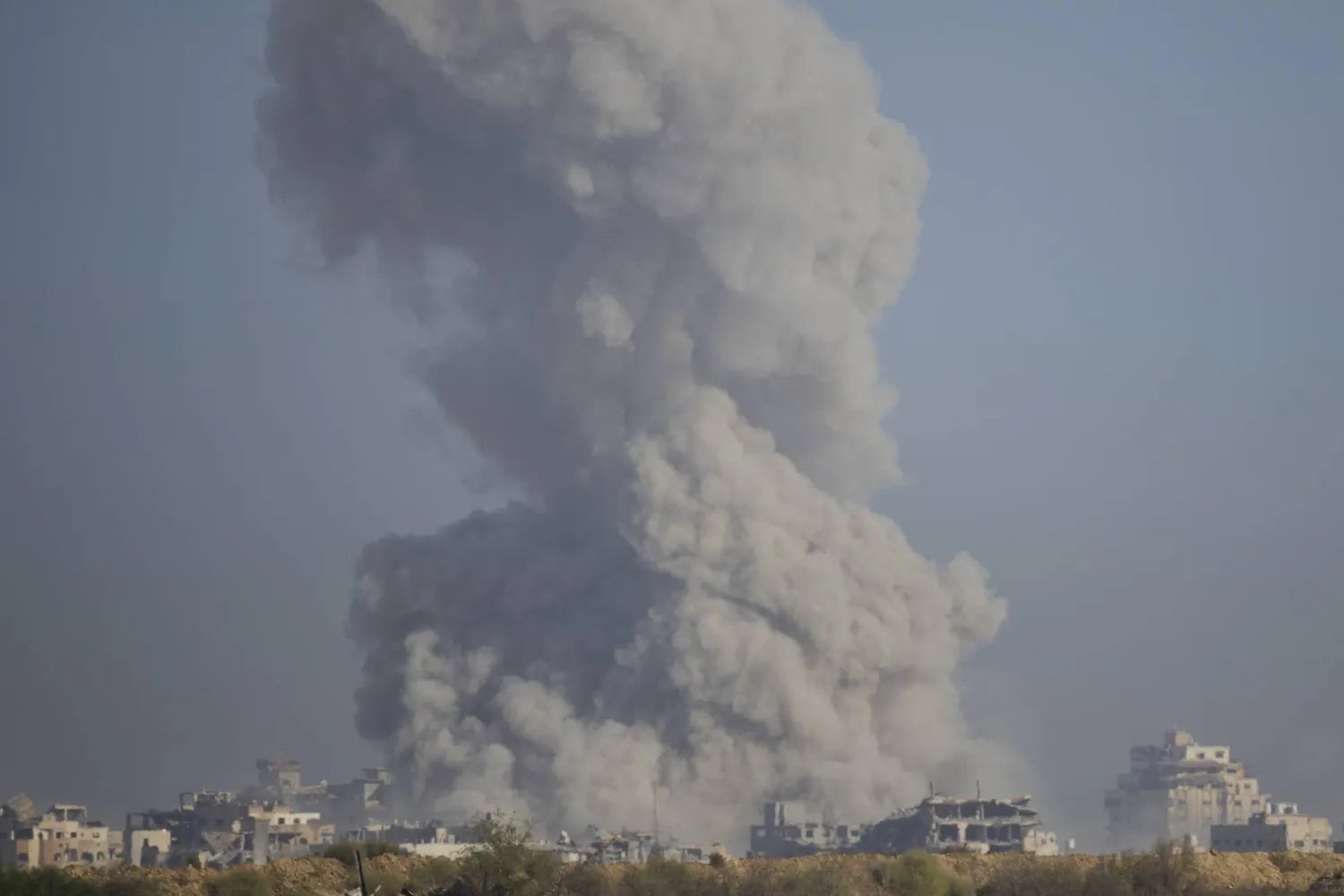

Israeli forces blew up more residential buildings in Gaza City on Sunday, killing at least 34 Palestinians and prompting many others to flee, Gazan health authorities said, as Israel's tanks pushed further into the densely populated city.
Nearly two years into the war, Israel describes Gaza City as the last bastion of Hamas and the military has been demolishing housing blocks it says were being used by the militant group since launching its ground assault in the city this month.
A pregnant woman and her two children were among those killed on Sunday, Reuters quoted medics as saying. The Israeli military did not immediately comment on the deaths, issuing a statement saying its forces had killed "numerous" militants.
Relatives sifted through the rubble of one of the apartment buildings that was hit in Gaza City, trying to salvage their belongings.
"The mother, the boy, the girl, and the baby in her womb - we found them all gone," said Mosallam Al-Hadad, the dead woman's father-in-law, saying his son had been seriously injured in the strike. "(He) was in a critical condition. We took him to the hospital, and his leg was amputated," Hadad told Reuters.
Israel said on Saturday its forces had expanded their operations in the Gaza City area over the past few days, killing 30 militants and locating weapons.
On Sunday, witnesses said Israeli tanks were advancing towards the west through Tel Al-Hawa, a southeastern suburb.
The Israeli military estimates that more than 450,000 people have left the city since the start of September. Hamas disputes this, saying just under 300,000 have left and that about 900,000 people remain.
In a statement Sunday, the Israeli military stated it killed Majed Abu Selmiya, who it said was a sniper for Hamas’ military wing and was preparing to carry out more attacks in the Gaza City area, without providing evidence.
Majed was the brother of the director of Shifa hospital, Dr. Mohamed Abu Selmiya, who called the allegations a lie and said Israel was trying to justify the killing of civilians. Dr. Selmiya told The Associated Press that his brother, 57, suffered from hypertension, diabetes and had vision problems.


