



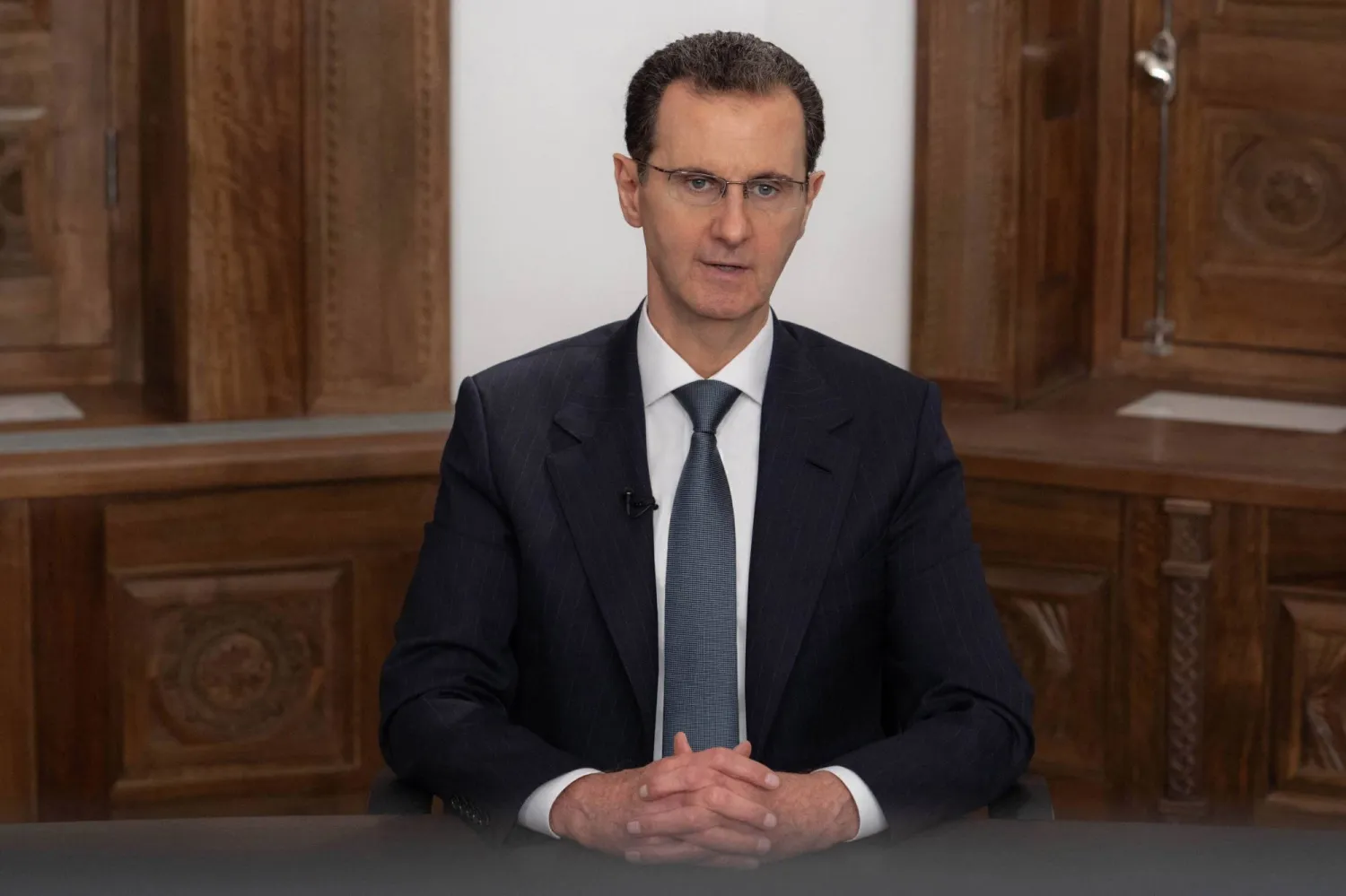

As anticipation grows over Syrian interim President Ahmed al-Sharaa’s visit to Moscow next month to attend the Arab-Russian summit, Damascus has officially launched legal proceedings against ousted Syrian president Bashar al-Assad, who has been living in Russia since the fall of his regime last December.
Tawfiq al-Ali, the seventh investigative judge in Damascus, issued an arrest warrant in absentia against Assad in connection with events that took place in Daraa in November 2011 during the civil war. The decision allows the warrant to be circulated through Interpol and pursued internationally.
In remarks to the state-run news agency SANA on Saturday, al-Ali said the warrant includes charges of premeditated murder, torture resulting in death, and unlawful deprivation of liberty.
He explained that the move stems from lawsuits filed by families of victims in Daraa, stressing that legal proceedings will continue “to hold accountable those responsible for crimes committed under the ousted regime.”
Sharaa is expected to attend the Arab-Russian Summit in mid-October at the invitation of Russian President Vladimir Putin. Deputy
Prime Minister Alexander Novak, who visited Damascus two weeks ago at the head of a large delegation, said Moscow attaches “great importance to the president’s visit,” describing it as the opening of a “new chapter in relations with Syria.”
So far, Russia has not responded positively to Damascus’s request for Assad’s extradition, a matter that was raised during Deputy Foreign Minister Mikhail Bogdanov’s visit to the Syrian capital earlier this year.
Moscow-based researcher Mahmoud Hamza downplayed the likelihood that Assad’s prosecution would disrupt the new stage in bilateral relations.
Speaking to Asharq Al-Awsat, he described Assad’s extradition as a Syrian demand essential for justice, noting that the arrest warrant “came at the right time.”
He predicted that Moscow would refrain from issuing a negative reaction, saying Putin “will not hand over Bashar al-Assad,” but will nonetheless take the matter into account.
Hamza added that the case “will not die; it may simply be postponed, or unconventional solutions may emerge later.”
The warrant was “crucial for establishing the rights of Syrians in court, as well as for its political significance,” he added.
He urged Damascus to extend the case to relevant international organizations, arguing that Assad “committed crimes against Syria and its people.”
He also revealed that Russian officials, in private conversations, “do not defend Assad but insist that they accepted him and his family on humanitarian grounds.”
Political analyst Bassam Suleiman, who is close to the Syrian government, told Asharq Al-Awsat that Damascus remains determined to “advance the path of transitional justice and prosecute criminals, foremost among them Assad.”
Russia bears a “historic responsibility” in repairing ties between the two peoples, he said, acknowledging the importance of cultural, social, and economic bonds.
“This positive history was tarnished,” Suleiman said. “Russia must now correct this, and realize that the man it is sheltering is the greatest criminal sought by Syrians.”


