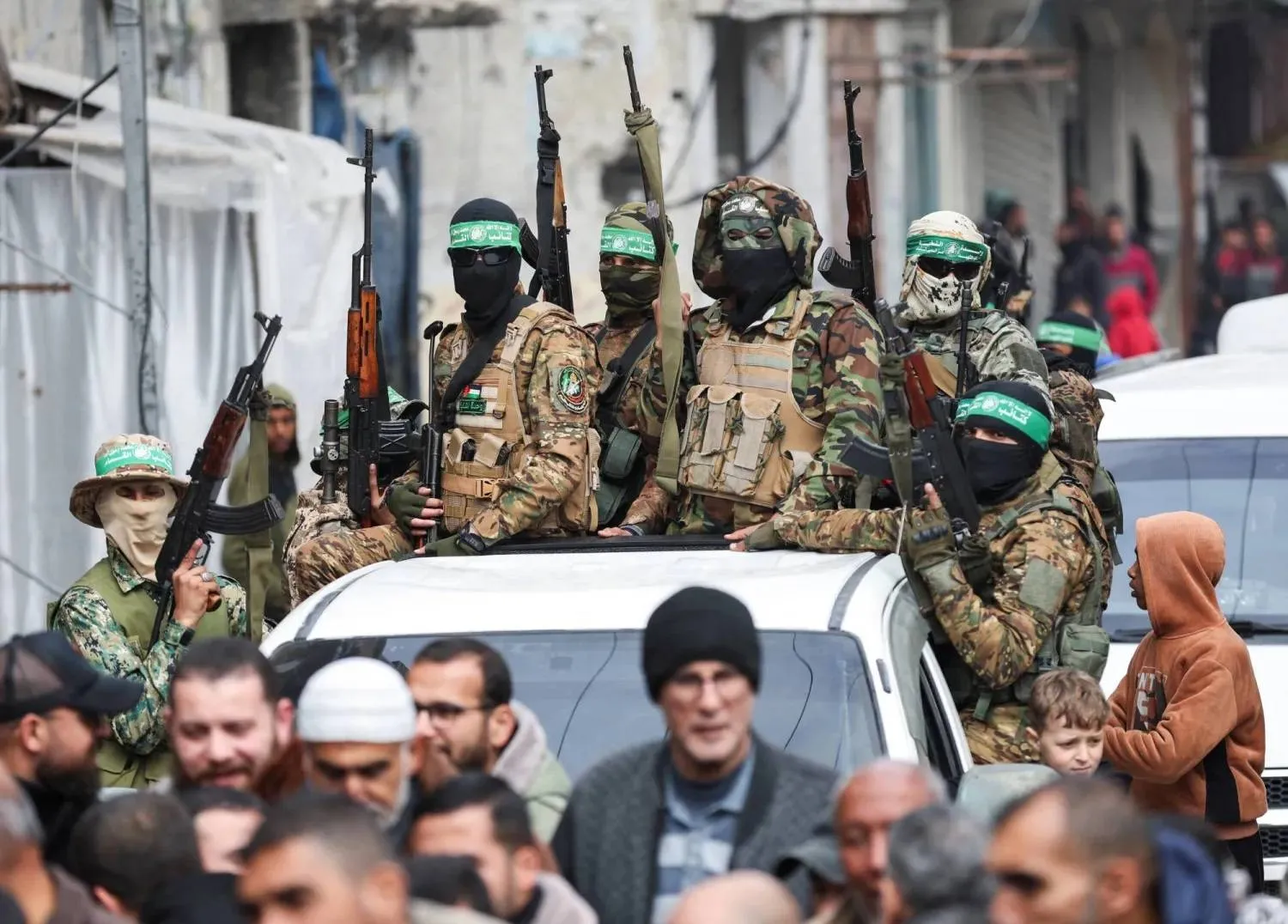

US President Donald Trump’s proposal for a ceasefire in Gaza and an end to the two-year war has left members of Hamas, its supporters, and employees of its government facing questions over the movement’s future and their own fate.
For decades, analysts described Hamas as the most disciplined Palestinian faction, with a political, military, economic and religious structure that won it lasting popularity among many Palestinians.
But in governing Gaza, the group often struggled to act as a representative of all Palestinians, critics say, running the enclave along partisan lines.
The latest war — and Hamas’s failure to anticipate its fallout — has hardened public resentment, with some residents and supporters questioning decisions that led to what they see as an unexpected and costly dead end.
Leadership Under Fire
Throughout the conflict, Hamas largely maintained its political, military and government apparatus. But after Israel resumed its offensive on March 18, stepped-up assassinations and more precise strikes began eroding that structure.
Hamas sources told Asharq al-Awsat that some officials, for the first time, abandoned their duties for fear of their safety. Others continued working but were forced underground, complicating the running of government and the organization’s internal networks.
That vacuum has widened since the killing of senior commanders in targeted operations, leaving mid-level leaders feeling increasingly exposed as Israel presses on with the war.
Cracks within the Movement
Since March, Hamas cadres, supporters and government employees have felt the strain of war more acutely, according to residents and officials. Salaries, once a key lifeline, have shrunk to below 40% of their value, often paid in old, damaged banknotes.
The US plan has deepened uncertainty. Many Hamas loyalists now question whether the group can retain power, or even survive as a dominant force.
“Trump’s plan is dangerous,” said J.A., an employee of Hamas’s economy ministry, who also works in the group’s social outreach wing. “There are real fears among activists and employees that future security forces could arrest us or interrogate us for belonging to Hamas.”
He told Asharq Al-Awsat, under the conditions of anonymity, that anxiety was widespread, and that some were already weighing whether to flee abroad. Others, especially field fighters, reject that option and insist on keeping their weapons, fearing for their lives if they disarm.
A senior figure in Hamas’s preaching arm, known as al-Da‘wa, likened the moment to the 1990s, when security pacts led to mass arrests of Hamas members by Palestinian Authority forces.
“We fear another harsh crackdown, like in 1996–97,” he told Asharq Al-Awsat.
The Da‘wa apparatus has long been one of Hamas’s key structures, guiding members into political and government posts and shaping the organization’s outreach. But unlike in previous instances, the leader said, Trump’s proposal has not been discussed with lower ranks.
Decisions are instead being left to Hamas’s exiled leadership in hopes of securing a final deal to end the war.
An Uncertain Future
Hamas employees and activists across its political, military and religious wings agree that the future looks unpredictable. Many worry about rumored provisions that could grant amnesty only if fighters hand over their weapons.
Others fear the unknown role of international and Arab forces, as well as Palestinian Authority police units expected to take over governance.
A member of Hamas’s public outreach wing, which organizes rallies and conferences, described the situation as “unstable.” Yet, they insisted the group’s internal order remained intact despite the war.
“Even with all this destruction in Gaza, many still hold on to resistance,” they said.
“This is not a defeat or the dismantling of Hamas. The group is still strong, still united, and Israel has not managed to break it as it claims,” they told Asharq Al-Awsat.
But not all supporters share that view. Mohammed Hamdan, a Gaza resident displaced to the center of the strip, said Hamas needed to recognize the suffering of civilians.
“This is the time for Hamas to step aside and hand over governance to another Palestinian authority,” he said.
“Like many supporters, and perhaps even activists, I think we could accept being handed to the Palestinian Authority, provided we are protected from arrest and persecution, and given a chance to open a new Palestinian page.”