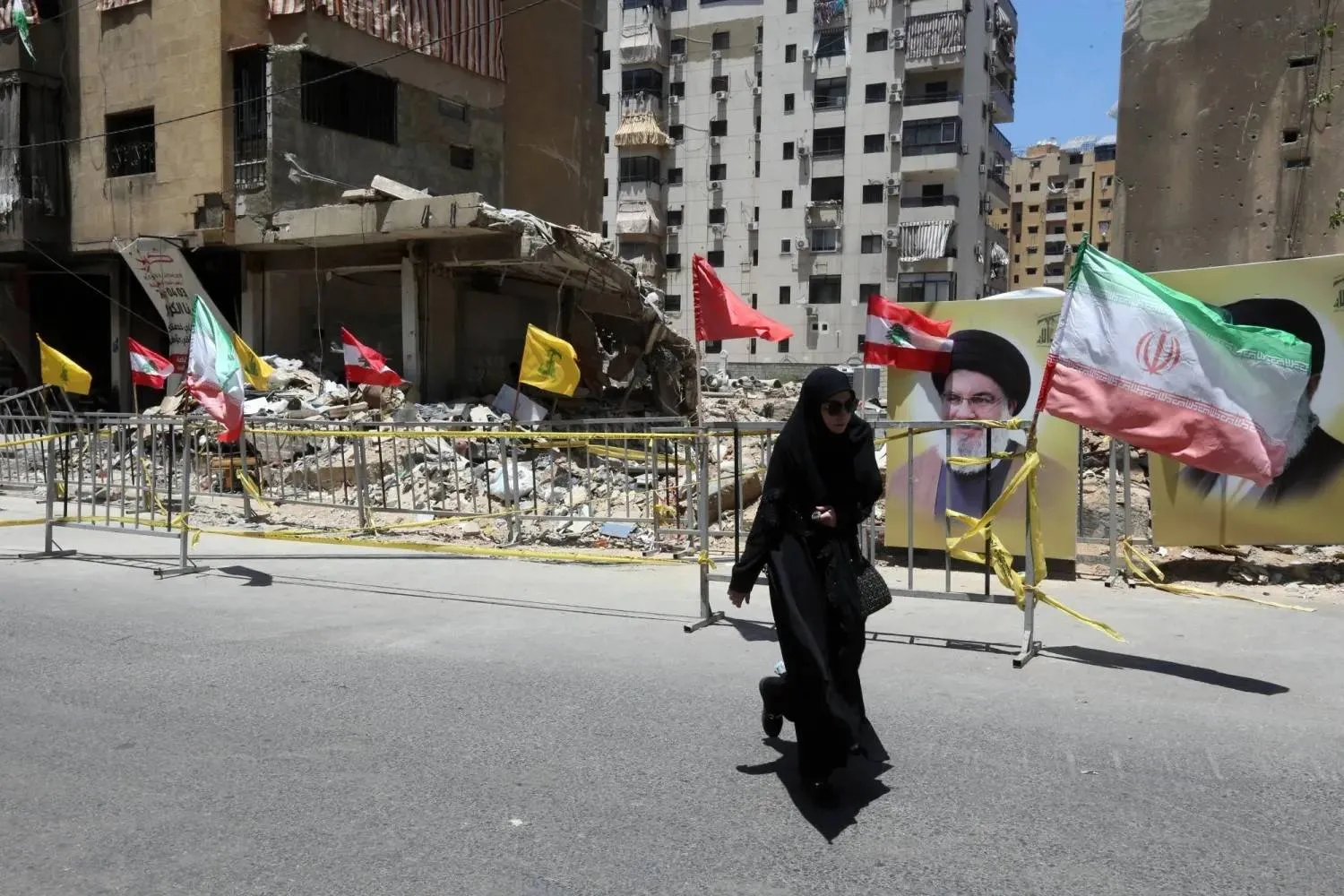

Lebanon is marking the second anniversary of Hezbollah’s entry into the “Support and Backing Gaza” battle on Oct. 8, 2023, facing what many describe as a “post-Hezbollah” military phase.
The shift comes amid domestic pledges to enforce the state’s “monopoly over arms” and growing local and international calls for Beirut to reclaim exclusive authority over decisions of war and peace.
Since Oct. 8, 2023, southern Lebanon has been the scene of near-daily exchanges of fire between Hezbollah and Israel. For months, the clashes remained limited and contained, but both sides gradually escalated, forcing thousands of families to flee border villages and inflicting heavy economic damage nationwide.
Lebanon entered a state of constant alert, gripped by fears of a wider conflict, before the fighting erupted into full-scale war in September 2024 and subsided two months later under a ceasefire agreement.
Dr. Mehiedine el-Chehimi a professor of law and foreign policy in Paris, told Asharq al-Awsat that Hezbollah and Lebanon’s so-called “resistance front” made a unilateral decision on Oct. 8, 2023 - based on a ruling by the party’s Shura Council and without consulting the Lebanese state - to enter what they called a “war of support and distraction.”
“This decision plunged Lebanon into a spiral of calamities at both the state and institutional levels,” el-Chehimi said. “It marked a clear loss for Hezbollah and the resistance axis - starting in Lebanon, through Syria, and reaching all the way to Iran and Yemen.”
A Complex Monopoly on Arms
The ceasefire agreement, which Lebanon says it has honored but Israel continues to violate, has not stopped Israeli airstrikes and assassinations. These ongoing attacks have amplified international and domestic pressure on Beirut to implement its pledge of exclusive state control over weapons - a principle Hezbollah says it will only accept under its own conditions.
Lebanese Shiite dissident Jad al-Akhaoui said the transition to dismantle Hezbollah’s military presence “is neither swift nor simple.”
“It’s deeply intertwined with politics, economics, and sectarian identity,” al-Akhaoui told Asharq al-Awsat. “Dismantling this system will require sustained internal and external pressure and serious political and security alternatives to restore public trust in the state and its institutions.”
He added: “The idea of a ‘post-military Hezbollah’ is emerging as a discussion and a concept, but turning it into reality will be painful. It’s likely to involve domestic and regional bargaining - and possibly confrontations - before Lebanon can become a normal state.”
Hamas and the “Trump Plan” Factor
Asked whether Hamas’ reported acceptance of the Trump peace plan could ease or hinder Hezbollah’s disarmament, Al-Akhaoui said such a move “would have direct repercussions on Lebanon and Hezbollah’s arsenal.”
“If Hamas - by laying down arms and entering a political process - sets a precedent, it would increase pressure on Hezbollah,” he said.
“An armed movement outside state control would lose legitimacy once the Palestinian resistance itself abandons its weapons. The party would also face mounting domestic embarrassment amid rising Lebanese demands to end exceptionalism and reassert state sovereignty.”
However, al-Akhaoui added that Hezbollah could also use Hamas’ disarmament “to justify holding onto its weapons - claiming Hamas’ downfall proves the need for its own strength to confront Israel and defend Lebanon. The outcome will ultimately depend on regional power dynamics and the Lebanese state’s ability to seize this moment and translate it into genuine sovereignty.”
Lebanon After Hezbollah
El-Chehimi said that since the signing of the ceasefire, Lebanon has entered “a new phase that can be described as Lebanon after Hezbollah - meaning after the presence of an illegal armed militia.”
“The current transition reflects the difficulty of Hezbollah becoming a purely political party,” he added.
“At its core, it still perceives itself as a military organization with parliamentary, ministerial, and grassroots extensions. Yet, Prime Minister Nawaf Salam’s government approved the ceasefire deal, making Lebanon more obligated than ever to implement international resolutions and pursue smart, active diplomacy to rebuild confidence in the state and increase pressure on Israel.”
He concluded: “Lebanon today, after the events of Oct. 7 and the subsequent decline of non-state movements across the region, stands at a crossroads. It can either manage the new phase wisely and move toward recovery or face further crises and external pressure. The current trajectory points toward consolidating the notion of a single, sovereign state that controls its entire territory, following the erosion of parallel, illegitimate powers that once dominated several capitals within the so-called resistance axis.”