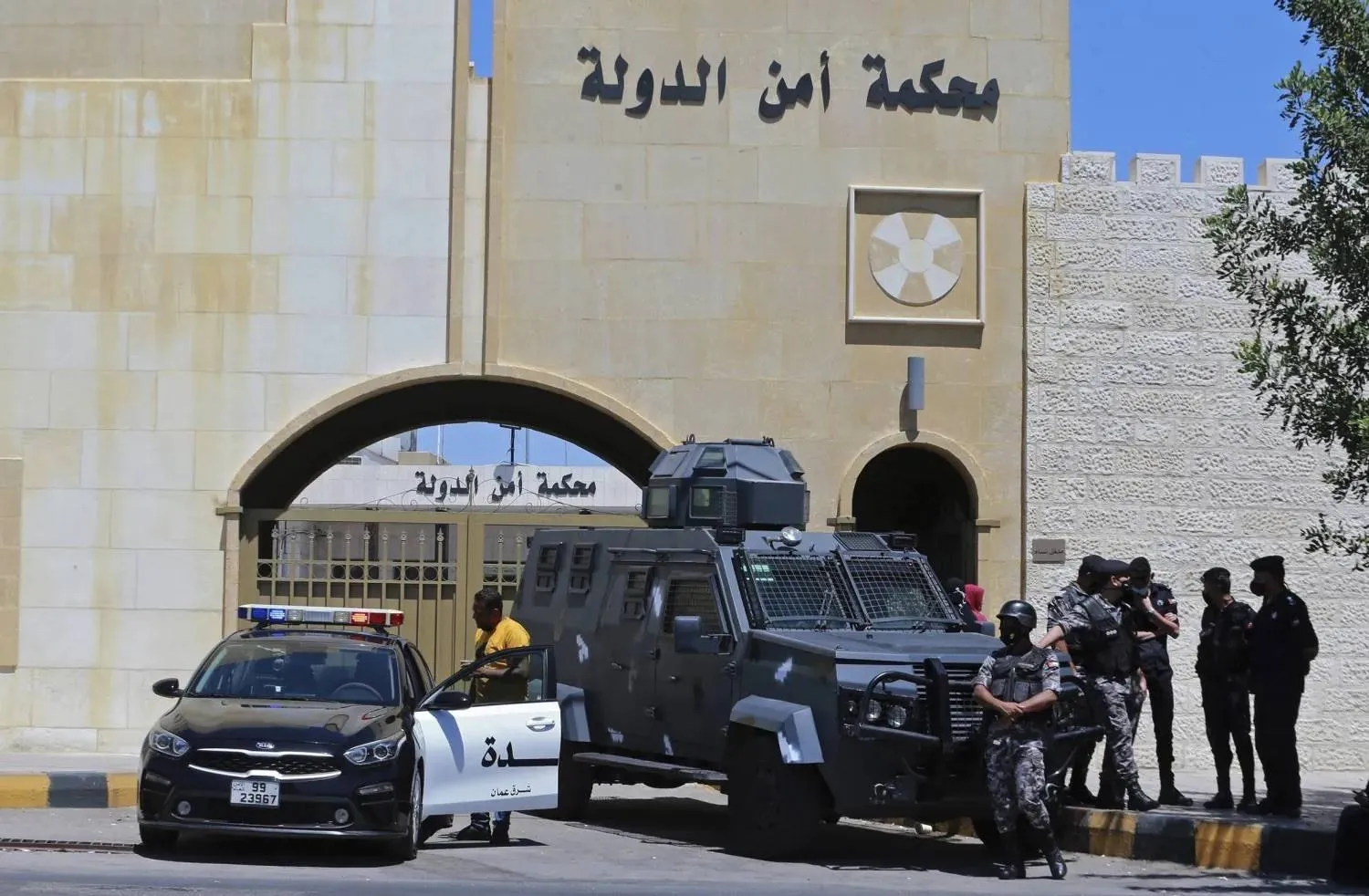

Jordan’s State Security Court on Wednesday issued verdicts against several defendants accused of plotting to undermine national security and incite chaos within the kingdom. The cases were first revealed in mid-April involving a group of individuals affiliated with the Muslim Brotherhood in Jordan, according to their own confessions.
On April 15, the General Intelligence Directorate announced that it had foiled plans aimed at destabilizing the country and creating material and security disturbances. Authorities said the conspirators sought to recruit and train operatives inside Jordan, send them abroad for further instruction, and prepare for attacks targeting domestic sites. The cases were subsequently referred to the State Security Court for prosecution.
According to official accounts, the intelligence service had been monitoring the suspects since May 2021. The investigation led to the arrest of members of the unlicensed Brotherhood group who had been manufacturing guided missiles, assembling drones, and possessing automatic weapons, allegedly with the intent to carry out terrorist operations inside Jordan, then-government spokesman Mohammad al-Momani said at the time.
Following the intelligence announcement, the Jordanian government disclosed that four separate cells were involved. Some were responsible for smuggling raw materials used to build drones and missiles, while others handled the actual manufacturing inside fortified warehouses surrounded by concrete walls. Meetings and coordination reportedly took place both inside Jordan and abroad.
Investigations revealed that one of the main cells responsible for missile production consisted of three individuals who had established two storage and production facilities - one in Zarqa and another in Amman - equipped with secret, reinforced rooms. The group had received funding and training from foreign sources and managed to produce a prototype of a short-range missile before being detained.
Another case involved recruitment efforts in which two defendants traveled to regional countries to collaborate with outside entities and recruit young Jordanians after receiving instructions and security training. They allegedly identified secret locations within the kingdom for planting materials in their possession.
In a separate case, training sessions were conducted in Jordan to prepare individuals for future missions, involving multiple areas used for instruction and coordination. Meanwhile, four other defendants reportedly collaborated to design and build drones, dividing responsibilities among themselves and traveling abroad to test a prototype glider in a farm field.
During recorded confessions, the defendants admitted ties to the Muslim Brotherhood. One of them, Abdullah Hisham Ahmad Abdul Rahman, said he had been linked to the group since 2002. Others claimed they received weapons and explosives training in Lebanon from Palestinian operatives. The banned Muslim Brotherhood organization denied any organizational link to the defendants, asserting in a statement that their actions were “individual” and did not represent the group.
Investigations further revealed that more than 30 million Jordanian dinars had been raised in recent years. Authorities said the outlawed Brotherhood transferred funds to regional and foreign destinations while allocating part of the money to domestic political campaigns in 2024 and to finance cells and activities later dismantled by security forces.
According to court documents, the illegally collected funds were used for political and charitable purposes -supporting a political party, media campaigns, protests, and student and union elections- as well as for paying monthly stipends to Brotherhood-affiliated politicians and financing their promotional activities.