


Morocco’s King Urges Faster Job Creation, Better Health and Education

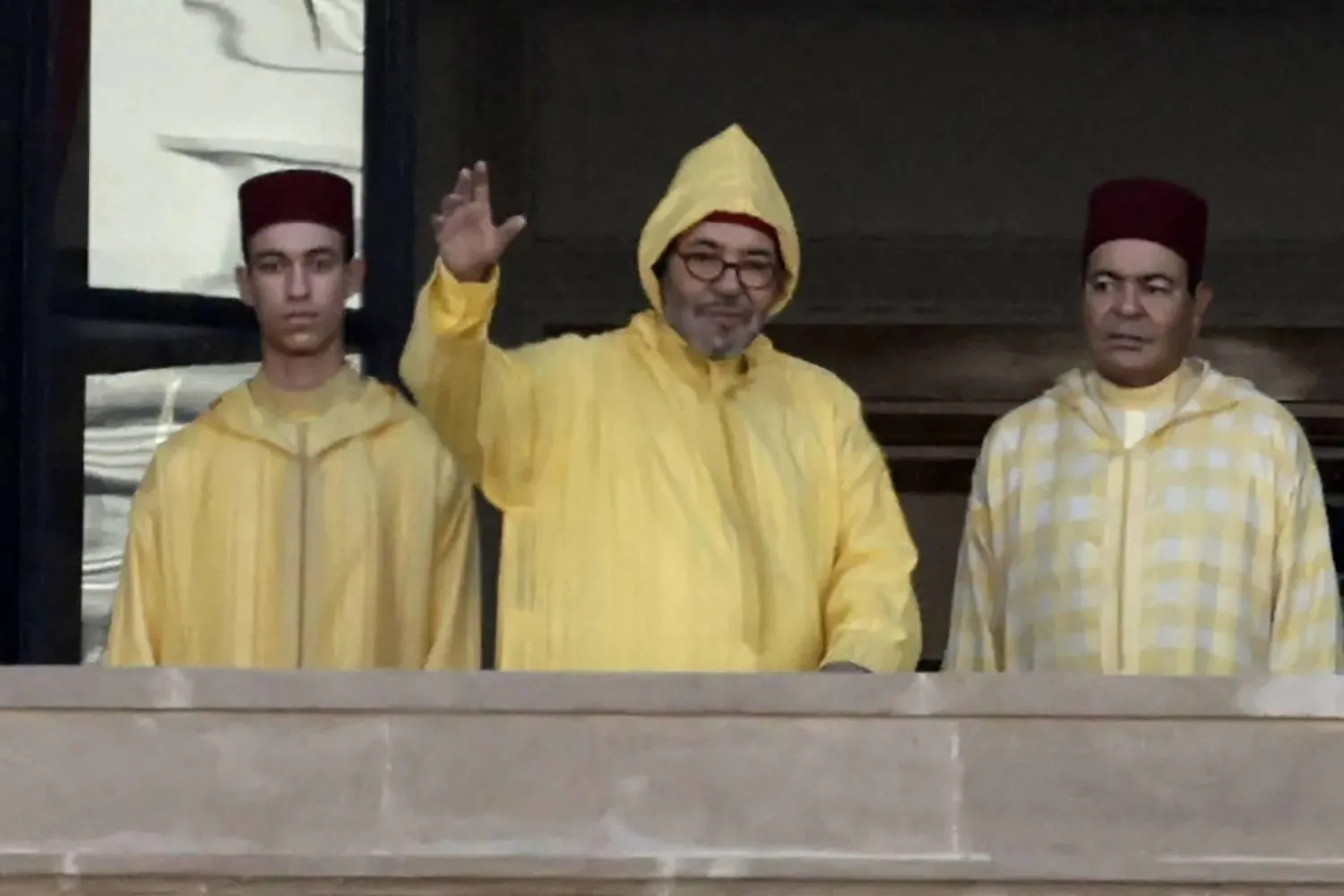
Morocco’s king arrives at parliament balcony with crown prince and brother (AFP)
TT

Morocco’s King Urges Faster Job Creation, Better Health and Education

Morocco’s king arrives at parliament balcony with crown prince and brother (AFP)

Morocco’s King Mohammed VI on Friday called on lawmakers to act with “seriousness” and defend citizens’ interests, saying there should be no rivalry between major development projects as long as the goal remains improving people’s livelihoods.

In an address to open the new parliamentary session, the monarch urged Parliament to accelerate reforms aimed at creating jobs for young people, improving public services, and paying greater attention to rural areas.

The speech came a week after large-scale demonstrations led by young Moroccans demanding better healthcare, education, and an end to corruption.

In his speech opening the autumn session of Parliament, King Mohammed VI stressed the importance of raising public awareness about government initiatives, particularly those related to citizens’ freedoms. He said that task also falls on political parties, elected representatives, the media, and “all the living forces of the nation.”

The king stressed the need to speed up the “rising Morocco” development process by launching a new generation of territorial development projects and ensuring that all citizens benefit from the fruits of growth. He called for accelerating reforms to generate employment and reduce rural disparities.

“The level of local development reflects the progress of a rising and united Morocco,” the monarch said, adding that tackling regional inequalities “is not merely a slogan or a temporary priority, but a strategic direction that all stakeholders must commit to.”

King Mohammed VI urged a faster pace in implementing territorial development programs, especially in job creation, healthcare, education, and in addressing the needs of the most vulnerable regions while promoting sustainable development along Morocco’s coastlines.

He said particular attention must be given to fragile regions, taking into account their specific needs and characteristics. “It has become necessary to rethink the development of mountain areas, which cover 30 percent of the national territory, and to provide them with an integrated public policy that reflects their unique features and vast potential,” the king said.

He also called for the effective and serious implementation of sustainable development mechanisms along the nation’s coasts, including the coastal law and national plan, to balance rapid development with environmental protection. The king urged expanding rural centers as hubs to manage urban growth and reduce its negative impact, making them “effective links” in bringing administrative, social, and economic services closer to rural citizens.

The king’s speech came a day after renewed demonstrations by the “Gen Z 212” movement on Thursday, when dozens of young protesters gathered outside Parliament demanding “the right to health, education, social justice, fighting corruption, and the government’s resignation.”

Thursday marked the eleventh day of the “Gen Z” protests. The movement released a new document reiterating demands for health and education rights, anti-corruption measures, and the departure of the government.

Meanwhile, the Moroccan government continues to express willingness to engage in dialogue with the “Gen Z” movement.

Government Spokesperson Mustapha Baitas said at a weekly press conference following Thursday’s cabinet meeting that dialogue “requires two parties,” stressing the need for an identifiable group of youth representatives with whom the government can negotiate.



Yemeni Presidential Adviser to Asharq Al-Awsat: Serious Efforts Underway to Enforce Rule of Law

Presidential Leadership Council Chairman Dr. Rashad al-Alimi. (Saba)
TT

Yemeni Presidential Adviser to Asharq Al-Awsat: Serious Efforts Underway to Enforce Rule of Law

Presidential Leadership Council Chairman Dr. Rashad al-Alimi. (Saba)

Engineer Badr Basalmah, an adviser to the Yemeni president, said Yemen is entering a decisive phase in which the state is attempting to reclaim control of the political landscape through what he described as a process of “reverse engineering,” backed by close regional support and aimed at restoring the authority of law and institutions.

He said the recent presidential decisions affecting the eastern provinces marked a pivotal moment with far-reaching political implications that go to the heart of the state’s survival.

Speaking to Asharq Al-Awsat, Basalmah said the decisions marked a qualitative shift by the Presidential Leadership Council (PLC) from a posture of “absorbing reactions” to one of “shaping action” and initiative, a move that he said would strengthen the centralization of sovereign decision-making and prevent the state from fragmenting.

He stressed that Saudi Arabia’s supportive stance toward Yemen’s legitimate government and its decisions represents the cornerstone of the current stability equation, noting that this support should not be read as interference in favor of one party over another, but rather as part of a strategy aimed at regulating the pace of developments and preventing a slide into uncertainty.

Basalmah said the eastern provinces, particularly Hadhramaut and al-Mahra, are undergoing a delicate political phase that could shape the future form of the Yemeni state and lay the groundwork for a future federal model.

From managing balances to institutional sovereignty

According to Basalmah, the recent decisions by PLC Chairman Dr. Rashad al-Alimi cannot be viewed merely within a routine administrative framework. He stressed that they represent a pivotal step with profound political significance tied to the core of the state’s survival.

The importance of these decisions lies in the fact that they embody a qualitative transition by the council from absorbing reactions to producing action and initiative, he explained.

He described this as a “clear political message to domestic and external audiences that the state, in its constitutional and legitimate sense, holds the final say in managing its sovereign institutions, and that it must remain a unifying national umbrella rather than a field for division or exploitation outside the framework of the comprehensive national project.”

Basalmah added that the move represents, at a deeper level, an effort to fortify centralized sovereign decision-making and prevent the state from sliding toward fragmentation or transforming into isolated administrative and security enclaves.

The Saudi role is a cornerstone

He reaffirmed that Saudi Arabia’s support for legitimacy and its decisions are the cornerstone of the current efforts to establish stability, explaining that such support reflects a strategy aimed at controlling the situation and preventing a descent into the unknown.

He said the importance of this role is evident in entrenching what he described as a “golden rule” that partnership does not mean dominance, adding that support for the PLC is intended to de-escalate tensions and prevent the imposition of fait accompli policies by force of arms, particularly in strategically sensitive areas such as Hadhramaut and Mahra.

Basalmah said Saudi Arabia, through this approach, is redrawing the red lines that ensure all parties remain under the state's umbrella, while pushing political forces toward dialogue as the only viable option, rather than what he described as reckless adventures that could threaten regional security and Yemen’s social fabric.

Eastern provinces and the shape of the future state

Basalmah said that the eastern provinces, foremost among them Hadhramaut and Mahra, have become a decisive factor in the Yemeni equation and are undergoing a political transition that could shape the country's future.

He told Asharq Al-Awsat that a closer reading of developments points to growing social and political awareness in these provinces toward rejecting absolute subordination or sharp polarization.

What is unfolding in Hadhramaut does not fall within the scope of a fleeting regional movement, but rather within the context of laying the groundwork for a future federal state model, he remarked.

These provinces are seeking to secure their rights to manage their own affairs and protect their territories through national formations, such as the Nation’s Shield Forces, under the umbrella of constitutional legitimacy, Basalmah went on to say.

Current indicators suggest that the option of forced annexation has receded in favor of a path toward a consensual formula that guarantees administrative and security autonomy for regions within a unified, federal Yemen, he stated.

Yemen is witnessing a serious attempt at “reverse engineering” the political scene, where instead of factions imposing their reality on the state, the state, with close regional support, is seeking to reclaim the initiative and impose the logic of law and institutions, he warned.

This process represents a long-term battle requiring a high degree of political wisdom, he urged, stressing that the winner will be whoever aligns with the logic of the state and the interests of citizens, backed by international legitimacy and Arab support.


Türkiye Calls Israel’s Recognition of Somaliland ‘Illegitimate’

This handout photograph taken and released by the Turkish presidential press service on December 30, 2025, shows Türkiye’s President Recep Tayyip Erdogan (R) and Somalia's President Hassan Sheikh Mohamud (L) shaking hands before their meeting in Istanbul. (Photo by Handout / Turkish Presidential Press Service / AFP)
TT

Türkiye Calls Israel’s Recognition of Somaliland ‘Illegitimate’

This handout photograph taken and released by the Turkish presidential press service on December 30, 2025, shows Türkiye’s President Recep Tayyip Erdogan (R) and Somalia's President Hassan Sheikh Mohamud (L) shaking hands before their meeting in Istanbul. (Photo by Handout / Turkish Presidential Press Service / AFP)

Türkiye’s president on Tuesday called Israel's recognition of Somaliland "illegitimate and unacceptable" as he hosted a visit by his Somali counterpart.

"Preserving the unity and integrity of Somalia in all circumstances holds special importance in our view. Israel's decision to recognize Somaliland is illegitimate and unacceptable," Turkish leader Recep Tayyip Erdogan said in a press conference alongside Somali President Hassan Sheikh Mohamud.

Israel sparked criticism last Friday when it said it was officially recognizing Somaliland -- a breakaway territory in Somalia's north.

The declaration was a first for the territory, which in 1991 had unilaterally declared secession from Somalia.

Israel's move has drawn widespread criticism from the African Union, Egypt and the European Union, which insist on war-torn Somalia's sovereignty.

Türkiye has frequently clashed with Israel over a range of issues, especially over the conflict in Gaza and Israeli obstruction of aid to the Palestinian territory.

Mohamud said Israeli Prime Minister Benjamin Netanyahu's "aggressive position, which also includes Somalia, is unacceptable".

He called Netanyahu's Somaliland declaration "a violation of international law" and "the start of insecurity and instability, especially for Somalia and the African region".


10 Countries Warn of ‘Catastrophic’ Gaza Situation

 Palestinians stand next to a tent set up on the rubble of buildings destroyed during Israeli air and ground operations in the Sheikh Radwan neighborhood, in Gaza City, Tuesday, Dec. 30, 2025. (AP)
Palestinians stand next to a tent set up on the rubble of buildings destroyed during Israeli air and ground operations in the Sheikh Radwan neighborhood, in Gaza City, Tuesday, Dec. 30, 2025. (AP)
TT

10 Countries Warn of ‘Catastrophic’ Gaza Situation

 Palestinians stand next to a tent set up on the rubble of buildings destroyed during Israeli air and ground operations in the Sheikh Radwan neighborhood, in Gaza City, Tuesday, Dec. 30, 2025. (AP)
Palestinians stand next to a tent set up on the rubble of buildings destroyed during Israeli air and ground operations in the Sheikh Radwan neighborhood, in Gaza City, Tuesday, Dec. 30, 2025. (AP)

The foreign ministers of 10 nations on Tuesday expressed "serious concerns" about a "renewed deterioration of the humanitarian situation" in Gaza, saying the situation was "catastrophic". 

"As winter draws in, civilians in Gaza are facing appalling conditions with heavy rainfall and temperatures dropping," the ministers of Britain, Canada, Denmark, Finland, France, Iceland, Japan, Norway, Sweden and Switzerland said in a joint statement released by the UK's Foreign Office. 

"1.3 million people still require urgent shelter support. More than half of health facilities are only partially functional and face shortages of essential medical equipment and supplies. The total collapse of sanitation infrastructure has left 740,000 people vulnerable to toxic flooding," the statement added. 

The ministers said they welcomed the progress that had been made to end the bloodshed in Gaza and secure the release of Israeli hostages. 

"However, we will not lose focus on the plight of civilians in Gaza," they said, calling on the government of Israel to take a string of "urgent and essential" steps. 

These included ensuring that international NGOs could operate in Gaza in a "sustained and predictable" way. 

"As 31 December approaches, many established international NGO partners are at risk of being de-registered because of the government of Israel's restrictive new requirements," the statement said. 

It also called for the UN and its partners to be able to continue their work in Gaza and for the lifting of "unreasonable restricts on imports considered to have a dual use". 

This included medical and shelter equipment. 

The foreign ministers also called for the opening of crossings to boost the flows of humanitarian aid into Gaza. 

While welcoming the partial opening of the Allenby crossing, they said other corridors for moving goods remained closed or severely restricted for humanitarian aid, including Rafah. 

"Bureaucratic customs processes and extensive screenings are causing delays, while commercial cargo is being allowed in more freely," the statement said. 

"The target of 4,200 trucks per week, including an allocation of 250 UN trucks per day, should be a floor not a ceiling. These targets should be lifted so we can be sure the vital supplies are getting in at the vast scale needed," it added.