


Rahi Says Pope Leo Will Carry Message of 'Peace' to Lebanon

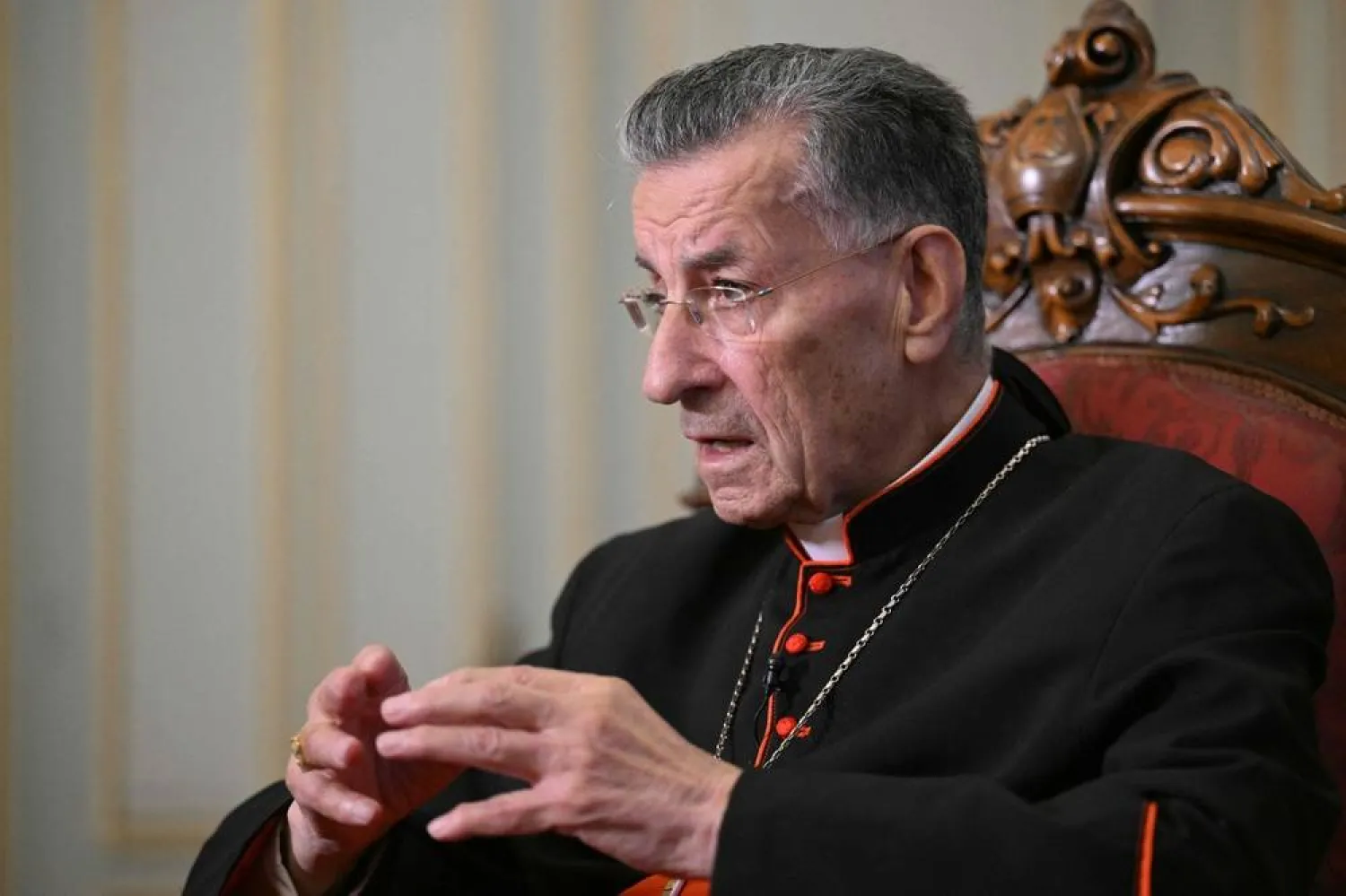
Lebanon's Maronite patriarch Cardinal Beshara Rahi speaks during an interview with AFP at the Maronite Patriarchate in Bkirki, north of Beirut, on October 15, 2025. (AFP)
TT

Rahi Says Pope Leo Will Carry Message of 'Peace' to Lebanon

Lebanon's Maronite patriarch Cardinal Beshara Rahi speaks during an interview with AFP at the Maronite Patriarchate in Bkirki, north of Beirut, on October 15, 2025. (AFP)

Pope Leo XIV will carry a message of peace to Lebanon and the Christians of the Middle East when he visits next month, Maronite Patriarch Beshara al-Rahi told AFP on Wednesday.

The Vatican said last week that Pope Leo will travel to Türkiye and Lebanon in a six-day trip beginning late November, his first since becoming head of the Catholic Church.

Rahi, who heads the Maronite Church, Lebanon's most influential Christian sect, hailed the pontiff's visit at a time of truce in the conflict between Israel and Lebanon, as well as the war in Gaza.

In an interview with AFP from the Maronite Patriarchate headquarters in Bkirki, north of Beirut, Rahi said that the US-born pope "will bring peace and hope to Lebanon during his visit".

"He comes at a time when the war in Gaza has ceased... and we are living in Lebanon under a ceasefire, despite violations occurring," he added.

After more than a year of hostilities between Israel and the Iran-backed Hezbollah group, a ceasefire agreement was signed in November.

The truce remains in effect despite Israel carrying out near-daily strikes on Lebanon, claiming to target Hezbollah members and infrastructure.

A few days ago, a ceasefire also came into effect in the Gaza Strip after a devastating two-year war between the Palestinian group Hamas and Israel.

"I believe that during this visit, he will focus on peace, and he will ask Lebanon to continue on its path toward peace," said Rahi, whose Church is in full communion with Rome.

The latest conflict killed more than 4,000 people in Lebanon and devastated Beirut's southern suburbs and the country's south and east, areas where Hezbollah holds sway.

Last week, Pope Leo said that his trip to Lebanon from November 30 to December 2 presents "the opportunity to announce once again the message of peace... in a country that has also suffered so much".

Rahi, who has long called for Lebanon to be kept out of regional conflicts, stated that he believes the visit "will remind all Lebanese, Christians and Muslims alike, of their responsibility to preserve Lebanon".

"The value of Lebanon lies in the fact that each of its groups maintains its role and identity. Coexistence means that Christians have their identity and Muslims have theirs. The pope does not come to say, 'abandon your identity', but rather, 'Live your identity'," he added.

"This is how the Vatican understands Lebanon, with its cultural and religious pluralism."

Pope Leo XIV is the third pontiff to visit Lebanon, after John Paul II in 1997 and Benedict XVI in 2012, who received a tremendous popular reception.

His trip comes in the wake of a series of crises that have ravaged Lebanon, from a crushing economic crisis that began in 2019, to the horrific port explosion the following summer, to the recent war.

"The visit is a great relief for Christians in Lebanon," Rahi said, as well as for "Christians in Syria, Iraq, Iran, and the Holy Land", who have gone through wars, conflicts, and waves of displacement.



Lebanon Starts Technical Response Process to US Treasury Demands

Lebanese President Joseph Aoun meets US Treasury delegation at Baabda Palace, Beirut (AFP)
TT

Lebanon Starts Technical Response Process to US Treasury Demands

Lebanese President Joseph Aoun meets US Treasury delegation at Baabda Palace, Beirut (AFP)

Lebanon has swiftly initiated a legal and procedural compliance process in response to what officials described as “very serious” US demands to curb terrorism financing, after a visiting US Treasury delegation delivered the requests to political and monetary authorities earlier this week along with warnings of possible sanctions.

The measures, which come with defined deadlines, explicitly target the drying up of Hezbollah’s funding channels and those of its affiliated organizations.

On Friday, the Central Bank of Lebanon (Banque du Liban) took what it described as “the first step in a series of precautionary measures aimed at strengthening the compliance environment within the financial sector,” amid speculation over the direction of government and ministerial steps in the same area.

Observers note that these moves extend beyond technical considerations and touch on the politically sensitive issue of controlling weapons exclusively.

The central bank’s initiative includes “applying precautionary measures to all nonbank financial institutions licensed by Banque du Liban, including money transfer companies, exchange houses, and other entities handling cash transactions in foreign currencies to and from Lebanon.”

Closing Hezbollah’s Financial Loopholes

This initiative aligns with information obtained by Asharq Al-Awsat from meetings held by the US Treasury delegation with Lebanon’s presidential, ministerial, parliamentary, and central bank authorities.

The meetings emphasized the need for strict measures to close loopholes used to channel funding to Hezbollah and its institutions, and to curb unregulated methods exploited by the group.

These include money transfer and exchange companies, illicit trade operations, many conducted in cash, gold, and some using cryptocurrencies, according to the delegation.

John Hurley, the Undersecretary of the Treasury for Terrorism and Financial Intelligence (TFI), spoke to journalists during a limited meeting at the US Embassy in Beirut.

Sources indicate that the next steps by the central bank will focus on promoting electronic payments in retail sectors, whether through cards, smartphones, or online internal and international transfers connected to secure banking networks.

These systems are subject to standard “know your customer” (KYC) requirements, helping control cash flow by regulating dollar liquidity, including part of the cash distributed monthly by the central bank for public sector salaries and banks’ contributions to depositor allocations, as per circulars.

Domestic Political Dimension

Financial sources familiar with the move said the measures were designed to avoid domestic political fallout and to prevent provoking the concerned political party. The steps are framed strictly as part of Lebanon’s effort to be removed from the Financial Action Task Force (FATF) “grey list.”

The central bank noted that “inclusion on this list indicates gaps in combating illicit financial transactions, triggering tighter international scrutiny and lowering confidence among global financial institutions.”

In a clarification responding indirectly to the Treasury delegation’s request for tighter controls over cash moving outside traditional banking channels, the central bank said the protective measures aim to “prevent the transfer of illicit or illegally obtained funds through these institutions, by imposing stricter compliance requirements and enhanced due diligence on all legal and natural persons involved in cash transactions, including ultimate beneficiaries.”

Additional Precautionary Measures

The central bank indicated that further steps will impose additional precautionary measures on commercial banks, aiming to “establish multiple layers of controls and checkpoints to detect, contain, and prevent illicit funds from circulating through the banking system and the broader financial sector.”

Lebanese Justice Minister Adel Nassar met with the US Treasury delegation in Beirut.

The Banking Control Commission will oversee the implementation of these measures and ensure all banks and nonbank financial institutions comply, taking corrective action as needed.

Under the central bank’s basic decision attached to Circular No. 3, nonbank financial institutions are now required to collect detailed client and transaction information for all operations of $1,000 and above, and to update KYC records according to attached templates for natural and legal persons as well as ultimate economic beneficiaries.

The circular mandates that institutions submit the required data to the central bank in encrypted form within two business days of the transaction.

Deadlines for implementing new procedures include adopting templates for cash transactions and new clients by the beginning of next month, with full compliance for existing clients within six months of the circular’s issuance.

The central bank warned that violations would expose institutions to sanctions under Article 208 of the Lebanese Code of Money and Credit, ranging from warnings to license revocation, in addition to fines and criminal penalties.


Saudi Signals on Lifting Export Ban Revive Hopes for Lebanese Farmers

Saudi Signals on Lifting Export Ban Revive Hopes for Lebanese Farmers
TT

Saudi Signals on Lifting Export Ban Revive Hopes for Lebanese Farmers

Saudi Signals on Lifting Export Ban Revive Hopes for Lebanese Farmers

Indications that Saudi Arabia is moving to lift its ban on agricultural imports from Lebanon and bolster trade with Beirut have rekindled hopes for new opportunities, particularly in the farming sector that has suffocated in recent years after drug smuggling networks exploited it to traffic narcotics.

Tony Tohme, head of the Economic Committee at the Chamber of Commerce, Industry, and Agriculture in Zahle and the Bekaa, said the expected Saudi move to end the ban on Lebanese agricultural exports “marks a highly significant development and a major boost for the Lebanese economy.”

He told Asharq Al-Awsat that the step is “a positive measure that has long been awaited and one we have worked for through long and continuous meetings, because it reopens the largest and most important market for Lebanese agricultural production.”

Tohme stressed that “Lebanon paid a heavy economic price because of the ban,” noting that the Bekaa, which makes up 43 percent of the country’s territory, “was directly affected because thousands of families rely on agriculture as their main source of income.” He added, “The entire economic cycle is disrupted when the agricultural sector declines.”

Losses Worth millions

Before 2021, agricultural exports to the kingdom ranged between 40 million and 50 million dollars a year. These exports were part of wider economic activities that were also hit by the ban, including land transport linked to shipments to Gulf countries. Lebanon’s trade deficit reached nearly 885 million dollars in 2024, according to estimates by the ministries of industry and agriculture and the chambers of commerce.

Land and sea shipping

Tohme said the ban not only blocked the entry of goods into Saudi Arabia, “but also barred Lebanese trucks from transiting Saudi territory toward other Gulf markets.”

Exporters were therefore forced to rely on costly sea freight, which he said was unsuitable for fresh produce that loses quality during long transport times and arrives in bulk, causing sharp price drops.

He said lifting the ban “will not only revive Lebanese vegetables and fruits but will also restore balance to the land transport sector, especially refrigerated trucks, which collapsed entirely after the ban and the halt of overland passage through Saudi Arabia.”

“We hope the decision will be issued soon as indicated by recent signals,” he said, adding that the step “will have positive repercussions on the entire Lebanese economy and will restore vitality to a whole sector that thousands of Lebanese depend on.”

He added, “We are fully prepared to cooperate to ensure the quality of exports and protect the reputation of Lebanese agriculture.”

Market reopening brings farmers back to life

In a related context, Ibrahim Tarshishi, head of the National Farmers’ Union, said Saudi Arabia’s announcement of its readiness to reopen its markets “brought hope back to the agricultural sector after three and a half years of losses.”

He told Asharq Al-Awsat that farmers received the news “with immense joy and great longing for the return of normal relations with the kingdom.”

Tarshishi said Lebanon previously exported “between 500,000 and 550,000 tons a year” before the figure dropped to “between 200,000 and 300,000 tons” after the ban, a loss of more than 50 percent of export volume.

He said the kingdom “has historically been the primary market for Lebanese agricultural products,” noting that “entire crops stopped being planted because they were destined for Arab markets, such as lettuce which cannot withstand sea transport.”

Tarshishi said lifting the ban “is not merely an economic measure but a key to a comprehensive solution,” adding that it “signals a restoration of confidence in the Lebanese state and in the security agencies that uprooted the dealers and smugglers who harmed Lebanon and its relations with its Arab brothers.”

He said, “When the kingdom opens its doors, other Arab doors open with it. This Saudi initiative is a step of a thousand miles, one that we hope will restore relations to their highest levels for the benefit of Lebanon, the agricultural sector and all Lebanese.”


Gaza War Becomes Cash Surge for US Weapons Makers

An Israeli F-16 carrying air-to-air missiles and extra fuel tanks takes off from an air base (Israel Defense Forces)
TT

Gaza War Becomes Cash Surge for US Weapons Makers

An Israeli F-16 carrying air-to-air missiles and extra fuel tanks takes off from an air base (Israel Defense Forces)

Israel’s war in Gaza, which erupted in October 2023, has become one of the most profitable conflicts for major US defense contractors.

As Gaza was being devastated and hundreds of thousands of civilians faced death and starvation, weapons factories across several US states were running at full capacity to meet Israel’s expanding military demands, generating more than 32 billion dollars in sales in just two years, according to a Wall Street Journal analysis based on US State Department data.

After the Hamas attack on southern Israel on October 7, 2023, and the large-scale Israeli military campaign that followed, Washington moved quickly to open an unprecedented weapons pipeline that included precision-guided munitions, long-range missiles, fighter jets and field equipment.

While Israel typically receives around 3.3 billion dollars in annual military assistance, that figure doubled in 2024 to 6.8 billion dollars in direct funding, not including non-cash support such as logistics, training and intelligence coordination.

A US State Department spokesperson said the Trump administration remains committed to Israel’s right to defend itself, adding that Washington is currently leading a regional effort to end the war through lasting security arrangements.

But despite talk of a “possible end” to the conflict, Pentagon data show that weapons production lines in US factories have not slowed and that supply contracts run through 2029, meaning arms deliveries to Israel will continue even after the fighting stops.

Who is benefiting most?

Boeing sits at the top of the list of beneficiaries after securing a 18.8 billion dollar deal to sell upgraded F-15 fighter jets to Israel, with delivery expected in four years.

The company also won an additional 7.9 billion dollars in contracts to supply Tel Aviv with guided bombs and associated weapons systems. These deals alone represent a major leap compared with Israel’s previous commitments to Boeing, which totaled less than 10 billion dollars over an entire decade.

Northrop Grumman, Lockheed Martin and General Dynamics secured specialized contracts for fighter jet spare parts, precision missiles and 120-millimeter tank rounds used in Merkava tanks.

Caterpillar benefited from soaring demand for its armored D9 bulldozers, widely deployed by the Israeli military to destroy homes and infrastructure in the enclave.

According to the US Defense Security Cooperation Agency, most of the deals are concentrated in aerial munitions and attack aircraft, while ground systems such as tanks and armored vehicles represent a far smaller share of total sales.

War as an economic opportunity

The conflict has not only been a military campaign, it also served as an economic boost for the US defense sector, which in recent years struggled with supply chain disruptions and labor strikes.

Boeing said in its 2024 annual report that its defense division saw strong demand from governments prioritizing security and defense technology amid rising threats.

Lockheed Martin reported a 13 percent increase in missile division revenues, reaching 12.7 billion dollars in a single year.

Oshkosh, which produces tactical military vehicles, said Israel’s orders saved a production line that was close to shutting down last year. Italy’s Leonardo Group, whose US unit sells military trailers to Israel, said in its latest financial report that the continuation of the conflicts in Ukraine and Israel ensures stable international sales for 2025.

The cost of war and who pays the price

Although the billions flowing through arms deals reflect a boom for the US defense industry, the humanitarian and political dimensions of the conflict have fueled debate in the United States and abroad.

The war has killed more than 68,000 people, including about 18,000 children, according to the Gaza Health Ministry. Israel has not released any official figures on the number of Hamas fighters killed.

As Washington funds a significant share of these sales with US taxpayer money, some Western financial institutions have started taking protest measures.

Three Norwegian funds withdrew investments from companies such as Caterpillar, Oshkosh and Palantir over the use of their products in Gaza. The Dutch pension fund sold its 448 million dollar stake in Caterpillar for the same reasons.

In Europe, Germany announced in August 2025 a halt to all arms export licenses to Israel for use in Gaza. US technology companies also faced internal pressure, prompting Microsoft to restrict the Israeli Defense Ministry’s access to some of its cloud services.

Artificial intelligence on the battlefield

Alongside conventional weapons, the war created a wider arena for cooperation on artificial intelligence and digital surveillance. Palantir, owned by conservative billionaire Peter Thiel, entered a partnership with the Israeli Defense Ministry in early 2024. After criticism that its tools were being used in airstrikes, CEO Alex Karp responded by saying that most of those killed “were terrorists,” in his words.

Israel also signed pre-war agreements with Google, Amazon and Microsoft for advanced cloud computing services, and all three companies have faced growing employee protests calling for an end to military cooperation.

In an unusual twist, some of the same US firms supplying Israel with weapons also participate in humanitarian relief programs for Gaza.

The US State Department allocated 30 million dollars to the Gaza Humanitarian Foundation, overseen by former Trump adviser Johnnie Moore, to coordinate aid distribution in the enclave.

The foundation hired American security contractors to protect its operations amid chaos and allegations of poor organization.