
Sudan's army-aligned government accused paramilitaries on Wednesday of attacking civilians in mosques during their recent takeover of the western city of El-Fasher, where satellite images show evidence of "continuing mass killing", Yale researchers say.
The capture of El-Fasher on Sunday after an 18-month siege marked by starvation and bombardment has solidified the Rapid Support Forces' (RSF) control over Darfur, sparking fears of ethnically motivated violence reminiscent of the region's darkest days, AFP reported.
El-Fasher was the last of Darfur's five state capitals to fall to the RSF, led by General Mohammad Hamdan Daglo, who have been at war with the regular army for more than two years.
"More than 2,000 civilians were killed during the RSF invasion of El-Fasher, targeting volunteers in mosques and the Red Crescent," Mona Nour Al-Daem, humanitarian aid officer for the army-aligned government, said Wednesday at a press conference in Port Sudan.
She added that the Adre border pass between Sudan and Chad has been "used to introduce weapons and equipment for the militias".
An analysis of satellite images by Yale's Humanitarian Research Lab released Tuesday night "corroborates evidence of continuing mass killing in the past 48 hours since RSF took control".
"These mass killing events include corroboration of alleged executions around a hospital and a previously unreported potential mass killing at an RSF detention site at the former Children's Hospital in eastern El-Fasher," the group said, adding there was also ongoing "systematic killing" at one location outside the city.
El-Fasher had been the last holdout in Darfur of army chief Abdel Fattah al-Burhan's forces, and its fall has left the RSF in control of a vast region covering a third of Sudan, with fighting now concentrated in the Kordofan region.
Since the city was captured by the RSF -- descended from the Janjaweed militias accused of genocide in Darfur two decades ago -- the group has again been accused of carrying out atrocities against civilians, with brutal videos circulating on social media.
The United Nations has warned of "ethnically motivated violations and atrocities" while the African Union condemned "escalating violence" and "alleged war crimes".
"Civilians being targeted based on their ethnicity underscore the brutality of the Rapid Support Force," the EU's foreign policy chief Kaja Kallas said in a statement Wednesday.
Since Sunday, more than 33,000 people have fled El-Fasher for the town of Tawila, about 70 kilometres (40 miles) to the west, which has already welcomed more than 650,000 displaced people, the UN says.
Around 177,000 people remain in El-Fasher, which had a population of more than one million before the war, according to the latest figures from the world body.
Satellite-based communications with El-Fasher remain cut off -- though not for the RSF, which controls the Starlink network there -- as are access routes to the city despite calls for humanitarian corridors.
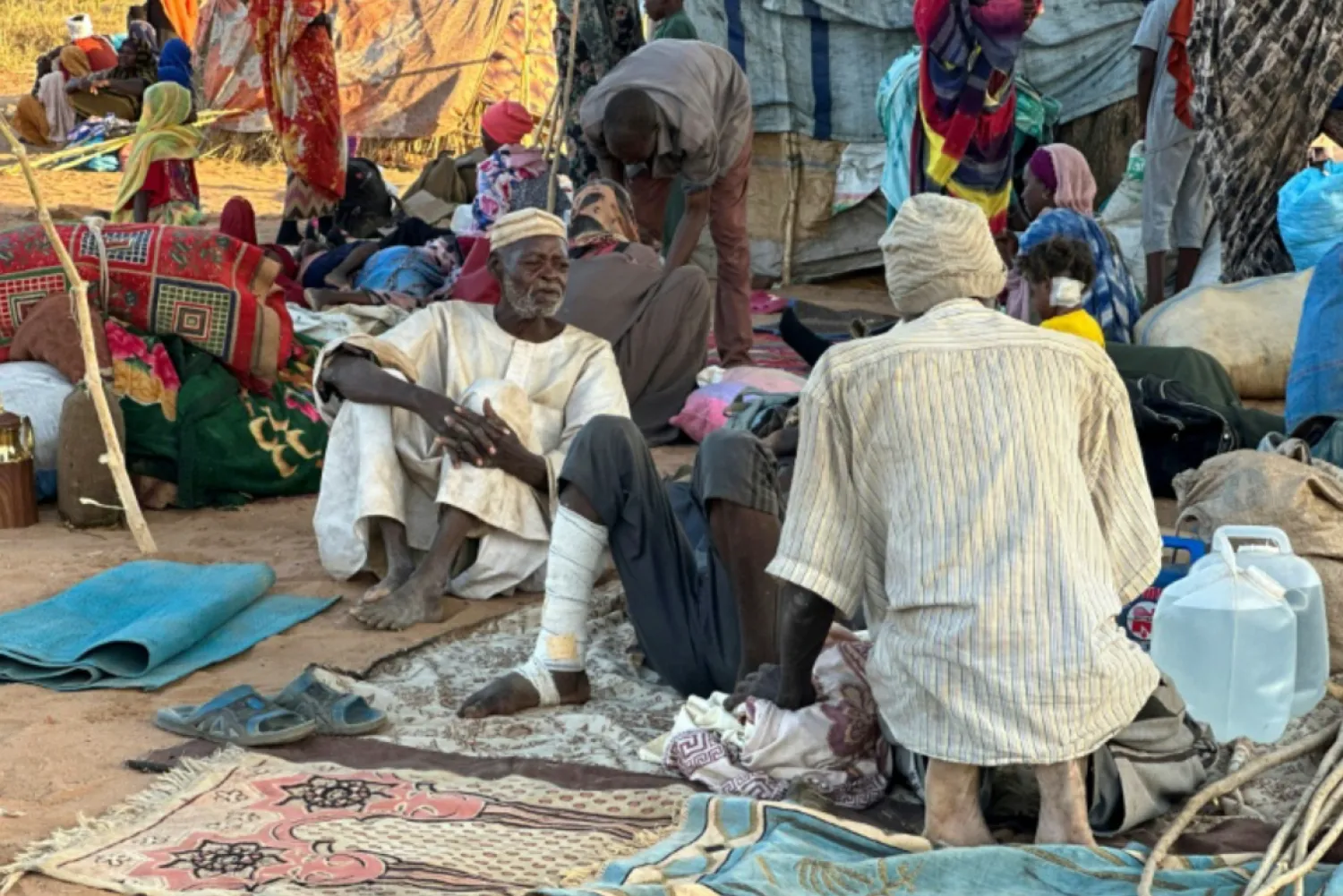
AFP images from Tawila showed displaced people, some of them with bandages, carrying their belongings and setting up temporary shelters.
Sudan's long-running war has killed tens of thousands of people, displaced millions and triggered the world's largest displacement and hunger crisis, with both sides accused of widespread atrocities.