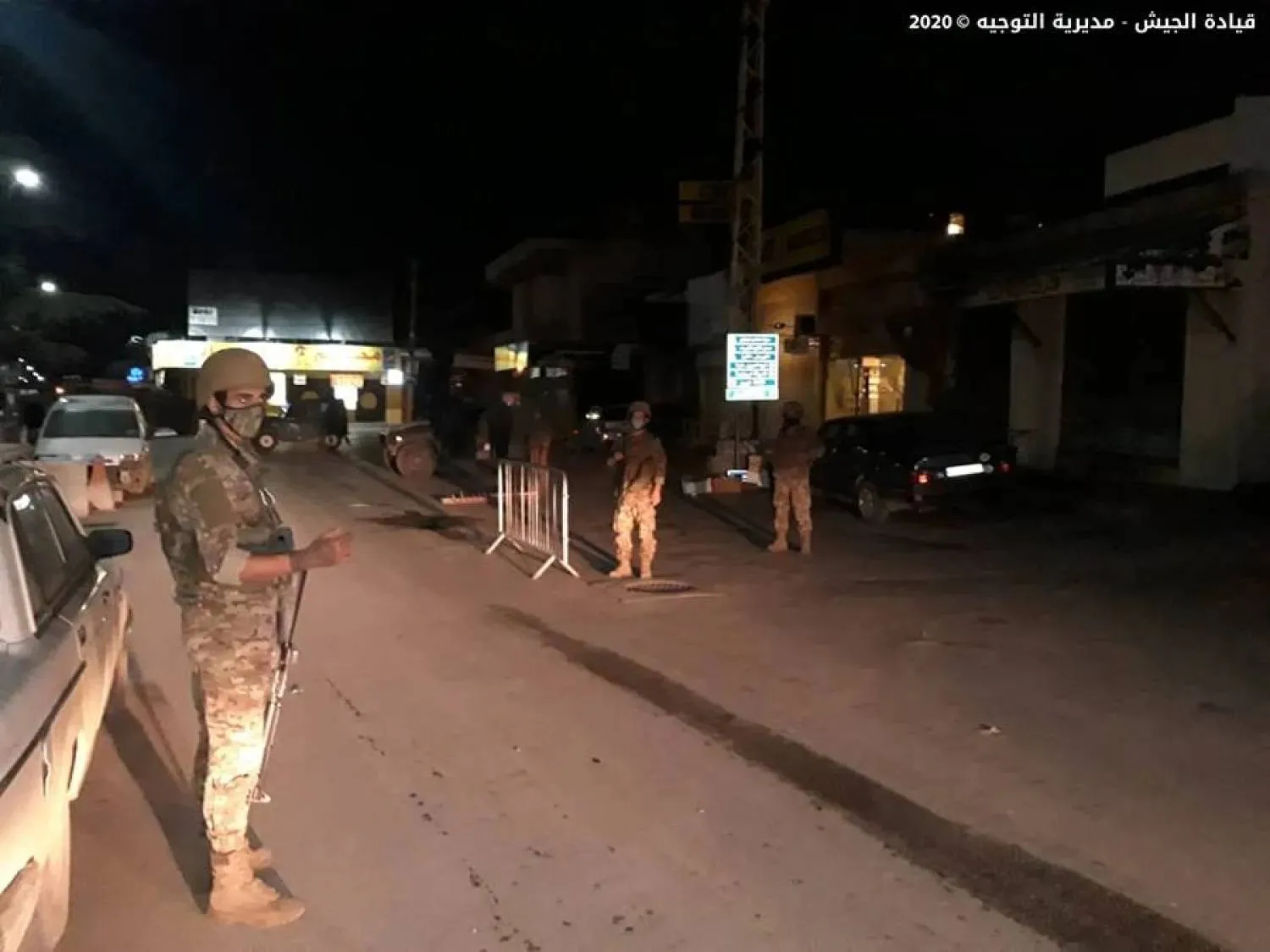

Repeated raids by the Lebanese Army on the Sharawneh neighborhood in eastern Lebanon’s Baalbek, alongside recent security operations, have drawn attention to the area long used by high-profile fugitives wanted for drug trafficking, shootings, car theft, and kidnapping for ransom. Locally, such individuals are known as “Tuffar,” those who flee authorities and have no fixed residence.
Sharawneh lies on the western edge of Baalbek and is the city’s largest neighborhood, covering some 10,000 square meters.
The northern sector is predominantly inhabited by the Al-Zeiter clan, while the southern sector is home to the Al-Jaafar clan, alongside families from the Al-Noun, Medlej, and Shalha clans.
Origins of the Neighborhood
Sharawneh began taking shape in 1950, when a handful of Al-Jaafar notables moved from their birthplace in Dar Al-Wasi’a, some 30 kilometers from Baalbek, seeking relief from harsh living conditions.
At the time, the area lacked official schools and transportation, and residents traveled to the city to sell agricultural produce such as apples, apricots, and cherries.
By 1958, the Al-Jaafar clan began constructing homes on state-owned lands, leveraging political unrest against then-President Camille Chamoun and the Baghdad Pact. Their political stance at the time provided cover for the neighborhood’s expansion. After the civil war, housing spread in all directions, occupying much of the city’s western flank.
Today, the Al-Jaafar clan exerts significant influence over Sharawneh, occupying roughly a third of its area and accounting for about a third of its population. Some youth turned to cannabis and drug trade, and the area increasingly harbored fugitives from Lebanese authorities.
The neighborhood also houses professionals such as lawyers, civil servants, and merchants, who now make up about 85% of the population.
Sobhi Jaafar, son of Sharawneh’s founder and a companion of Imam Musa al-Sadr in the 1970s, said: “The reality on the ground is different. Most people left Dar Al-Wasi’a due to the lack of schools and neglect, and they settled in Sharawneh more than fifty years ago.”
Engagement with the State
Jaafar, also known as Abu Asaad, urges authorities to reintegrate Sharawneh into the state’s framework, blaming economic conditions for the neighborhood’s current challenges.
“We wanted to engage with the state project. We visited army leaders and sought positions in internal security and customs forces, but our requests were rarely met. I cannot deny that former Army Commander Gen. Jean Kahwaji helped us enlist 50 Al-Jaafar members in the military at the time,” he said.
He added that some young clan members emigrated, while others became fugitives.
“Sixty percent of the wanted individuals are now in state prisons. Some resisted security forces during raids and were killed. The state decided to eliminate at least ten of them over the past years. The rest fled the area, while the neighborhood continues to face daily raids and searches for illegal items.”
Army Tightens Grip
In recent years, Sharawneh has seen rising armed conflicts, lawlessness, kidnappings, killings, thefts, and attacks on army patrols and civilians along international roads. Gunfire erupts on many occasions, and minor disputes often escalate into serious security incidents.
The neighborhood has become a refuge for drug dealers, high-profile fugitives, and armed gangs, regularly making headlines in local and international media.
In mid-2022, the Lebanese Army gained full control of Sharawneh, cracking down on drug traffickers. Key figures, including Abu Sallah, fled, though he was later killed in a 2025 confrontation with the army. Authorities dismantled several drug production facilities and confiscated weapons, illegal items, ammunition, stolen vehicles, and freed hostages.
End of Political Cover
Some sources suggest that the fugitives once enjoyed political and security cover, which has recently collapsed. Pursuits of wanted individuals, smugglers, and major drug dealers intensified.
According to neighborhood sources, around 200 people were on the wanted list, most of whom were arrested and imprisoned, while the remainder fled.